


Brass Recording Barometer
A brass recording barometer tracks atmospheric pressure continuously on paper charts, combining mechanical precision with handsome timber and metal housing.
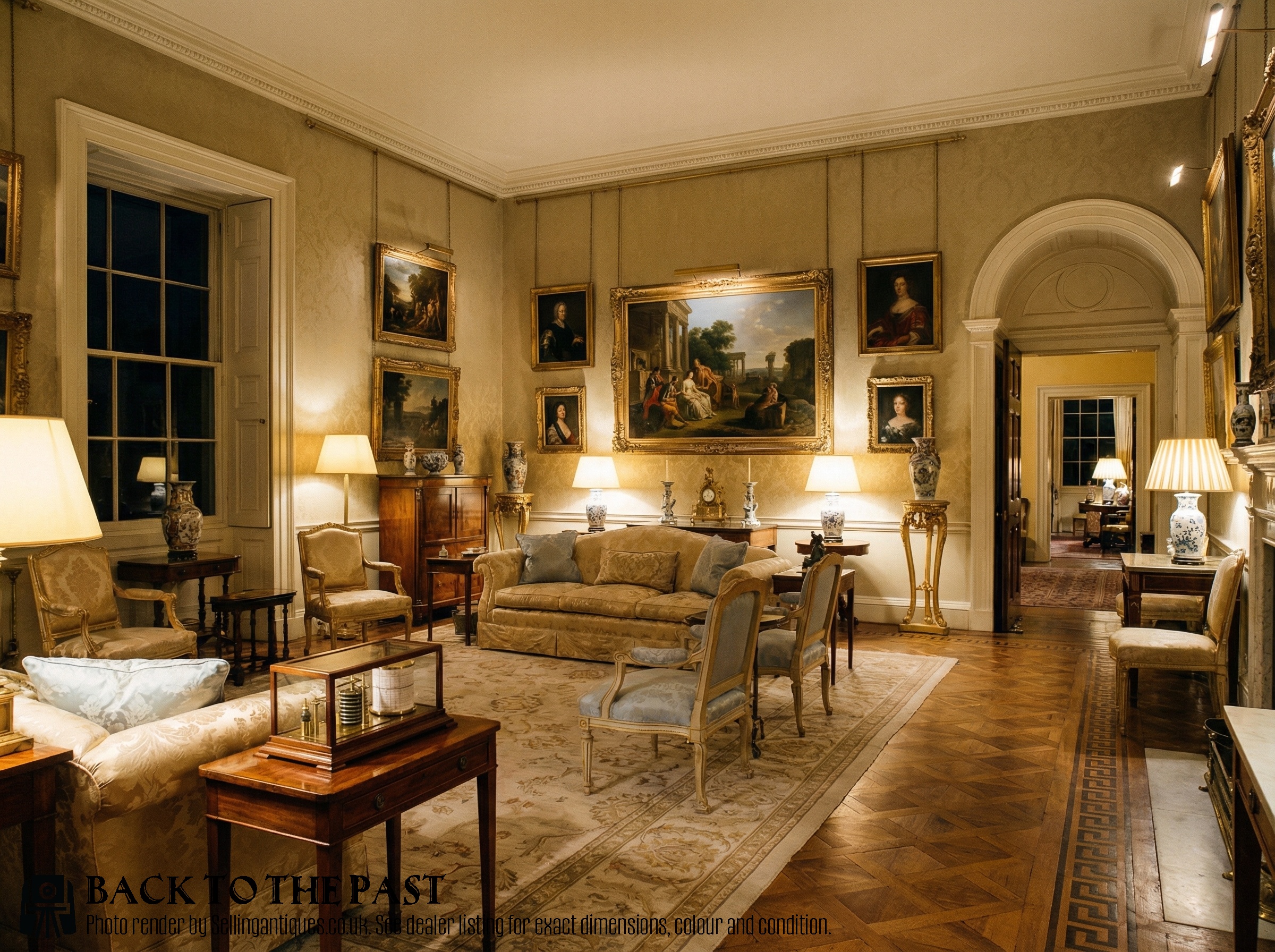
Brass Recording Barometer
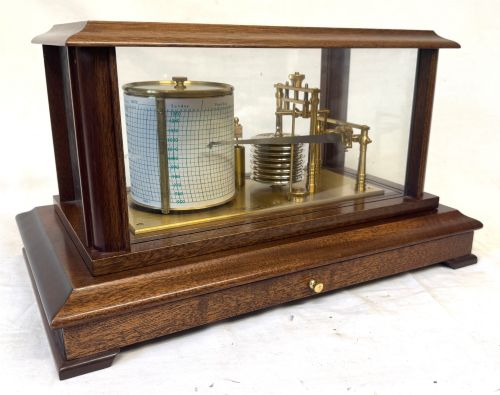
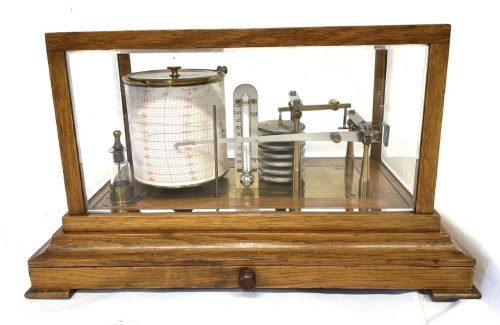
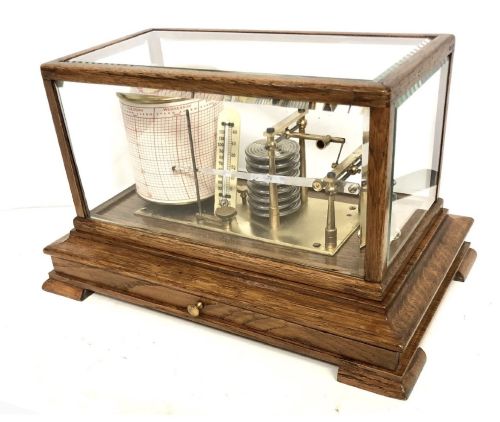
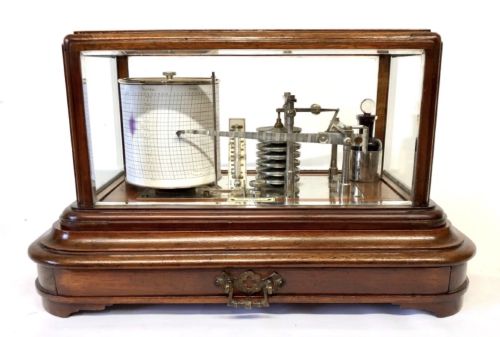
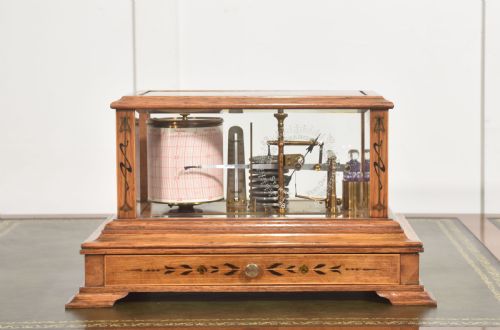
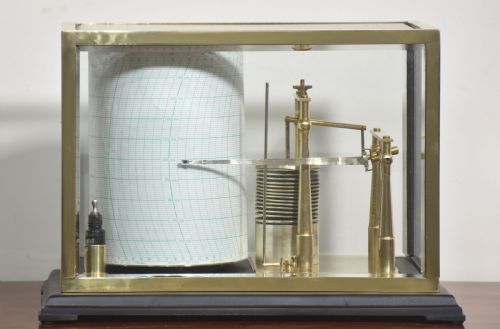
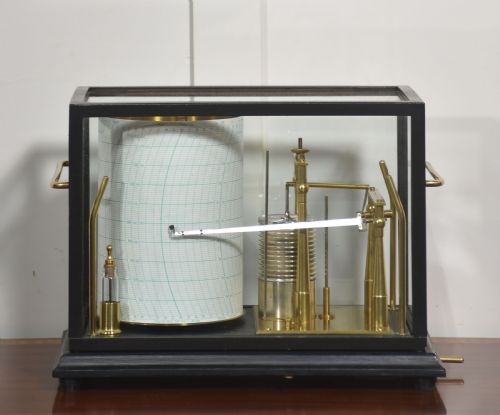
A brass recording barometer, more commonly known as a barograph, houses a set of vacuum capsules linked to a recording arm that traces pressure changes onto a rotating drum. These instruments emerge from the nineteenth and twentieth centuries, spanning Victorian, Edwardian and later decades.
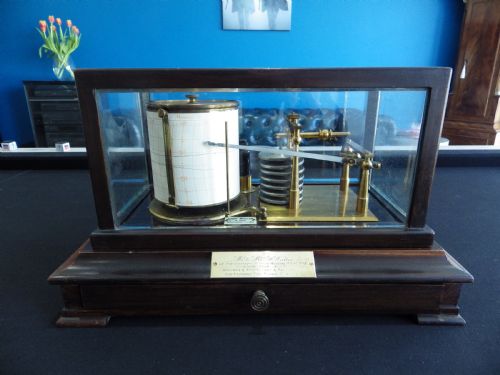
Most examples encountered here sit beneath a five-glass cover, allowing clear viewing of the brass mechanism within. They frequently incorporate a chart drawer in the base and often pair the recording drum with an auxiliary thermometer or a separate barometer dial.
Timbers dominate the cabinetry, with polished mahogany and figured oak appearing alongside walnut. Makers range from renowned London scientific houses to regional opticians and retailers.
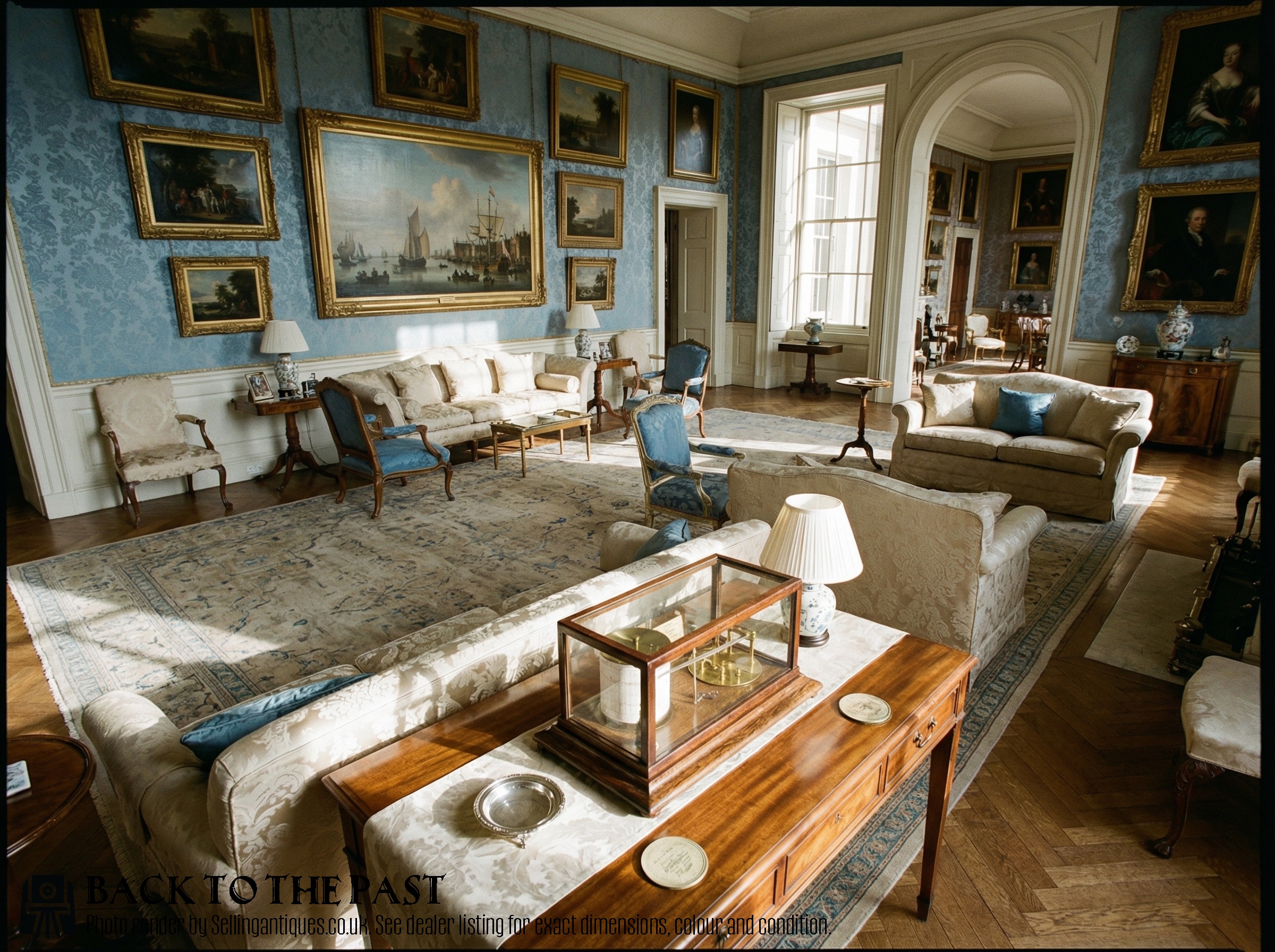
Materials and technique
Heavy brass forms the chassis, levers and recording drums, polished and lacquered to resist tarnish. Steel provides the spring components and pivots necessary for sensitive movement translation.
Cabinetmakers constructed the glazed wooden covers from solid mahogany, oak or walnut, often incorporating bevelled glass panels and dovetailed chart drawers beneath the mechanism. Paper charts printed with weekly or daily grids complete the functional assembly.
Brass Recording Barometer Retail Price Guide 2026
Typical asking prices for brass recording barometer among the pieces listed under this phrase on Sellingantiques today, from the lower quarter to the upper quarter. They describe what is for sale here now, not the wider market.
Several units crossed oceans to distant colonial ports before returning home to record the weather.
What separates the grades
Quality rests upon the precision of the clockwork drum movement and the integrity of the aneroid vacuum stack. Finer makers invested in heavier brass castings, compensated movements and superior glass bevelling.
Cabinet execution distinguishes workshop output, with select pieces featuring decorative Art Nouveau inlay or retailer signatures from prominent London houses. The presence of original paper charts and matching thermometer dials elevates an example.
Short and Mason·Negretti and Zambra·Jules Richard·Casella London
The Brass Recording Barometer Glossary
- Barograph
- A self-recording barometer that draws continuous pressure lines on a paper chart. It translates atmospheric shifts via stacked metal vacuum chambers.
- Aneroid
- Operating without liquid. These movements rely on expanding and contracting metal capsules to measure air pressure.
- Chart drum
- The rotating cylinder driven by internal clockwork that carries the graduated paper record. Ink from the pen nib marks the passing time and pressure.
- Thermometer
- A temperature gauge frequently mounted alongside the barometer bed. It provides simultaneous weather readings within the instrument case.
Brass Recording Barometer: Frequently Asked Questions
How do you operate a brass recording barometer?
Wind the clockwork drum gently using its attached key and secure a fresh paper chart around the cylinder. Ensure the pen arm rests lightly on the paper with a small supply of specialised ink.
Check that the vacuum capsules respond freely to local air pressure before leaving the instrument to record over the week.
Where should you place a barograph at home?
Position the instrument on a stable, level surface away from direct sunlight, radiators and exterior drafts. Stable indoor temperatures prevent false fluctuations in the mechanical recording.
Choose a location where the brass and timber housing can be appreciated without risking accidental knocks to the glass cover.
How do you date an antique barograph?
Examine the timber style, cabinet construction methods, and any engraved signatures on the brass bed plate or thermometer scales. Victorian examples often display heavier mahogany framing, while Edwardian pieces may show lighter oak or inlaid details.
Maker signatures and patent marks frequently correspond to known working periods of the firm.
Why do some models include a weather dial?
Combined instruments integrate a traditional aneroid dial alongside the recording drum to show immediate pressure conditions at a glance. This dual display allowed users to compare instantaneous readings with the historical trend traced on the paper chart.
Such units often served as comprehensive desk or mantel weather stations.