


Glazed Barograph Case
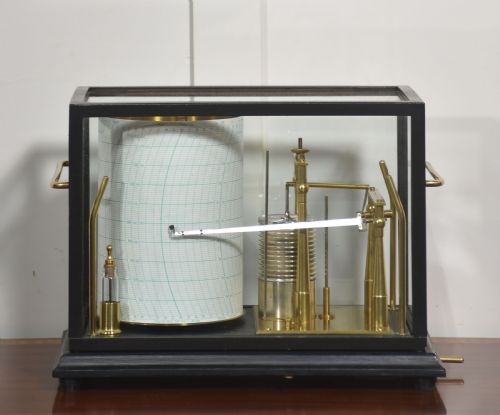
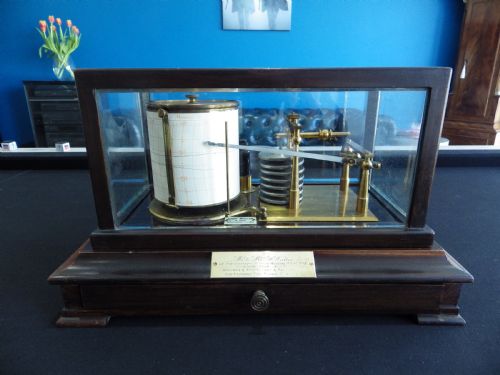
A glazed barograph case protects a recording barometer behind glass panels, giving you a working scientific instrument that displays daily atmospheric shifts.
What a glazed barograph case is
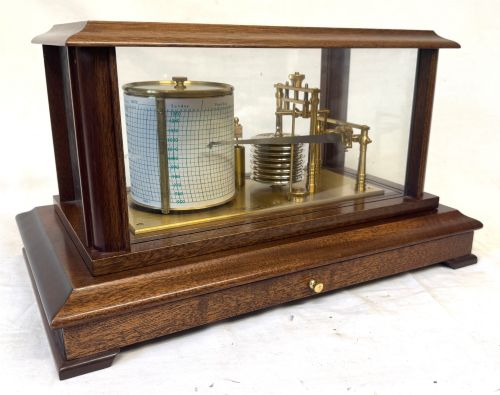
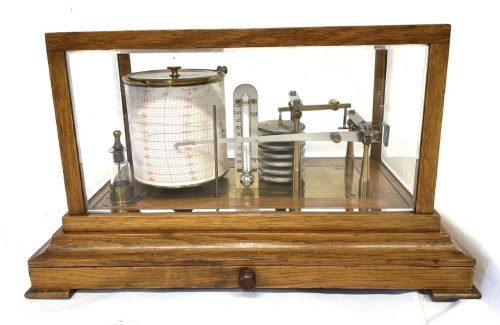
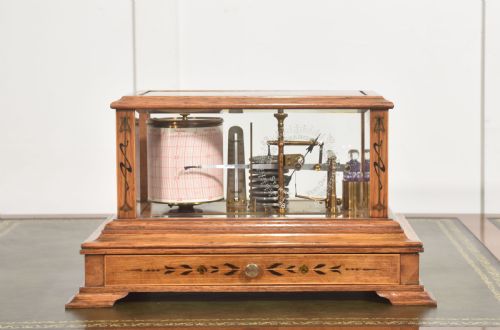
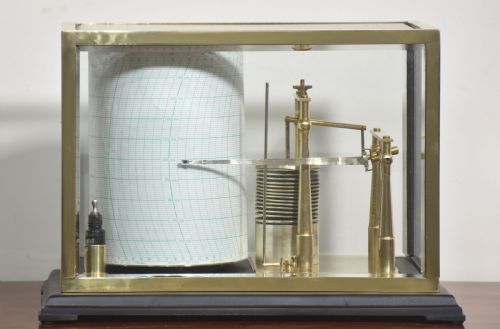
When you search for a glazed barograph case, you are looking at timber enclosures designed to house mechanical weather-recording instruments. These wooden housings feature glass panels that allow you to view the rotating drum and recording arm without exposing the delicate mechanism to dust or drafts.
The versions you are most likely to meet on this page date from the Victorian, Edwardian, and early twentieth-century periods. They appear in forms such as oak, mahogany, and walnut, frequently incorporating bevelled glass and lower chart drawers.
Some examples arrive as complete scientific instruments containing movements by makers such as Short & Mason, Casella London, Gluck, Depree and Young Ltd Exeter, and Richard Freres. Others are described simply as barographs or five-glass instruments from the Edwardian era.
How they were made
These cases were constructed using cabinet-making timbers like mahogany, oak, and walnut, shaped to house brass, steel, and glass components. Joinery was built to fit exact tolerances so that the glazed top and sides formed a protective enclosure around the recording mechanism and paper chart drum.
Makers incorporated brass handles, feet, and hinges alongside bevelled glass panes. Many designs included a base drawer lined to store spare recording charts and a thermometer mounted on the bed of the case.
Retail Price Guide 2026
Typical UK retail prices for glazed barograph case, calculated from the Sellingantiques database of over a million retail prices indexed since 2003. This retail price guide relies exclusively on Sellingantiques data; no external sources or auction records are used, so the figures do not describe the wider market.
Miniature barographs allow you to monitor atmospheric pressure on a tiny scale while keeping a delicate glass vitrine on your desk.
What varies in quality
The distinction between a standard enclosure and a finer piece lies in the choice of timber figure and the precision of the brass and glass work. Heavier mahogany and walnut housings with panelled frames and bevelled glass sit above simpler constructed boxes.
The presence of named maker signatures on the dial or movement elevates an instrument's standing. Integration of practical details like thermometer mountings and smoothly fitted chart drawers separates standard workshop production from finer scientific output.
Short & Mason·Casella London·Depree and Young Ltd·Richard Freres
The Glazed Barograph Case Glossary
- Barograph
- A recording barometer that traces atmospheric pressure onto a paper chart over a set period. It uses an aneroid mechanism connected to an inked arm.
- Aneroid
- Operating without liquid. An aneroid barograph measures air pressure through the expansion and contraction of sealed metal capsules.
- Bevelled glass
- Glass panes with angled, polished edges set into the top and sides of the wooden case. This technique adds depth and catches the light.
- Chart drawer
- A shallow compartment built into the base of the wooden housing. It stores replacement paper recording sheets and spare ink.
- Thermometer
- A temperature-measuring instrument mounted on the wooden bed of the barograph alongside the main pressure drum.
Frequently Asked Questions
What is a glazed barograph case?
A glazed barograph case is a wooden housing with glass panels built to protect a mechanical recording barometer. It keeps dust away from the delicate levers while letting you view the chart drum.
These enclosures date primarily from the Victorian and Edwardian eras, utilising timbers such as mahogany, oak, and walnut.
How do I change the chart?
You lift the glass cover or open the wooden housing to access the rotating brass drum. The paper chart wraps around this cylinder and secures with a small clip.
Spare charts are typically stored in the built-in drawer beneath the main mechanism. You also check the ink supply on the arm during this process.
Where should I place it?
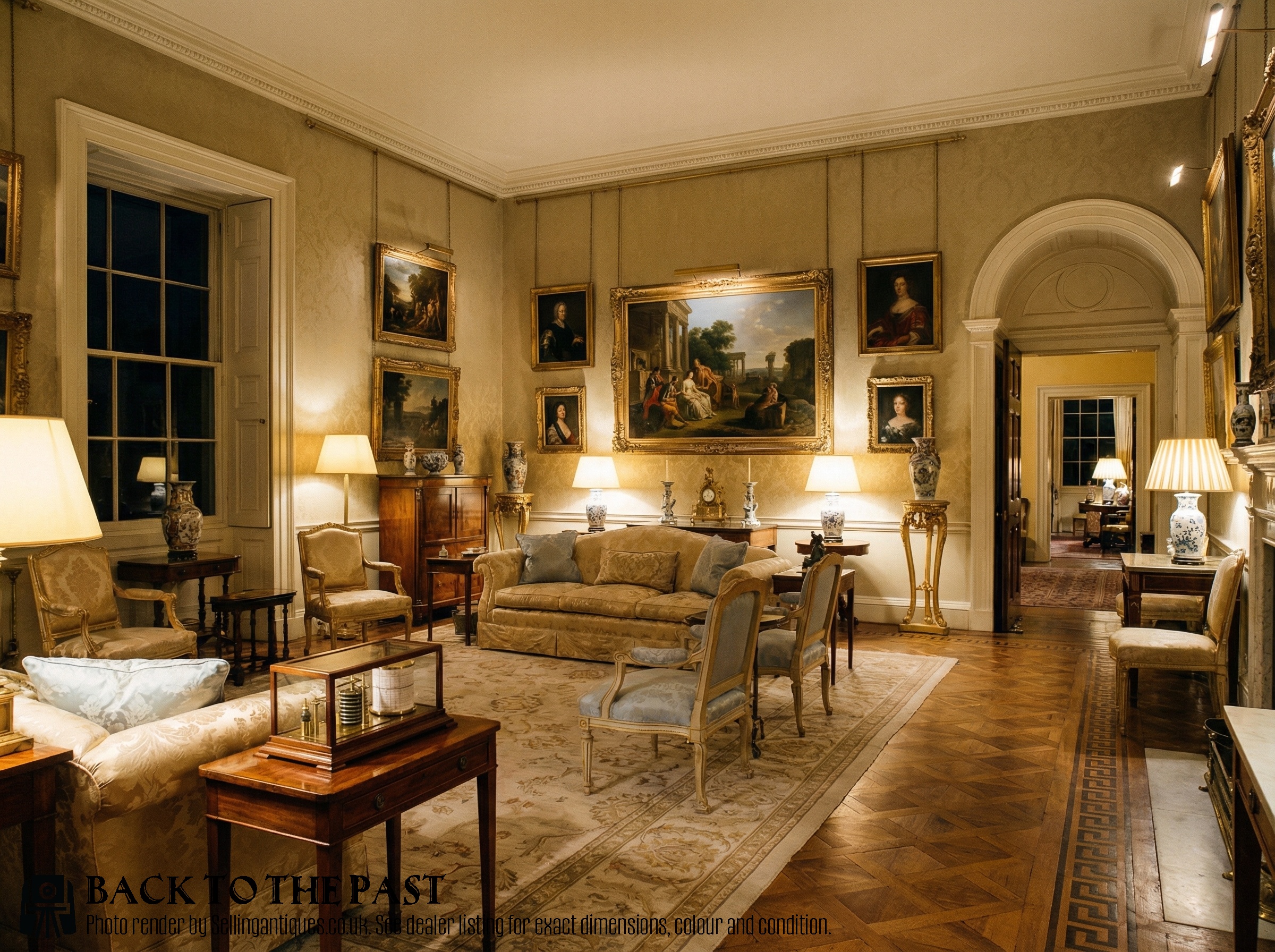
Position the instrument on a stable, level surface away from direct sunlight and heat sources. Temperature fluctuations can interfere with the barometric readings.
A sideboard or desk in a study or hallway allows you to view the daily pressure trace easily. Keep it away from high-traffic areas where vibrations might disturb the recording arm.
How do I date the case?
You examine the timber species, joinery style, and any maker signatures on the dial or movement. Edwardian examples often feature lighter mahogany or oak with bevelled glass panes.
Victorian versions tend toward heavier proportions and darker finishes. Maker inscriptions and patent details provide precise dates when present.