




Mahogany Barograph Case
A mahogany barograph case houses a recording weather instrument in rich timber and glass, offering a tangible link to Victorian and Edwardian domestic science.
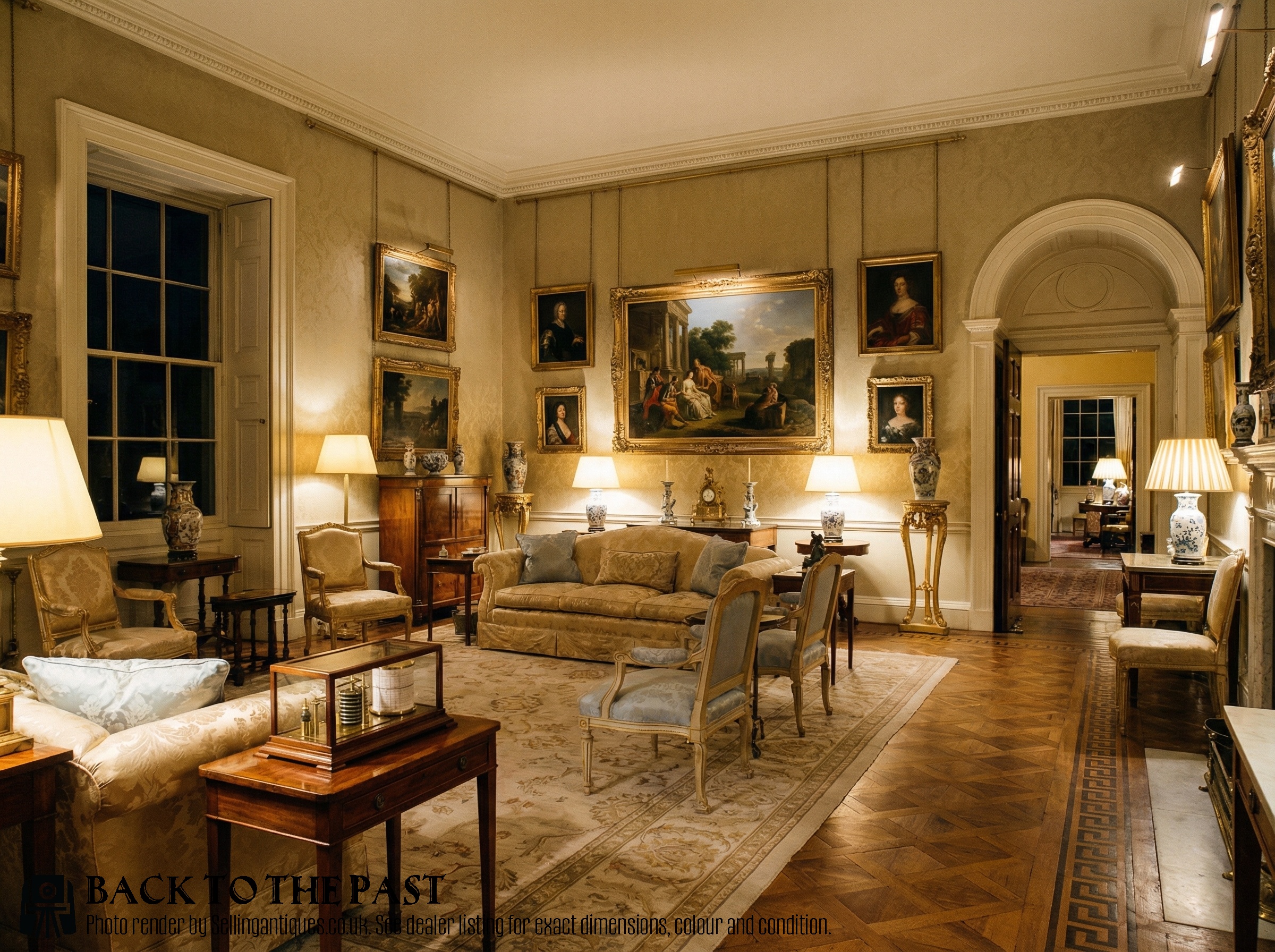
Mahogany Barograph Case
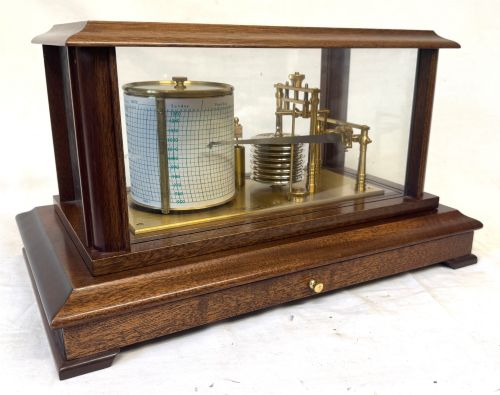
A mahogany barograph case protects the delicate mechanism that tracks atmospheric pressure over the course of a week. Most examples seen here date from the Victorian and Edwardian eras, through to the interwar period and the mid-twentieth century.
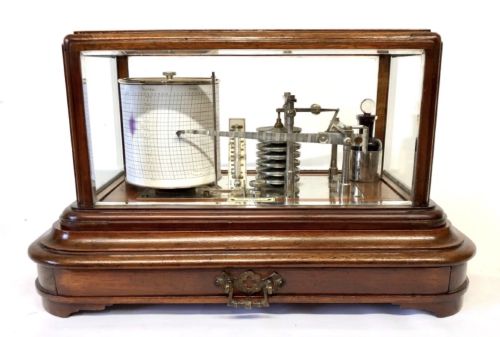
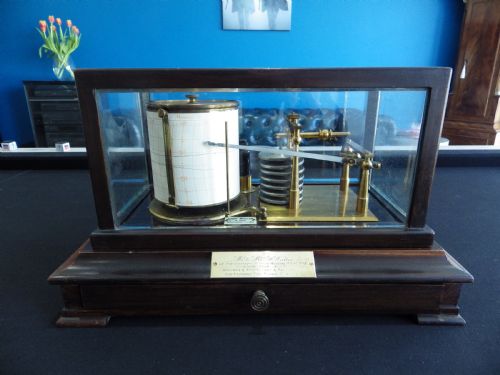
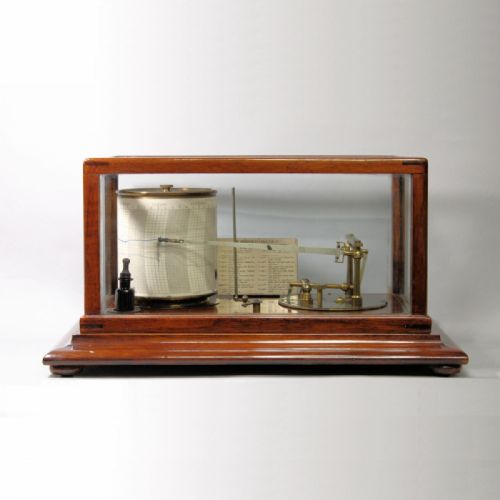
The standard form is a five-glass vitrine set atop a rectangular mahogany base containing a chart drawer. Some versions incorporate additional thermometers or aneroid barometer dials within the timber chassis.
Makers ranged from provincial retailers to renowned scientific instrument houses based in London, Paris and further afield.
Timber and Brass Construction
Makers fashioned these housings from solid or veneered mahogany, fitted with bevelled or plain glass panels to allow continuous observation of the rotating drum. Brass hinges, carrying handles and leveling feet provide structural contrast to the dark timber.
Internal mechanisms combine steel springs and brass levers linked to paper charts, while exterior surfaces often show careful french polishing.
Listings feature mahogany, brass, glass, steel, and paper across Victorian, Edwardian, and interwar periods.
Distinctions in Execution
Superior examples display crisp cabinetry work with precise mitred joints, finely figured timber grain and robust brass hardware that maintains smooth operation of the chart drawer. The quality of the signed movement and the clarity of the glass panes further set finer instruments apart.
Simpler or later pieces show utilitarian construction with plain timber boards and minimal decoration, serving purely functional recording purposes rather than display.
Negretti & Zambra·Short & Mason·Richard Freres·O Comitti & Son·Russell Norwich·Gaupp & Co·Casella London·Robson of Newcastle·R Fuess·Chadburns Ltd·Harrods of London·R Stewart
The Mahogany Barograph Case Glossary
- Barograph
- A self-recording barometer that graphs atmospheric pressure onto a revolving paper chart over seven days. This mechanical instrument translates subtle shifts in weather into inked lines.
- Chart Drawer
- A shallow compartment built into the wooden base specifically designed to hold spare weekly recording papers. It keeps consumable supplies neatly stored directly beneath the mechanism.
- Aneroid
- Operating without liquid, utilising a sealed metal vacuum box that expands or contracts with air pressure changes. This movement drives the recording arm across the rotating drum.
- Vanne
- A French term sometimes associated with precision movements, though the evidence here points primarily to English and French workshop origins. It relates to the delicate balance of the lever arms.
Mahogany Barograph Case: Frequently Asked Questions
What is a mahogany barograph case?
It is a wooden and glass enclosure built to protect a mechanical weather-recording instrument. The timber base usually contains a drawer for spare weekly charts.
These cases were designed for domestic display in libraries or halls, allowing gentlemen to monitor barometric trends at a glance.
How do I operate the instrument?
You place a specialised paper chart onto the rotating drum and ensure the pen rests lightly against the paper. A clockwork mechanism turns the drum once a week.
Regular maintenance involves winding the clockwork movement and occasionally replacing the ink in the recording nib.
How do I date these pieces?
Dating relies on the style of the mahogany cabinet, the complexity of the brass hardware, and the maker signature engraved on the bedplate. Edwardian and late Victorian examples predominate in the records.
Paperwork or retailer labels retained inside the chart drawer provide further chronological clues.
Where were these instruments made?
Makers and retailers operated across Britain, with significant production in London by firms like Short & Mason and Negretti & Zambra. Continental workshops such as Richard Freres in France also supplied the market.
Colonial retailers sometimes stamped their names on instruments destined for posts in Hong Kong or Singapore.