


Edwardian Brass Barograph
Edwardian brass barograph weather instruments combine precise meteorological recording with polished metal and timber cabinetry for the home.
Edwardian Brass Barograph
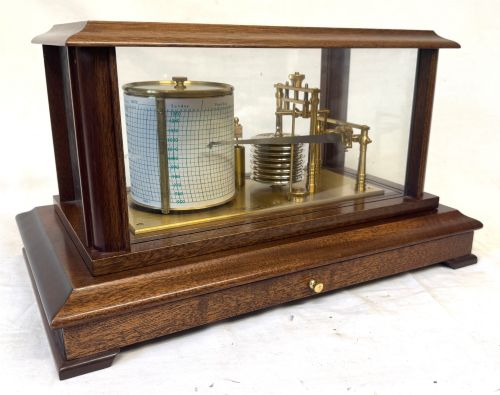
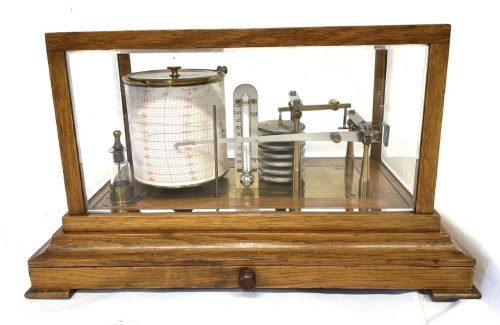
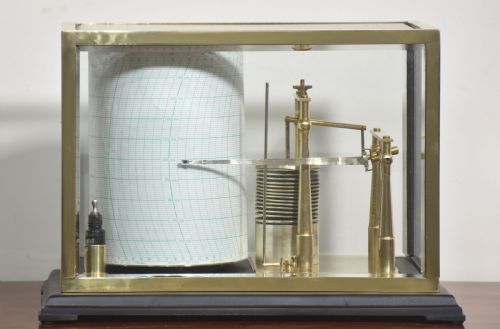
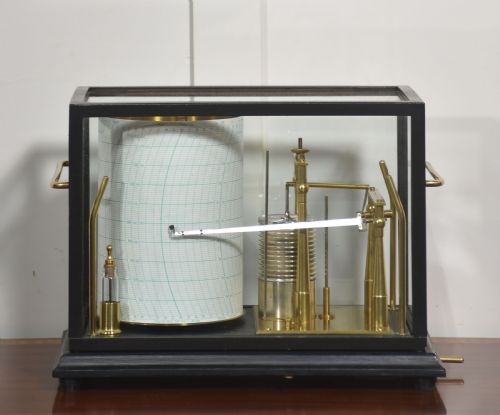
An Edwardian brass barograph is a mechanical weather-recording instrument housed beneath glass panels, designed to trace atmospheric pressure onto a revolving drum. These scientific instruments measure changes in barometric pressure using internal metal bellows connected to an inked pen arm.
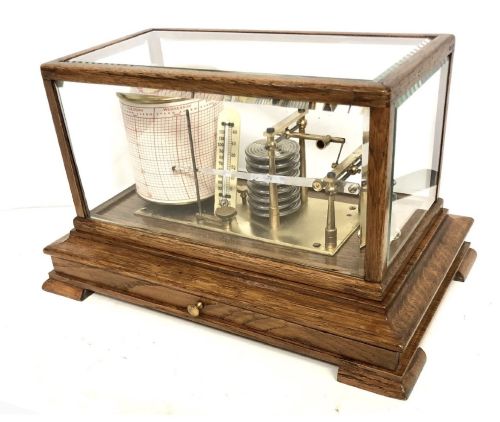
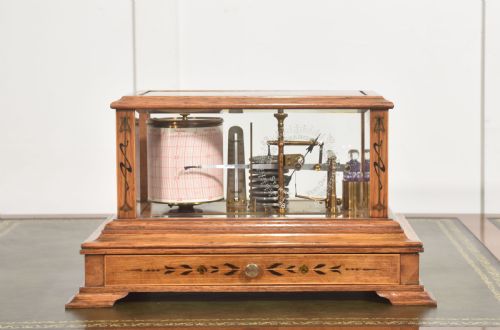
The versions met on this page span the Edwardian period alongside late Victorian and early twentieth-century examples, frequently incorporating wooden cases made from mahogany or oak. Many feature integrated thermometer dials, chart drawers, and bevelled glass panels that allow an unobstructed view of the mechanism in action.
Materials and construction methods
Makers constructed these instruments using polished brass and steel for the delicate recording mechanisms, mounted upon timber bases housed within glass-panelled cases. Mahogany and oak serve as the predominant woods for the cabinetry, sometimes augmented by walnut or decorative Art Nouveau inlay work.
The physical housing typically relies on five glass panes to protect the internal levers while keeping the recording drum and barometer dial fully visible. Paper charts printed with weekly pressure graduations were secured to the revolving drum, driven by an internal clockwork movement.
Keep your fingers away from the delicate inked arm unless you want a barometer reading tattooed directly onto your cuff.
Distinctions in quality and finish
Quality in these recording instruments rests upon the precision of the maker's signature movement and the clarity of the brass components. Signed pieces from established meteorological instrument makers display superior mechanical refinement in the gearing of the drum and the responsiveness of the metal aneroid stacks.
The standard of the surrounding timber case also distinguishes individual pieces, with heavier mouldings, selected wood grains, and fitted chart drawers elevating the cabinet work. The inclusion of bevelled glass panes and secondary weather instruments such as barometers or thermometers further separates standard models from finer examples.
Short and Mason·Negretti and Zambra·Casella London·Jules Richard·R Fuess
The Edwardian Brass Barograph Glossary
- Barograph
- A self-recording aneroid barometer that charts atmospheric pressure onto paper over a set period. This instrument uses stacked vacuum capsules to detect pressure shifts.
- Aneroid
- Operating without liquid. An aneroid mechanism relies on expanding and contracting metal chambers to register pressure changes.
- Bevelled glass
- Glass panes featuring an angled or polished edge around the perimeter. This treatment adds a decorative finish to the protective case.
- Chart drawer
- A small compartment built into the base of the wooden housing. It stores spare weekly recording papers and spare ink bottles.
Edwardian Brass Barograph: Frequently Asked Questions
How does an Edwardian barograph work?
An internal stack of sealed metal chambers expands or contracts as atmospheric pressure rises and falls. A system of connected levers transfers this physical movement to an arm holding an inked nib.
The nib traces a continuous line onto a paper chart fitted around a clockwork-driven drum that rotates once a week.
How are weekly charts replaced?
The glass top or side of the wooden case lifts or opens to grant access to the revolving brass drum. The old paper chart is removed and a fresh graduated sheet is secured around the cylinder.
At the same time, the clockwork mechanism is wound using a small key and the inked nib is adjusted to match the current barometric reading.
Where were barographs placed in homes?
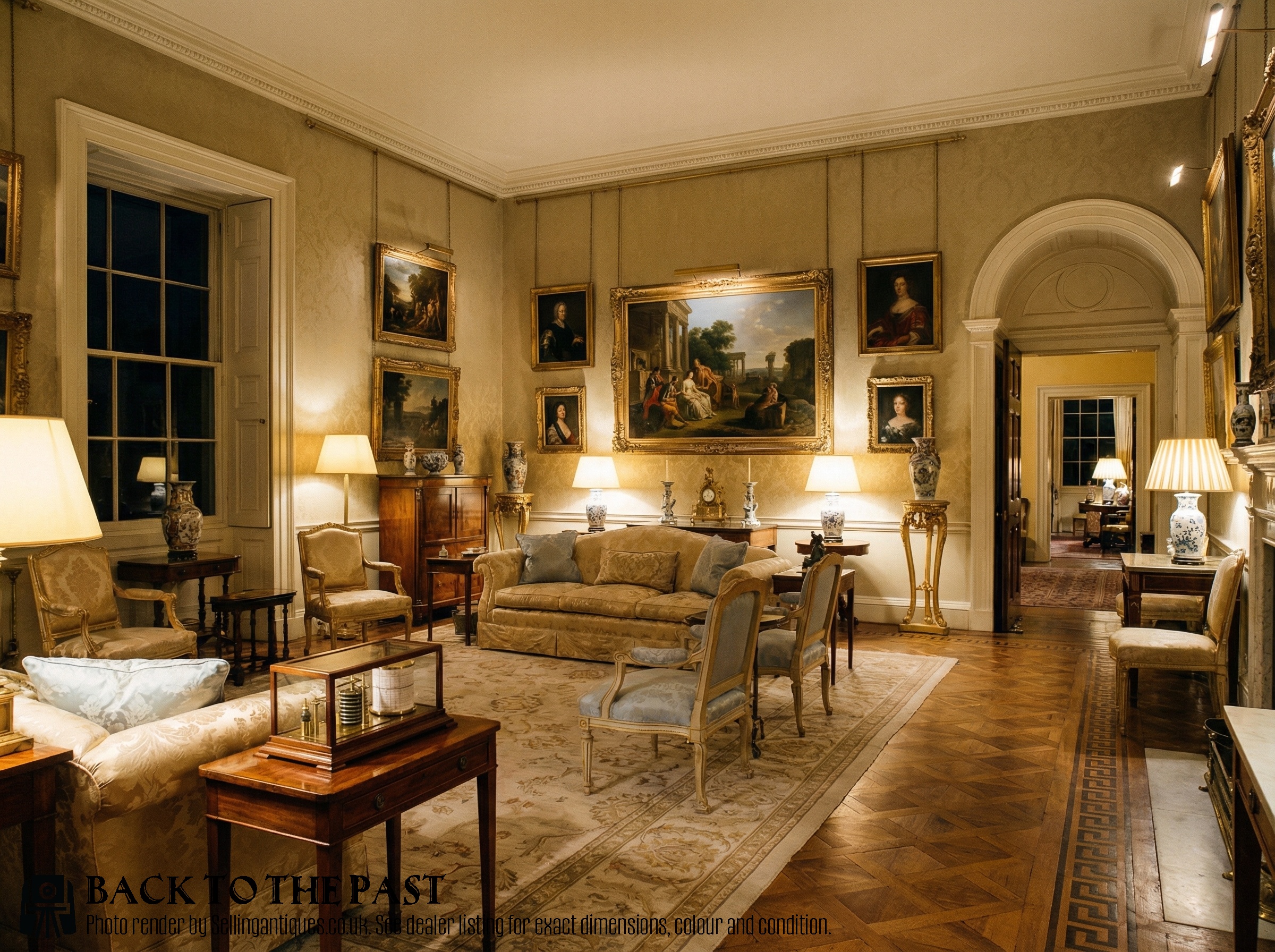
These instruments were traditionally kept in libraries, hallways, or studies where gentlemen could monitor impending weather shifts. Their polished brass and timber construction suited the formal interior decoration of the period.
The inclusion of a chart drawer kept recording supplies close at hand beneath the main instrument.
Did these instruments include other weather tools?
Many examples feature a thermometer mounted alongside the recording drum to display ambient room temperature. Some versions incorporate a separate aneroid barometer dial set into the wooden case front.
These combined instruments functioned as domestic weather stations for households before electronic forecasting existed.