



Desk Barometer Recorder
A desk barometer recorder measures and charts atmospheric pressure changes over time, offering both scientific utility and classic Victorian or Edwardian craftsmanship.
Desk Barometer Recorder
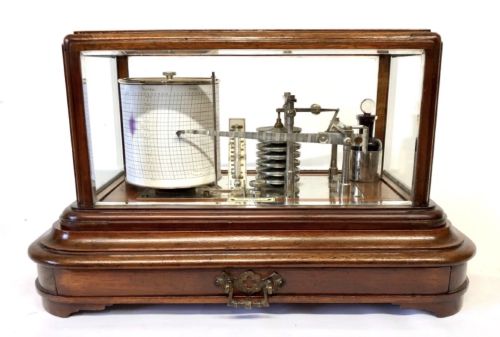
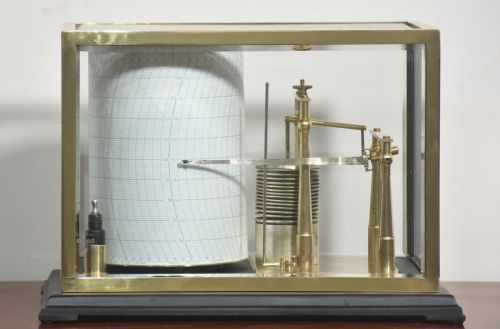
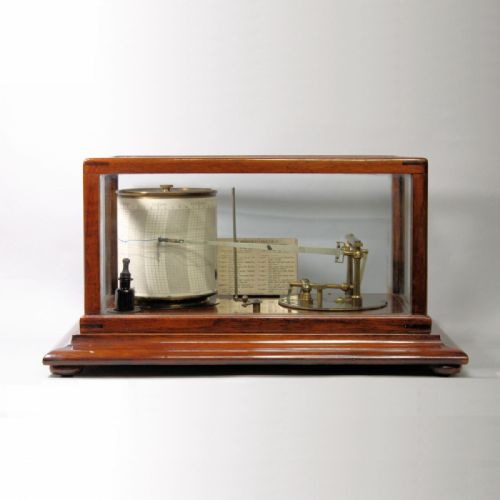
A desk barometer recorder, often called a barograph, is a mechanical instrument that automatically records barometric pressure onto a rotating chart. Buyers searching for a desk barometer recorder seek functional scientific apparatus housed in handsome timber cases.
The pieces on this page span the late Victorian, Edwardian, and 1910 periods, alongside 1900, 1920, and 1890 examples. Most variations take the form of barographs, barometers, and scientific instruments.
Origins include English workshops and makers operating as far afield as Hong Kong and Singapore. Mahogany, oak, and ebonised wood form the primary cabinet housings, often protected by bevelled glass panels.
How they were made
Maker workshops built these instruments using brass, steel, and glass housed within fitted timber boxes of mahogany or oak. Paper charts receive continuous ink tracings driven by clockwork mechanisms.
Cabinets feature glazed five-glass viewing cases, inlaid woodwork, and lower storage drawers designed to hold spare recording papers. Metal components combine lacquered brass frames with sensitive aneroid barometer stacks.
Desk Barometer Recorder Retail Price Guide 2026
Typical asking prices for desk barometer recorder among the pieces listed under this phrase on Sellingantiques today, from the lower quarter to the upper quarter. They describe what is for sale here now, not the wider market.
Some models include a tipping bucket mechanism to catch the rain while you check the barometric pressure inside.
What varies in quality
Quality rests upon the refinement of the movement and the integrity of the cabinet work. Finely made examples display crisp maker signatures, substantial brass castings, and polished mahogany or oak joinery.
Gaupp & Co Hongkong & Singapore·Short & Mason·R Fuess·Callaghan & Co of London
The Desk Barometer Recorder Glossary
- Barograph
- A self-recording aneroid barometer that traces pressure fluctuations onto a paper chart. This mechanical device runs on a clockwork drum.
- Aneroid barometer
- An instrument measuring atmospheric pressure without liquid, using expanding and contracting metal chambers. These sensitive capsules drive the recording arm.
- Five-glass case
- A wooden cabinet featuring a top panel and four vertical glass sides to display the internal mechanism. This design allows clear observation of the moving parts.
- Tipping bucket
- A mechanism used in recording rain gauges to measure precipitation by rocking back and forth when filled. It records rainfall incrementally over time.
Desk Barometer Recorder: Frequently Asked Questions
How does a barograph work?
A barograph uses stacked metal bellows that expand or contract with changing air pressure. Connected levers transfer this movement to an inked arm resting on a revolving paper cylinder.
The rotating drum completes one full rotation over seven days, creating a continuous line graph of weather patterns. Clockwork mechanisms inside the drum power this steady rotation.
Where should I place a desk barometer recorder?
Position the instrument on a stable, level surface away from direct sunlight, radiators, and drafts. These environmental factors can interfere with the sensitive internal metal bellows.
Studies, libraries, and hallways provide suitable indoor climates where the mechanical action remains undisturbed. Avoid damp rooms to protect the brass and paper components from moisture.
How do I change the chart paper?
Lift the inked nib away from the drum using the small lever provided on the recording arm. Carefully lift the metal drum or unscrew the securing clip to slide off the used paper.
Wrap a fresh weekly chart around the cylinder, ensuring the overlapping edge aligns correctly. Reapply a small drop of specialised ink to the nib before lowering it gently back onto the paper.
How do I date an antique barograph?
Examine the style of the wood case, brass fittings, and any engraved maker plaques on the bedplate. Edwardian and Victorian specimens often display distinctive cabinet mouldings and retailer signatures.
Patent dates printed on the paper charts or stamped onto the brass movement provide a reliable baseline for manufacturing eras. Specific regional retailers can also help narrow down the operational window of the workshop.