


Victorian Brass Barograph
A Victorian brass barograph records air pressure on paper, combining precision mechanics with handsome cabinetry for any room.
Victorian Brass Barograph
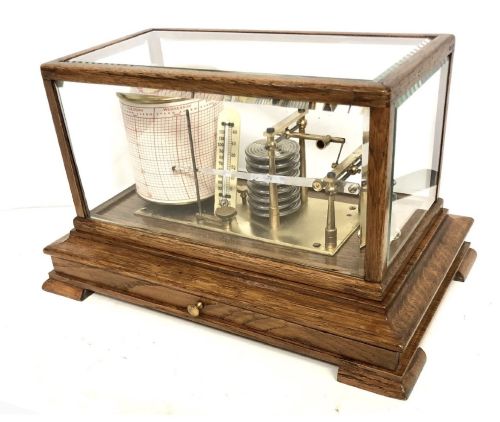
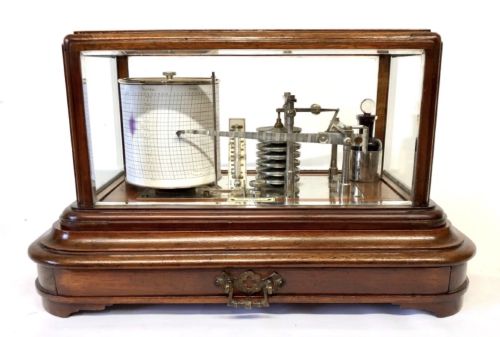
A Victorian brass barograph records continuous atmospheric pressure onto a rotating paper chart using a stack of metal vacuum chambers linked to an inking arm. You will most frequently encounter mahogany or oak cases enclosing the brass mechanism beneath bevelled glass panels.
Most examples hail from the nineteenth century or the Edwardian era, often incorporating a thermometer alongside the main recording drum. These scientific instruments served a practical domestic purpose in recording weather trends before digital forecasting existed.
Materials and construction
The delicate barometer mechanisms utilise polished brass and steel components housed within heavy timber cases of mahogany, oak, or walnut. Bevelled glass panels protect the moving parts from dust while allowing a clear view of the recording drum and inking arm.
Cabinet makers constructed fitted drawers beneath the main chamber to store spare paper charts, while instrument makers engraved their signatures onto the brass bedplates. Wall-mounted French variants also appear, demonstrating alternative space-saving designs.
Listings feature mahogany, oak, and walnut timber cases housing brass mechanisms, spanning the Victorian period through to the 1920s.
Judging quality and craftsmanship
Quality rests in the crispness of the maker's signature engraving upon the brass bedplate and the robustness of the timber case construction. Well-proportioned cabinetry with tight dovetail joints and original bevelled glass panes elevates an instrument.
Makers such as Negretti and Zambra or Short and Mason achieved superior mechanical precision in their linkages and temperature compensation. The presence of secondary instruments like a built-in thermometer or barometer dial also influences desirability.
Negretti and Zambra·Short and Mason·Gaupp and Co·Robson of Newcastle·Richard Freres·Antoine Redier
The Victorian Brass Barograph Glossary
- Aneroid capsule
- A sealed corrugated metal vacuum chamber that expands and contracts with changing atmospheric pressure. This movement drives the recording arm across the paper chart.
- Bevelled glass
- Glass panes with angled edges set into the brass framework of the case. This technique adds structural strength and catches the light.
- Chart drawer
- A small compartment built into the base of the wooden housing to hold spare recording sheets. It keeps the paper flat and close at hand.
- Bedplate
- The flat metal platform that anchors the barometer mechanism and levers. Makers often engraved their company names and serial numbers here.
Victorian Brass Barograph: Frequently Asked Questions
How do I change the paper chart?
Lift the hinged glass lid and release the small lever that lifts the inking arm away from the drum. You can then slide the old paper chart off the rotating cylinder and secure a fresh one in its place.
Take care not to bend the delicate metal arm when resetting it against the paper. A tiny drop of specialised oil on the drum spindle keeps the clockwork turning smoothly.
Where should I place a barograph at home?
Position the instrument on a sturdy, level surface away from direct sunlight, radiators, and heavy foot traffic. Sudden temperature swings or vibrations will interfere with the accuracy of the recording arm.
Studies, libraries, and hallways provide ideal stable environments where the timber case and brasswork can be safely appreciated. Ensure the location allows easy access for winding the internal clockwork drum.
How do I wind the clockwork mechanism?
Most recording drums contain a spring-driven clock movement that requires winding every week or month depending on the design. Use the small key provided to wind the barrel inside the rotating drum with gentle, steady turns.
Avoid over-winding the spring, as this can damage the internal gears. If the drum fails to rotate, the escapement may require professional cleaning by a horologist.
How do I tell Victorian barographs from later ones?
Victorian examples frequently feature substantial mahogany or walnut cabinetry with hand-engraved brass maker plates and robust mechanical linkages. Edwardian and later nineteenth-century pieces often adopt lighter oak cases or simpler industrial layouts.
Examining the typeface on the maker's signature and the thickness of the brass components helps confirm the production period. Consulting the paper charts and interior hardware reveals further clues about the manufacturing decade.