



Brass Barometer with Drawer
These brass barometer with drawer instruments combine meteorological recording with fitted cabinetry, offering both functional scientific utility and period charm.
Brass Barometer with Drawer
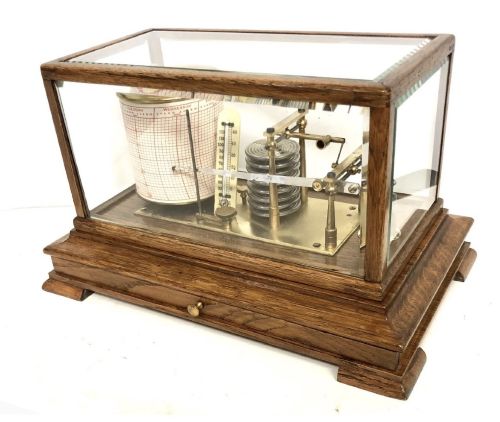
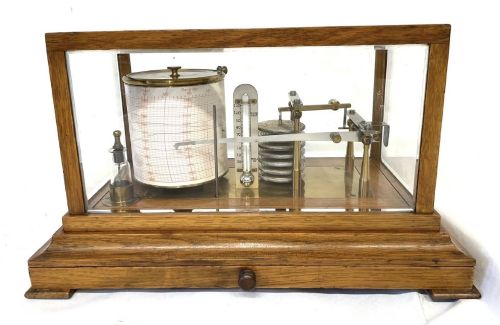
A brass barometer with drawer typically takes the form of a barograph housed in a wooden case fitted with a lower storage compartment for recording charts. These scientific instruments appear across Victorian, Edwardian, and later twentieth-century periods, recording atmospheric pressure onto paper drums.
The most frequent examples on this page are oak or mahogany cased barographs featuring bevelled glass panels and integrated chart drawers. Makers such as Short & Mason, Casella London, Baines Harrogate, and Negretti & Zambra are represented among these scientific pieces.
Forms range from simple five-glass cases to more elaborate designs incorporating thermometers and combined barometer dials. The presence of the chart drawer defines this particular group of recording barometers.
How they were made
Cases utilise solid oak and mahogany, constructed to house sensitive mechanical movements beneath bevelled glass windows. Metal components include brass for the internal linkages and dials, alongside steel and paper for the recording mechanisms and charts.
Cabinet makers built these enclosures with hinged lids and fitted base drawers specifically dimensioned to hold weekly recording charts. Glazing techniques employ multiple glass panes to allow clear viewing of the recording drum and arms from various angles.
Brass Barometer with Drawer Retail Price Guide 2026
Typical asking prices for brass barometer with drawer among the pieces listed under this phrase on Sellingantiques today, from the lower quarter to the upper quarter. They describe what is for sale here now, not the wider market.
Listings feature oak and mahogany woods combined with brass, glass, and paper components across Edwardian and Victorian periods.
What varies in quality
Quality differences emerge in the precision of the casework, particularly the timber selection and the clarity of the bevelled glass panes. Cases constructed from figured mahogany or well-selected oak represent the finer end of production.
The distinction between standard commercial instruments and superior pieces often rests on the movement maker and the inclusion of supplementary instruments like thermometers or combined barometer dials. Signed movements by established makers indicate higher manufacturing standards.
SHORT AND MASON LONDON·CASELLA LONDON·BAINES HARROGATE·NEGRETTI AND ZAMBRA
The Brass Barometer with Drawer Glossary
- Barograph
- A recording barometer that produces a continuous trace of atmospheric pressure on a paper chart. This mechanical instrument uses an aneroid cell stack linked to an inked arm.
- Chart drawer
- A shallow base compartment integrated into the instrument case to store spare recording papers. This feature keeps weekly charts close at hand for the operator.
- Aneroid
- Operating without liquid, utilising expanding metal chambers to measure pressure changes. These vacuum chambers drive the recording arm inside the instrument case.
- Bevelled glass
- Glass panes with angled edges fitted into the wooden enclosure. This detail enhances the appearance of the viewing windows.
- Thermometer
- A temperature measuring device mounted alongside the main pressure recording mechanism. Some instruments include this dual capability within the single oak or mahogany case.
Brass Barometer with Drawer: Frequently Asked Questions
What is a brass barometer with drawer?
A brass barometer with drawer is typically an aneroid barograph housed in an oak or mahogany cabinet with a built-in compartment for paper charts.
These scientific instruments record atmospheric pressure over time using an inked arm moving across a rotating drum.
How do you use a barograph?
The instrument operates autonomously by recording weekly barometric fluctuations onto specialised paper charts held on the rotating drum.
Operators store fresh supplies of these recording papers directly in the fitted chart drawer beneath the main movement.
How do I date an oak cased barograph?
Dating relies on cabinet styles, timber choices, and maker signatures found on the paper scales or brass beds. Victorian examples often feature heavier mahogany framing, while Edwardian and later pieces frequently utilise light oak or five-glass configurations.
Makers active during these periods stamped their details onto the metal components or supplied branded charts.
Where should I place my barograph?
Position the instrument on a stable, level surface away from direct heat sources and drafts to ensure accurate pressure readings.
Keep the cabinet in a steady environment where the bevelled glass panels allow clear observation of the recording arms.