


Vintage Aneroid Barograph
A vintage aneroid barograph records atmospheric pressure onto paper charts, offering a mechanical window into the changing weather.
Vintage Aneroid Barograph
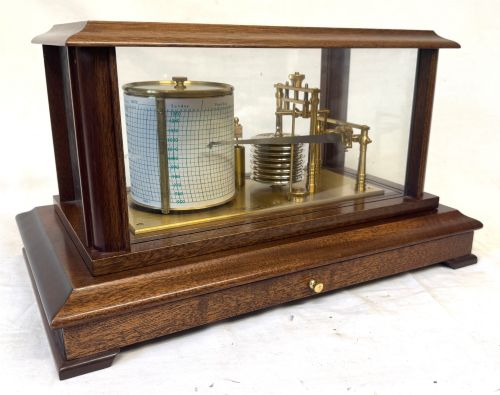
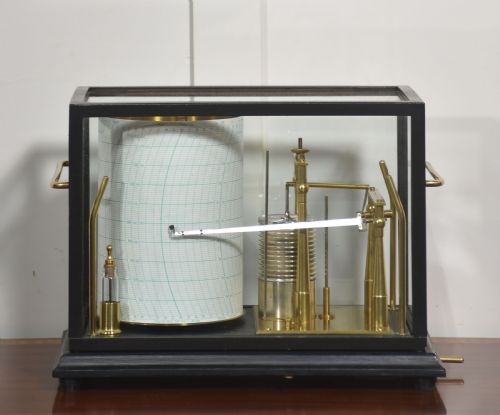
A vintage aneroid barograph stands as a mechanical weather station that charts atmospheric pressure over a span of a week. These scientific instruments combine utility with timber and glass casework designed to sit upon a desk or hang upon a wall.
The selections encountered here range across the Victorian, Edwardian, and interwar periods up to the mid-twentieth century. Most examples present a rotating drum driven by clockwork alongside a series of stacked metal vacuum capsules that move a pen across paper charts.
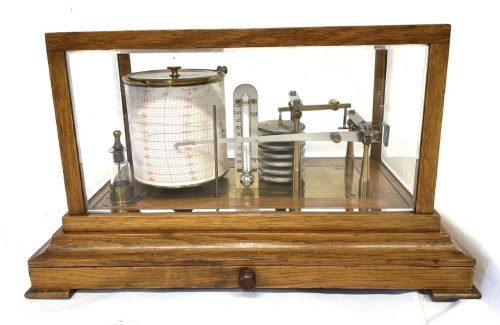
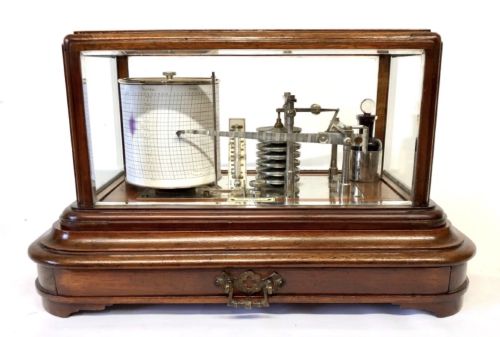
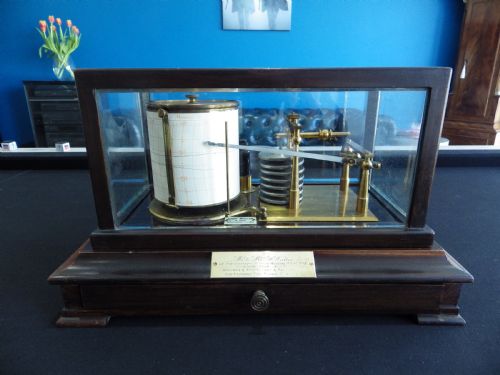
Makers housed these mechanisms within enclosures built from mahogany, oak, or walnut, frequently incorporating bevelled glass panes and small drawers intended for storing unused paper charts. Some specimens integrate secondary instrumentation such as a thermometer directly into the timber base.
Materials and Construction
Craftsmen built the structural housings of these barographs using dense hardwoods such as mahogany, oak, and walnut, often joining the timber with neat mitres and polishing the exterior to a rich sheen. Brass and steel form the internal movement, wheels, and levers, while heavy glass panels protect the delicate linkages from dust and draughts.
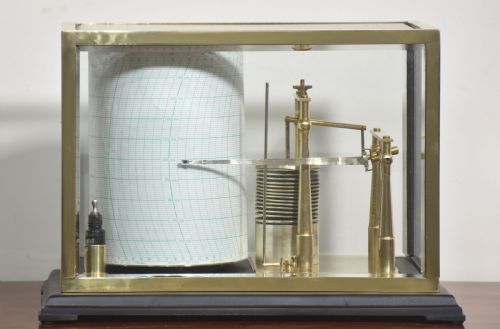
The recording mechanism relies upon aneroid vacuum capsules connected to a pivoted arm holding an ink pen. A spring-driven clockwork cylinder rotates beneath the pen tip at a steady pace, leaving a continuous ink trace across a graduated paper chart.
Listings feature timber cases constructed from mahogany, oak, and walnut, paired with brass and steel mechanisms under glass.
Evaluating Quality and Finish
Quality in these scientific pieces rests upon the crispness of the brass mechanism and the choice of timber for the case. Heavier gauge brasswork, finely engraved scales, and substantial mahogany or walnut housings separate standard commercial output from workshop pieces produced by renowned instrument makers.
Finer examples often feature five glass panels providing unobstructed views of the movement, integrated chart drawers with flush brass handles, and supplementary thermometers mounted alongside the primary drum. The clarity of the maker signature engraved upon the brass bedplate further distinguishes the better pieces.
Short And Mason·Negretti And Zambra·Richard Freres·Jules Richard
The Vintage Aneroid Barograph Glossary
- Aneroid barograph
- An instrument that measures atmospheric pressure without liquid, using expanding metal capsules to drive an inked pen across a rotating paper drum. These devices provide a continuous visual record of meteorological trends.
- Bevelled glass
- Glass panes possessing angled edges that catch the light, commonly fitted into the timber lids and sides of superior instrument cases. This detail enhances the display qualities of the wooden housing.
- Chart drawer
- A small compartment integrated beneath the main platform of the instrument to store spare weekly recording papers. This feature keeps the consumables neat and close to hand.
- Clockwork drum
- A brass cylinder containing a spring-driven movement that rotates once every seven days. The paper chart wraps around this drum to receive the ink trace.
- Vacuum capsules
- Sealed corrugated metal chambers that contract or expand as atmospheric pressure rises and falls. They form the primary sensing element of the aneroid mechanism.
Vintage Aneroid Barograph: Frequently Asked Questions
How does a barograph record the weather?
Inside the instrument, stacked metal vacuum capsules expand or contract as air pressure shifts. These movements transfer through a series of brass levers to an arm holding an ink pen.
The pen rests against a paper chart secured around a clockwork drum. As the drum turns slowly over the course of seven days, the pen leaves a continuous ink line charting the atmospheric fluctuations.
Can I still buy paper charts for them?
Yes, replacement weekly charts remain available through specialist meteorological suppliers and collectors' associations. They are printed to match the standard drum rotations used by historical makers.
When setting up the instrument, you simply wrap a fresh chart around the brass cylinder, secure it with the metal clip, and fill the small nib with recording ink.
Where should I place a barograph at home?
These instruments require a stable surface away from direct sunlight, central heating vents, and damp areas. Sudden temperature swings or vibrations can interfere with the delicate clockwork and expansion capsules.
A quiet sideboard, study desk, or low bookshelf provides an ideal spot where the movement can operate without disturbance and the weekly trace remains easy to inspect.
How do I distinguish Victorian from Edwardian models?
Victorian examples frequently display rich, dark mahogany or walnut woodwork with robust brass fittings and heavy bevelled glass panels. The maker signatures on these are often intricately engraved directly onto the brass bedplate.
Edwardian and later pieces sometimes lean towards simpler oak housings or utilitarian designs intended for offices, railways, and scientific institutions, occasionally omitting decorative mouldings in favour of plain function.