


Antique Chart Barometer
An antique chart barometer, commonly known as a barograph, records atmospheric pressure continuously onto paper charts for domestic and scientific observation.
Antique Chart Barometer
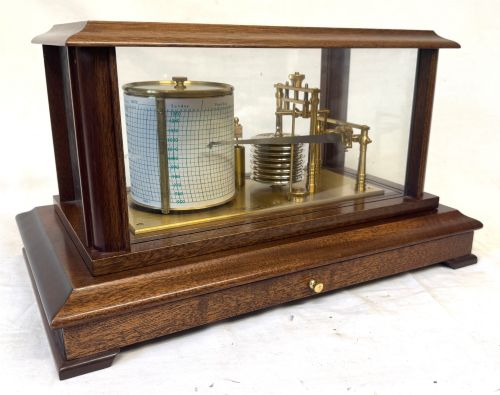
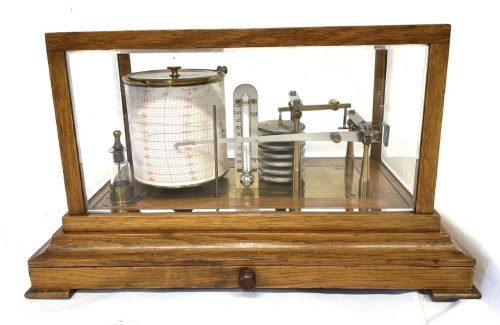
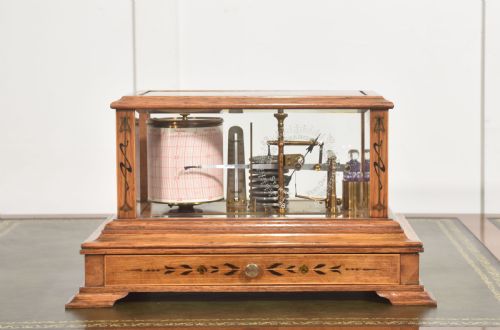
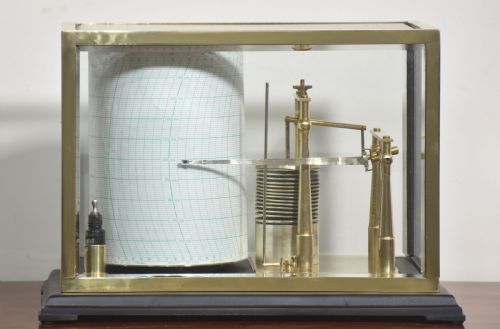
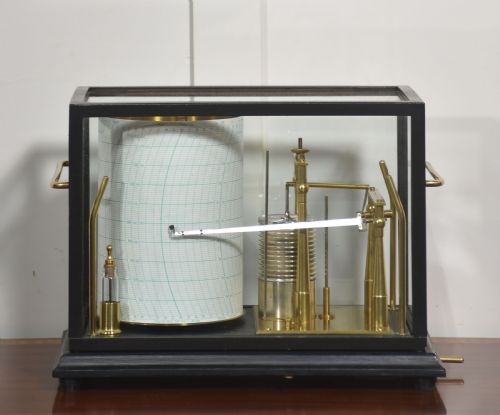
An antique chart barometer is an instrument designed to record continuous changes in atmospheric pressure onto a rotating drum fitted with paper. These domestic and scientific devices capture weather patterns over weekly cycles, displaying pressure variations through a linked mechanical arm.
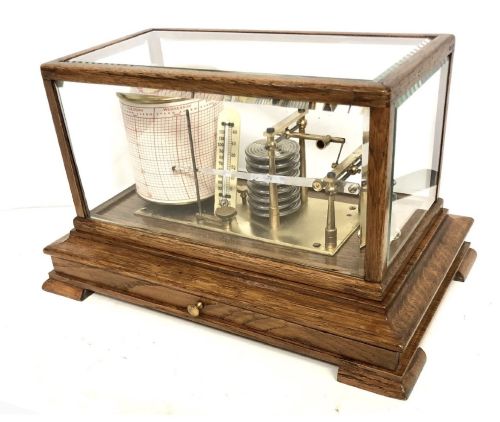
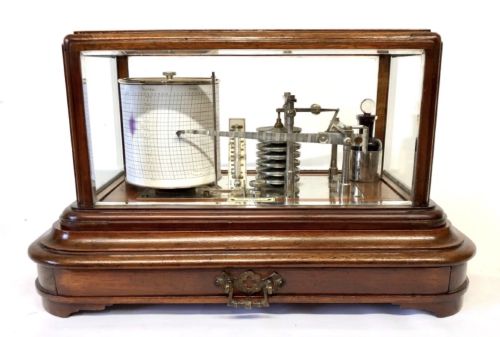
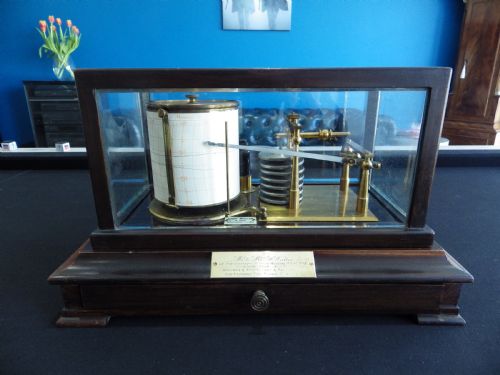
Most examples found here date from the Victorian, Edwardian, and interwar periods, running from the late nineteenth century through to the middle decades of the twentieth. Oak and mahogany dominate the timber cases, typically constructed with five glass panels to protect the delicate mechanism while allowing clear visibility.
Many cabinets incorporate a chart drawer in the base to store spare recording sheets and ink bottles, occasionally accompanied by an attached thermometer. Makers housed these mechanisms in everything from utilitarian scientific boxes to decorative polished hardwood cases suited for a library or hallway.
Materials and construction
Instrument makers housed the recording movements in solid timber cases of oak and mahogany, joined with precision and fitted with bevelled glass panels. Brass and steel components form the internal barometer stacks, levers, and clockwork drums that drive the recording arm.
The recording mechanism relies on evacuated metal chambers that expand and contract with shifts in atmospheric pressure, translating tiny movements through delicate brass linkages. Paper charts printed with grid lines wrap around the clockwork drum, receiving an inked trace from the nib.
Some Victorian barographs recorded railway pressure drops and Southend holiday weather on the exact same roll of paper.
Factors of quality and distinction
Quality rests in the precision of the clockwork movement and the reputation of the firm that retailed or manufactured the instrument. Houses such as Short and Mason or Negretti and Zambra employed superior finishing on brass components and more robust gear trains.
Russell Norwich·Gaupp and Co·Hezzanith·Short and Mason·Negretti and Zambra·Casella London·R Fuess·Harrods of London·Robson of Newcastle·Jules Richard·Dobbie Son and Hutton·Richard Freres
The Antique Chart Barometer Glossary
- Barograph
- A self-recording aneroid barometer that charts atmospheric pressure over time onto a rotating drum. This mechanical instrument removes the need for manual readings.
- Aneroid
- Operating without liquid, utilising flexible metal bellows to measure air pressure. This invention allowed barometers and barographs to become portable and compact.
- Chart drawer
- A small storage compartment built beneath the main instrument housing. It holds spare recording papers, ink, and occasionally winding keys.
- Beveled glass
- Glass panes with edges cut and polished at an angle. This traditional glazing adds depth and refinement to the five-glass instrument case.
Antique Chart Barometer: Frequently Asked Questions
How does a barograph work?
A stack of sealed metal vacuum chambers expands and contracts as atmospheric pressure rises and falls. These tiny physical movements travel through a series of multiplying levers to move an inked nib across a rotating paper chart.
The rotating drum contains a clockwork movement that turns the cylinder once every seven days. This continuous mechanical action creates a permanent visual record of local weather trends over the course of a week.
How do I change the chart paper?
You lift the hinged brass arm gently away from the drum to prevent damaging the delicate nib. The paper cylinder lifts out or the clip releases, allowing you to slide off the old chart and secure a fresh one aligned with the correct day and time.
After securing the new paper, you refill the tiny nib with specialised recording ink if necessary. Lower the arm back onto the paper carefully and wind the clockwork drum using its attached key.
Where should I place a barograph at home?
Position the instrument on a sturdy, level surface away from direct sunlight, radiators, and heavy vibrations. Hallways or studies provide stable environments where temperature fluctuations remain minimal.
Because these devices rely on sensitive mechanical linkages, placing them on unstable furniture or in damp rooms can affect the accuracy of the pressure trace.
How do I date an antique barograph?
Stylistic clues in the woodwork, such as Edwardian inlay or heavy Victorian mouldings, offer initial chronological markers. Many makers stamped their company names, serial numbers, or patent details directly onto the brass bedplate or the paper scales.
The style of the lettering, the design of the thermometer mount, and accompanying paper documentation often narrow down the decade of manufacture.