


Antique Oak Barograph
An antique oak barograph records atmospheric pressure with mechanical precision housed in timber and glass.
Antique Oak Barograph
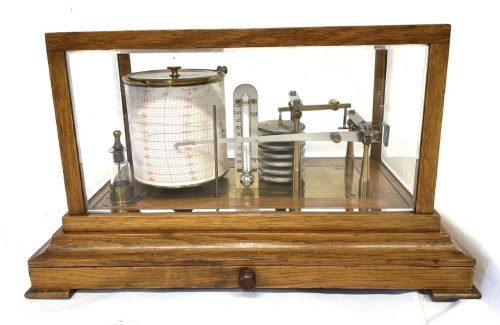
An antique oak barograph is a scientific instrument designed to continuously record atmospheric pressure onto a paper chart over the course of a week. These weather instruments combine functional engineering with domestic cabinet-making, typically taking the form of a polished timber case fitted with multiple glass panels.
The versions met on this page span from the Victorian period through the Edwardian era into the 1930s and 1940s. Most examples feature solid or veneered oak housings, often equipped with a built-in drawer beneath the mechanism for storing unused recording charts.
Makers such as Short & Mason and Negretti & Zambra dominate the records, alongside retail signatures like Baines Harrogate. Alongside pure barographs, the selection includes related weather instruments that incorporate thermometers and supplementary barometer dials.
How they were made
The construction of these instruments relies on the combination of dense cabinet timbers and delicate internal metalwork. Oak cases are joined with traditional methods, housing mechanical movements built from brass, steel, and other metals.
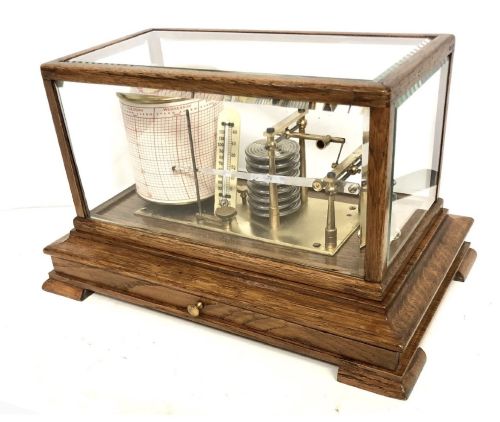
Visibility of the recording drum and linkage arms is achieved through bevelled glass panes fitted into the top and sides of the wooden frame. Paper charts are mounted onto rotating drums driven by internal clockwork mechanisms.
Listings span from the 19th Century through the Edwardian period to the 1940s, predominantly utilising oak, brass, and bevelled glass.
What varies in quality
Quality in these scientific instruments rests upon the precision of the maker's signature and the refinement of the case construction. Signed works by established makers command attention for their superior mechanical execution and durability.
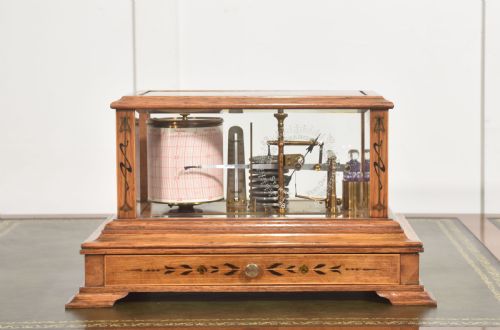
Cabinet detail distinguishes the range, such as the inclusion of bevelled glass panels, decorative inlay work, and integrated chart drawers. The clarity of the timber grain and the integrity of the brass linkages further separate standard production from finer examples.
Hezzanith·Short & Mason·Negretti & Zambra·Dobbie son and Hutton London·Jules Richard·James Lucking·Armstrong of Manchester
The Antique Oak Barograph Glossary
- Barograph
- A self-recording barometer that traces atmospheric pressure onto a paper chart. It uses an aneroid mechanism connected to an inked nib.
- Aneroid
- Operating without liquid. Aneroid barometers and barographs measure pressure using flexible metal bellows.
- Bevelled glass
- Glass panes with edged, angled borders fitted into the case top and sides. This detail enhances light entry and visual clarity.
- Chart drawer
- A small storage compartment built into the base of the wooden case. It holds spare weekly recording papers and spare ink.
Antique Oak Barograph: Frequently Asked Questions
How do you operate a barograph?
Operation requires winding the internal clockwork drum and securing a fresh paper chart around its circumference. The arm is then gently lowered so the inked nib rests against the paper to trace pressure changes.
Regular maintenance involves supplying fresh ink to the nib and checking the calibration against a standard barometer.
What is the chart drawer used for?
The integrated drawer beneath the instrument mechanism stores weekly paper recording charts and spare bottles of ink. Keeping supplies within the housing ensures they remain close at hand for weekly maintenance.
This compartment is a standard feature of many cased models from the Edwardian period onward.
How do you date an oak barograph?
Dating relies on stylistic clues in the oak case work, such as Art Nouveau inlay or Edwardian proportions, alongside maker signatures. Surviving trade labels and engraved maker plates on the brass bedplate offer precise manufacturing decades.
Materials also provide context, with late Victorian examples showing distinct cabinet forms compared to 1930s British designs.
Where should a barograph be placed?
These instruments sit best on a stable, level surface away from direct heat sources and vibrations that might disrupt the recording arm. Placed on a desk or shelf, the bevelled glass allows clear viewing of the rotating drum.
Because they record ambient atmospheric pressure, any dry interior room with stable temperatures suits their housing.