


Vintage Weather Station
A vintage weather station measures atmospheric pressure and temperature with brass dials and wooden cases.
What a vintage weather station is
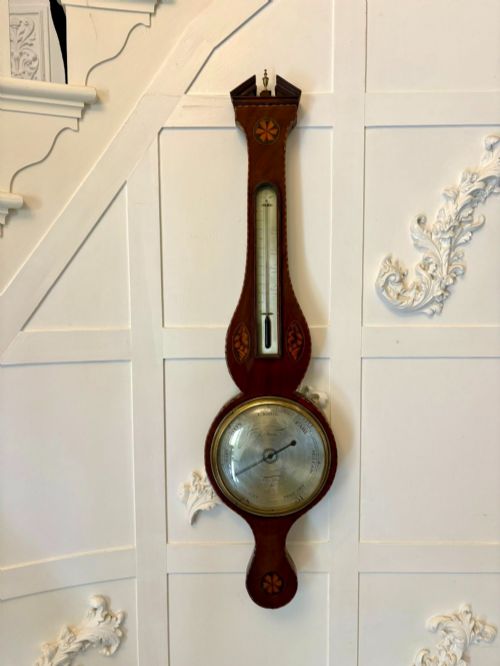
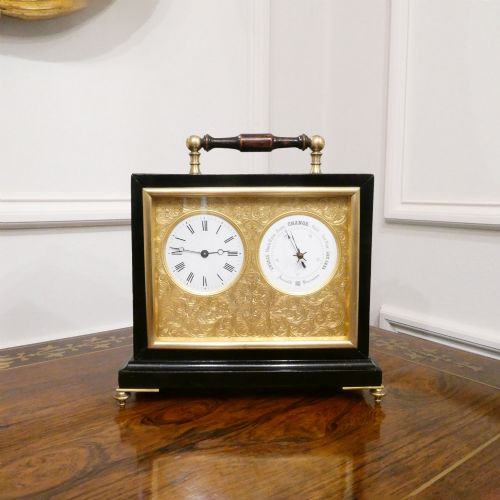
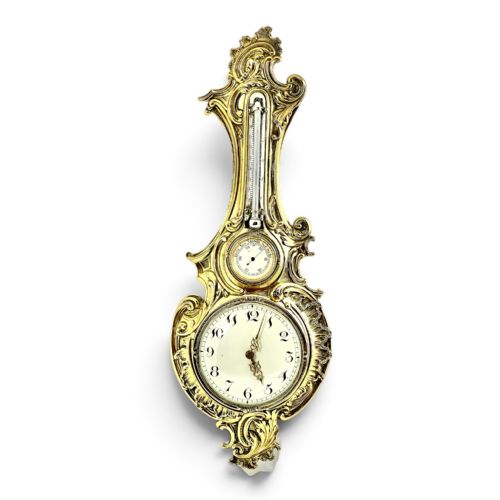
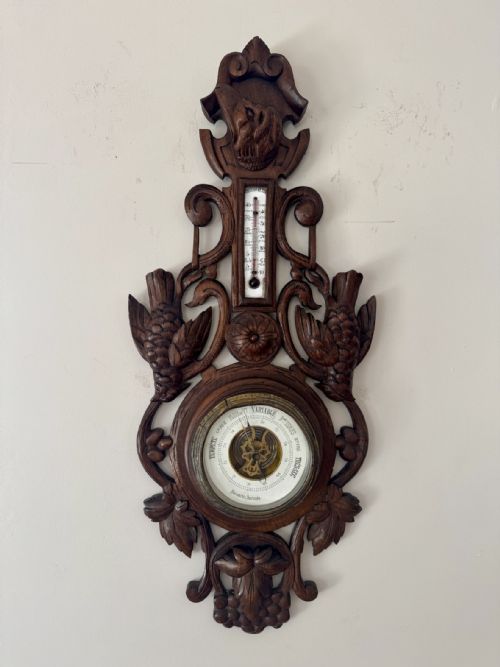
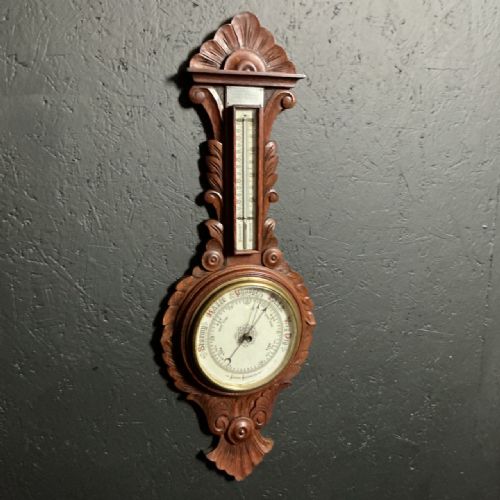
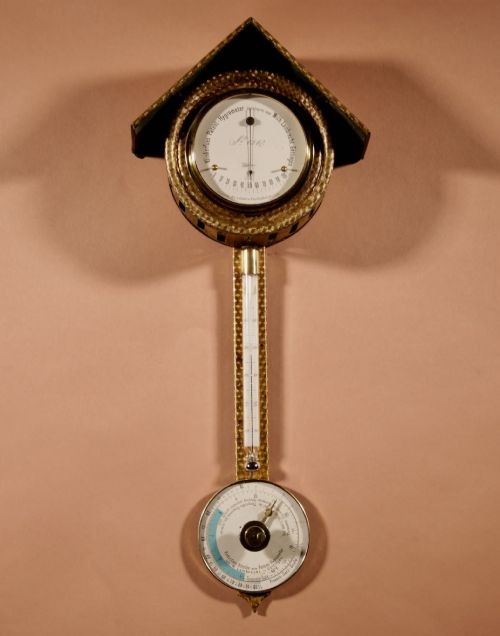
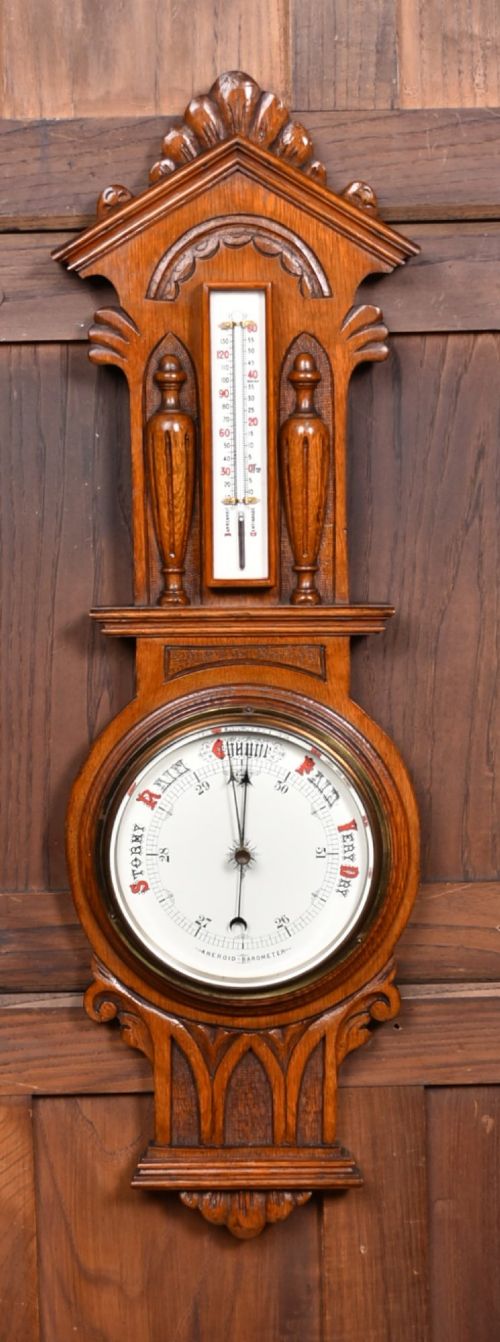
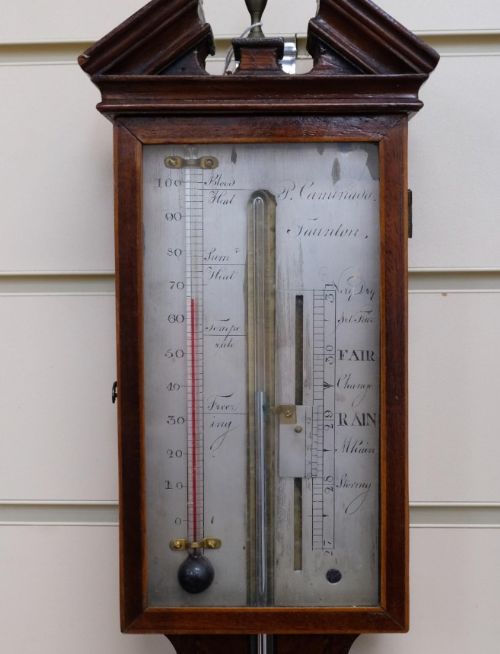
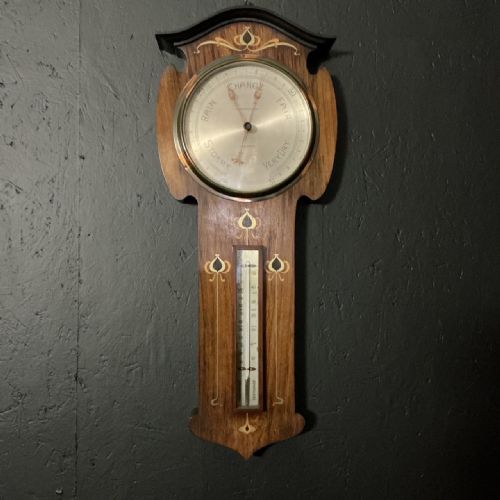
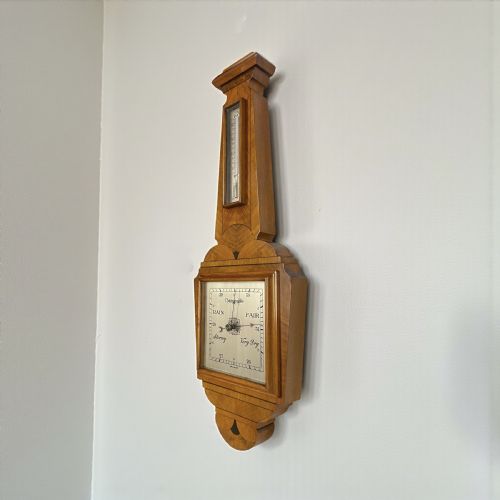
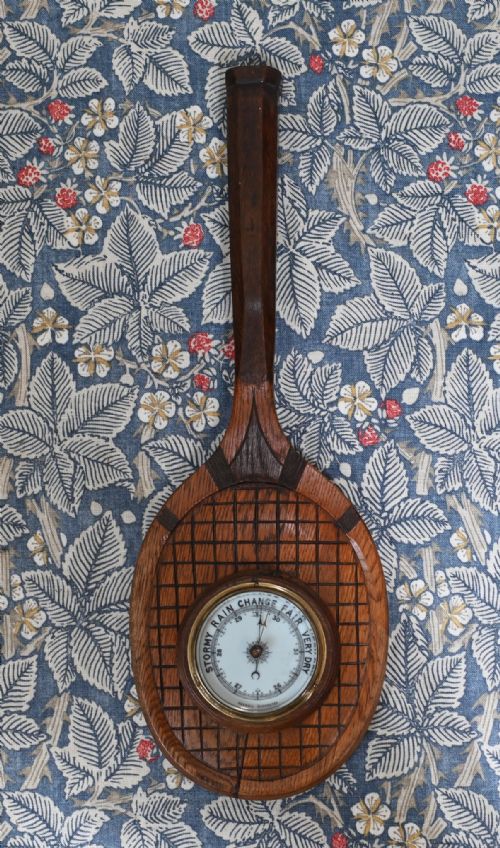
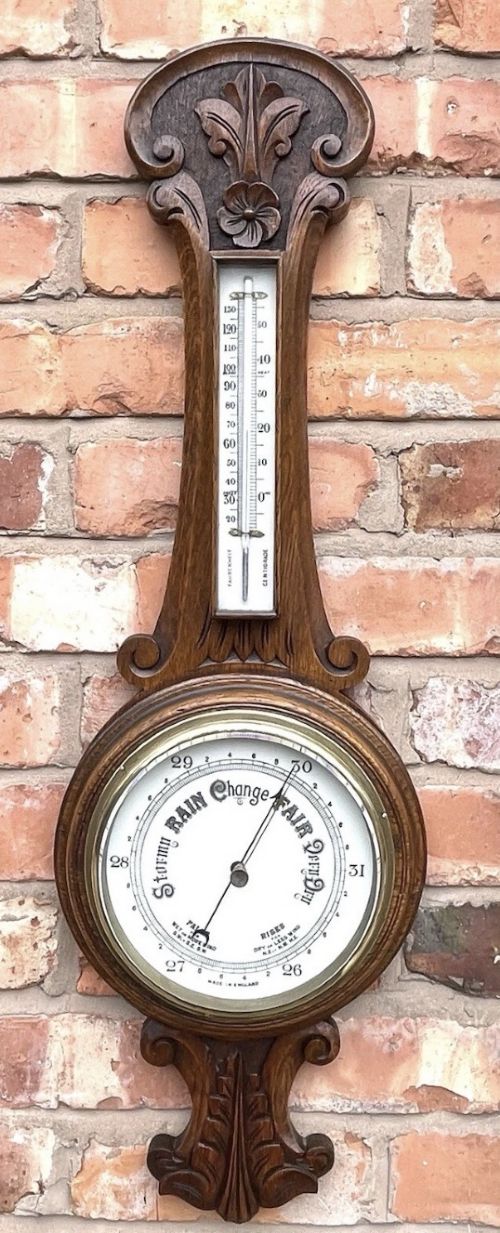
A vintage weather station combines instruments such as barometers, thermometers, and sometimes clocks within a single mounted or desk frame. Collectors encounter these pieces in styles spanning Victorian, Edwardian, Art Deco, and Georgian Revival periods.
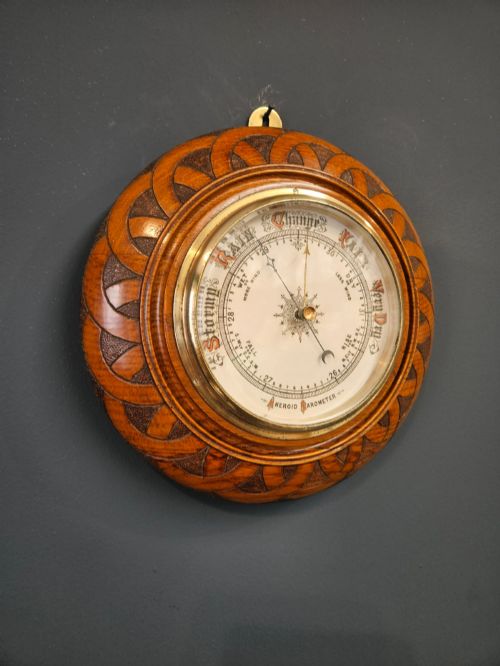
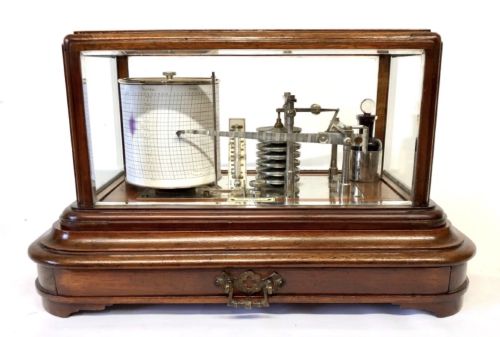
The dominant forms on this page include aneroid barometers, combined clock and thermometer sets, and recording barographs housed in wooden or stone cases. These instruments reflect the domestic and maritime tracking requirements of the nineteenth and twentieth centuries.
Origins range from English workshops to general European production, utilising materials like carved oak, walnut, onyx, and brass. Each piece serves as both a functional scientific instrument and a decorative interior object.
How they were made
Cases utilise solid woods like oak and walnut, alongside decorative veneers and carved stone such as onyx and lapis lazuli. Joinery and carving techniques define the Victorian and Edwardian examples, while geometric lines characterise the Art Deco pieces.
Internal mechanisms rely on brass components, glass bezels, and mercury or aneroid movements to register pressure and temperature changes. Metal dials feature engraved or printed graduations beneath protective glass faces.
Retail Price Guide 2026
Typical UK retail prices for vintage weather station, calculated from the Sellingantiques database of over a million retail prices indexed since 2003. This retail price guide relies exclusively on Sellingantiques data; no external sources or auction records are used, so the figures do not describe the wider market.
Early weather watchers relied on these brass dials to forecast garden parties and carriage rides.
What varies in quality
The calibre of a vintage weather station rests upon the precision of its mechanical movement and the integrity of its casing materials. Solid carved oak and polished onyx command attention compared to simpler veneered alternatives.
Makers with established reputations, such as specialised instrument houses, distinguish their barographs and barometers through refined brass calibration and superior glasswork. The crispness of dial engravings and the weight of the metal components further separate standard utility pieces from finer examples.
Dobbie Son And Hutton London
The Vintage Weather Station Glossary
- Aneroid barometer
- An instrument that measures atmospheric pressure without liquids, using a small flexible metal box called an aneroid cell. This expansion and contraction moves the pointer across the dial.
- Barograph
- A recording barometer that plots atmospheric pressure over time onto a rotating paper chart using a pen arm. These mechanical units often sit within glazed mahogany or oak cases.
- Mercury thermometer
- A temperature-measuring device utilising liquid mercury sealed inside a calibrated glass tube. It responds to ambient heat fluctuations.
- Veneer
- A thin layer of finer wood glued to a base timber foundation to create decorative surface patterns. This technique appears on various nineteenth and twentieth-century instrument cases.
- Bezel
- The metal ring that holds the glass cover in place over the instrument face. It protects the delicate pointer and paper dial beneath.
Frequently Asked Questions
How do I read a vintage barometer?
The pointer indicates current atmospheric pressure in inches or millibars, moving towards rain, change, or fair. Setting the movable brass index needle allows you to track whether pressure rises or falls over the day.
Changes in pressure help anticipate short-term weather shifts, mirroring the original domestic use of these instruments before electronic forecasts.
What is the difference between an aneroid and mercury barometer?
Aneroid barometers use a sealed metal vacuum capsule that expands and contracts with pressure changes. Mercury barometers rely on a column of liquid metal balancing against atmospheric pressure.
Most decorative domestic weather stations utilise the safer aneroid system to avoid handling hazardous liquid columns indoors.
How do I date a weather station?
Stylistic clues such as geometric Art Deco onyx designs, heavy Victorian carved oak, or Georgian Revival mahogany framing point to specific eras. Maker signatures and patent marks inscribed on the brass dials provide further chronological evidence.
Examining the construction of the wooden case and the typography on the paper or metal face also assists in determining age.
Where should I place a vintage weather station?
Keep these instruments away from direct sunlight, radiators, and damp exterior walls to protect the wood case and internal brass mechanics. Stable indoor room temperatures ensure the metal components and thermometers function accurately.
They sit well on sturdy desks, library shelves, or mounted securely on interior walls.