




Victorian Oak Barometer
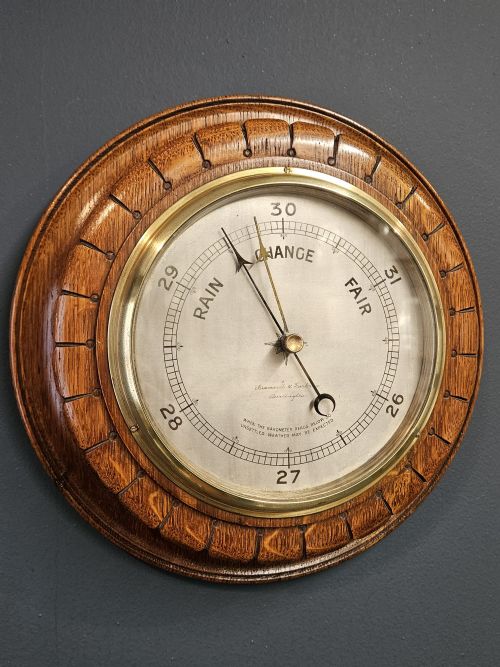
A victorian oak barometer records atmospheric pressure while anchoring a room with dense grain and carved detail.

Victorian Oak Barometer
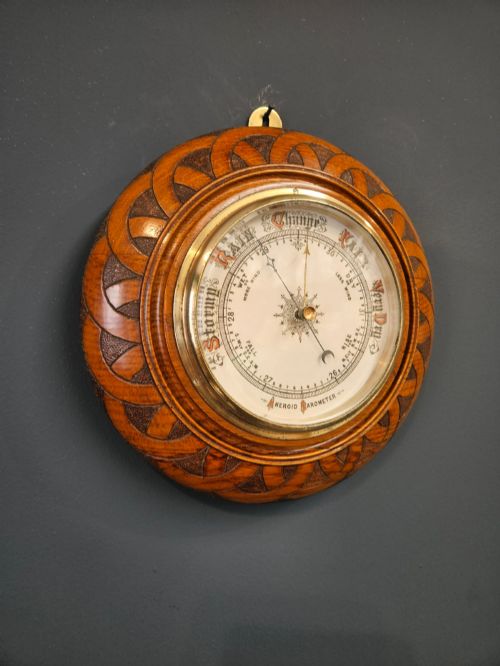
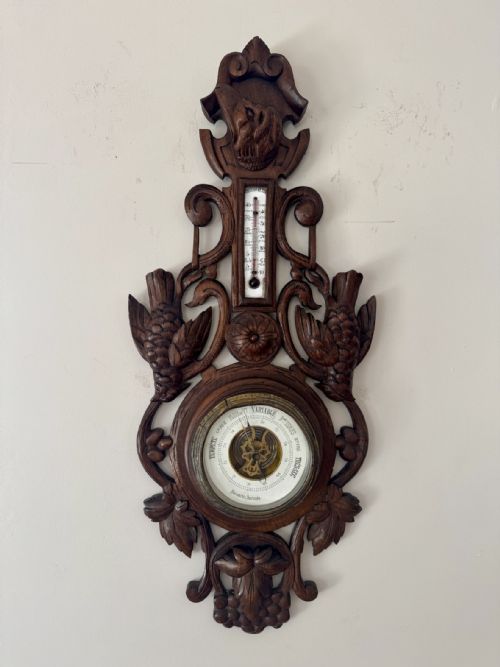
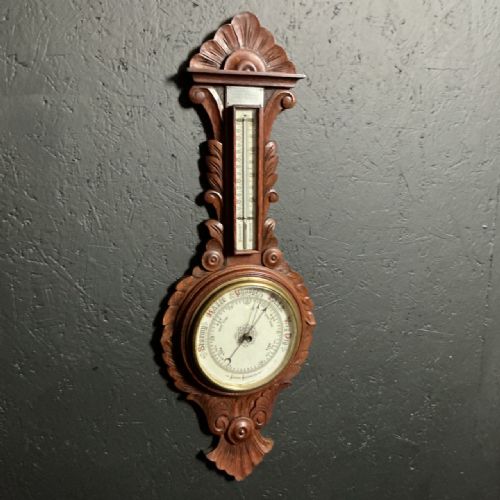
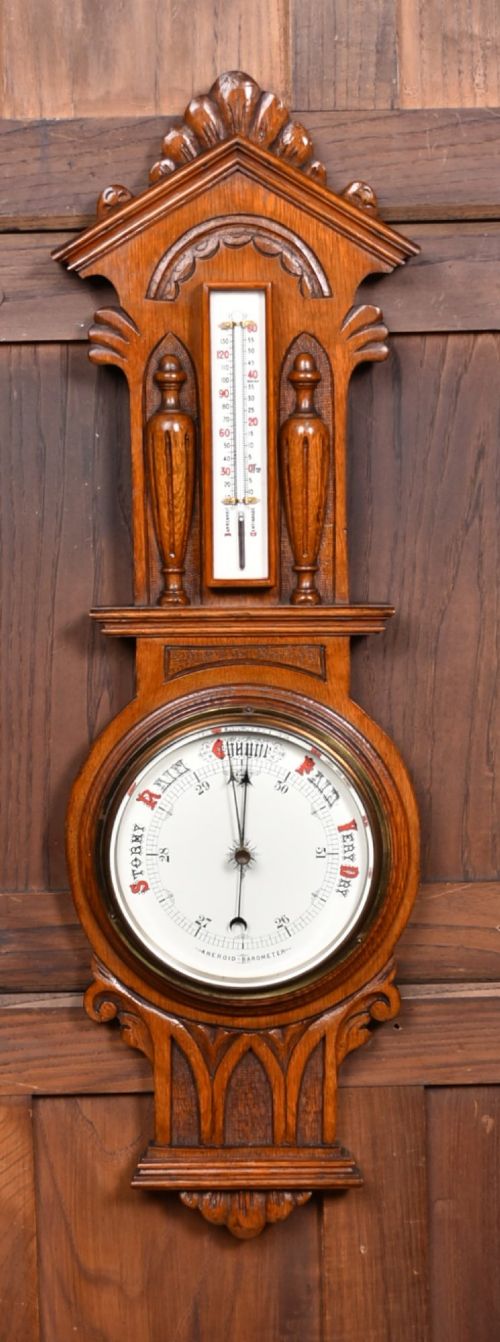
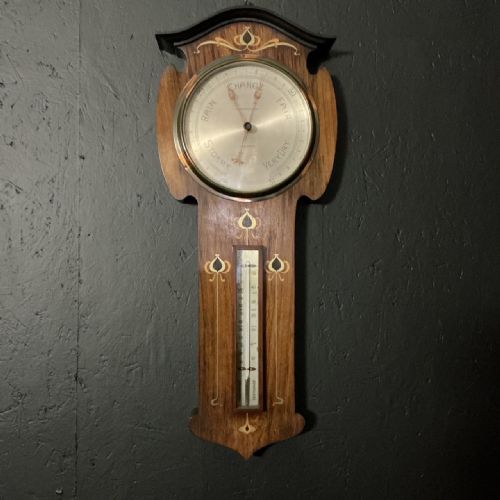
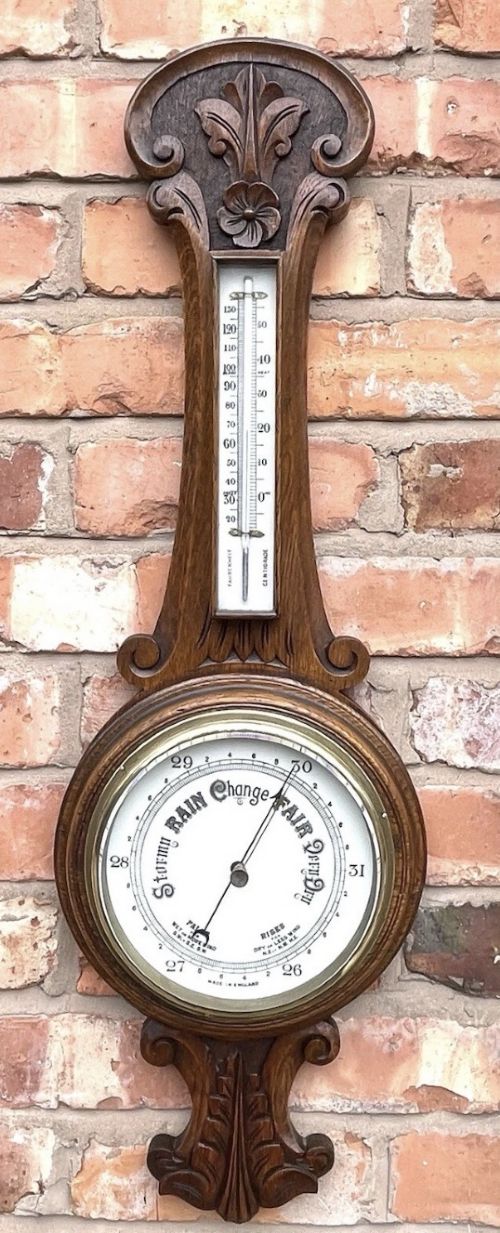
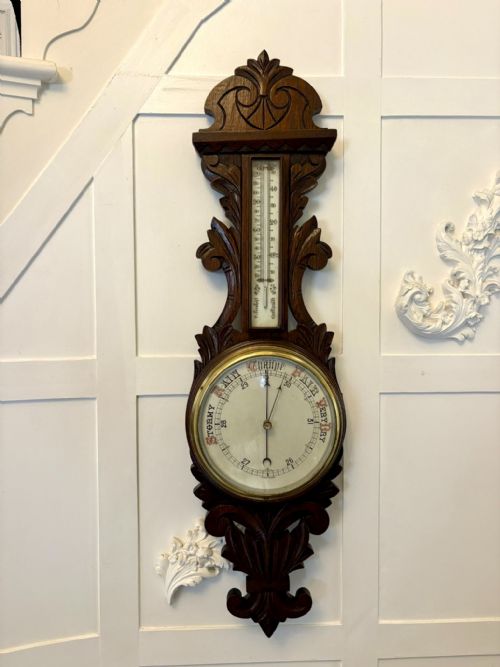
A victorian oak barometer combines domestic utility with dense woodwork, appearing most frequently on this page as a wall-hanging banjo or stick instrument from the nineteenth century.
Makers housed these scientific movements within turned, geometric, or heavily carved oak cases, often pairing the dial with an integrated thermometer or chart drawer.
The selection ranges from simple domestic stick barometers to complex Admiral Fitzroy storm models and ornate Black Forest carvings.
How They Were Made
Cabinetmakers shaped solid oak into rope-twist borders, petal motifs, and architectural frames, housing delicate glass tubes filled with mercury or aneroid metal capsules.
Dials were rendered in silvered brass, porcelain, or ceramic, carrying engraved maker signatures and metric scales beneath bevelled glass covers.
Victorian Oak Barometer Retail Price Guide 2026
Typical asking prices for victorian oak barometer among the pieces listed under this phrase on Sellingantiques today, from the lower quarter to the upper quarter. They describe what is for sale here now, not the wider market.
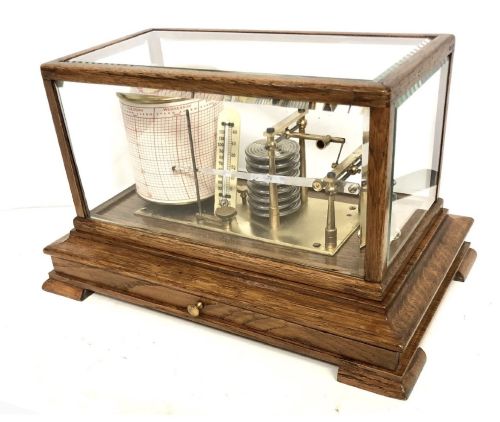
Recorded forms range from architectural desk clocks and hatstands to marine barometers and recording barographs.
What Varies in Quality
Superior examples display crisp, deep relief carving on the oak case, particularly around leaf and bird motifs, alongside intact silvered brass dials by known makers.
The sophistication of the internal movement dictates rank, distinguishing standard aneroid domestic instruments from mercury-filled stick barometers and recording barographs.
Bramwell & Harbron of Darlington·Negretti & Zambra·Baines Harrogate·W Watson & Sons·J Hughes London·Maple & Co·R & J Beck London·Watson Of Holborn
The Victorian Oak Barometer Glossary
- Aneroid barometer
- An instrument that measures atmospheric pressure using an expanding and contracting metal capsule rather than liquid mercury. It drives a mechanical pointer across a graduated dial.
- Stick barometer
- A tall, vertical instrument containing an open-ended glass tube filled with mercury. It allows direct observation of barometric height.
- Banjo barometer
- A domestic wall barometer shaped like a banjo, featuring a circular dial at the top above an elongated body that often houses a thermometer.
- Barograph
- A mechanical scientific instrument that continuously records barometric pressure over time onto a rotating paper chart using an ink pen.
Victorian Oak Barometer: Frequently Asked Questions
How do I set my antique barometer?
Rotate the set hand to match the current position of the black indicator needle. Tap the glass lightly to settle the mechanism before reading changes in pressure.
Changes in weather will push the needle above or below your set marker, revealing whether pressure is rising or falling.
Are these barometers still accurate?
Most antique instruments respond to atmospheric changes, though mercury stick barometers require careful calibration against a known standard.
Many owners use them as decorative wall pieces while keeping an eye on the general trend toward fair or stormy weather.
Where should I hang a wall barometer?
Select an interior wall away from direct sunlight, radiators, and heavy draughts. Stable temperatures help protect the delicate wooden case and internal metal linkages.
Ensure the fixing is secure because solid oak and glass instruments carry considerable weight.
How do I identify a stick barometer?
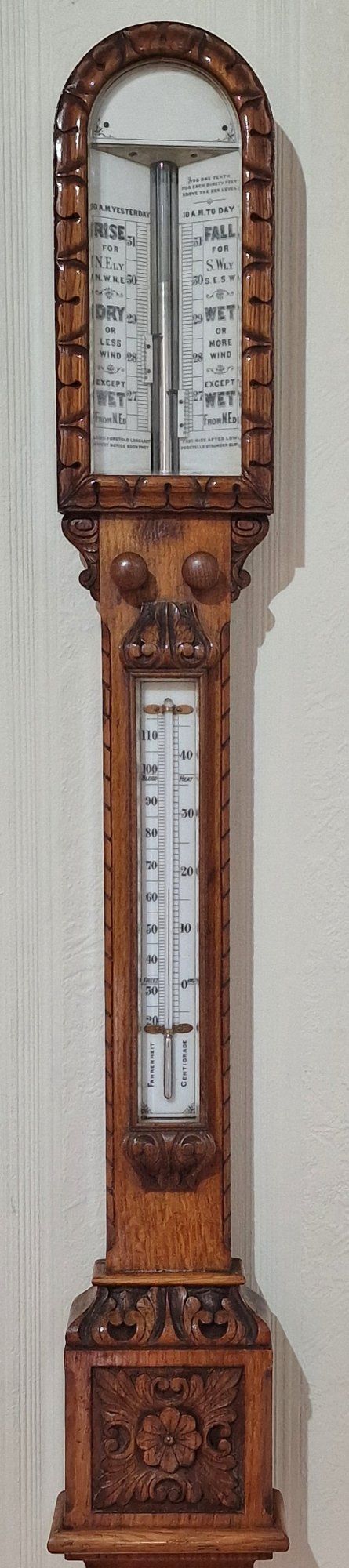
Stick barometers feature a long, narrow wooden trunk enclosing the glass mercury tube, often topped with an exposed or glazed dial scale. They lack the bulbous lower body found on banjo models.
These pieces lean towards a more utilitarian scientific aesthetic rather than domestic parlour decoration.