





English Oak Barometer
These English oak barometers combine domestic utility with solid craftsmanship, offering a practical barometer for any room.
English Oak Barometer
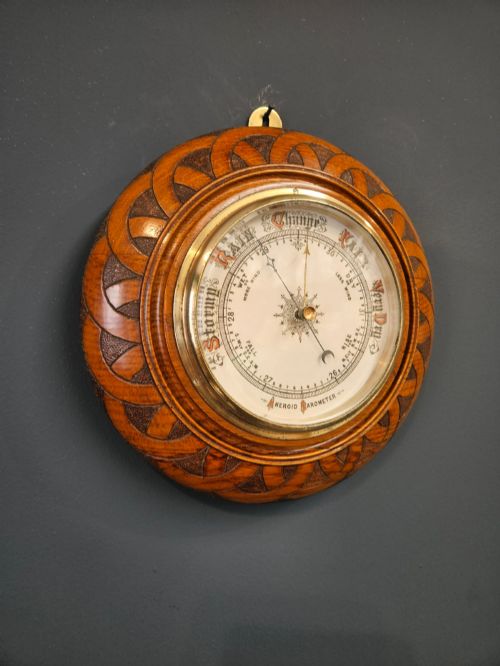
An English oak barometer brings domestic weather tracking into the hall or study, rendered in durable timber. The selection spans Victorian and Edwardian periods, alongside pieces dating from the nineteenth century to nineteen ten.
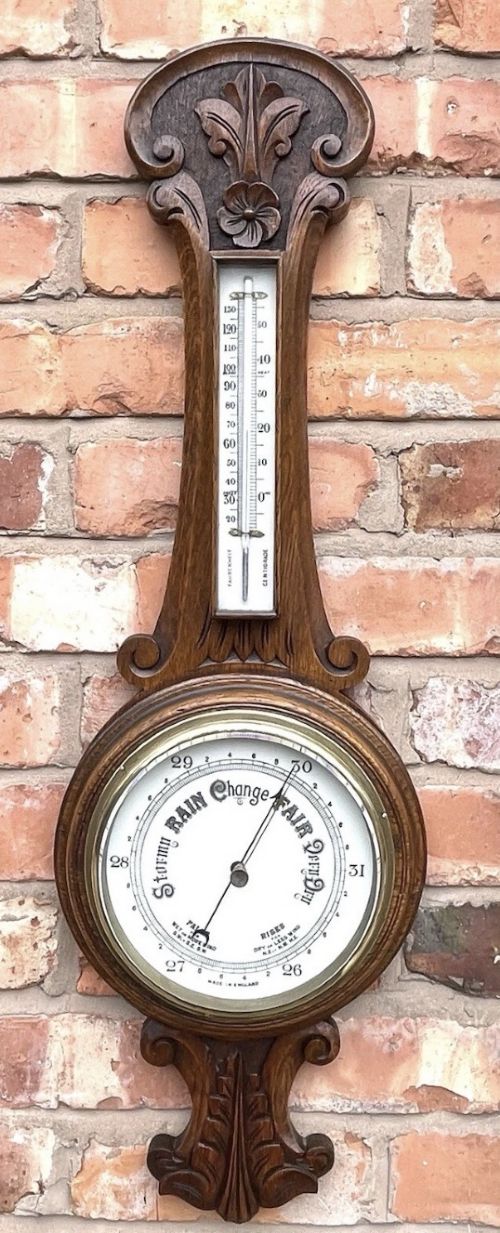
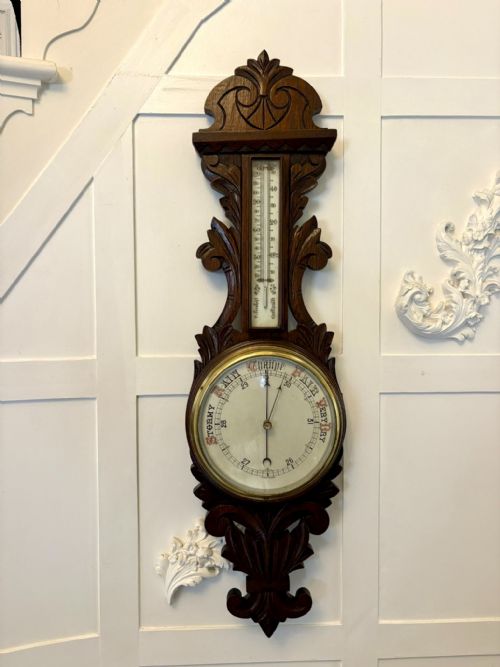
Banjo shapes, stick forms, and barographs appear frequently in these listings. Many incorporate thermometers alongside the main dial to offer a fuller record of atmospheric conditions.
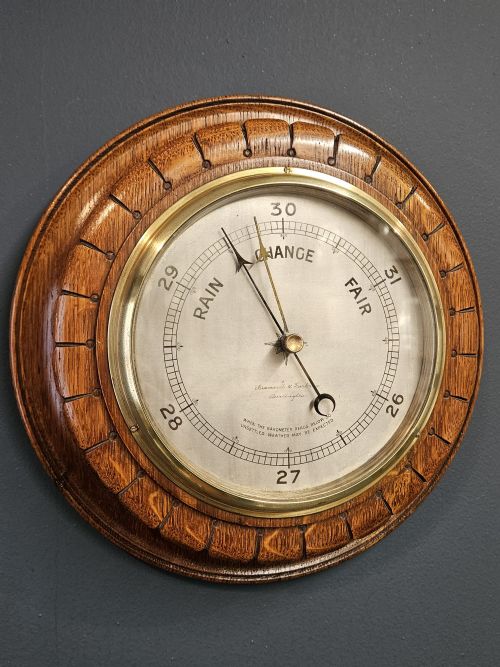
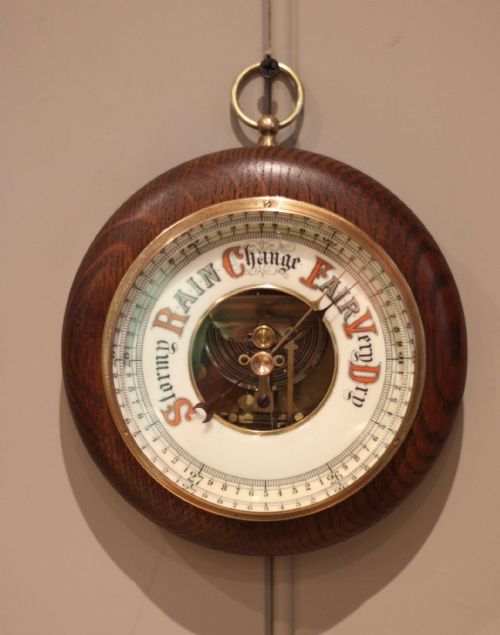
Most examples hail from the Victorian and Edwardian eras, displaying turned or carved cases. Buyers encounter both circular dials and elongated banjo formats designed for wall mounting.
Construction and Materials
Makers constructed these housings predominantly from oak, often turning or carving the solid timber into banjo, stick, or barograph cases. Bevelled glass protects the delicate dials and mechanisms within.
Dials are typically formed from silvered metal, whilst some incorporate ceramic elements to display the weather scales. Brass fittings and hinges secure the glass fronts and internal components.
English Oak Barometer Retail Price Guide 2026
Typical asking prices for english oak barometer among the pieces listed under this phrase on Sellingantiques today, from the lower quarter to the upper quarter. They describe what is for sale here now, not the wider market.
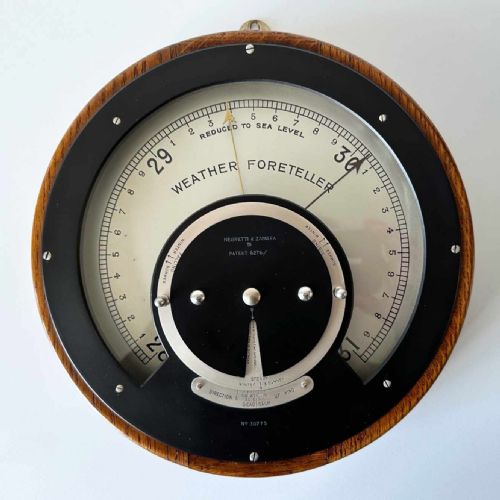
Some weather foretellers included chart drawers so snug they demand a gentle pull to yield their spare paper rolls.
Judging Quality
The distinction between standard and superior pieces rests in the crispness of the oak carving and the legibility of the silvered metal dial. Finer examples display meticulous attention to the turned wooden bezels and case mouldings.
Signed instruments by recognised makers command attention for the precision of their mechanical assemblies. The integration of auxiliary instruments like thermometers and chart drawers elevates the sophistication of the piece.
Negretti & Zambra·Short & Mason·W Watson & Sons·Bramwell & Harbron·J Hughes London·Winstanley of Wigan·Army and Navy
The English Oak Barometer Glossary
- Aneroid barometer
- A barometer that measures atmospheric pressure through the expansion and contraction of a sealed metal capsule. This design avoids the use of liquid mercury.
- Barograph
- A scientific instrument that records barometric pressure continuously over a period upon a paper chart. Many include a dedicated drawer for spare charts.
- Banjo barometer
- A domestic barometer housed in a case shaped like a banjo, typically featuring a large circular dial at the base and a thermometer along the stem.
- Stick barometer
- A tall, narrow barometer that houses a vertical tube of mercury to measure atmospheric pressure. These require a secure wall mounting.
- Silvered dial
- A metal dial treated to achieve a silvery, reflective finish with deeply etched graduations. This treatment enhances contrast for reading weather measurements.
English Oak Barometer: Frequently Asked Questions
How do I read an aneroid barometer?
Read the main pointer against the engraved scale to determine the current pressure reading. Tap the glass gently to settle the mechanism before taking your reading.
Use the secondary set hand, adjusted by the central knob, to mark the present pressure. Comparing the moving pointer to this marker indicates whether pressure is rising or falling.
Where should I hang a stick barometer?
Mount the instrument on an interior wall away from direct sunlight, radiators, and draughts. Rapid temperature fluctuations affect the internal mechanism.
Ensure the wall is sturdy enough to support the weight of the oak case safely. Hang it at eye level for easy daily observation.
How do I date an oak barometer?
Examine the style of the oak case, noting whether the carving reflects Victorian exuberance or Edwardian restraint. Label formats and maker signatures also provide clues to the production era.
Check the glass bezel and backboards for construction methods typical of the nineteenth or early twentieth century. Comparing the mechanical layout with known workshop dates narrows the period further.
What is the difference between a barograph and a barometer?
A standard barometer displays only the current atmospheric pressure through a single pointer on a dial. It offers a snapshot of weather conditions at the moment of inspection.
A barograph records pressure fluctuations continuously onto a rotating drum holding a paper chart. This provides a historical trace of weather patterns over a week.