



Edwardian Wall Barometer
An Edwardian wall barometer brings reliable weather tracking and striking period timber into a hallway or study.
What an edwardian wall barometer is
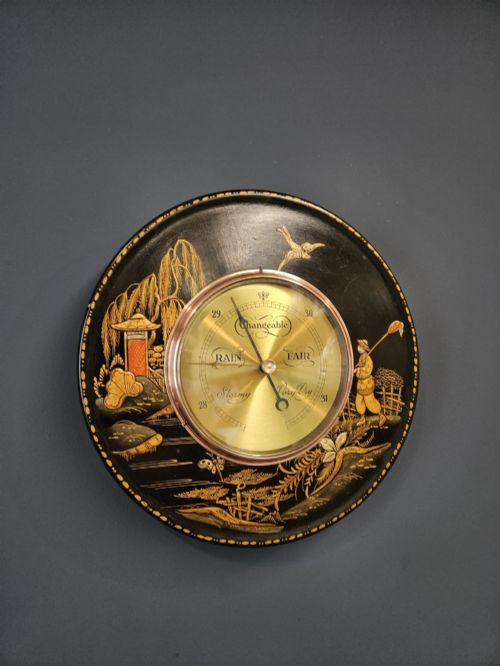
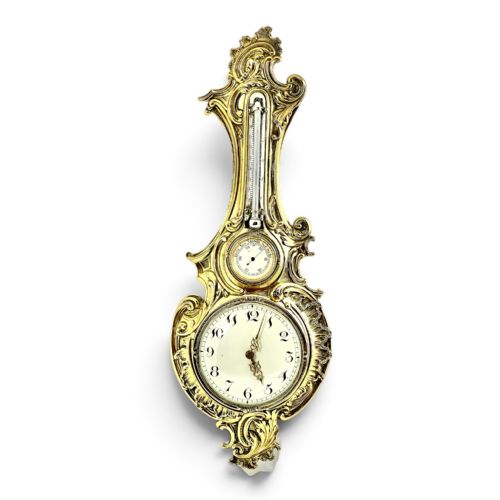
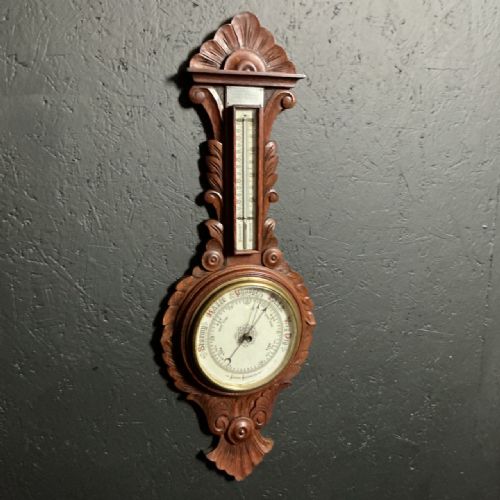
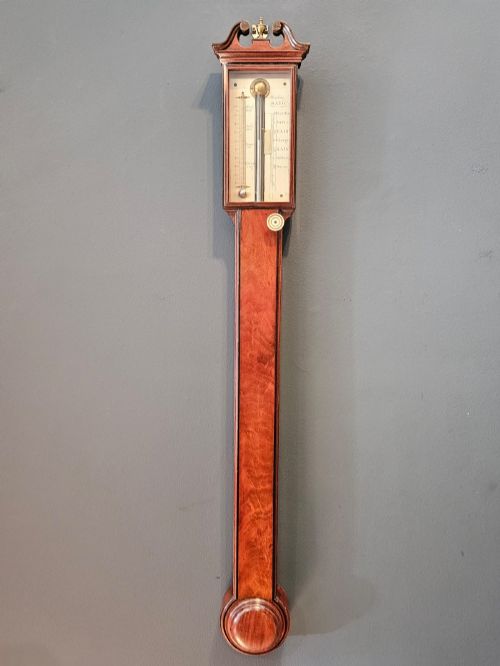
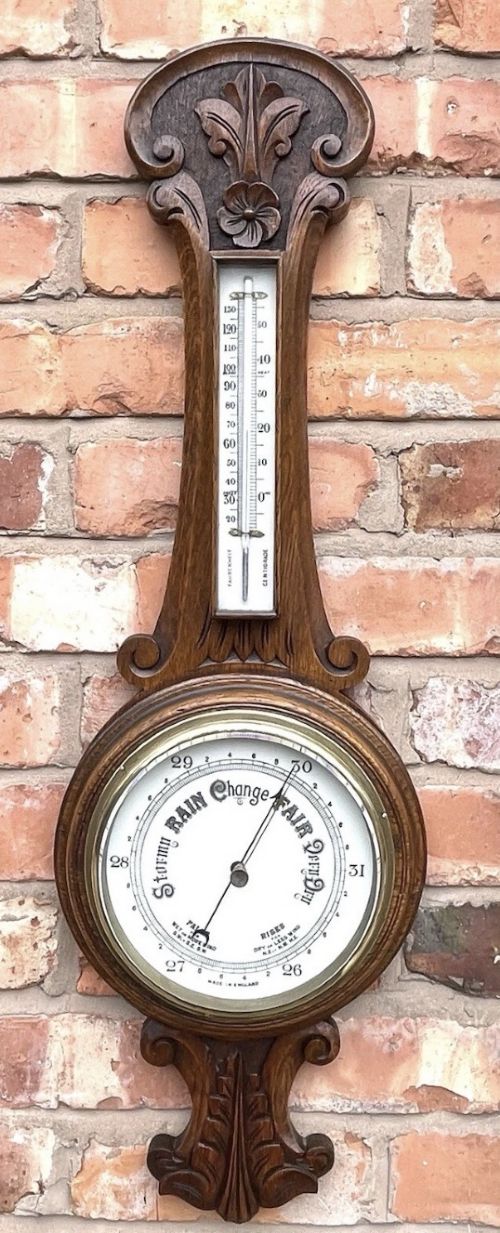
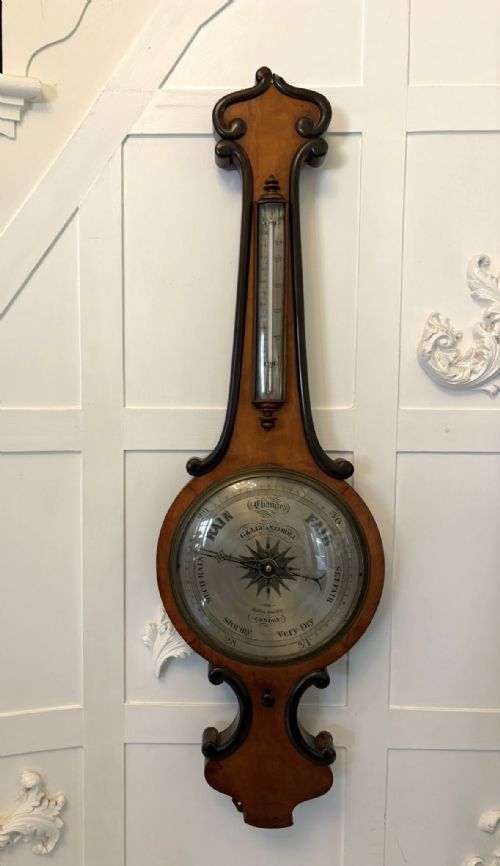
An edwardian wall barometer is a domestic weather glass designed to hang on domestic walls, appearing in forms such as banjo barometers and cased instruments. These pieces date from the Edwardian period, 1900, and the Victorian era, utilising styles like Edwardian Chinoiserie, Arts and Crafts, and traditional Edwardian design.
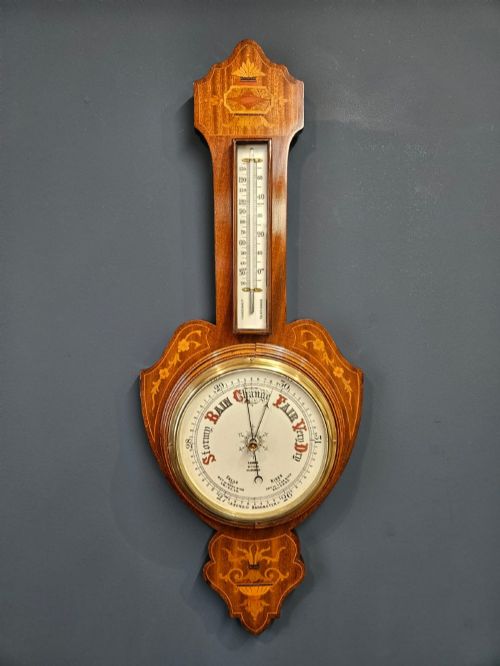
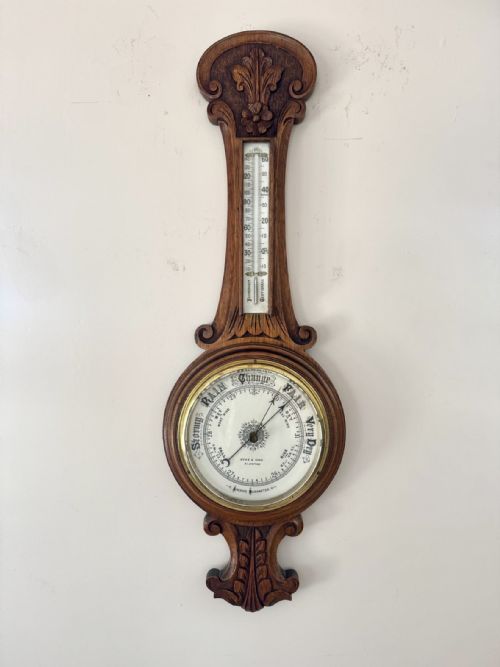
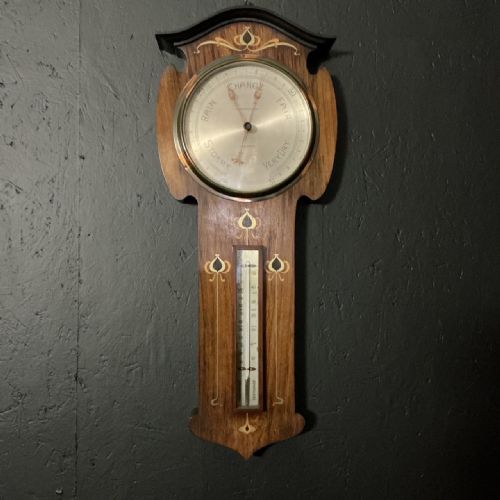
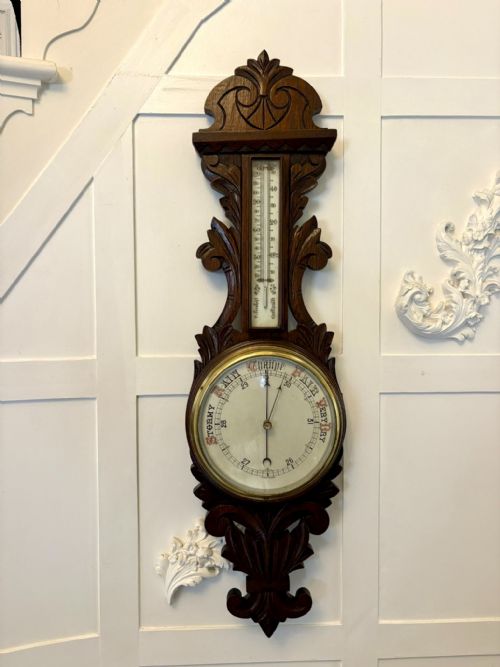
The versions most commonly met on this page are carved oak aneroid barometers and mahogany inlaid banjo barometers. Examples include pieces featuring built-in thermometers and specific regional maker signatures from places like Sleaford.
How they were made
These instruments utilise solid timbers such as oak and mahogany, frequently enhanced with delicate satinwood and wood inlay. Carved wooden cases house the aneroid mechanism, protected beneath a curved glass face.
Surfaces receive various finishes, including polished wood and lacquer, while specialist variants incorporate Edwardian Chinoiserie decorative schemes. Metal components typically consist of brass dials and indicators.
Retail Price Guide 2026
Typical UK retail prices for edwardian wall barometer, calculated from the Sellingantiques database of over a million retail prices indexed since 2003. This retail price guide relies exclusively on Sellingantiques data; no external sources or auction records are used, so the figures do not describe the wider market.
Listings on this site feature oak and mahogany woods alongside brass and glass, spanning the Victorian period up to 1900 and the Edwardian era.
What varies in quality
The standard of carving and inlay separates standard production models from exceptional commissions. Crisp relief work in oak and precise wood inlay indicate higher workshop skill.
Named makers and signed dials distinguish specific pieces from anonymous factory output. The presence of integrated thermometers and well-executed lacquer finishes further elevates the standing of an instrument.
Hyde & Sons Sleaford
The Edwardian Wall Barometer Glossary
- Aneroid barometer
- A weather-measuring instrument that uses a flexible metal capsule rather than liquid mercury to register atmospheric pressure. This sealed box expands and contracts with weather changes to move the dial hand.
- Banjo barometer
- A tall, symmetrically shaped wall barometer resembling the stringed musical instrument, featuring a bulbous lower section and a tapering upper stem. They frequently incorporate thermometers alongside the main dial.
- Chinoiserie
- A European decorative style imitating Chinese artistic traditions, featuring painted or lacquered motifs on furniture and instrument cases. It was occasionally applied to Edwardian barometer casings.
- Inlay
- A technique where pieces of contrasting wood, such as satinwood, are fitted into recesses carved into the primary timber surface to create decorative patterns.
Frequently Asked Questions
What is an aneroid barometer?
An aneroid barometer measures atmospheric pressure using a small, flexible metal box inside that expands or contracts as the weather changes. This movement is connected directly to the pointer on the dial.
Unlike traditional mercury barometers, these dry instruments contain no liquid, making them safer and easier to hang securely on domestic walls.
How do I hang a wall barometer?
A wall barometer needs a secure fixing directly into a wall stud or a sturdy wall plug, as timber cases can be surprisingly heavy. Hanging it at eye level ensures the dial is easy to read.
Avoid placing the instrument near direct heat sources, radiators, or damp exterior walls, which can affect the timber case and the internal mechanical response.
Are these barometers still accurate?
These instruments were built to provide genuine meteorological readings, and many retain their working mechanical sensitivity after a century. They respond reliably to changes in barometric pressure.
Most aneroid mechanisms can be gently calibrated using a small screw on the back if local altitude or shifting ages cause any drift in the dial reading.
How do I tell Edwardian from Victorian styles?
Victorian barometer cases often feature heavier, deep-relief carving and darker, denser oak timbers. They lean towards formal, imposing silhouettes.
Edwardian examples tend to introduce lighter woods, refined satinwood inlay, and sometimes whimsical painted lacquer finishes like Chinoiserie, reflecting a shift towards brighter domestic interiors.