


Sheraton Style Barometer
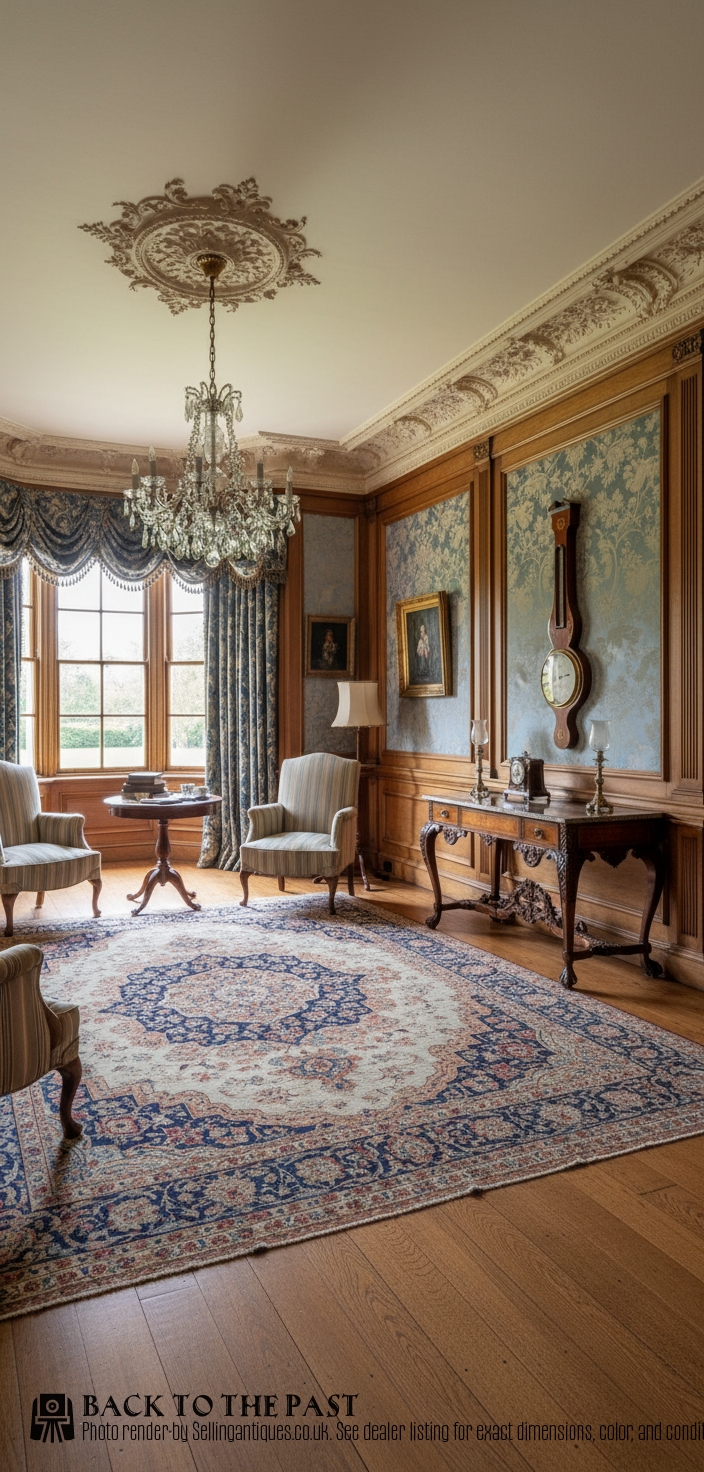
A Sheraton style barometer brings neoclassical elegance to a hallway, combining practical weather forecasting with refined eighteenth-century cabinet work.
Sheraton Style Barometer
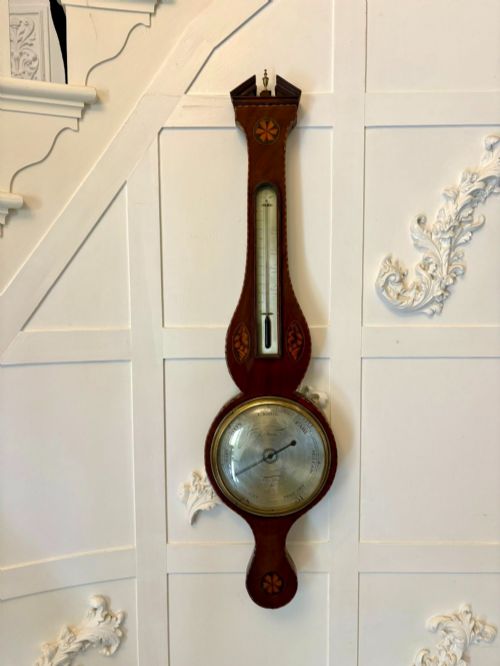
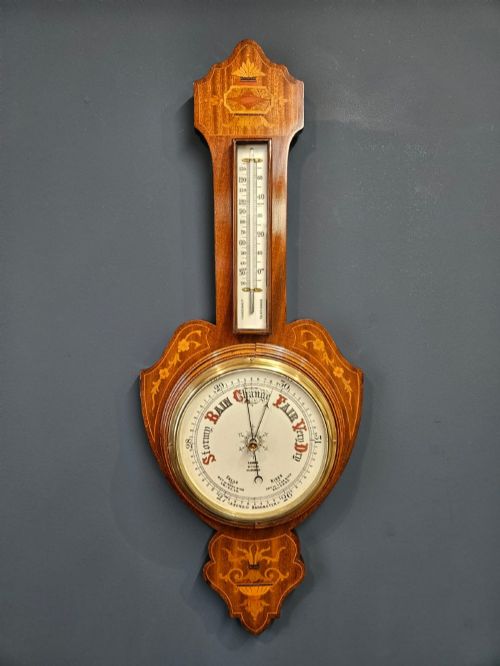
A sheraton style barometer typically takes the form of a banjo barometer, featuring a slender trunk topped by a dry-and-damp dial and a larger spirit thermometer towards the base. These wall-mounted instruments date from the Georgian, Victorian, and Edwardian eras, reflecting the enduring popularity of neoclassical design principles.
Makers adapted classic patterns across the nineteenth and twentieth centuries, producing both mercury stick models and later aneroid versions that dispensed with liquid tubes. The examples found here demonstrate regional British craftsmanship ranging from provincial workshops to city firms.
The dominant timber across these pieces is mahogany, frequently enriched with contrasting stringing and marquetry panels. Buyers encounter both full-size hallway instruments and smaller decorative variants designed for compact spaces.
How they were made
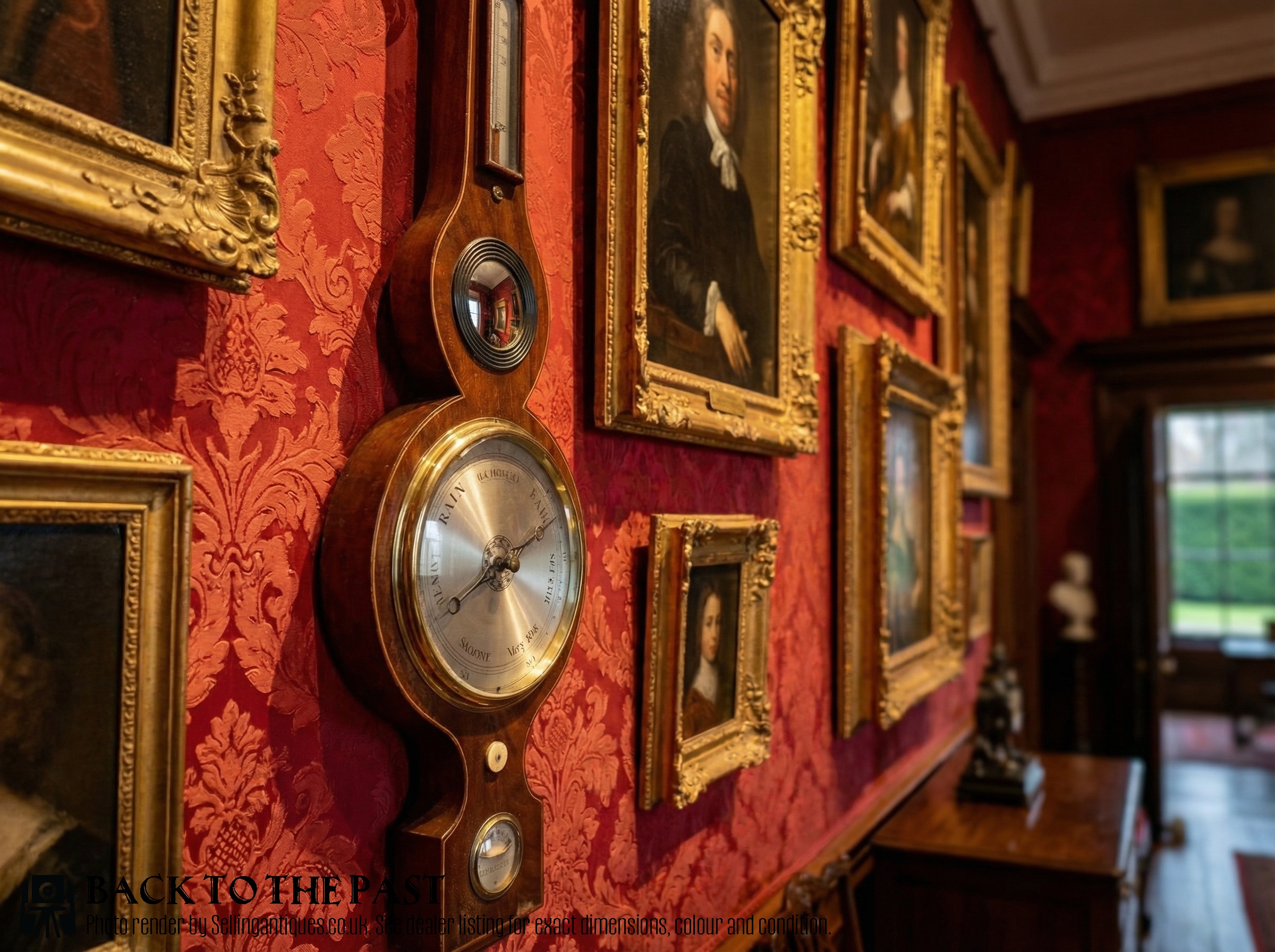
Cabinetmakers shaped the characteristic curved trunk from solid mahogany or rosewood, often applying veneers to create a smooth, figured surface for the front panels. They then integrated boxwood inlay, shell motifs, and marquetry to achieve the crisp geometric framing associated with the style.
The brass bezels, dials, and thermometer scales were cast, engraved, and silvered by specialists before being fitted into the wooden case alongside the glass-fronted barometer mechanism.
Sheraton Style Barometer Retail Price Guide 2026
Typical asking prices for sheraton style barometer among the pieces listed under this phrase on Sellingantiques today, from the lower quarter to the upper quarter. They describe what is for sale here now, not the wider market.
Materials documented across the pieces include mahogany, rosewood, satinwood, and boxwood inlay alongside brass and glass.
What varies in quality
Quality rests in the crispness of the wood inlay and the precision of the cabinet work, where finer pieces exhibit sharply defined shell motifs and balanced proportions. The subtlety of the grain in the mahogany or rosewood foundation dictates the visual depth of the case.
The sophistication of the dial engraving and the completeness of the original brass fitments separate standard provincial pieces from those produced by skilled urban instrument makers.
Prada of High Wycombe·Giana Shrewsbury·L Casatelli of Liverpool·J Groce York
The Sheraton Style Barometer Glossary
- Banjo barometer
- A wall barometer shaped with a narrow stem and a bulbous lower section, resembling the stringed musical instrument. This format dominated British hallway decoration throughout the nineteenth century.
- Aneroid barometer
- An instrument that measures atmospheric pressure using a small, flexible metal box rather than liquid mercury. This mechanical system gained widespread use during the Victorian period.
- Stringing
- Thin lines of contrasting timber inlaid into the surface of the cabinet work to form geometric borders. It defines the neoclassical panels characteristic of the sheraton style.
- Marquetry
- Elaborate patterns formed by fitting together contrasting pieces of wood veneer to create pictorial or decorative scenes. Makers utilised this technique on the damp-dial pediments.
- Thermometer
- A secondary temperature scale mounted onto the trunk below the main dial, recording ambient heat alongside atmospheric pressure. Most banjo barometers incorporate this dual function.
Sheraton Style Barometer: Frequently Asked Questions
How do I hang a sheraton style barometer safely?
These wall-mounted instruments require a secure fixing point directly into masonry or a wall stud, using a sturdy brass screw or wall hook that matches the hanging ring at the top of the case.
Because the timber cases and glass dials are heavy, avoid relying solely on standard picture plaster hooks to support the weight.
Did these barometers use mercury?
Traditional examples from the Georgian period rely on a column of liquid mercury within a glass tube to measure atmospheric pressure changes.
Later Victorian and Edwardian iterations frequently employ aneroid movements, which operate mechanically without any liquid.
How do I distinguish a Georgian piece from a later copy?
Examination of the internal wooden construction, backboards, and the hand-engraving on the brass dial reveals the age of the instrument. Eighteenth-century examples display distinct hand-cut fixings and secondary timbers consistent with early workshop practices.
Later reproductions and Edwardian revivals often incorporate machine-cut components and different backing woods.
How should I maintain the timber case?
Apply a light coat of quality beeswax periodically to nourish the mahogany or rosewood veneer, buffing gently with a soft cloth to preserve the sheen. Avoid modern silicone sprays or liquid polishes that can degrade the historic finish.
Keep the instrument away from direct heat sources and damp walls to prevent the wood from warping or the veneer from lifting.