
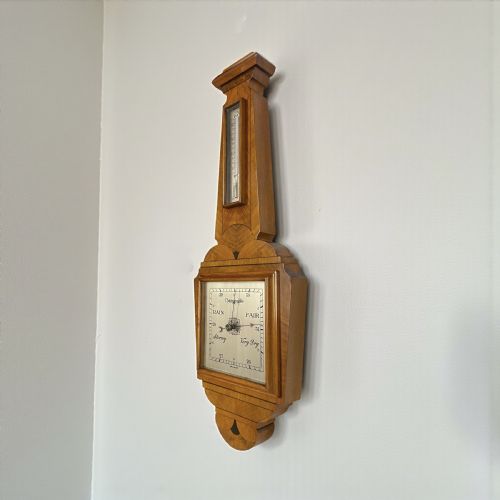
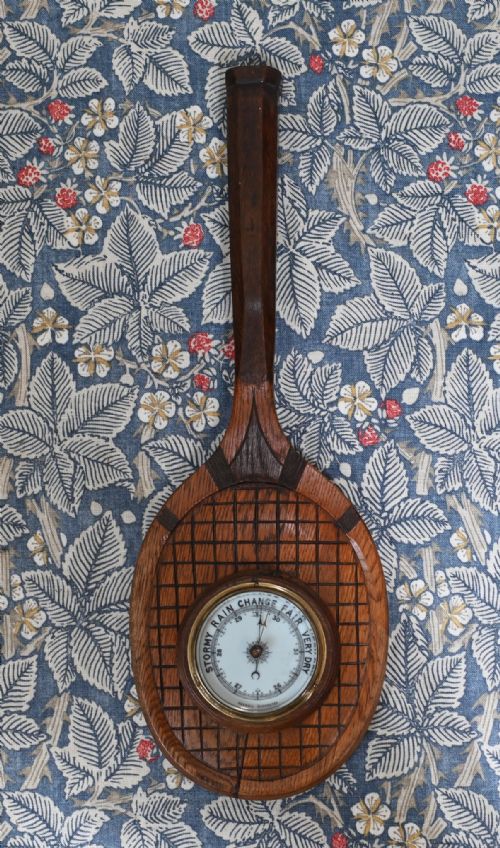
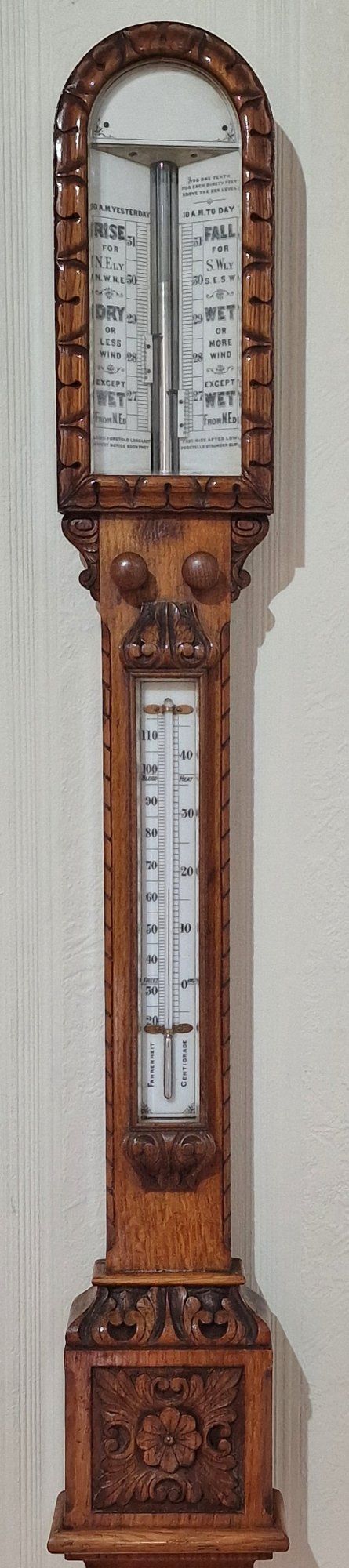

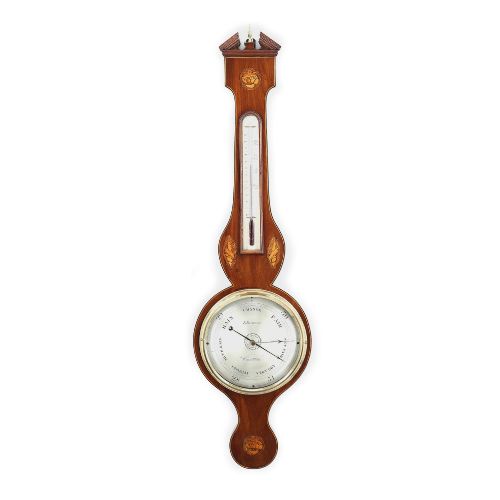

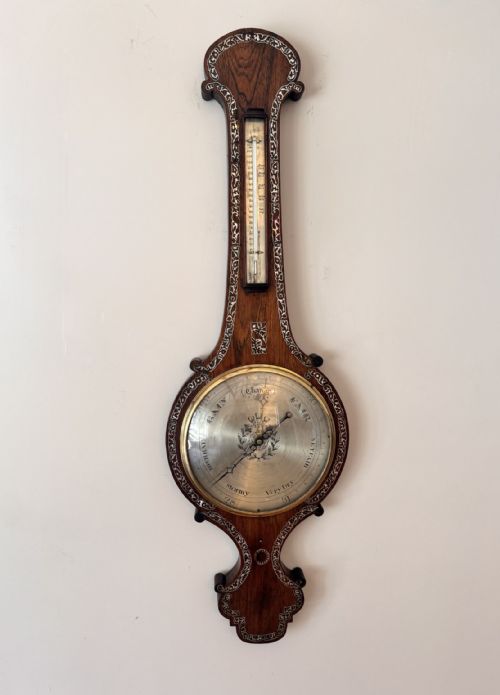
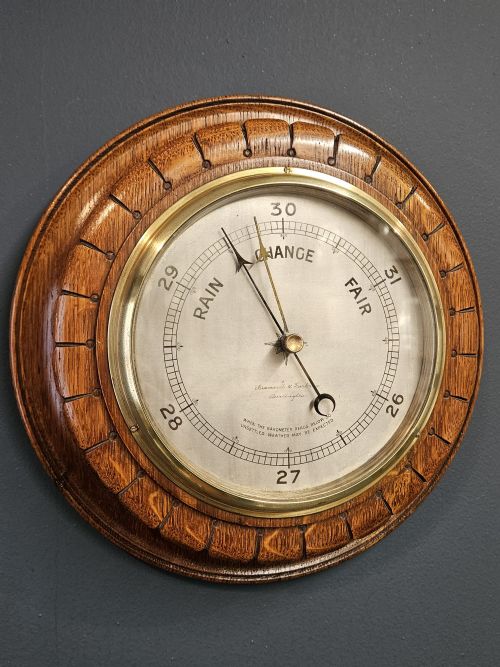
Antique Wooden Barometer
An antique wooden barometer measures atmospheric pressure while bringing rich timber cases of mahogany, oak, walnut and rosewood onto domestic walls.
Antique Wooden Barometer
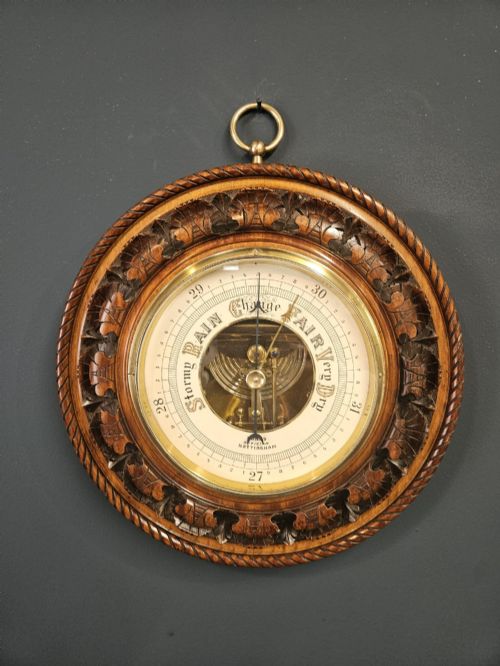
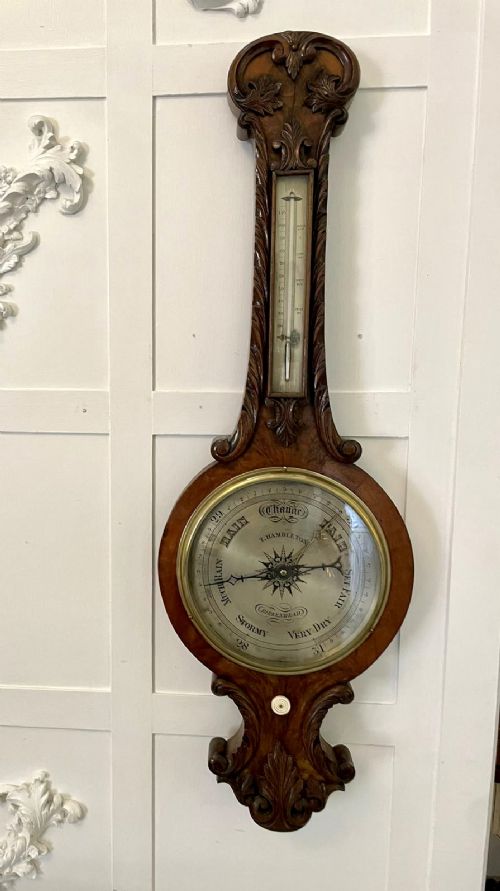
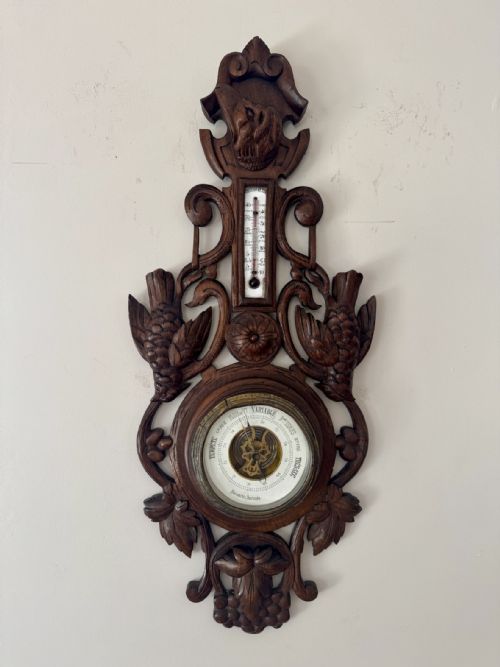
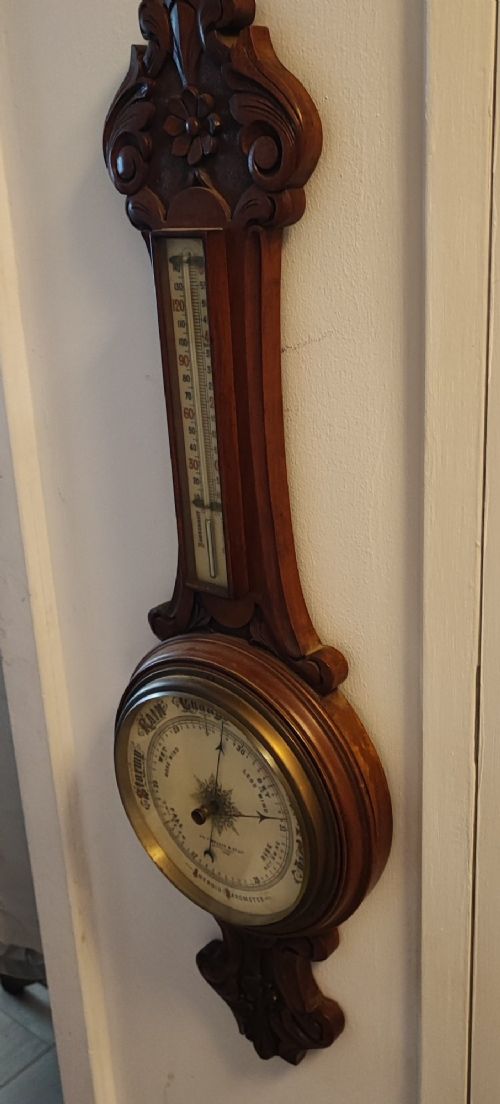
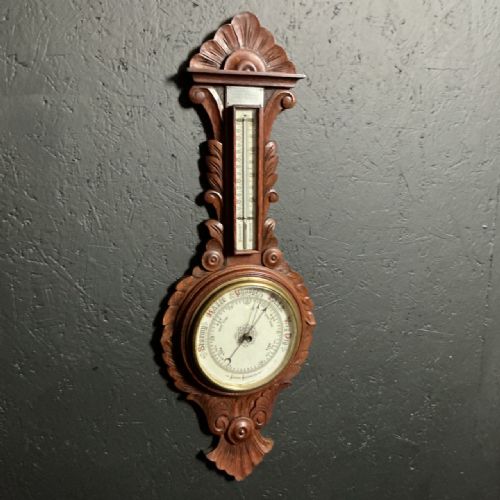
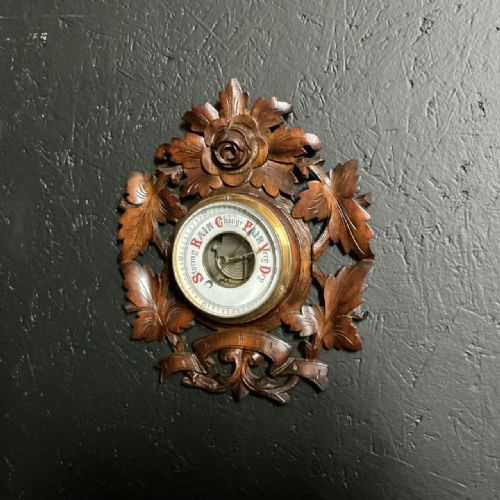
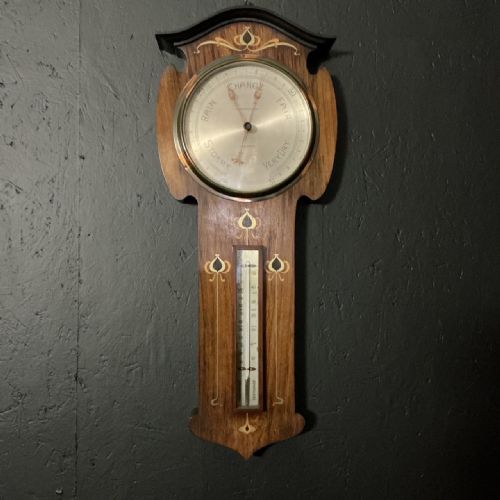
When you search for an antique wooden barometer, you encounter wall-hanging instruments spanning banjo, stick, wheel and aneroid formats. The pieces on this page appear predominantly in Victorian and Edwardian guises, alongside Georgian revivals, Art Deco iterations, and carved Black Forest productions.
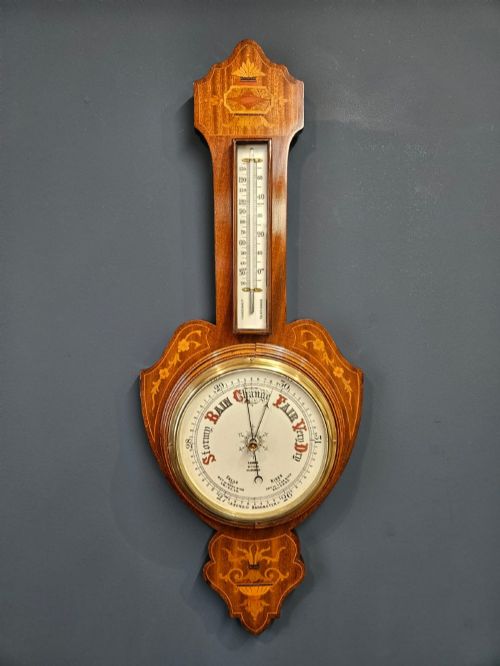
The form stretches from domestic hall instruments to larger carved oak and walnut specimens decorated with foliage or birds. Makers housed these mechanisms in cases fashioned from burr walnut, rosewood, and inlaid mahogany, often combining the barometer dial with a thermometer.
Wall barometers dominate the selection, functioning both as scientific instruments and decorative focal points for period interiors. You meet everything from plain oak Edwardian models to elaborate Black Forest carved frames and Admiral Fitzroy designs.
Materials and construction
Makers constructed these instruments using solid and veneered timbers including mahogany, oak, walnut, rosewood and carved woods. Wood inlay, mother of pearl and marquetry feature extensively across the surfaces of banjo and wheel barometers.
Glass protects the delicate silvered or porcelain dials, whilst brass bezels frame the faces and secure the interior mechanisms. Carved wooden cases, particularly within the Black Forest style, showcase detailed manual woodworking and deep relief carving.
Internal construction relies on sealed aneroid capsules or mercury columns connected to visible indicators. These components sit within robust timber housings designed to withstand decades of atmospheric measurement.
Barometer forms range from banjo and stick configurations to wheel designs, aneroid movements and Black Forest carved frames.
Judging the standard
Quality rests in the crispness of the timber carving and the precision of the case joinery. Plain oak or mahogany examples rely on proportion and timber grain, whereas Black Forest or carved walnut pieces depend on the depth and animation of the relief work.
The legibility and finish of the dial elevate a piece significantly. Silvered brass dials with sharp engraving and original bezels separate superior examples from plainer production models.
Integrity of the timber case, retention of original mercury tubes or aneroid movements, and the presence of matching thermometers dictate the overall standing of the instrument.
B. Besozzi of Weymouth·Bramwell & Harbron of Darlington·Molton of Norwich·W Watson & Sons·Jenkins Of Old Swindon
The Antique Wooden Barometer Glossary
- Aneroid barometer
- An instrument measuring pressure using a flexible metal box rather than liquid mercury. It became widely utilised from the mid-nineteenth century onwards.
- Banjo barometer
- A wall barometer shaped like a banjo, featuring a circular dial at the top and a longer trunk below containing a thermometer or hydrometer.
- Stick barometer
- A tall, narrow wall instrument housing a vertical mercury tube against a scale. It offers a direct and traditional reading of atmospheric pressure.
- Wheel barometer
- A round dial instrument operated by a siphon tube and pulley wheel mechanism. These often incorporate hygrometers and spirit levels at the base.
- Black Forest style
- Carved woodwork originating from central Europe, characterised by deeply modelled foliage, animals, and rustic scenes. These frames are typically fashioned from walnut or lime.
- Silvered dial
- A brass or metal clock face treated to achieve a silvery matte finish. The graduation markings and numerals are then etched and darkened for legibility.
Antique Wooden Barometer: Frequently Asked Questions
Where should I hang a wooden barometer?
Mount your antique wooden barometer on an interior wall away from direct sunlight, radiators, and heavy draughts. Hallways and studies provide stable environments that protect the timber case and sensitive internal mechanics.
Ensure the wall fixing is secure, particularly with massive carved oak or walnut specimens that carry substantial weight. Height matters for legibility, so position the dial at eye level for comfortable daily readings.
How do I read an aneroid barometer?
Tap the glass lightly before taking a reading to settle the internal linkage. The main pointer indicates current atmospheric pressure, whilst the set hand is manually aligned over it to track movement.
If the needle moves clockwise toward higher numbers, pressure is rising and fair weather typically approaches. Movement toward lower numbers signals falling pressure, pointing to incoming rain or wind.
Can I calibrate an antique barometer?
Most aneroid barometers feature a small adjustment screw accessible through the back or the dial face. You calibrate the instrument by matching its reading to the current official barometric pressure for your exact local area.
Allow the mechanism time to settle after relocation or adjustment before turning the screw further. Mercury stick barometers generally require less intervention once correctly sited and mounted.
How do I care for the wood case?
Dust the mahogany, oak or walnut case regularly with a soft, dry cloth to prevent grime accumulation. Avoid using modern silicone sprays or harsh chemical polishes that can damage antique French polish or waxed finishes.
Feed dry timbers occasionally with a traditional microcrystalline wax to preserve the grain and lustre. Keep the instrument away from damp spaces that might warp the wood or tarnish the brass bezels.