



Nineteenth Century Barometer
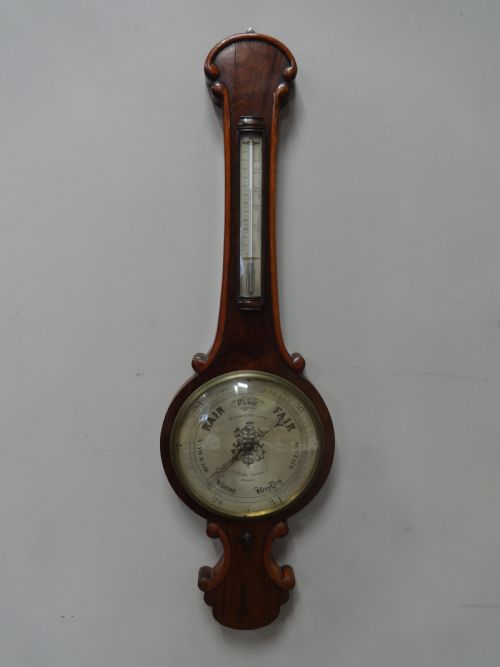
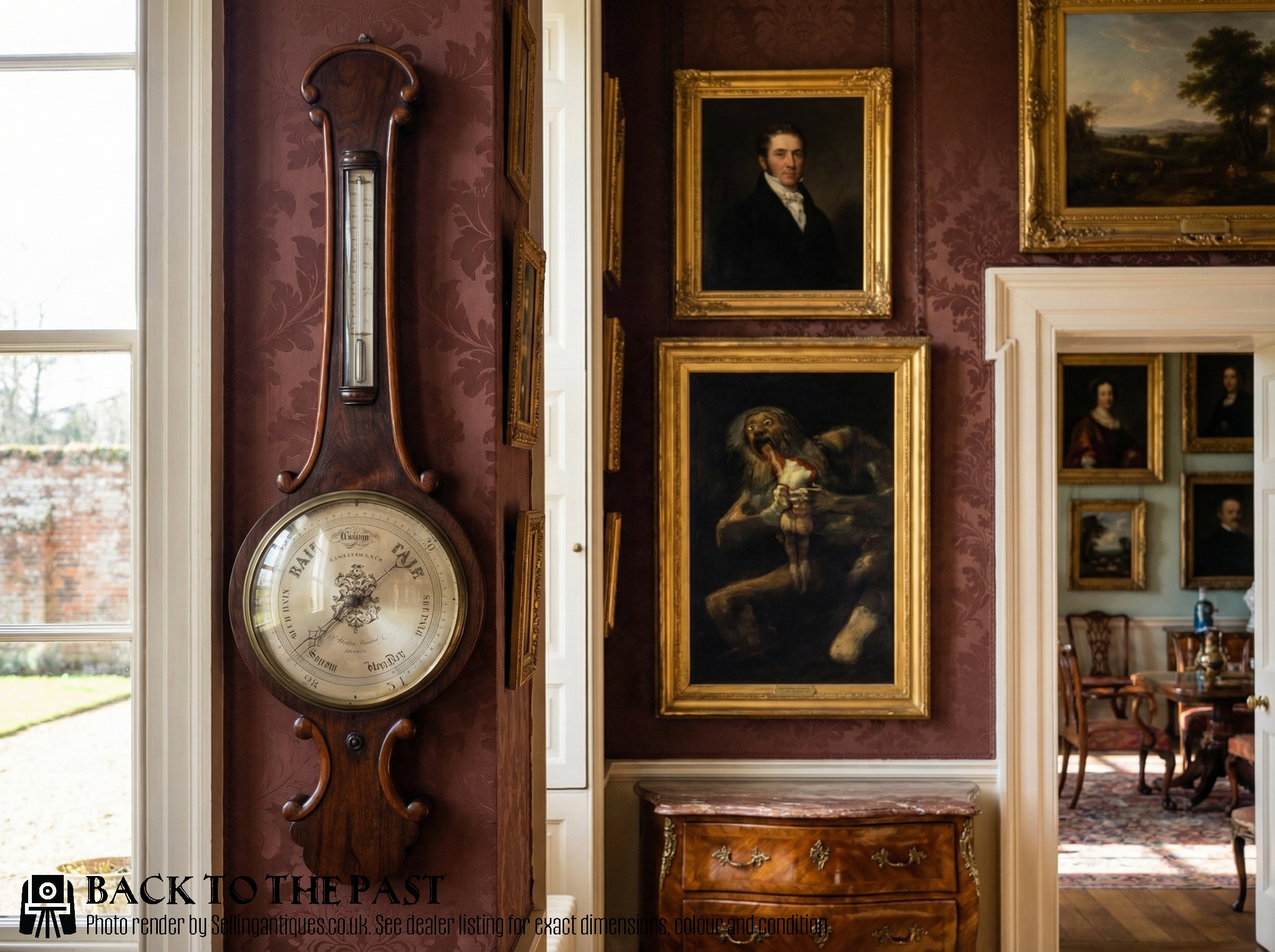
A nineteenth century barometer measures atmospheric pressure while anchoring a hallway or study with timber and brass.
What a nineteenth century barometer is
When you search for a nineteenth century barometer, you find domestic instruments designed to measure atmospheric pressure and predict weather changes. The listings span the Regency and Victorian periods, showcasing the shift in interior tastes across decades. Domestic forecasting required precision, making these functional objects central to household management.
The stick barometer is the most common form on this page, housed in slender wooden cases of mahogany or rosewood. Wheel barometers, often called banjo barometers due to their shape, also appear frequently alongside French Atmos movements and marine designs. These pieces range from simple mahogany stick instruments to marquetry decorated neocalssical wall pieces.
Makers such as W.E. Pain of Cambridge, Joseph Somalvico & Co, and F Salteri & Co signed many of these surviving instruments. Scottish and English workshops produced examples featuring satinwood inlay, bone scale plates, and mother-of-pearl highlights. Every piece combines scientific utility with the cabinetmaker's art of the era.
How they were made
Cabinetmakers constructed the cases using solid and veneered timbers including mahogany, rosewood, and satinwood. Wood inlay and mother-of-pearl ornamentation embellished the finer wheel barometer frames, while glass protected the delicate dial faces and mercury tubes. Brass bezels, dampers, and indicators added metallic contrast to the polished timber surfaces.
Instrument makers calibrated the barometer tubes and engraved the measurement scales onto paper, bone, or silvered brass plates. Atmos barometers utilised mechanical changes driven by temperature variations to power the movement without winding. Each instrument required expert coordination between the woodworker and the scientific instrument maker.
Retail Price Guide 2026
Typical UK retail prices for nineteenth century barometer, calculated from the Sellingantiques database of over a million retail prices indexed since 2003. This retail price guide relies exclusively on Sellingantiques data; no external sources or auction records are used, so the figures do not describe the wider market.
The listings here feature both the Regency and Victorian periods, utilising mahogany, rosewood, satinwood, bone, and mother-of-pearl.
What varies in quality
The distinction between standard domestic barometers and superior examples lies in the ambition of the timber work and the signature on the dial. Cases featuring intricate marquetry, satinwood banding, or mother-of-pearl inlay demonstrate a higher tier of cabinetmaking. Signed works by documented makers such as George Bateman or Joseph Somalvico carry greater weight than unsigned workshop pieces.
The preservation of original mercury columns, glass tubes, and silvered paper or brass dials defines the integrity of the instrument. Simpler stick barometers rely entirely on the proportion of the wood case and the clarity of the vernier scale for their appeal. Quality here is a measure of material selection and the enduring legibility of the maker's hand.
W.E. Pain of Cambridge·Joseph Somalvico & Co·F Salteri & Co·J&J Gardner of Glasgow·Gowland & Son, Liverpool·George Bateman London
The Nineteenth Century Barometer Glossary
- Stick barometer
- An instrument contained within a long, narrow vertical wooden case that houses the open-ended glass tube of mercury. This form provides a direct reading of the barometric column against a fixed scale.
- Wheel barometer
- A wall instrument featuring a circular dial face at the base connected to a concealed siphon tube via a pulley and float system. Often called a banjo barometer due to its distinctive bulbous silhouette.
- Atmos barometer
- A hermetically sealed mechanical clock and barometer movement driven by subtle fluctuations in temperature and atmospheric pressure. This French innovation winds itself continuously without human intervention.
- Vernier scale
- A small auxiliary sliding scale attached to the barometer plate that allows fractional readings of the main barometric scale. It transforms a simple gauge into a precise scientific instrument.
- Marquetry
- The art of applying fitted pieces of wood veneer to a structure to form decorative patterns and pictorial scenes. Regency and Victorian makers utilised this technique on geometric wheel barometer cases.
Frequently Asked Questions
How do I read a nineteenth century barometer?
Read the main pointer on wheel barometers or the mercury level against the scale on stick barometers to observe atmospheric pressure. Higher readings indicate settled weather, while falling levels suggest approaching rain or wind.
The scale often includes descriptive weather words alongside numerical pressures to guide the household. Comparing the primary indicator with the set hand reveals whether pressure is rising or falling since the last check.
Where should I hang a stick barometer?
Hang your stick barometer on an interior wall away from direct sunlight, radiators, and heavy vibrations. Stable indoor temperatures ensure the wood case remains secure and the internal mechanism functions accurately.
Position the instrument at eye level in a hallway or study so family members can consult the weather easily. Secure fixings are essential given the weight of the dense timber cases and glass tubes.
Are nineteenth century barometers still accurate?
Many nineteenth century barometers remain fully functional and respond correctly to changes in atmospheric pressure. Proper calibration against a known standard allows them to track weather patterns just as they did centuries ago.
Some surviving instruments serve primarily as decorative wall furniture rather than working forecasters. Collectors value both the scientific heritage and the decorative quality of these timber cases regardless of active calibration.
What is the difference between a stick and wheel barometer?
A stick barometer displays the mercury column directly within a long vertical wooden trunk, offering a straightforward scientific readout. A wheel barometer places the dial at the bottom of a broader case, translating column movement through a mechanical pulley.
Wheel barometers generally occupy more wall space and allow for decorative pediments like onion tops. Stick barometers emphasise minimalist timber grain and structural restraint.
How do I identify a Regency period barometer?
Regency barometers often feature restrained neoclassical proportions, string inlay, and architectural pediments in mahogany or satinwood. The lettering on the dial plates tends to use clean serif typography typical of the early nineteenth century.
Look for dry timber surfaces and simpler brass fittings that distinguish Regency work from later Victorian elaboration. Signed dials from makers working in London or provincial cities further anchor the date.