
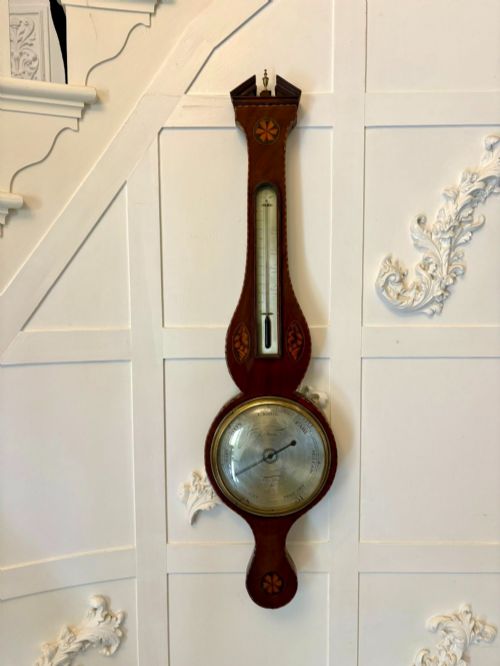
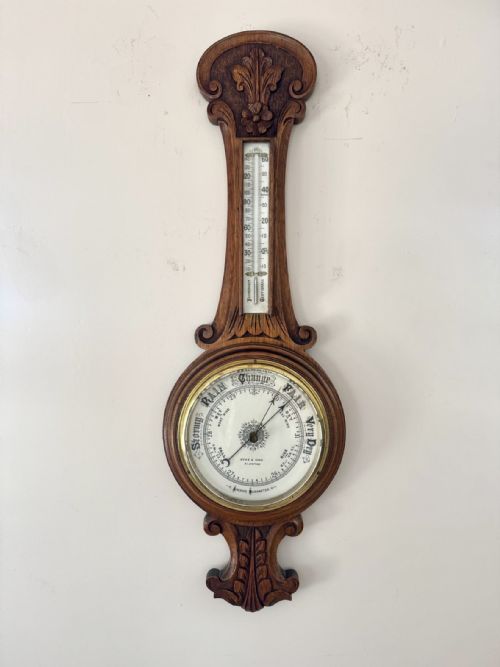
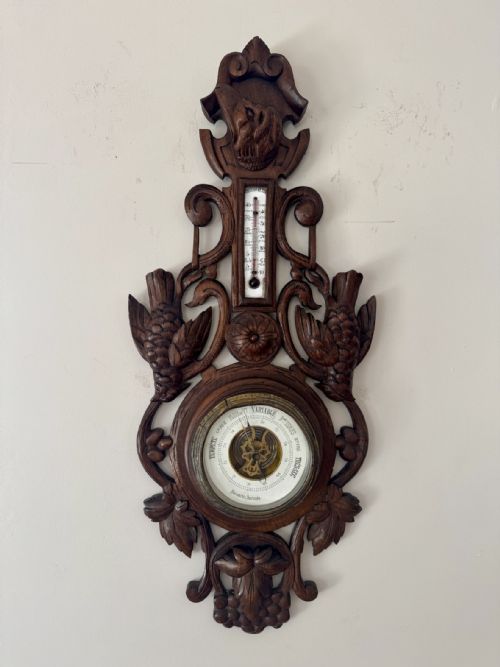
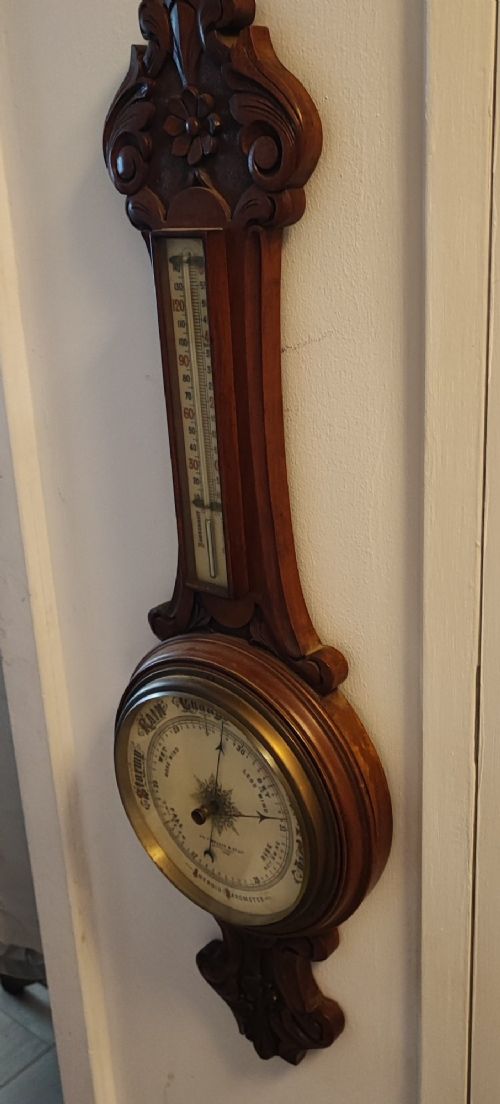

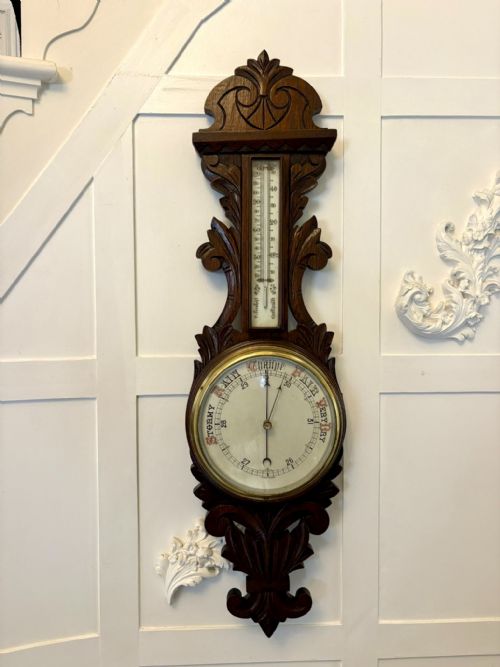


Dark Wood Wall Barometer
These dark wood wall barometer examples bring practical nineteenth-century recording instruments into modern rooms.
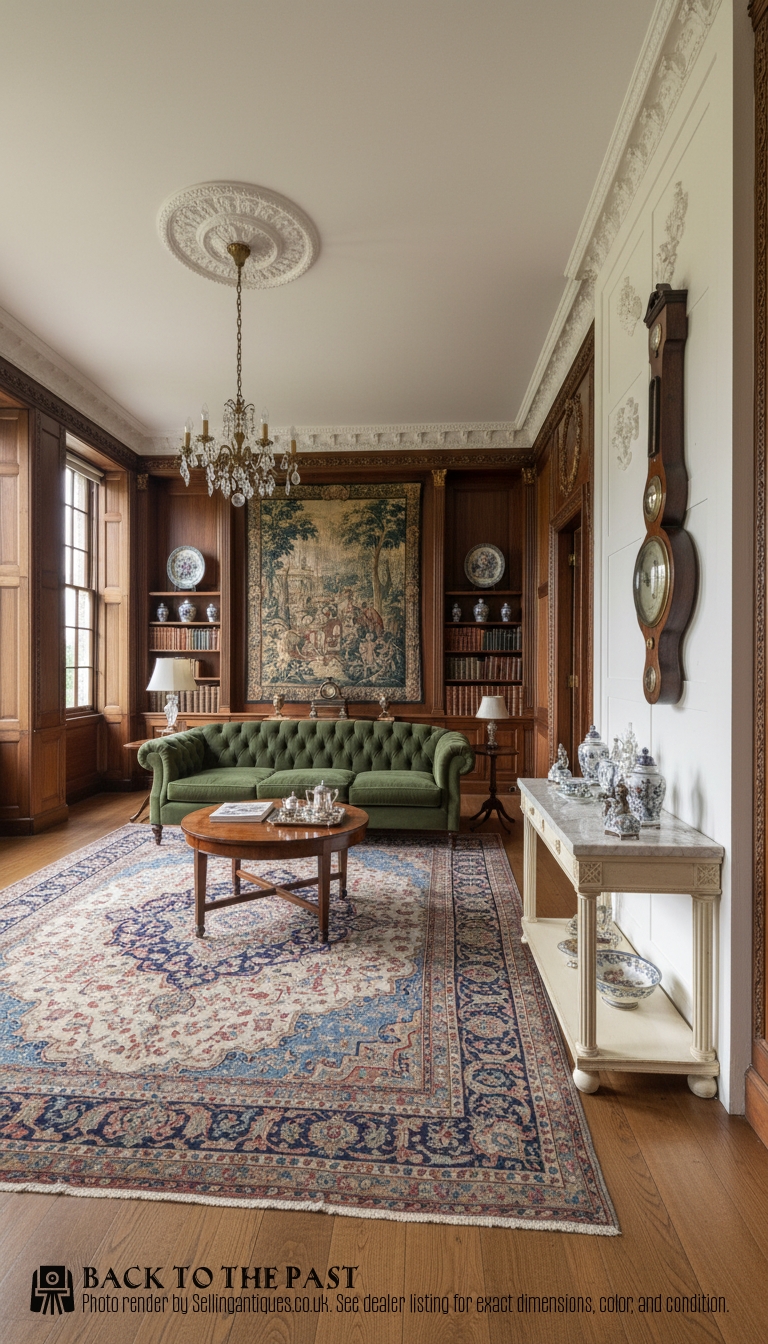
What a dark wood wall barometer is
A dark wood wall barometer serves as both a functional weather instrument and a decorative piece of wall furniture. These domestic recording tools measure atmospheric pressure to help forecast local weather conditions.
Materials and construction
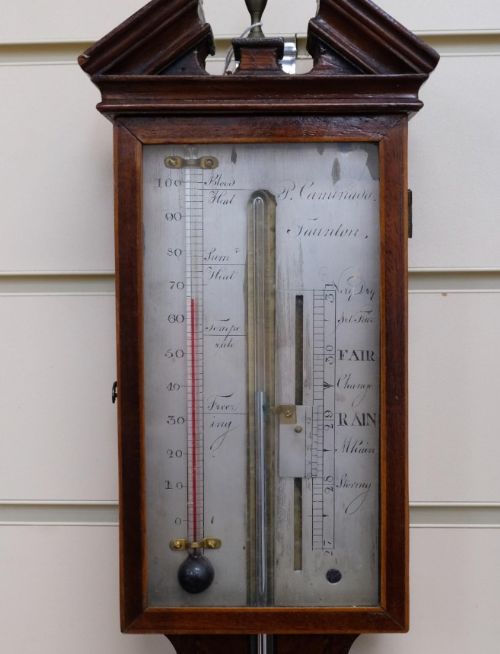
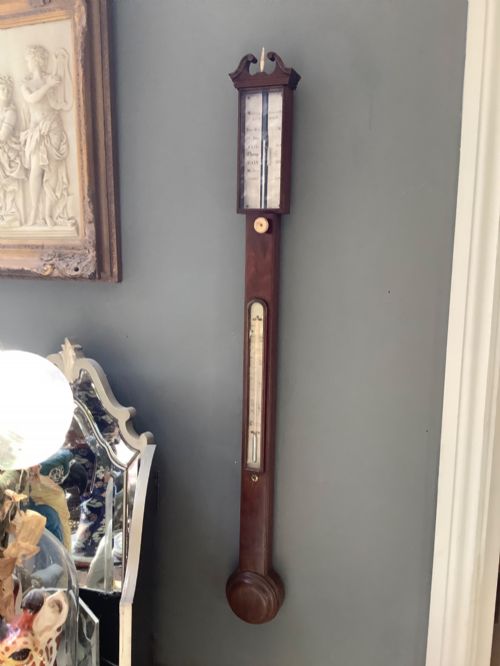
Cabinet makers utilised dense timbers including mahogany, rosewood, walnut and carved wood to house the delicate glass tubes and dials. Many nineteenth-century cases feature contrasting boxwood inlay, ebony details or mother of pearl accents.
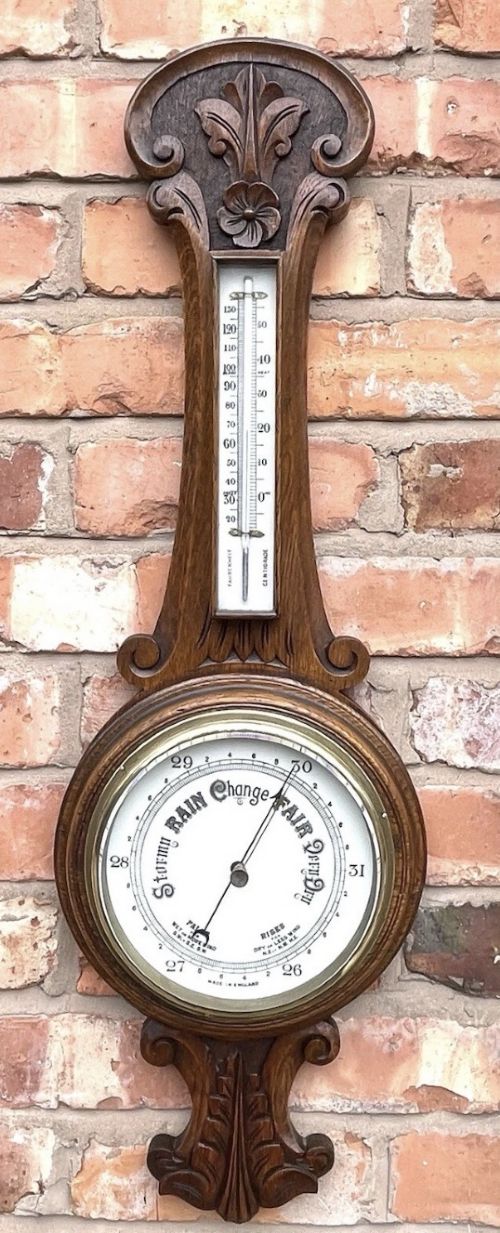
Carved wood elements appear on regional items such as Black Forest frames, whilst makers integrated brass bezels and thermometer scales into the wooden housings.
Retail Price Guide 2026
Typical UK retail prices for dark wood wall barometer, calculated from the Sellingantiques database of over a million retail prices indexed since 2003. This retail price guide relies exclusively on Sellingantiques data; no external sources or auction records are used, so the figures do not describe the wider market.
The listings span the Georgian, Victorian and Edwardian periods, utilising mahogany, rosewood, walnut and boxwood inlay.
Assessing quality
The distinction between standard domestic instruments and superior examples lies in the refinement of the timber casing and the intricacy of the inlay work. Finer nineteenth-century pieces display precise boxwood stringing, carefully selected grain patterns and elaborate carved decoration.
Signed dials by known instrument makers elevate the status of a dark wood wall barometer compared to unsigned workshop output.
Blake & Son·Charles Aiano·A Pozzoby London
The Dark Wood Wall Barometer Glossary
- Aneroid barometer
- An instrument that measures atmospheric pressure without using liquid, relying on a flexible metal box. This design became common during the Victorian period.
- Banjo barometer
- A domestic weather glass housed in a case shaped like a banjo, typically combining a hygrometer, thermometer and dial. These are frequently veneered in rosewood or mahogany.
- Stick barometer
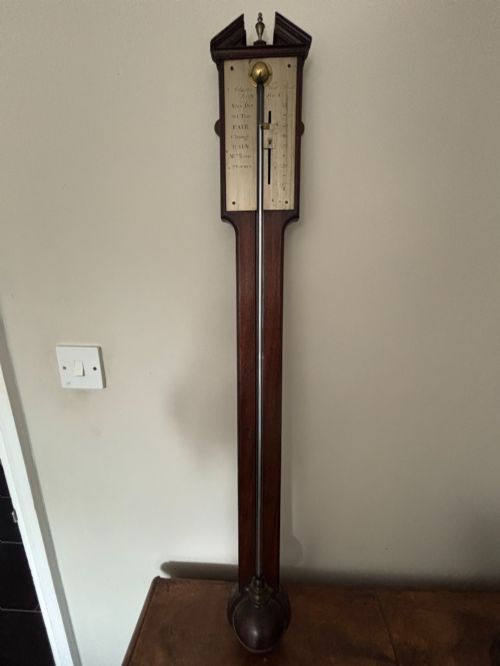
- A vertical instrument containing a tube of mercury to measure air pressure against a visible scale. Georgian examples often feature exposed scales protected by glass.
- Boxwood inlay
- Contrasting light wood inserted into darker timber surfaces to create geometric lines or decorative motifs. It appears frequently on nineteenth-century cases.
Frequently Asked Questions
How do I hang a heavy barometer safely?
Secure the mounting directly into a wall stud or use heavy-duty wall anchors rated for the weight of the timber case. Ensure the hanging bracket on the reverse is firmly fixed to the wood.
Check that the instrument hangs completely vertical so the internal mechanics function correctly.
What is the difference between wheel and stick barometers?
A stick barometer uses a long, straight tube of mercury to show direct barometric height. A wheel barometer translates pressure changes through mechanical linkages to move a pointer around a circular dial.
Both styles utilise rich dark wood cases but present the weather readings in different visual formats.
How do I date a nineteenth-century barometer?
Examine the style of the timber case, the script used for the maker's signature, and the complexity of any inlay work. Georgian and early nineteenth-century pieces often feature stick formats with exposed ivory or boxwood scales.
Later Victorian examples lean towards aneroid dials mounted in carved wood or rosewood banjo frames.
Do these antique barometers still work?
Many surviving instruments retain functional movements that respond to changing air pressure. Aneroid versions can often be calibrated locally using a reliable reference reading.
Even when used purely for decoration, they retain their mechanical integrity as historical scientific objects.