






18th Century Barometer
An 18th century barometer measures atmospheric pressure with mercury and fine cabinetry, offering both scientific history and elegant domestic decoration for your wall.
18th Century Barometer
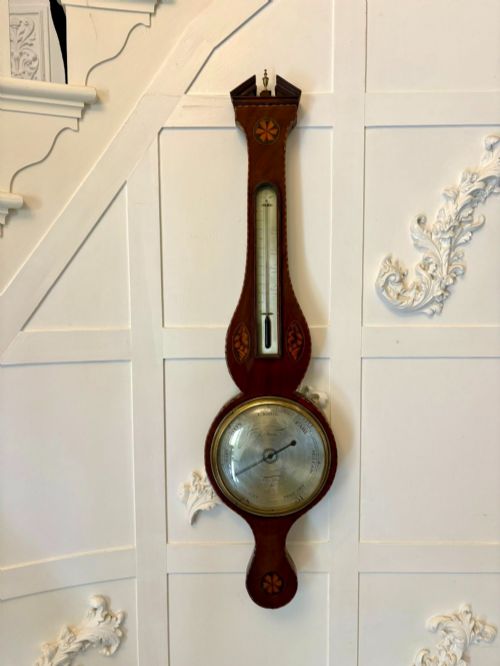
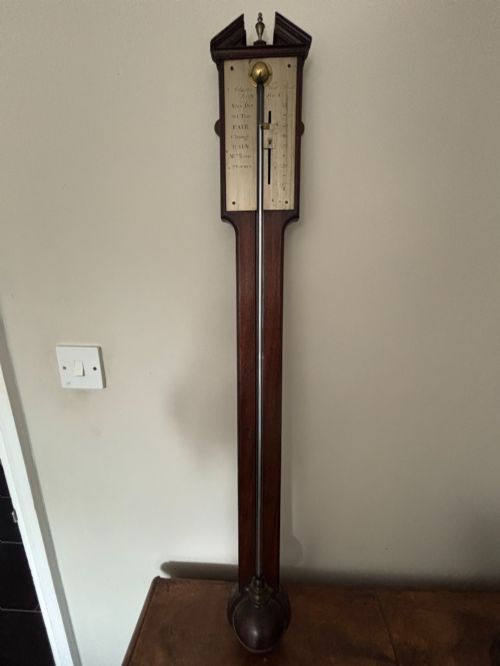
When you search for an 18th century barometer, you encounter precision meteorological instruments housed in timber cases that span the Georgian and Regency periods. These pieces include stick barometers, wheel barometers, and angle barometers designed to hang on interior walls.
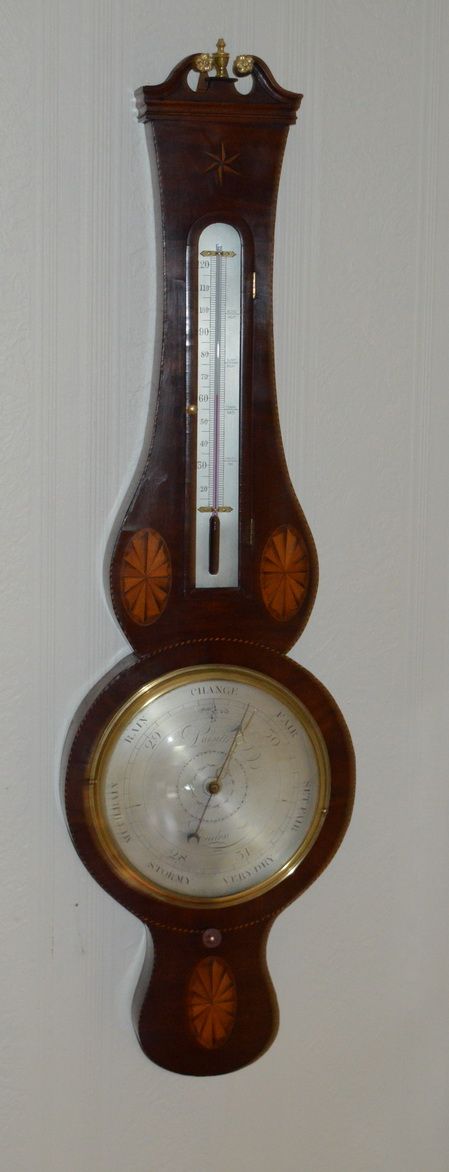
You are most likely to meet mahogany stick barometers and banjo barometers from the George III era on this page. These versions showcase the transition from purely utilitarian scientific apparatuses to sophisticated decorative furnishings for polite rooms.
How they were made
Makers constructed the primary housings using solid and veneered timbers such as mahogany, walnut, and pollard oak, often adding boxwood and ebony inlay for decorative contrast. Brass was utilised for cistern covers, dials, and vernier scales, whilst glass protected the delicate mercurial tubes and indicator faces.
Cabinetmakers shaped the long stems and curved banjo bodies by hand, housing the enclosed mercury tubes securely within the wooden channels. Skilled dial engravers marked the pressure scales with intricate calibrations and maker signatures.
18th Century Barometer Retail Price Guide 2026
Typical asking prices for 18th century barometer among the pieces listed under this phrase on Sellingantiques today, from the lower quarter to the upper quarter. They describe what is for sale here now, not the wider market.
Some makers added visible angle tubes just to make the mercury creep sideways, turning a boring weather glass into a parlour trick.
What varies in quality
The distinction between a standard example and an exceptional piece rests upon the crispness of the cabinetwork and the reputation of the maker inscribed on the dial. Examples signed by notable London instrument makers command greater attention due to their documented craftsmanship.
The subtlety of the boxwood stringing, the preservation of the original glass and brass fittings, and the proportion of the timber case elevate certain pieces above ordinary utility models.
George Adams London·Blunt·Luisetti of London·Gilbert London·Charles Aiano London·Pozzoby London·Pinchetti and Co London·Tarone Gally and Co·Matthew Berge London·Nairne London·Lincoln of London·Negretty and Co of London
The 18th Century Barometer Glossary
- Stick barometer
- A tall, narrow instrument where the mercury column rises and falls in a vertical glass tube against a visible scale. This form provides a direct reading of atmospheric pressure.
- Banjo barometer
- A household instrument featuring a rounded dial at the base resembling a banjo body, connected to a longer upper stem containing the tube. These pieces gained popularity in the later Georgian period for domestic halls.
- Vernier scale
- A small sliding auxiliary scale used alongside the main barometer tube to read barometric pressure measurements with greater precision. It enables minute adjustments in observation.
- Angle barometer
- An instrument incorporating an inclined glass tube that magnifies small changes in atmospheric pressure. This configuration represents a more uncommon variation in scientific design.
18th Century Barometer: Frequently Asked Questions
How do stick barometers work?
A stick barometer operates by balancing the weight of a column of mercury in a glass tube against atmospheric pressure pressing down on an exposed reservoir at the base. Changes in the weather alter this pressure, causing the mercury level to rise or fall accordingly.
Historical examples rely on this same physical principle, contained within protective wooden trunks and read against engraved brass or ivory scales.
Where should I hang a wall barometer?
These instruments suit interior spaces with stable ambient temperatures, away from direct sunlight, radiators, or heavy vibrations from doors. Hallways and studies provide traditional settings where they remain visible and functional.
Ensure the wall fixings can support the weight of the timber case and that the instrument hangs perfectly plumb for accurate readings.
How do I identify a Georgian barometer?
Georgian barometers display characteristic timber choices like mahogany or walnut, traditional architectural mouldings, and hand-engraved brass or silvered dials signed by the maker. The construction methods, such as hand-cut dovetails and vernacular brasswork, reflect eighteenth-century workshop practices.
Later Regency variants often introduce broader mahogany veneers, shaped bow-fronts, and more elaborate marquetry or boxwood stringing.
Are these barometers still accurate?
Many surviving examples retain their original mercury tubes and remain capable of registering atmospheric pressure changes with surprising accuracy. However, rough transit can introduce air bubbles into the column, requiring professional readjustment.
Collectors view them primarily as historical works of art and precision engineering rather than daily weather forecasters.