


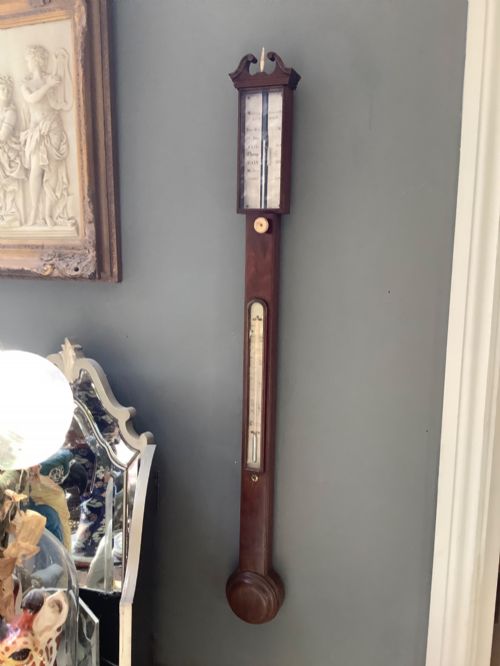


Mercury Stick Barometer
These mercury stick barometer examples record atmospheric pressure through enclosed metal columns, offering both functional science and traditional interior decor.

What these pieces are
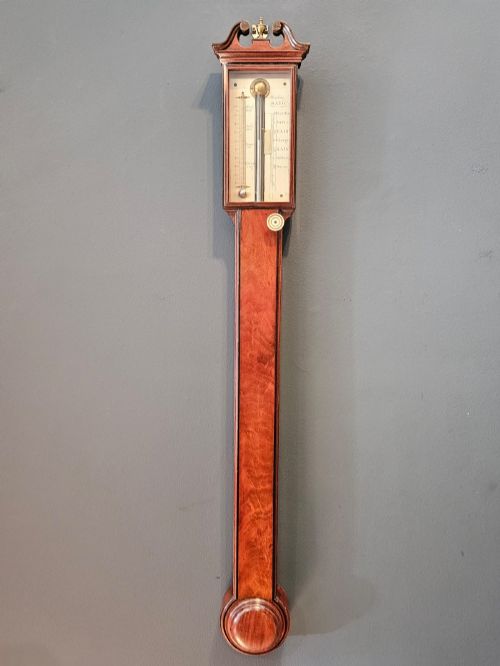
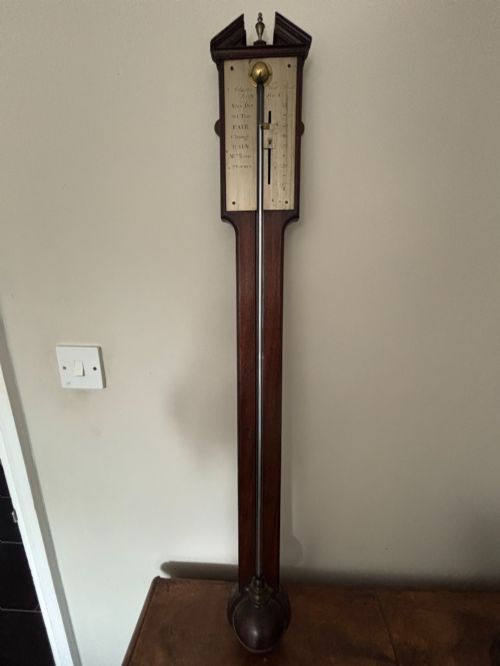
A mercury stick barometer is a vertical weather-measuring instrument designed to track changes in atmospheric pressure. The pieces catalogued here span periods from the early eighteenth century through the Victorian era and into the early twentieth century.
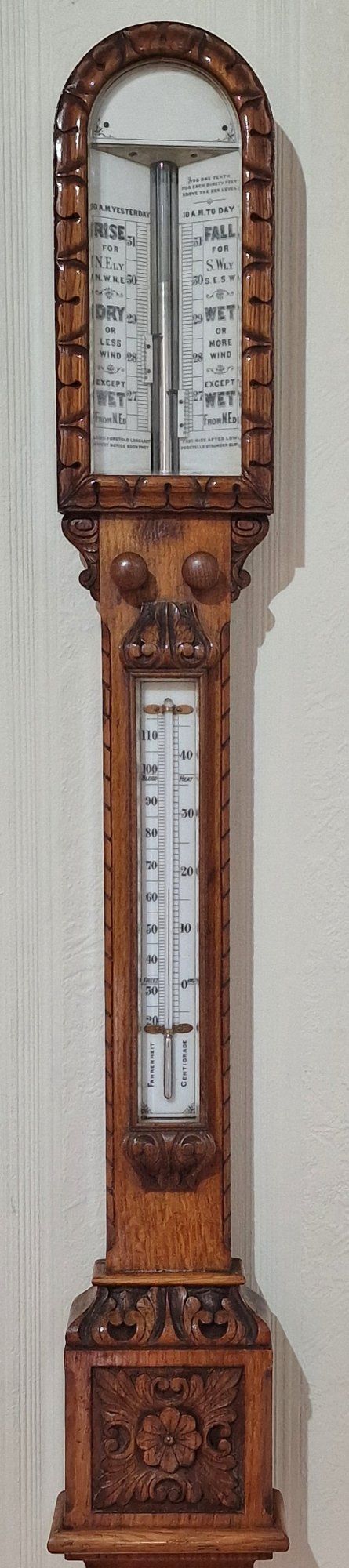
The styles range from plain Georgian and Regency designs to more decorative Victorian maritime variations. Walnut, mahogany, oak and boxwood make up the primary wooden structures found across the inventory.
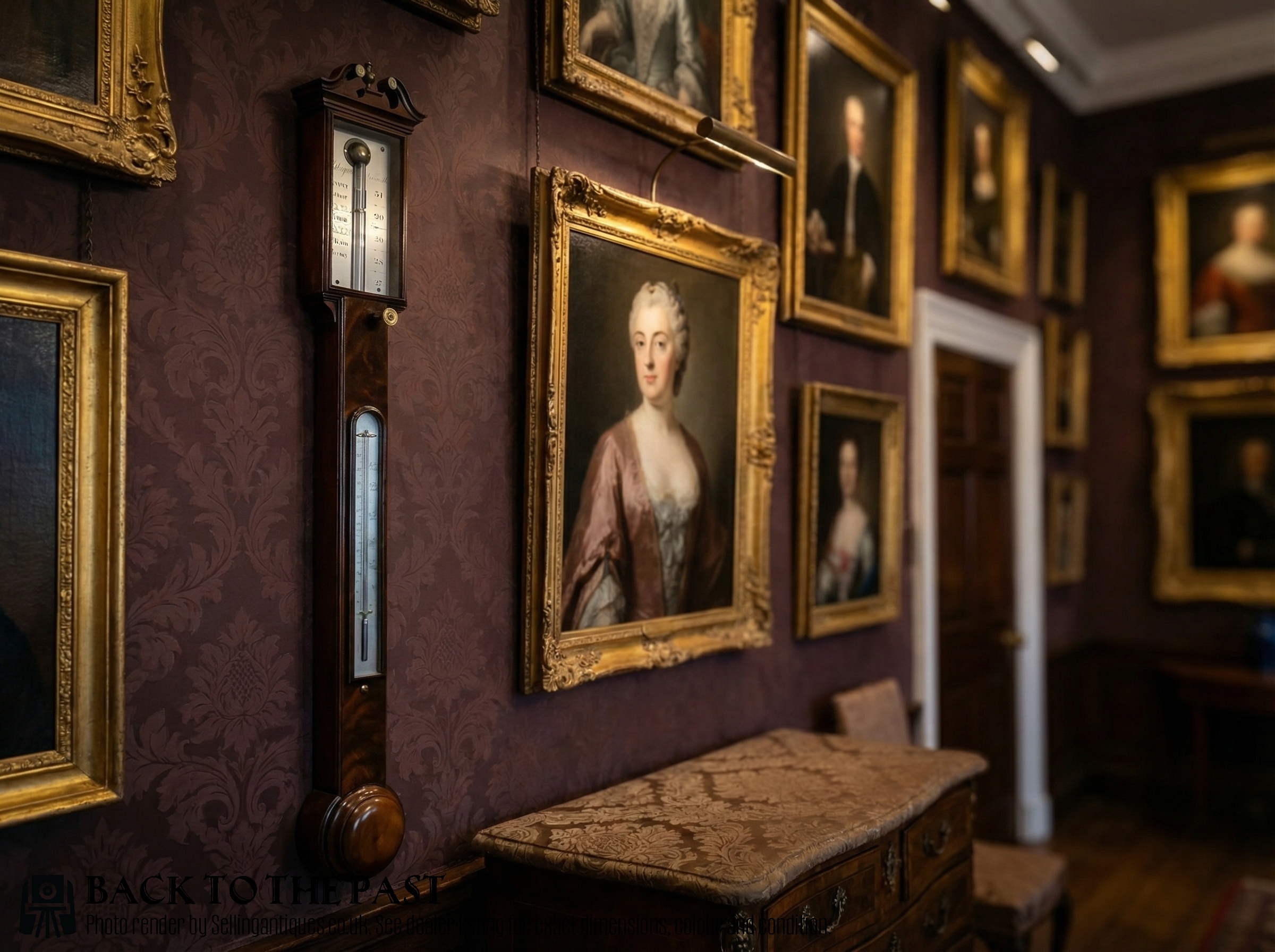
How they were made
Cabinetmakers constructed the main trunks using solid timbers like mahogany, walnut, oak and rosewood, sometimes adding parquetry or ebony and boxwood inlay. These cases protect the delicate glass tubes containing the liquid metal.
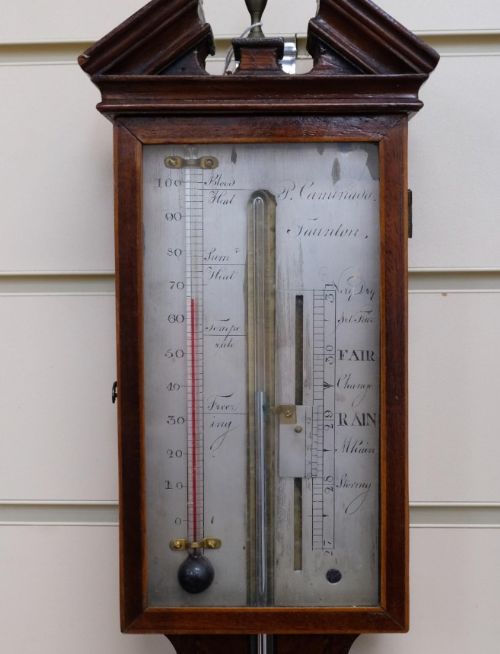
The measurement scales are typically engraved on silvered metal plates, allowing for clear reading of barometric changes. Exposed brass cistern covers, bone vernier knobs and steel indicators complete the mechanical assemblies.
Retail Price Guide 2026
Typical UK retail prices for mercury stick barometer, calculated from the Sellingantiques database of over a million retail prices indexed since 2003. This retail price guide relies exclusively on Sellingantiques data; no external sources or auction records are used, so the figures do not describe the wider market.
Some nineteenth-century instruments include built-in thermometers so you can fret about both the air pressure and the temperature at the exact same time.
What varies in quality
Quality rests in the fineness of the cabinetwork and the distinction of the maker's signature on the silvered dial. Pieces featuring intricate parquetry or bow-fronted mahogany show greater workshop skill than plain utility versions.
Signed instruments by known makers command higher regard than unsigned examples. The survival of the original mercury column and undamaged silvered brass plates also defines the standard of preservation.
JB Bergna Newcastle·Ronchetti Of Holborn·J Hughes London·Bate·James Gatty London·Alexander Adie·Pozzoby London·Malacrida of Dublin·Charles Baker London·Colombo London·White & Barr Glasgow·Barraga·Gatward Hitchin
The Mercury Stick Barometer Glossary
- Barometer
- An instrument used for measuring atmospheric pressure in order to forecast weather. These devices rely on a column of liquid metal balancing against air pressure.
- Cistern
- The enclosed reservoir at the base of the instrument that holds the reserve of liquid metal. It connects directly to the main vertical glass tube.
- Vernier
- A small sliding scale attached to the face that allows the user to read fractional parts of the main pressure subdivisions. It is adjusted using a small bone or metal knob.
- Silvered metal
- A brass plate treated with a silver solution to provide a contrasting surface for engraved graduations and maker details. This material reflects light gently in domestic interiors.
- Parquetry
- Geometric mosaic woodwork used to decorate the surface of the instrument case. It demonstrates advanced joinery and decorative ambition.
Frequently Asked Questions
How do I read a stick barometer?
You read the height of the liquid column against the engraved scale, using the sliding vernier to measure precise fractions. Rising levels generally indicate fair weather ahead, while falling levels suggest approaching storms.
Changes happen slowly over hours, so tapping the instrument gently before reading helps settle the column against friction.
Where should I hang a barometer?
Hang your instrument on an interior wall away from direct sunlight, radiators and heavy vibrations. Hallways or studies suit them well because room temperatures remain relatively stable in those areas.
Keep the case strictly vertical to ensure the column measures pressure accurately without binding against the backboard.
How do I date a stick barometer?
Dating relies on the style of the wood case, the shape of the cistern cover and the lettering on the silvered dial. Georgian and Regency pieces often feature architectural pediments and fine mahogany veneers.
Victorian examples tend toward sturdier oak construction and simpler bezels, while maker signatures help narrow down the active workshop years.
Are these barometers still accurate?
Many surviving instruments continue to track atmospheric pressure correctly if the sealed glass tube remains intact and air-free. They function as both historical scientific objects and working weather indicators.
Professional calibration may be needed if the column has separated or collected air bubbles over the decades.