


Regency Stick Barometer
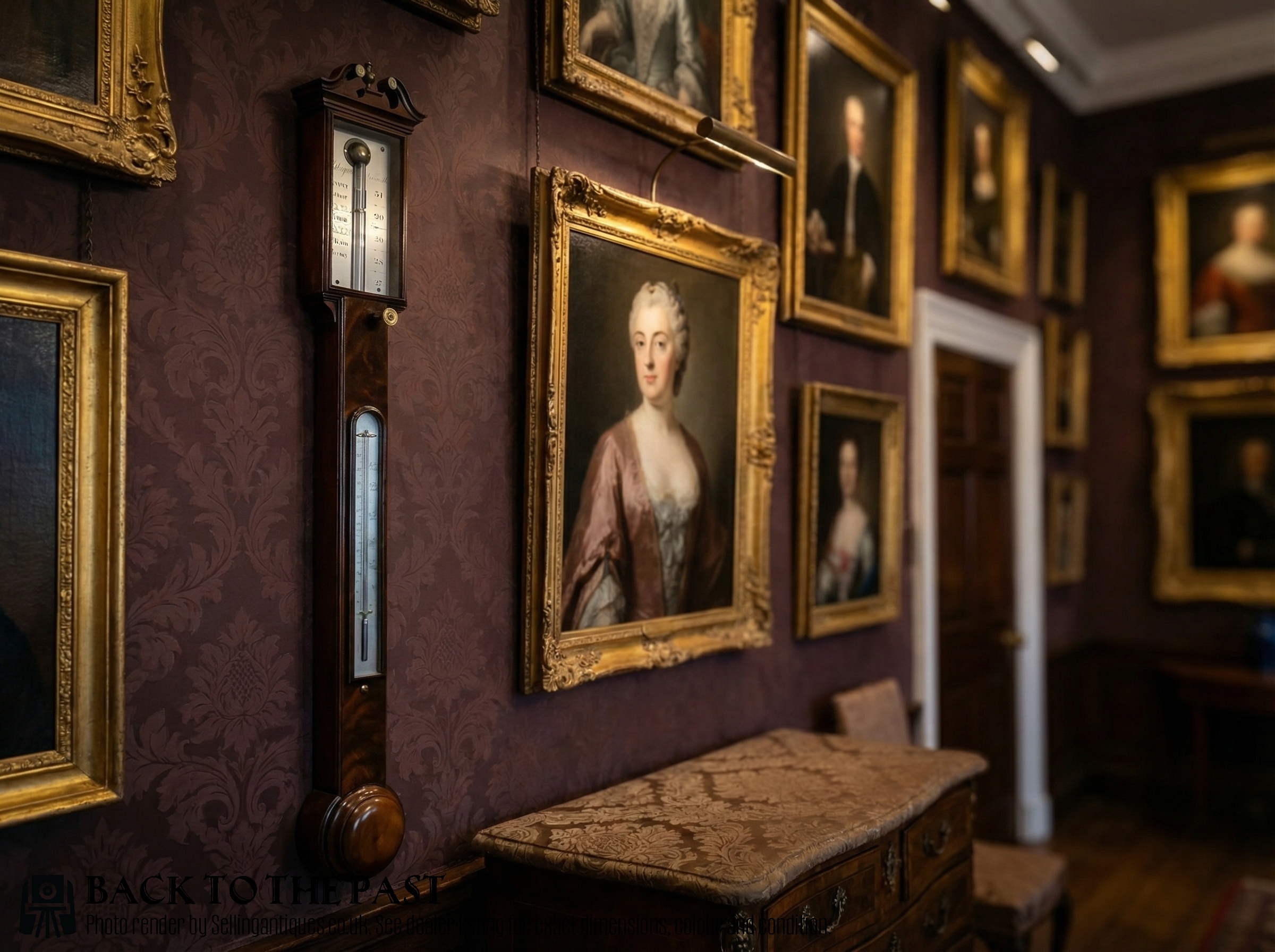
A regency stick barometer measures atmospheric pressure with precision, housed in a slender timber case designed to hang gracefully in a hallway or library.
What these barometers are
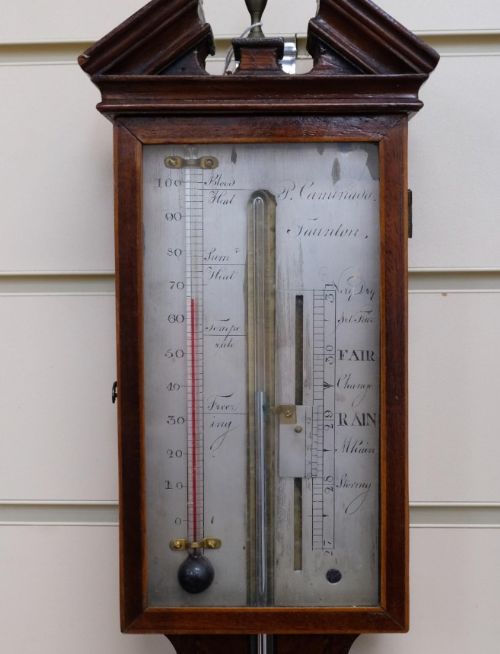
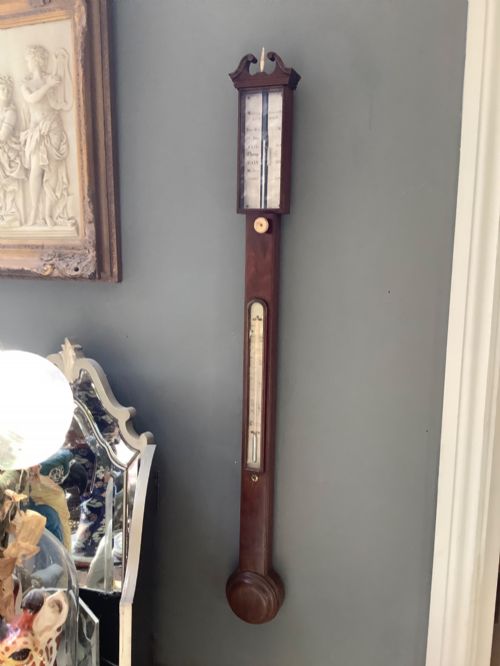
A regency stick barometer is an instrument for measuring atmospheric pressure, primarily produced during the nineteenth century and the Georgian and Victorian periods. These pieces take the form of a tall, narrow wall-mounted case enclosing a glass tube filled with mercury, topped by an open or glazed dial.
Originating from workshops across London, Newcastle, Liverpool, Exeter, Dublin, Edinburgh, and Norwich, these instruments served both domestic utility and scientific interest in grand homes. Examples range from simple architectural frames to elaborate pieces finished with parquetry and fruitwood inlay.
How they were made
Cabinetmakers constructed the tall trunk cases using solid timbers like mahogany, rosewood, and fruitwood, sometimes incorporating flame veneers and parquetry patterns. Glass protected the delicate mercury columns, while brass and silvered brass plates received finely engraved calibrations and maker inscriptions.
Details such as bone vernier scales and turned wooden cistern covers completed the lower terminals of the barometer cases. Metal components including brass hanging rings and hinges secured the instruments to walls and protected the movable indicators.
Retail Price Guide 2026
Typical UK retail prices for regency stick barometer, calculated from the Sellingantiques database of over a million retail prices indexed since 2003. This retail price guide relies exclusively on Sellingantiques data; no external sources or auction records are used, so the figures do not describe the wider market.
Several examples preserve the names of itinerant Italian instrument makers who journeyed to establish workshops in Georgian provincial cities.
What varies in quality
The distinction between standard examples and the finest pieces rests upon the selection of timber and the sophistication of the case geometry. Figures in the wood grain, such as flame mahogany or richly figured rosewood, alongside refined bow fronted contours, elevate the visual presence of an instrument.
Signatures by notable makers working in London and regional hubs add archival weight to a piece. Furthermore, the crispness of the engraved markings upon the silvered brass scales and the intact survival of delicate bone indicators demonstrate superior craftsmanship.
Dollond of London·JB Bergna·Bate of London·Ronchetti Of Holborn·Sandrino of Liverpool·Corti of Exeter·Malacrida of Dublin·Harris, London
The Regency Stick Barometer Glossary
- Bow fronted
- A case profile that curves outward at the front, softening the strict linearity of the instrument. This shape requires advanced woodworking skill to achieve smoothly.
- Silvered brass
- A metal alloy treated with silver powder to create a bright, matte surface for engraving scale numerals. It provides high contrast against dark instrument cases.
- Vernier scale
- A small auxiliary sliding scale operated by a bone or ivory knob to read atmospheric pressure measurements with greater precision. It allows fractional divisions of the main scale.
- Marine stick barometer
- A specialised hanging barometer designed to compensate for the motion of a ship at sea, often featuring gimbal mountings. These pieces typically date from the late regency period.
- Cistern cover
- The protective wooden or brass housing at the base of the barometer that conceals the mercury reservoir. It often echoes the decorative turning found at the top of the case.
Frequently Asked Questions
How do I read a stick barometer?
Read the height of the mercury column against the engraved scale, utilising the adjustable vernier to pinpoint exact measurements. Rising mercury typically indicates improving weather conditions.
Changes in the pressure readings over the course of hours provide the best indication of coming meteorological shifts. Observant owners record these movements daily to track local forecasts.
Where should I hang a stick barometer?
Mount the instrument securely on an interior wall away from direct sunlight, radiators, and heavy foot traffic. Stable ambient temperatures ensure the mercury responds accurately to atmospheric changes.
Hallways and libraries provide traditional settings where fluctuations from external heat sources remain minimal. Ensure the back of the case rests flat against the wall for proper vertical alignment.
How do I identify a Georgian barometer?
Examine the timber selection, case construction, and the style of the engraved silvered brass scale. Pieces from this era often utilise solid mahogany with restrained architectural detailing.
Signatures from regional cities and London workshops active during the early nineteenth century further confirm the period. Compare the dial layout and wood finishes with documented archival examples.
Can these barometers still be moved?
Moving a mercury barometer requires tilting the case gently to allow the mercury column to fill the glass tube completely. This prevents air pockets from forming and breaking the fragile glass during transit.
Professional transport is recommended for long distances to ensure the instrument remains inverted or properly secured. Once installed in a new location, the barometer must hang vertically for several hours before settling.