



Wall Mounted Barometer
A wall mounted barometer records atmospheric pressure with precision, offering both a reliable forecast and a handsome focal point for a room.
What wall mounted barometer designs look like
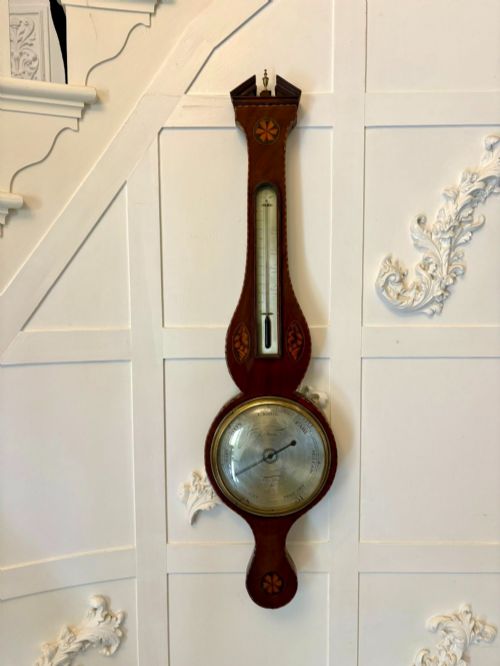
When you search for a wall mounted barometer, you encounter pieces spanning the Georgian, Victorian, and Edwardian eras. These instruments primarily take the form of stick barometers or wheel barometers, designed to hang securely in domestic or marine settings.
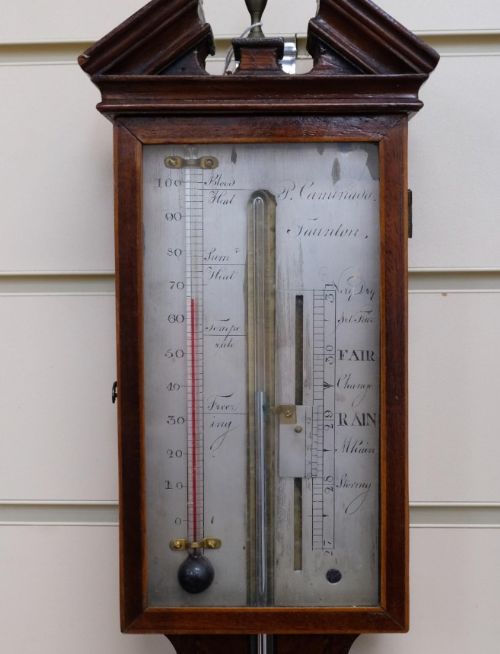
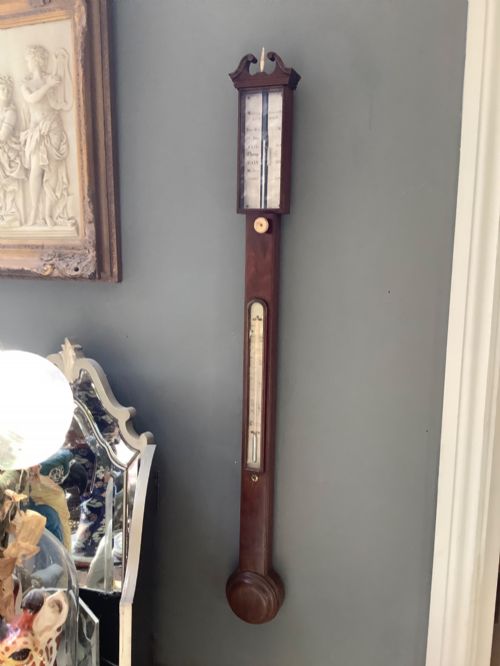
The most common examples on this page are mahogany stick barometers and walnut stick barometers from the nineteenth century. Makers such as Negretti and Zambra and Bate of London produced these dependable recording devices during periods of significant scientific instrument manufacturing.
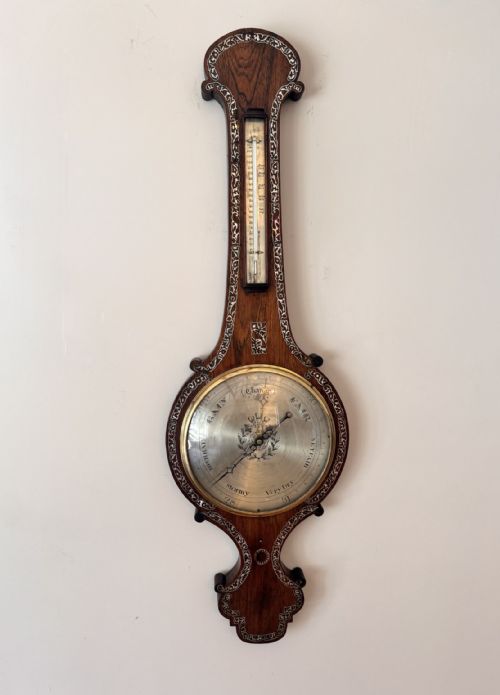
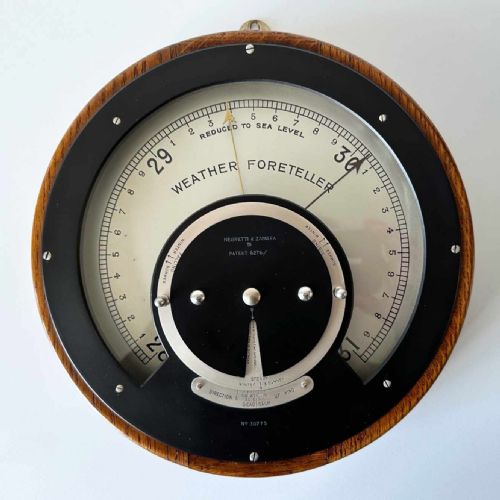
Examples range from restrained Georgian specimens to more ornate mid-Victorian carved walnut pieces and early twentieth-century aneroid weather foretellers. Each object combines functional meteorological measurement with the cabinetmaker's skill of its specific period.
Materials and construction
Cabinetmakers constructed the main bodies of these instruments from dense hardwoods such as mahogany, walnut, and oak. These timbers provided the stability necessary to protect delicate internal tubes and mechanisms from warping.
Internal components incorporate glass tubes, mercury, silvered metal dials, brass fittings, and bone verniers. Skilled artisans mounted these materials onto carved or polished wooden frames designed for vertical wall hanging.
Retail Price Guide 2026
Typical UK retail prices for wall mounted barometer, calculated from the Sellingantiques database of over a million retail prices indexed since 2003. This retail price guide relies exclusively on Sellingantiques data; no external sources or auction records are used, so the figures do not describe the wider market.
Listings feature periods spanning from the Georgian era through to the early twentieth century, utilising mahogany, walnut, and oak.
Assessing quality in barometers
Quality reveals itself in the crispness of the timber carving and the legibility of the silvered metal scale. Superior makers employed finer graduations and sharper engraving on the register plates.
The integrity of the original case construction and the retention of signed maker details distinguish standard production from exceptional workshop output. Signed examples from noted makers command greater interest among collectors.
Negretti & Zambra·Bate of London·Hayward of Ashford
The Wall Mounted Barometer Glossary
- Stick barometer
- A tall, narrow instrument that measures atmospheric pressure using a vertical column of mercury in a glass tube. This form represents the traditional standard for meteorological accuracy.
- Wheel barometer
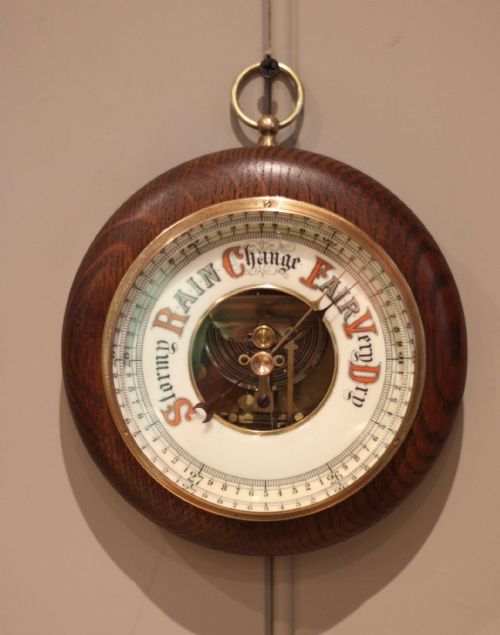
- A dial-type barometer where changes in pressure move a pulley and a visible pointer around a circular face. These often include auxiliary dials such as hygrometers or thermometers.
- Aneroid barometer
- A barometer that measures pressure without liquid, using a flexible metal box that expands or contracts. This mechanical design became popular in the late nineteenth and early twentieth centuries.
- Vernier scale
- A subsidiary sliding scale that allows the user to read barometrical measurements to a fraction of a millimetre or inch. It enhances the precision of stick barometers.
- Silvered metal
- A brass or copper plate treated with a silver solution to provide a bright, reflective background for engraved measurement scales. This surface is frequently protected by a lacquer layer.
Frequently Asked Questions
How do I hang a wall mounted barometer?
These instruments require a sturdy wall anchor capable of supporting the full weight of the hardwood case and glass components. Ensure the fixing is secure and level before releasing the instrument.
Position the barometer away from direct sunlight, radiators, and exterior doors to prevent extreme temperature fluctuations from affecting the internal mechanism.
What is the difference between stick and wheel barometers?
A stick barometer displays pressure vertically through a long mercury column, offering a direct view of the physical height of the fluid. This style is favoured for its scientific appearance and historical accuracy.
A wheel barometer converts vertical movement into a rotational pointer on a circular dial, often accompanied by weather predictions inscribed on the face. This circular format was traditionally suited to domestic hallway display.
How do I read a mercury barometer?
Locate the current pressure by observing the top of the mercury column against the graduated scale. Tap the instrument lightly before reading to release any friction in the glass tube.
Use the adjustable vernier scale to take precise readings and compare them over consecutive hours to determine whether weather conditions are improving or deteriorating.
Can antique barometers still predict the weather?
Historic barometers continue to measure atmospheric pressure accurately provided the internal glass tube remains sealed and free of air bubbles. They respond to real-time changes in barometric pressure just as they did centuries ago.
Interpreting the forecasts requires understanding local weather patterns alongside the numerical readings displayed on the silvered scale.