





Cistern Tube Barometer
These cistern tube barometers are precision weather instruments housed in refined timber cases, prized for their elegant simplicity and reliable atmospheric readings.
What They Are
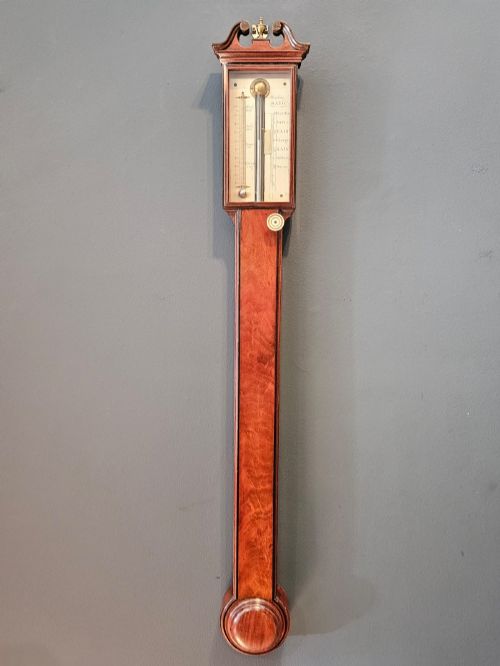
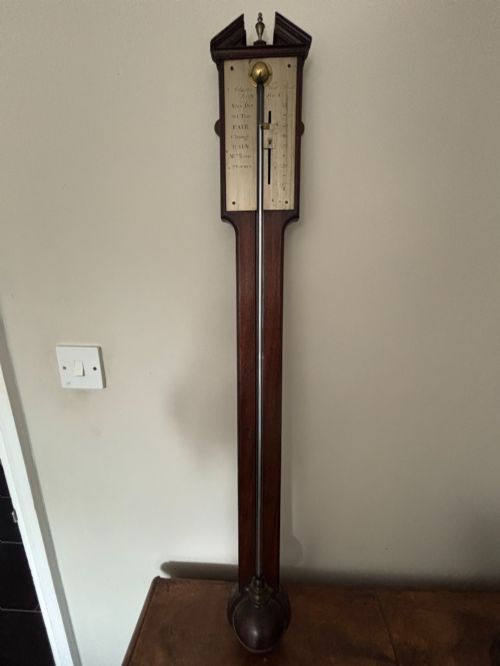
A cistern tube barometer is a traditional weather instrument designed to measure atmospheric pressure through the rise and fall of mercury within a vertical glass column. The form developed significantly across the Georgian, Regency, and Victorian eras, shifting from straightforward utilitarian apparatuses into sophisticated domestic furnishings.
The versions most commonly met on this page are stick barometers housed in tall, slender wooden cases. Examples frequently feature mahogany, rosewood, or ebonised wood frames, sometimes incorporating auxiliary instruments such as thermometers to form integrated weather stations.
Makers produced these instruments throughout the eighteenth and nineteenth centuries in both British and continental workshops. Their slim profiles allow them to sit neatly in narrow hallways and reception rooms just as they did centuries ago.
How They Were Made
Craftsmen built the cases using dense hardwoods such as mahogany and rosewood, which provided stability against environmental changes and allowed for fine cabinet-making details. Artisans shaped the wood into clean trunk lines, frequently terminating in rounded or cistern covers at the base.
The delicate barometer tubes were fashioned from clear glass and filled with mercury, mounted alongside carefully calibrated scale plates made of bone or ceramic. Metal components such as brass were utilised for vernier sliders, gimbals, and dial bezels to protect the glass and ensure precise readings.
Retail Price Guide 2026
Typical UK retail prices for cistern tube barometer, calculated from the Sellingantiques database of over a million retail prices indexed since 2003. This retail price guide relies exclusively on Sellingantiques data; no external sources or auction records are used, so the figures do not describe the wider market.
The listings on this page span the Georgian, Regency, and Victorian periods, constructed from mahogany, rosewood, and ebonised wood.
What Varies in Quality
Quality in a cistern tube barometer rests largely upon the pedigree of the maker and the crispness of the cabinetwork. Pieces bearing signatures from renowned opticians and instrument makers display superior engraving on their scales and finer joinery in the timber cases.
The choice of materials also dictates the standing of an instrument, with rich rosewood veneers and well-preserved bone or ivory scale plates marking out the higher tiers of production. Simpler ebonised wood or plain mahogany variants offer a more utilitarian charm while still maintaining accurate mechanical principles.
George Adams London·Blunt·Negretti & Zambra London·S&B Solomons of London·Ciresa of Milan·Corti of Exeter
The Cistern Tube Barometer Glossary
- Cistern
- The small reservoir at the base of the barometer tube that holds the reserve of mercury. Changes in atmospheric pressure cause the mercury to move between this reservoir and the vertical glass tube.
- Stick barometer
- A tall, narrow barometer design where the glass tube is mounted directly onto a wooden backboard rather than behind a circular dial. This form dominated precision weather recording before wheel barometers became popular.
- Vernier scale
- A small auxiliary sliding scale attached to the barometer that allows readings to be taken with greater precision. It enables the user to measure fractions of an inch or millibar accurately.
- Ebonised wood
- Timber treated with a dark stain or finish to imitate expensive ebony. This technique was frequently utilised during the nineteenth century to provide sharp contrast against brass fittings.
Frequently Asked Questions
How do I read a cistern tube barometer?
Read the height of the mercury column against the scale plate, adjusting the vernier slide to align with the meniscus. Rising mercury generally indicates improving weather, while falling mercury points towards approaching rain or unsettled conditions.
Compare successive readings over several hours to observe the trend rather than relying on a single static position. The engraved scale provides the numerical pressure measurement used by the observer.
Where should I hang a stick barometer?
Hang your barometer on an interior wall away from direct sunlight, central heating radiators, and draughty doorways. Extreme temperature fluctuations can cause the wood to warp and affect the mercury within the glass tube.
A stable indoor environment ensures the instrument remains accurate and preserves the condition of the antique timber case.
How do I date a Georgian or Victorian barometer?
Examine the style of the wooden case, the materials used for the scale plates, and any signature engraved upon the metalwork. Georgian examples often feature simpler mahogany trunks, whereas Victorian versions frequently incorporate bone scales and more ornate weather station configurations.
Makers' signatures and address details listed on the register plate offer the most reliable path to establishing a precise period of manufacture.
Can these antique barometers still be used today?
Yes, many of these instruments remain fully functional and continue to track atmospheric pressure accurately after centuries of existence. Gentle handling and careful relocation are essential to protect the delicate mercury column within the glass tube.
Consulting a specialist conservator is recommended if the barometer requires re-filling or internal maintenance before being placed into service.