




Victorian Weather Station
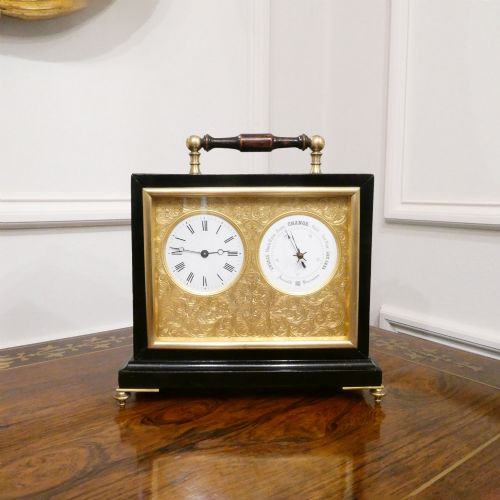
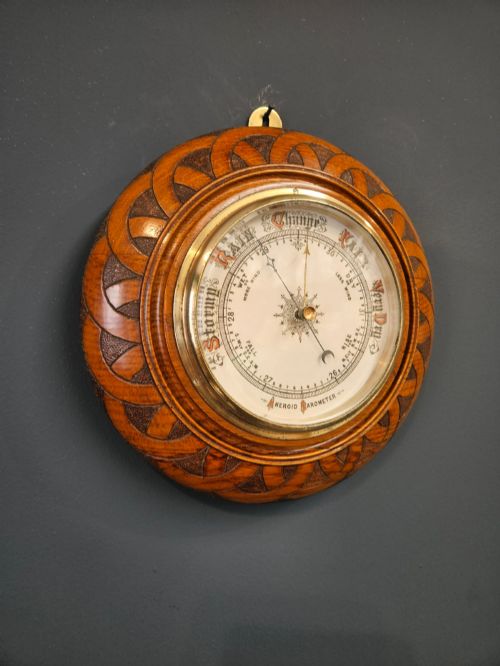
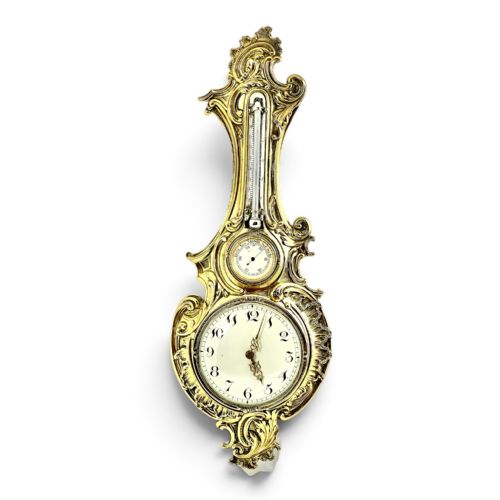
These Victorian weather station pieces are precision barometers and recording instruments housed in carved wood and mahogany cases, prized for both scientific utility and period charm.
What a Victorian weather station is
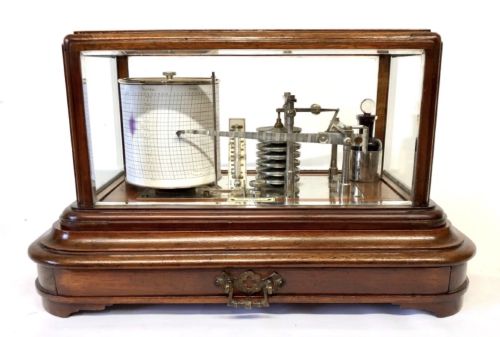
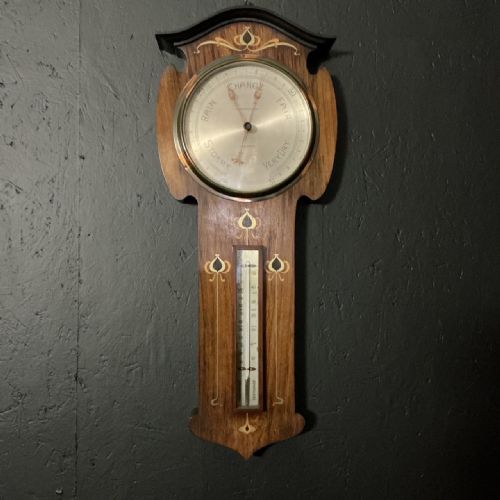
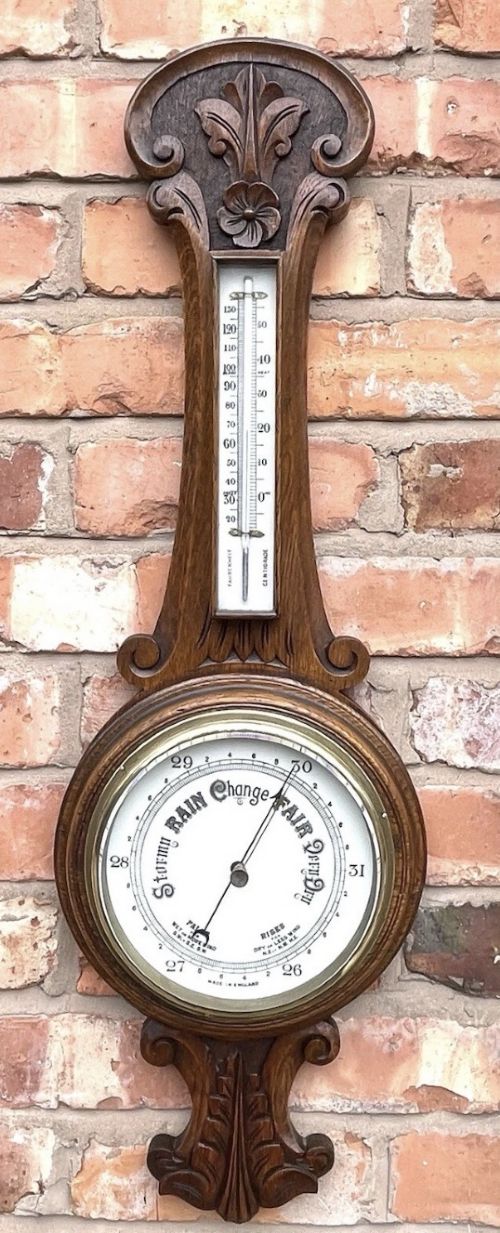
A Victorian weather station combines barometric instruments with wooden framing, appearing frequently as aneroid barometers, stick barometers, and self-recording aneroid setups. These items span various decades of the nineteenth century, including examples from eighteen fifty up to eighteen ninety.
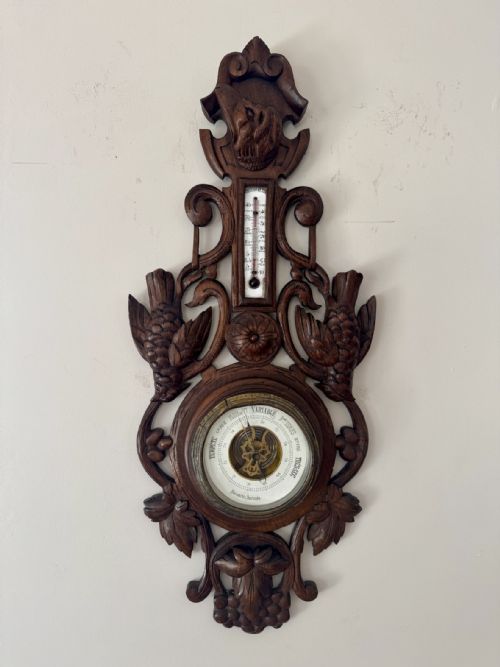
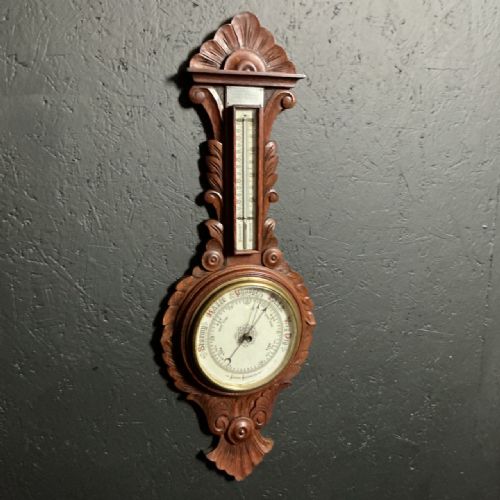
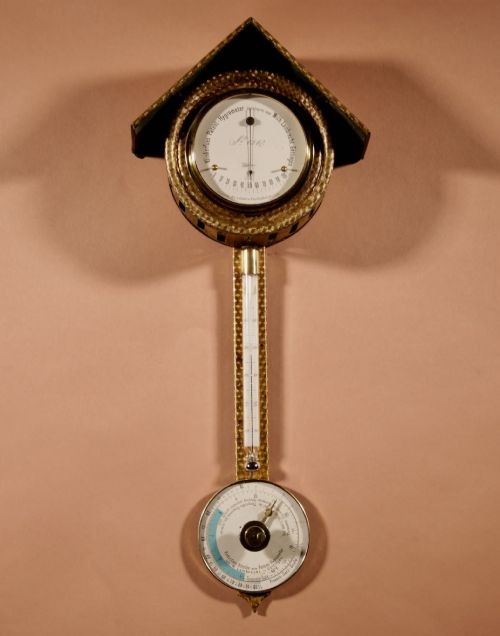
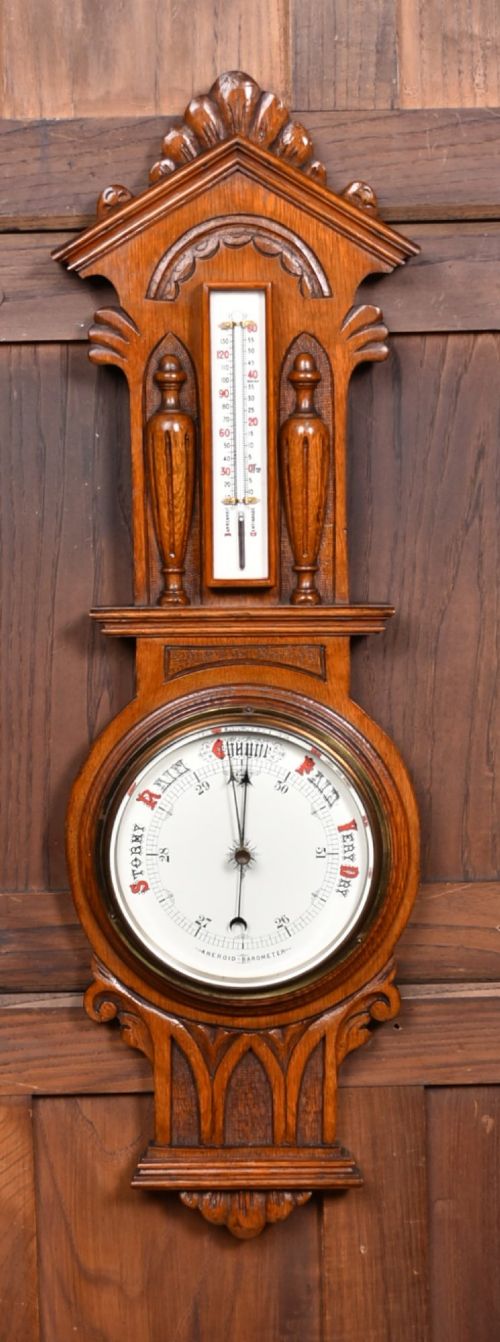
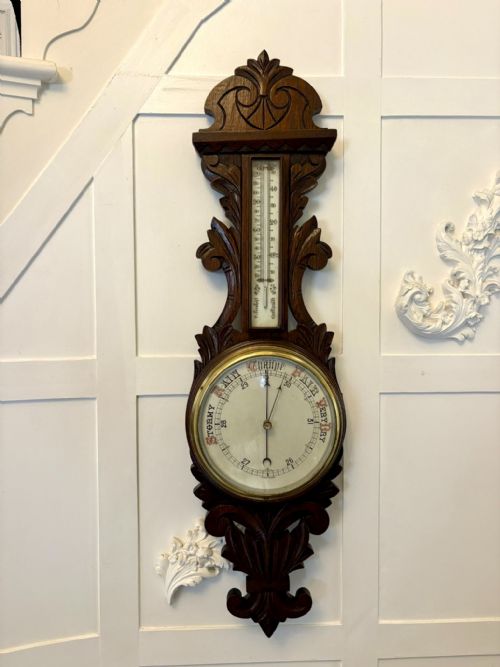
The objects take several distinct physical forms, ranging from carved wooden Black Forest enclosures to traditional mahogany and fruitwood inlaid cases. Makers incorporated exposed glass tubes, porcelain dials, and brass components to display atmospheric changes clearly.
Collectors encounter pieces originating from London makers alongside continental Black Forest workshops. The styles strictly reflect the Victorian era, utilising rich timber and detailed carving techniques characteristic of the period.
Materials and construction
Craftsmen built these weather stations using solid timbers such as mahogany, fruitwood, and carved wood, applying intricate joinery and inlay work to shape the exterior cases. Metal brass components were fitted to secure dials, bezels, and internal mechanisms.
Glass protects the delicate barometer faces and recording drums, while specialised internal hardware utilises mercury or aneroid movements. Porcelain dials often feature finely painted or etched meteorological scales to record atmospheric pressure.
Retail Price Guide 2026
Typical UK retail prices for victorian weather station, calculated from the Sellingantiques database of over a million retail prices indexed since 2003. This retail price guide relies exclusively on Sellingantiques data; no external sources or auction records are used, so the figures do not describe the wider market.
Recorded materials span glass, brass, carved wood, mahogany, and porcelain across nineteenth-century items.
Judging quality and execution
Distinction across the range lies in the depth of the carving and the selection of timber, where heavily detailed Black Forest foliage or finely figured mahogany elevates a piece above simpler designs. The reputation of the maker also dictates distinction, with signed London workshop examples showing superior mechanical precision.
The integration of multiple instruments, such as self-recording aneroid mechanisms alongside standard barometers, represents a higher tier of scientific sophistication. Superior execution is visible in the crispness of the porcelain dial lettering and the sturdiness of the brass fittings.
S and B Solomons of London·Andrew Ross London·JH Steward London·Negretti and Zambra
The Victorian Weather Station Glossary
- Aneroid barometer
- A device that measures air pressure without liquid, using a flexible metal box that expands or contracts as pressure changes. This mechanism forms the heart of many nineteenth-century domestic instruments.
- Stick barometer
- A tall, vertical barometer utilising a column of mercury within a glass tube to indicate atmospheric pressure. These typically feature exposed scales mounted on mahogany or fruitwood floor-standing or wall-hanging boards.
- Self recording aneroid barometer
- An advanced meteorological instrument equipped with a rotating drum to log pressure shifts over time. These complex pieces were produced by prominent scientific makers in London.
- Black Forest
- A style of deeply carved wooden ornamentation originating from a specific European region during the nineteenth century. Pieces in this tradition display elaborate natural motifs like leaves and animals.
- Fruitwood
- A dense, light-coloured timber utilised by cabinetmakers for inlay and decorative woodwork on nineteenth-century instruments. It provides a smooth surface for intricate geometric patterns.
Frequently Asked Questions
How do stick and aneroid barometers differ?
Stick barometers rely on an open column of liquid mercury within a tall glass tube to register shifts in barometric pressure. They are housed in elongated wooden boards.
Aneroid barometers use an internal sealed metal capsule that flexes with air pressure changes, allowing for a more compact, dial-based instrument face.
Where were these instruments made?
The evidence shows production originating from specialised workshops in London, where notable instrument makers signed their dials and mechanisms. Other examples come from continental European makers working within the Black Forest carving tradition.
London pieces frequently emphasise scientific precision and mahogany cabinetry, whereas continental pieces highlight elaborate wood carving.
How do I care for a Victorian barometer?
These instruments require stable indoor environments away from direct sunlight and extreme temperature fluctuations to protect the sensitive internal mechanisms and wooden cases. Gentle dusting of the glass and brass components preserves the surface finish.
Moving a mercury stick barometer requires extreme care to secure the liquid column against sudden shocks.