


Victorian Wheel Barometer
A victorian wheel barometer brings nineteenth-century domestic science to a wall, combining practical weather reading with rich cabinet work.
Victorian Wheel Barometer
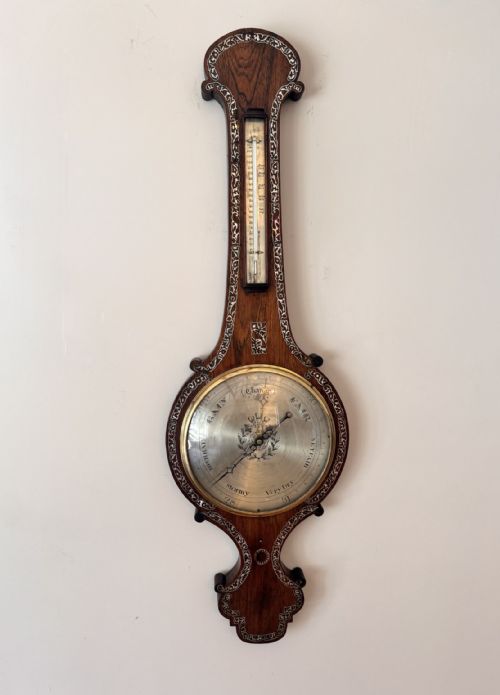
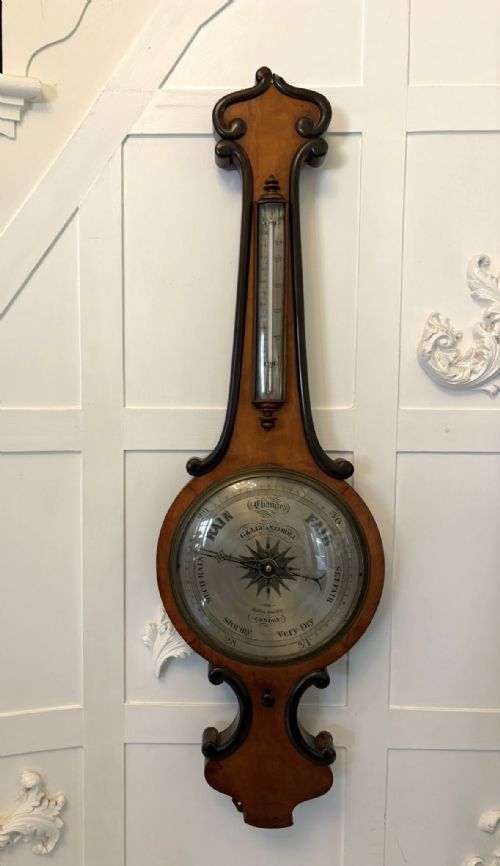
A victorian wheel barometer is a domestic wall instrument designed to measure atmospheric pressure, taking the form of a banjo or round-topped wooden case. These pieces display a silvered metal dial for reading the weather alongside subsidiary instruments like spirit thermometers and hygrometers.
The versions most commonly met on this page date from the mid-nineteenth century, constructed during periods spanning the reigns of William IV and Queen Victoria. They frequently appear in richly figured timbers such as mahogany and rosewood.
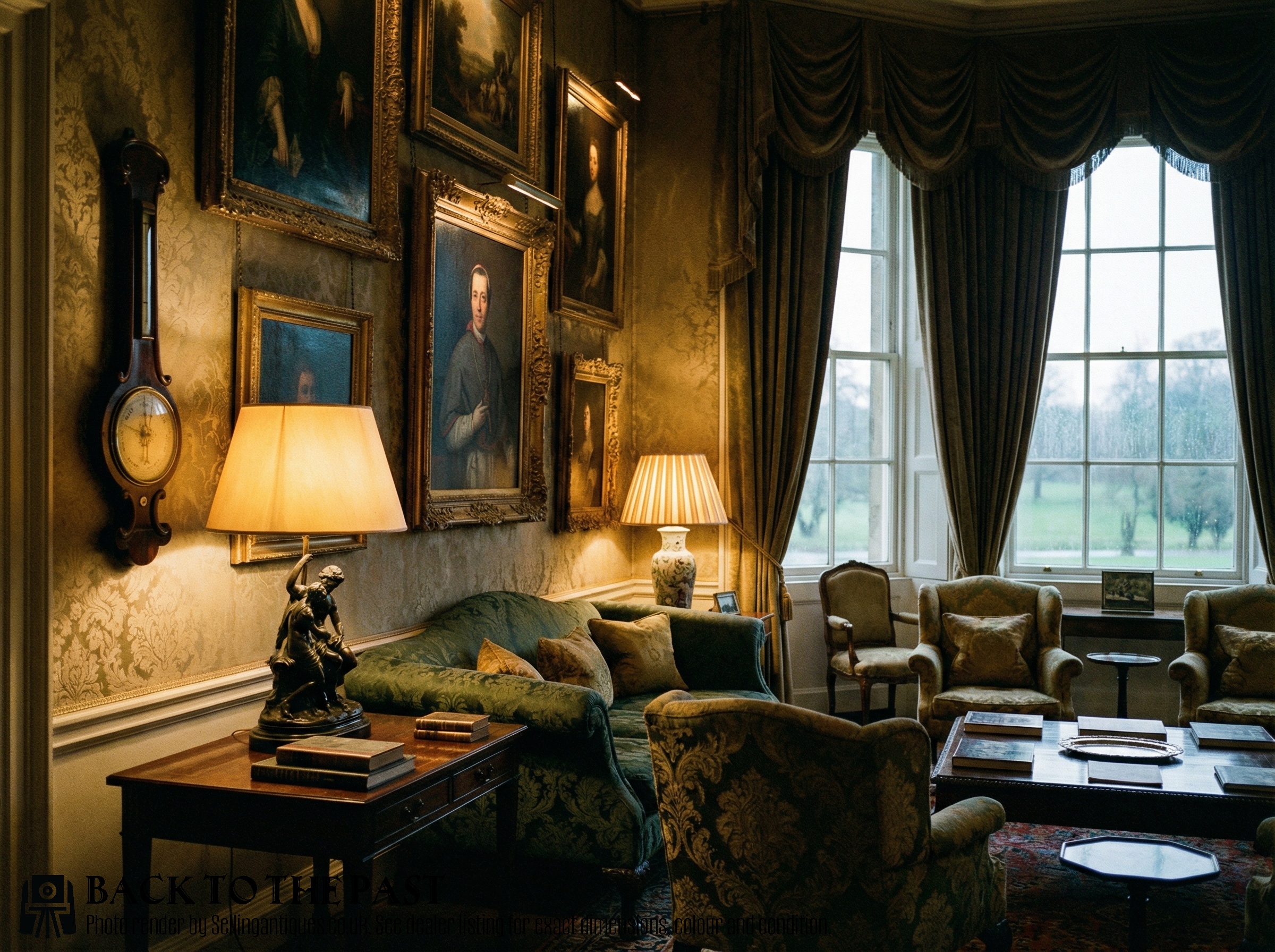
Beyond basic weather indication, these instruments served as decorative focal points in nineteenth-century hallways and drawing rooms. The form bridges precision engineering and fine cabinet making.
Materials and Construction
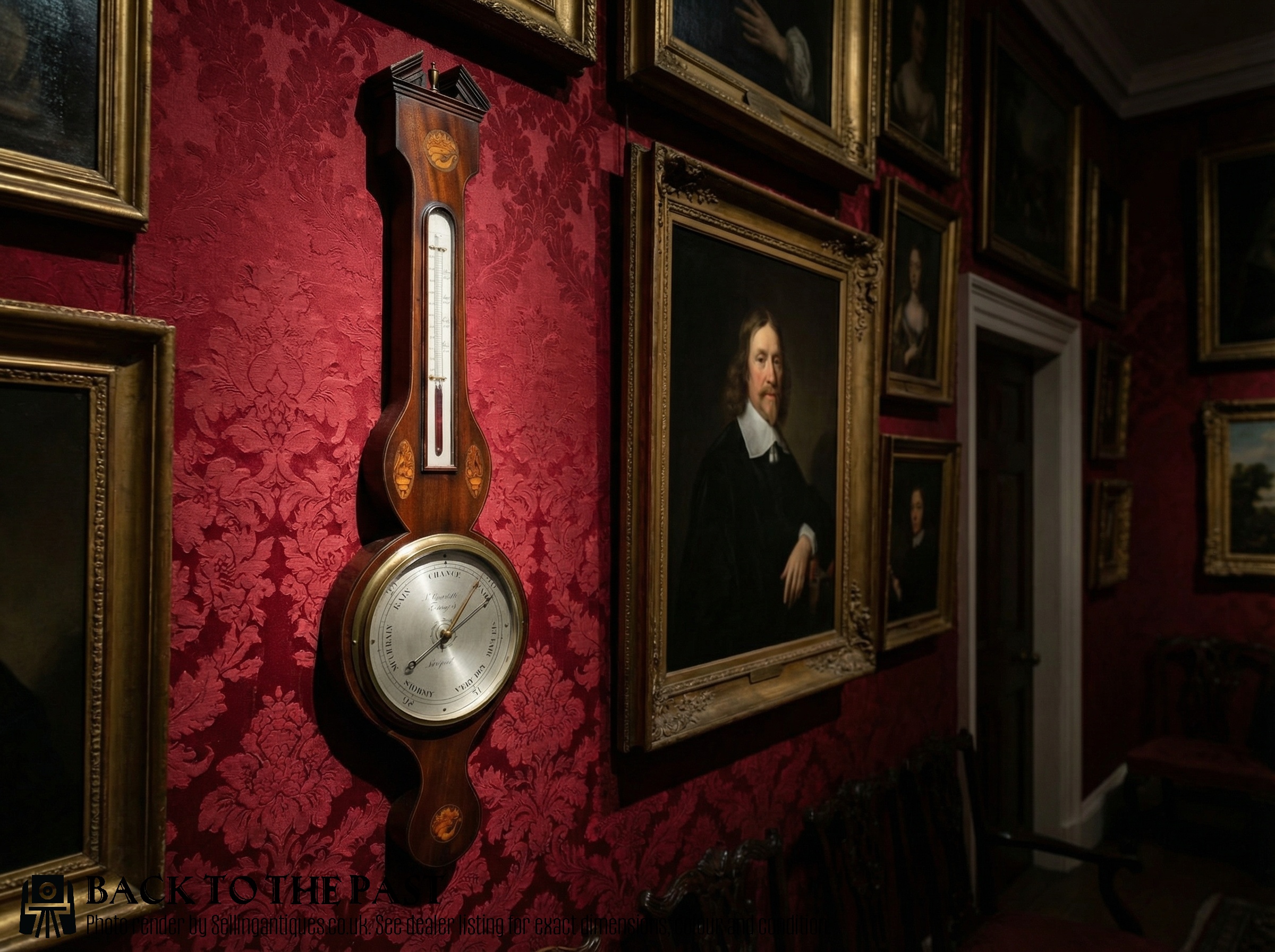
Makers housed the sensitive mercury mechanisms inside shaped wooden carcasses formed from dense timbers like mahogany, walnut, and rosewood. These cases often incorporated decorative stringing, shell inlay, or carved scrollwork.
The dials were typically constructed from silvered metal, etched with weather legends and barometric scales, then protected behind heavy glass and brass bezels. Mother-of-pearl inlay frequently adorned the broader sections of the case.
Victorian Wheel Barometer Retail Price Guide 2026
Typical asking prices for victorian wheel barometer among the pieces listed under this phrase on Sellingantiques today, from the lower quarter to the upper quarter. They describe what is for sale here now, not the wider market.
Several examples include charming onion-top crests that give the dignified weather glasses a rather surprised expression.
Factors That Distinguish Quality
Quality rests heavily on the crispness of the cabinet work and the complexity of the dial layout. Cases with deeply carved crests, well-matched flame veneers, and intricate mother-of-pearl floral work stand apart from plainer examples.
The reputation of the maker inscribed on the silvered dial also distinguishes individual pieces. Skilled opticians and instrument makers signed their work, ensuring finer graduating on the scale and more reliable mechanical assemblies.
G & L Guanziroli·Negretti & Zambra·Joseph Somalvico & Co·W.E. Pain·L Casatelli
The Victorian Wheel Barometer Glossary
- Banjo barometer
- A household weather glass housed in a curved wooden case resembling a banjo. This shape provided space for a large circular dial at the base and thermometers above.
- Mercurial barometer
- An instrument that measures atmospheric pressure by balancing the weight of a column of mercury against the outside air. Changes in pressure cause the liquid to rise or fall in the tube.
- Silvered metal
- A brass or copper dial plate coated with a thin layer of silver powder and salt. This treatment created a bright, readable surface for engraved weather scales.
- Aneroid barometer
- A weather instrument that uses a sealed, flexible metal box to measure pressure without employing liquids. This mechanism allowed for more compact or differently shaped cases.
- Hygrometer
- A secondary instrument often mounted on the dial face to measure humidity in the air. It worked alongside the main barometric scale to give a fuller picture of atmospheric conditions.
Victorian Wheel Barometer: Frequently Asked Questions
How do I read a wheel barometer?
Read the main dial by observing the position of the pointer relative to engraved weather predictions like 'Fair' or 'Rain'. A secondary hand, adjusted by a central knob, was traditionally set over the current reading to track whether pressure rose or fell.
Changes become clear over hours rather than minutes. Tapping the glass gently before reading helps settle the mechanism if friction holds the pointer.
Where should I hang a barometer?
Hang the instrument on an interior wall away from direct sunlight, radiators, and heavy draughts. Rapid temperature shifts affect the internal mechanism and wood case.
Secure it firmly using a sturdy wall plug and screw matching the weight of the dense timber frame.
Are these barometers still accurate?
Many retain surprising accuracy when the internal mercury tube remains intact and unblocked. They respond reliably to local atmospheric pressure changes just as they did in the nineteenth century.
Treat them as historical scientific instruments rather than precision tools for modern meteorological forecasting.
How do I care for the wood case?
Maintain the polished mahogany or rosewood surface by dusting gently with a soft, dry cloth. Avoid chemical polishes and silicone sprays that build up films over time.
Feed dry timber occasionally with a quality conservation wax to preserve the depth of the grain.