
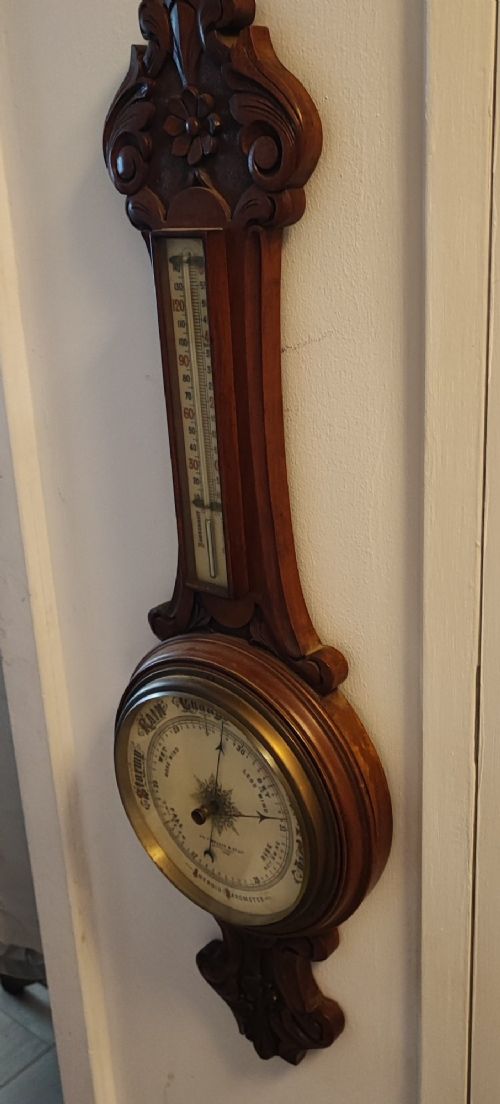


Carved Mahogany Barometer
A carved mahogany barometer brings domestic weather tracking into the hallway with rich timber grain and classic dial work.
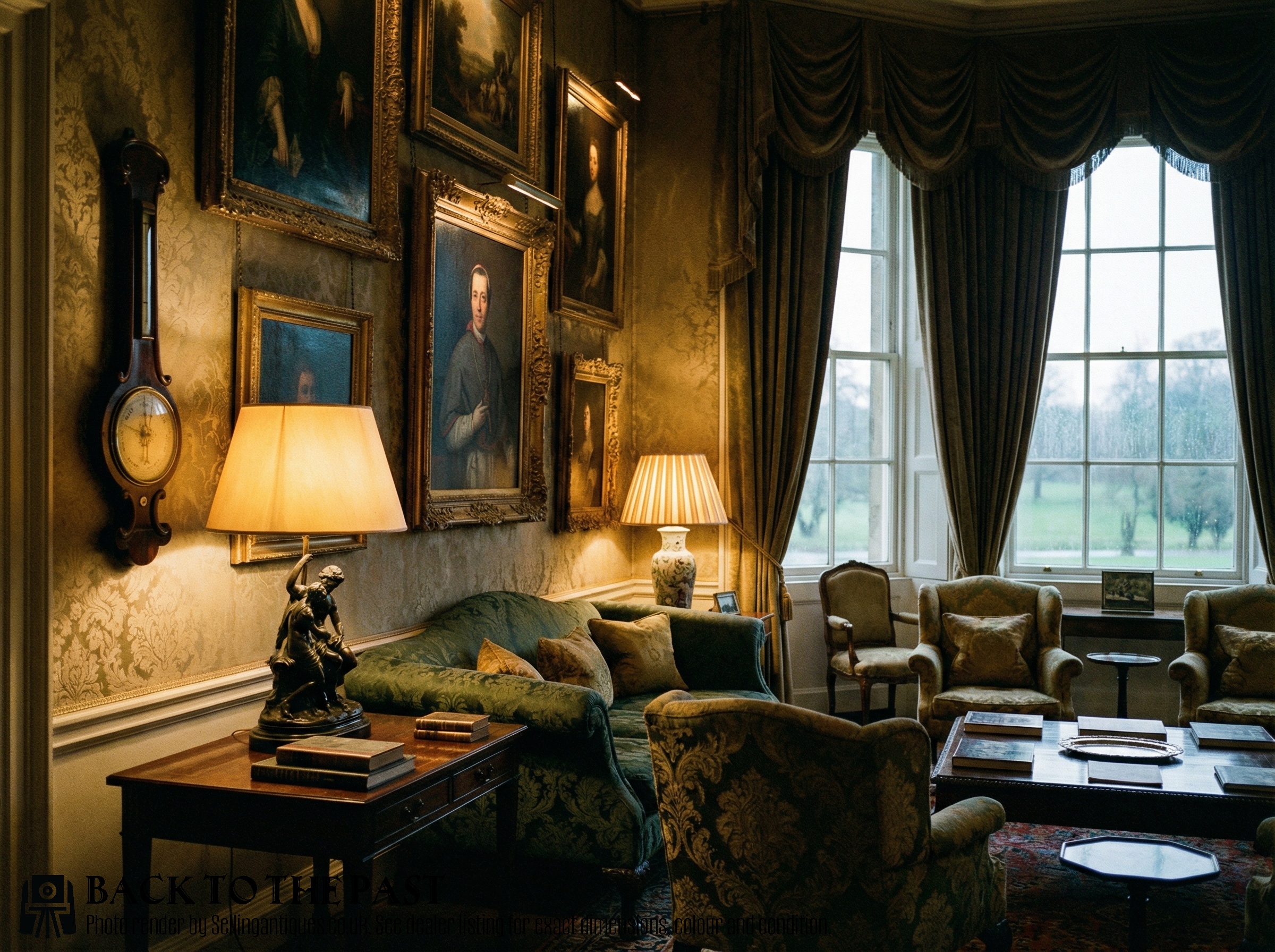
Carved Mahogany Barometer
When you search for a carved mahogany barometer, you enter a field dominated by nineteenth-century banjo and wheel formats alongside upright stick barometers and architectural hall stands. These instruments combine functional weather sensing with furniture-grade cabinet work in dense tropical timber.
The Victorian era supplies the highest volume of surviving pieces on this page, often featuring banjo shapes with scrolled crests and shell inlay. Georgian examples appear in both wheel and stick formats, offering simpler lines and earlier regional maker signatures.
Makers housed these movements in cases shaped for the wall or integrated into larger entrance hall furniture. The timber ranges from plain figured stock to richly grained mahogany enhanced by marquetry inlay and brass fittings.
How they were made
Cabinet makers constructed the bodies from solid and veneered mahogany, shaping the wood with hand carving, turned elements, and floral or shell marquetry inlay. The timber provides structural stability for the internal tubes and dials while taking a high polish.
Makers mounted silvered metal scales and engraved brass dials behind protective glass plates, often framing them with cast brass bezels. Internal mechanisms utilise mercury columns or aneroid capsules linked to delicate linkages that translate atmospheric pressure changes into needle movement.
Carved Mahogany Barometer Retail Price Guide 2026
Typical asking prices for carved mahogany barometer among the pieces listed under this phrase on Sellingantiques today, from the lower quarter to the upper quarter. They describe what is for sale here now, not the wider market.
Some nineteenth-century barometers arrived paired with working clocks to keep domestic time alongside atmospheric shifts.
What varies in quality
The distinction between ordinary and exceptional pieces rests on the depth of the cabinet work and the crispness of the carved details. Sharply defined shell inlays, finely turned cistern covers, and substantial cast brass bezels elevate a case above standard production.
Signatures on the silvered dial plate from recorded makers indicate higher workshop standards and better-preserved internal mechanics. The visual harmony between the figured mahogany grain and the proportion of the pediment dictates the overall presence of the instrument.
James H Kelly of Glasgow·Bianchi Ipswich·Alexander Adie·S P Cohen Glasgow·Negretti & Zambra·Russell of Liverpool
The Carved Mahogany Barometer Glossary
- Banjo barometer
- A domestic weather glass housed in a shaped wall case resembling a banjo, featuring a small circular dial at the top and a larger dial or thermometer below. This form became the standard domestic shape during the nineteenth century.
- Stick barometer
- A tall, narrow wall instrument where the mercury tube remains largely visible behind a glass cover alongside a long vertical scale. These pieces offer precise barometric readings through a direct column format.
- Aneroid barometer
- A weather instrument that measures atmospheric pressure using a sealed flexible metal box rather than liquid mercury. This mechanical system allowed for more compact and varied case designs from the mid-nineteenth century onward.
- Silvered metal
- A brass or copper dial plate treated to produce a matte silver finish before being engraved with weather descriptions and numbers. The fine black wax infill provides sharp contrast for reading the scale.
- Marquetry inlay
- The art of applying contrasting wood veneers to create decorative patterns such as shells or floral motifs on the mahogany case front. This technique demands precise hand cutting and fitting.
Carved Mahogany Barometer: Frequently Asked Questions
How do I read a wheel barometer?
The upper dial shows general weather descriptions alongside numerical pressure readings measured in inches of mercury. The moveable indicator hand is set by hand over the primary needle to track daily changes.
Rising needles point toward fair weather while falling indicators suggest rain and stormy conditions. The lower subsidiary dials often house secondary instruments like thermometers or hygrometers.
Where should I hang a wall barometer?
Mount your instrument on an interior wall away from direct sunlight, heating vents, and heavy vibrations from slamming doors. Stable room temperatures ensure the internal mechanism responds accurately to atmospheric shifts.
Ensure the wall fixings match the weight of the dense mahogany case and secure directly into solid masonry or studwork.
How do I date a mahogany barometer?
Examine the case style, dial construction, and decorative details like shell inlay or carved pediments. Georgian pieces display simpler, restraint lines while Victorian versions frequently employ heavier scrollwork and aneroid dials.
Maker signatures engraved on the metal dial plate provide a direct link to recorded working dates and business addresses.
What is the difference between stick and banjo barometers?
Stick barometers use a long vertical tube to display mercury directly against an engraved scale, favouring scientific precision. Banjo barometers translate that movement through a mechanical pulley system to fit a decorative wall case.
Both types record barometric pressure but suit different interior proportions and collector preferences.