

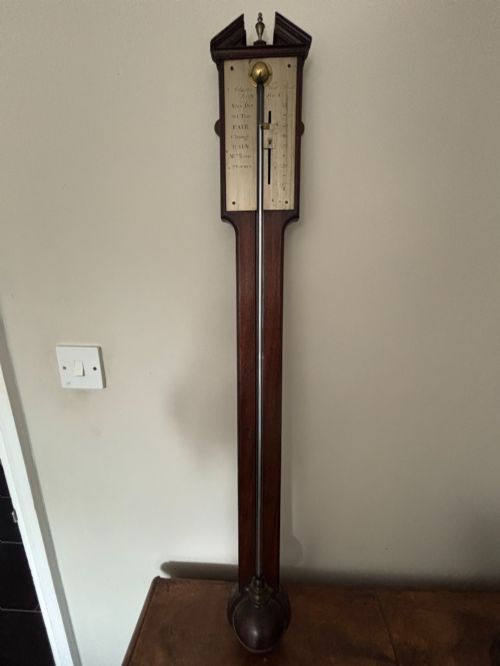
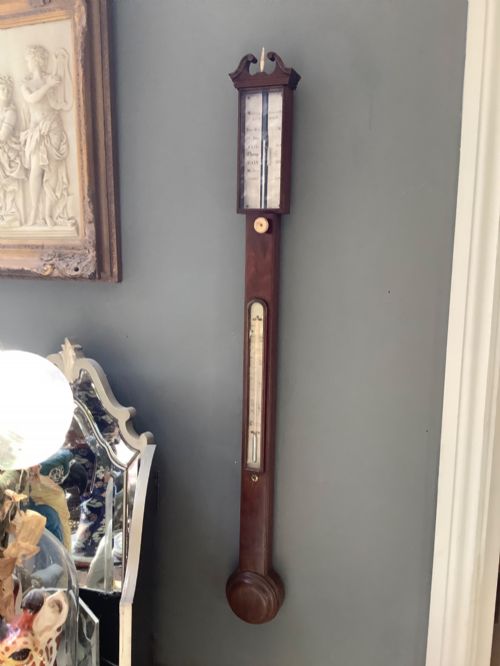
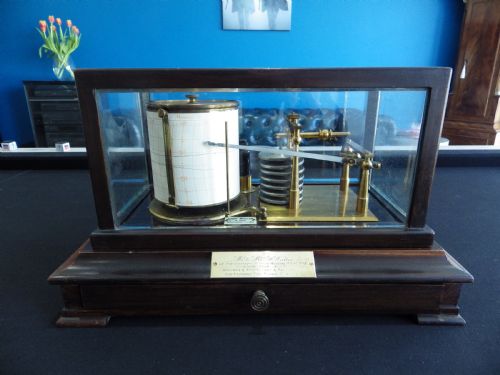


Dark Mahogany Barometer
These dark mahogany barometers bring deep timber tones and precision weather tracking into any room, making them essential finds for period interiors.
What these pieces are
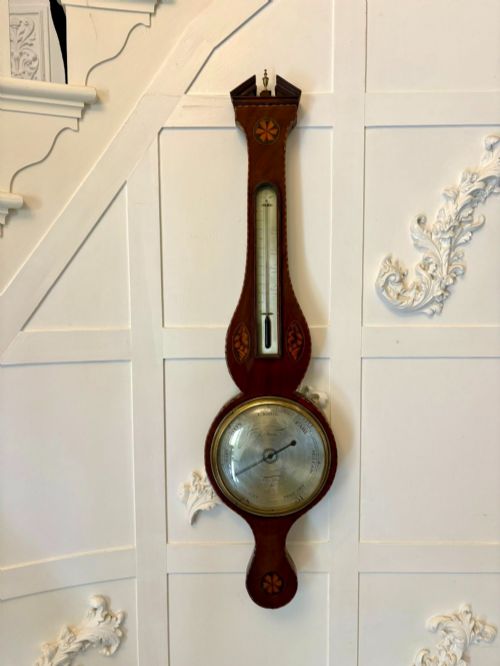
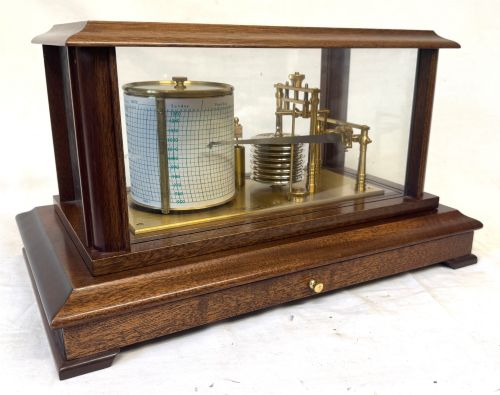
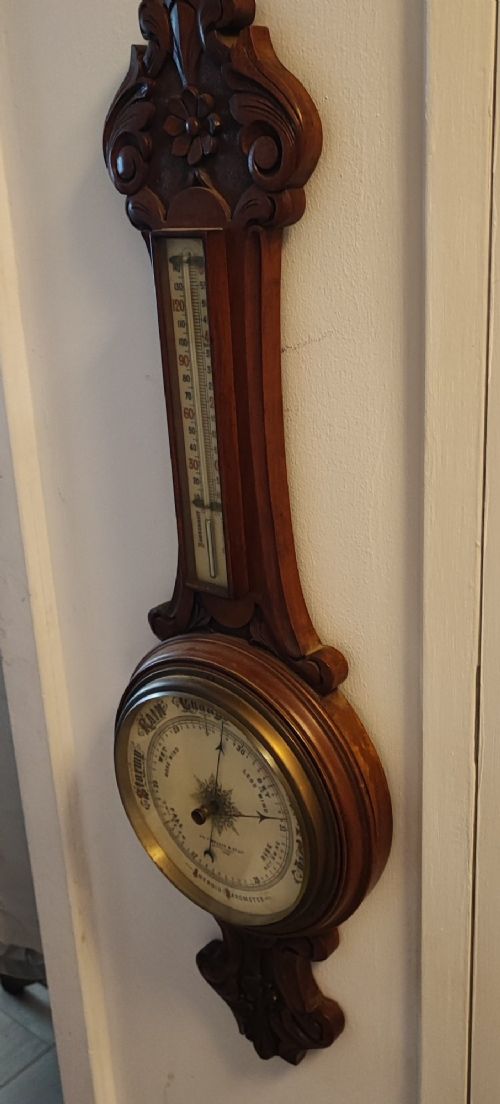
A dark mahogany barometer is a practical scientific instrument housed within a rich wooden case, designed to measure atmospheric pressure with elegance. Collectors seeking a dark mahogany barometer will encounter a variety of forms spanning the Georgian, Regency, and Victorian periods.
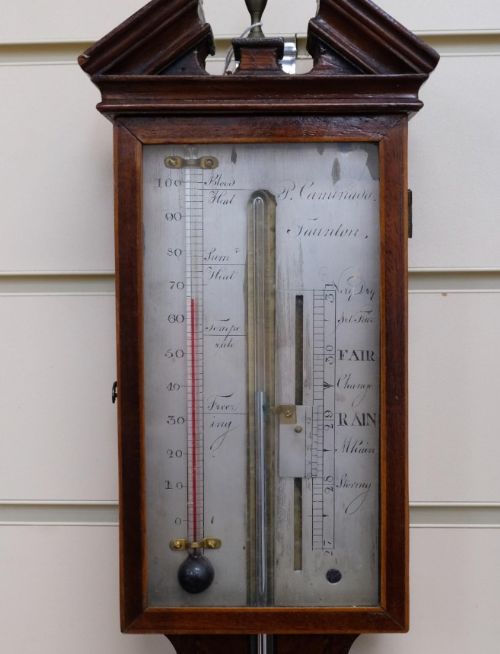
The selection ranges from banjo barometers with curved pediments to bow-fronted and traditional stick barometers. These pieces originate from the nineteenth century, including specific years such as eighteen-sixty and eighteen-eighty, showcasing the enduring appeal of dark mahogany cabinetry in domestic spaces.
Makers such as Bate and S. P. Cohen produced notable examples, alongside pieces bearing retailer details like Giana of Shrewsbury. Each dark mahogany barometer reflects the shifting domestic tastes of nineteenth-century Britain while serving its original meteorological purpose.
How they were made
Craftsmen built the cases using solid and figured mahogany timber, often selecting dense boards with deep grain patterns. These wooden housings were shaped into banjo profiles, straight stick channels, or bow-fronted designs.
Dials and indicators incorporate brass bezels, glass faceplates, and bone components for reading scales and verniers. Metalwork was carefully fitted into the wooden chassis to protect the delicate mercury tubes and mechanical linkages within.
Retail Price Guide 2026
Typical UK retail prices for dark mahogany barometer, calculated from the Sellingantiques database of over a million retail prices indexed since 2003. This retail price guide relies exclusively on Sellingantiques data; no external sources or auction records are used, so the figures do not describe the wider market.
Some models squeeze a thermometer, a hygrometer, and a mirror all onto one very busy wooden banjo.
What varies in quality
Quality rests in the choice of mahogany timber and the crispness of the case moulding, where figured grain demonstrates superior selection. Simpler pine carcasses veneered in thin mahogany sit below solid, well-proportioned examples with balanced proportions.
The refinement of the brasswork and the legibility of the bone or metal dial plates separate standard production items from signed workshop pieces. Retaining original glass, bezels, and maker signatures elevates the standing of an instrument considerably.
Bate·S. P. Cohen
The Dark Mahogany Barometer Glossary
- Barometer
- An instrument used for measuring atmospheric pressure to forecast weather changes. Most period examples utilise a column of mercury encased in wood.
- Banjo barometer
- A wall-mounted instrument shaped roughly like a banjo, typically featuring a dry-and-damp dial at the top and a larger thermometer or spirit level below. This form became popular during the Georgian and Victorian eras.
- Stick barometer
- A tall, narrow instrument where the barometer tube is exposed or sheltered behind a glass panel within a straight wooden trunk. These offer a more restrained appearance than their banjo counterparts.
- Bow-fronted
- A case design featuring a convex, curved front panel that projects outward from the wall. This treatment softens the strict vertical lines typical of standard stick barometers.
- Vernier
- A small sliding scale auxiliary to the main barometer scale that allows precise readings of atmospheric pressure. It is often constructed from bone or ivory on nineteenth-century dials.
Frequently Asked Questions
How do I hang a heavy mahogany barometer?
Secure the instrument directly into a wall stud or use heavy-duty wall anchors rated for the weight of the timber case.
Ensure the barometer hangs completely plumb so the internal mechanisms and mercury column function accurately.
Can these historic barometers still predict the weather?
Yes, the internal mercury columns respond to changes in atmospheric pressure just as they did in the nineteenth century.
Calibration may be necessary upon moving the instrument to a new location or elevation.
How should I clean the mahogany case?
Dust the timber gently with a soft, dry cloth and avoid applying modern chemical polishes that can degrade the historic finish.
Occasional application of traditional wax helps nourish the dark mahogany grain without buildup.