

Antique Wood Barometer
An antique wood barometer measures atmospheric pressure while bringing rich timber cases and detailed dials into a room.
Antique Wood Barometer
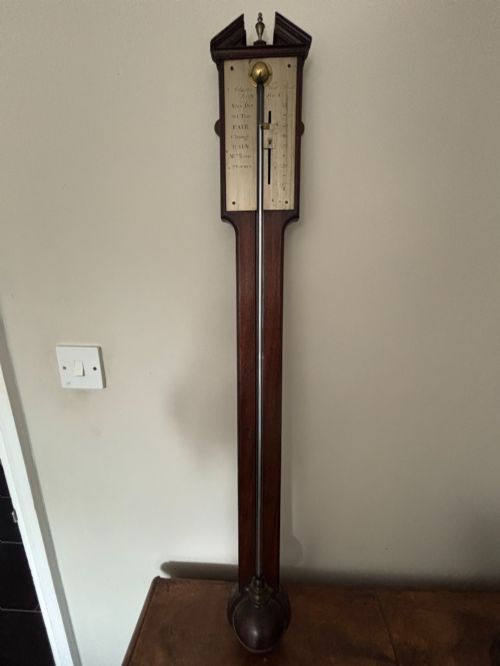
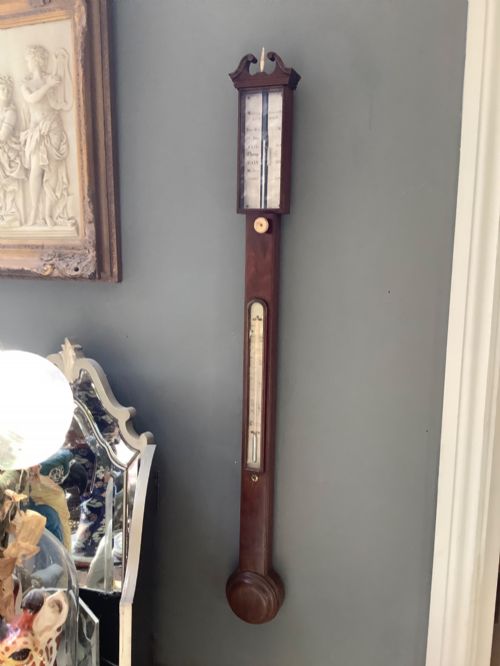
An antique wood barometer is a weather-measuring instrument housed in a timber case, typically found in styles ranging from Georgian stick barometers to Victorian and Edwardian banjo formats. These instruments record atmospheric pressure changes using mercury columns or aneroid mechanisms, combining practical meteorological utility with decorative interior presence.
Materials and Construction
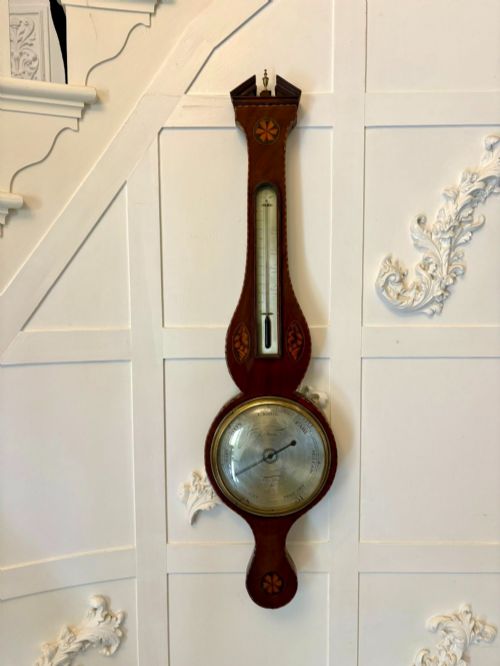
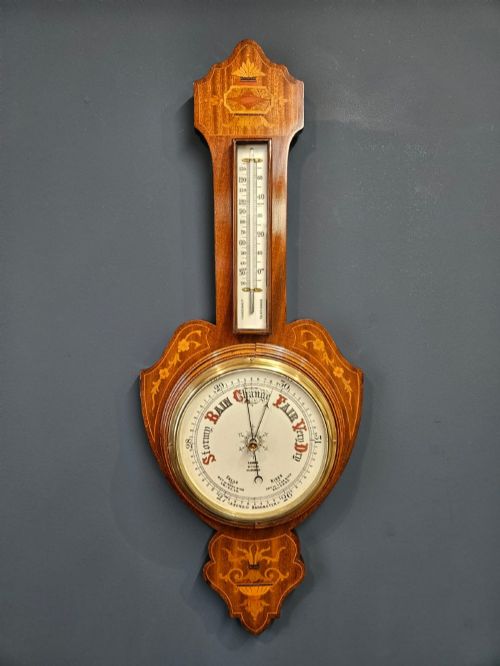
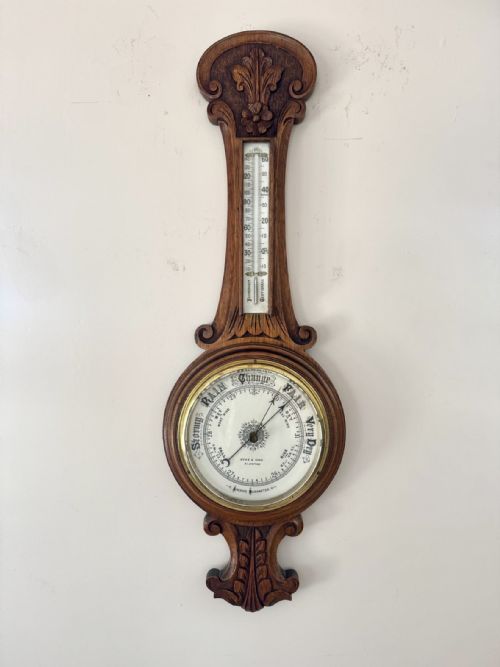
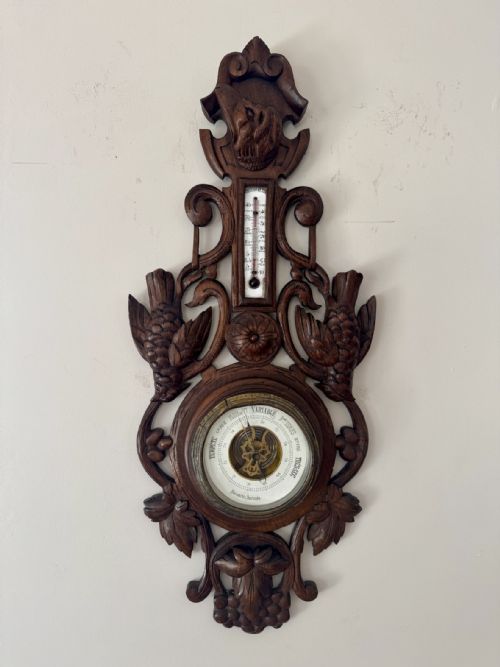
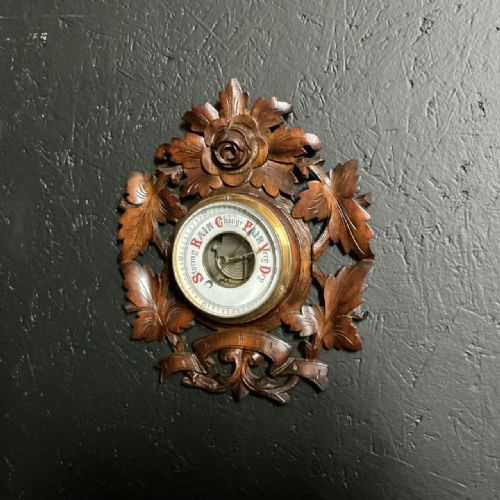
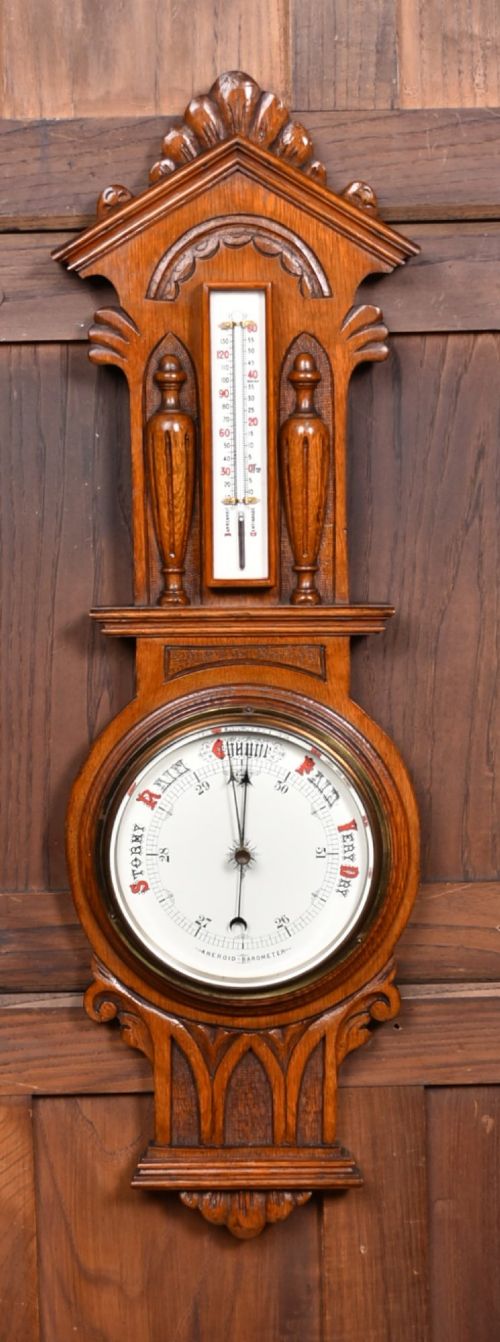
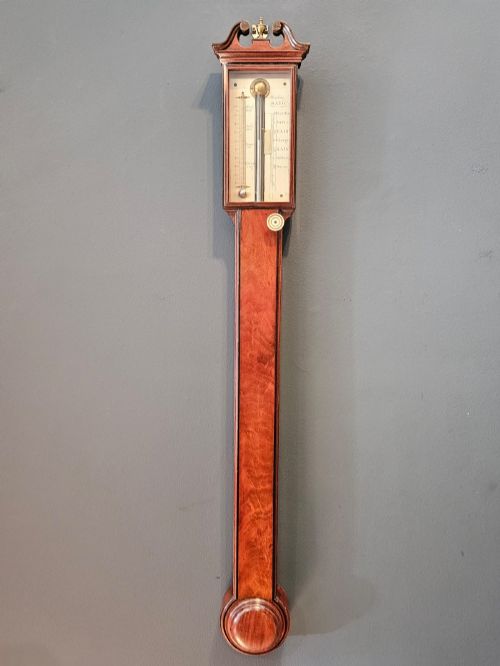
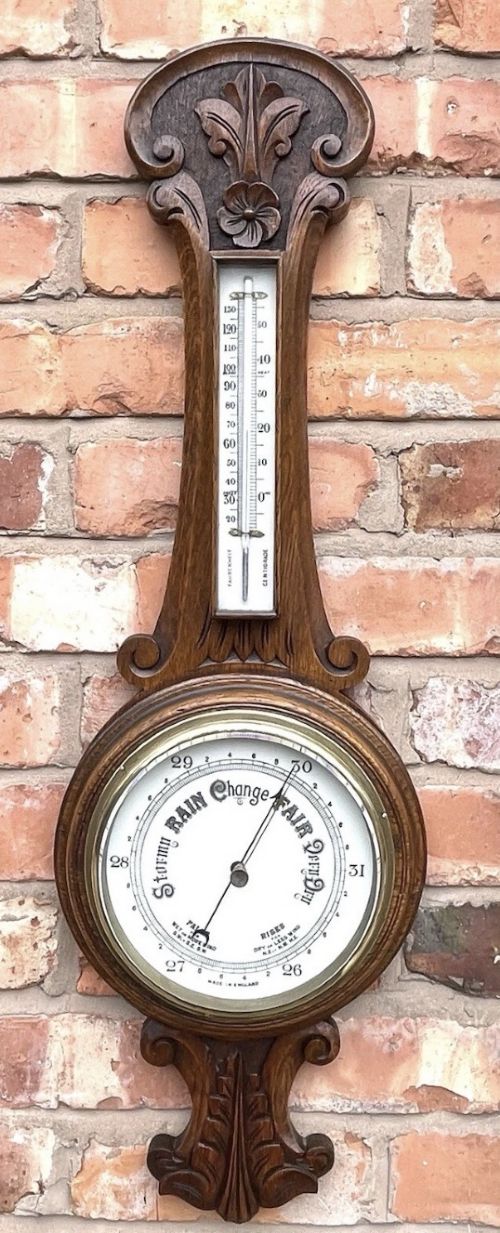
Cabinet makers utilised dense cabinet timbers like mahogany, rosewood, oak, and walnut, often shaping them into curved sticks or expanded banjo profiles. Timber cases were frequently embellished with boxwood inlay, mother of pearl highlights, or elaborate hand-carved motifs particularly associated with Black Forest workshops.
Internal scientific mechanics relied upon glass tubes filled with mercury or sealed metal aneroid capsules connected to indicator dials via delicate linkages. Brass bezels, ceramic dial faces, and bone vernier scales were integrated alongside the timber housing to complete the instrument.
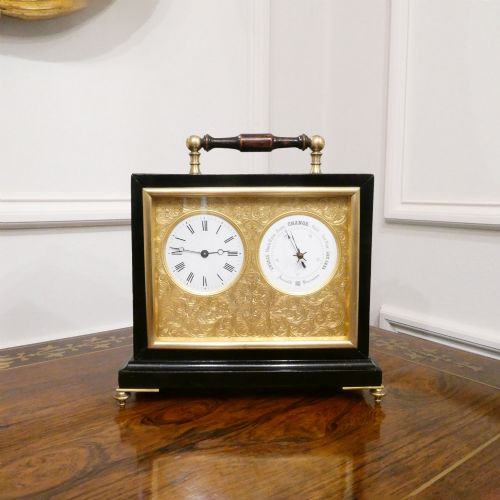
Listings feature mahogany, oak, walnut, and rosewood cases spanning the Georgian, Victorian, and Edwardian periods.
Assessing Quality and Execution
Quality rests upon the crispness of the timber carving, the precision of string inlay or shell motifs, and the clarity of the engraved or printed dial face. Superior examples exhibit tightly grained cabinet woods matched with high-grade brass fittings and signed dials from notable makers.
The integrity of the internal barometer mechanism and the retention of original mercury tubes, glass covers, and thermometer attachments heavily influence the standard of a piece. Finer specimens maintain their original paper scales, paperwork, and untouched timber patination without excessive restoration.
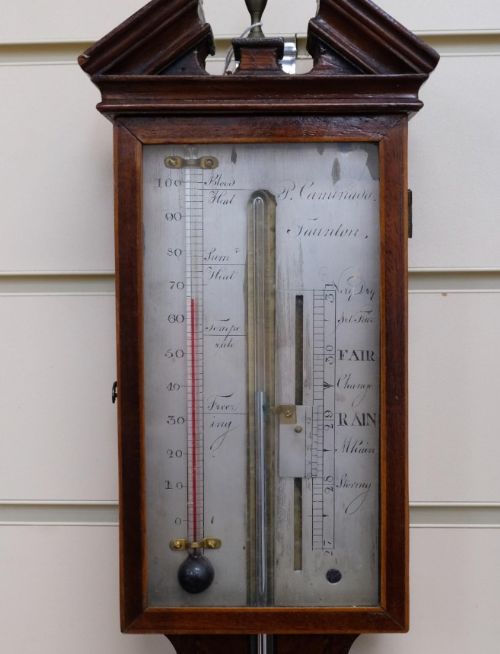
Hyde & Sons Sleaford·Russell NORWICH·P. Caminada Taunton·George Adams London·Short & Mason London·Dollond of London·Negretti & Zambra·Ballard of Cranbrook·Comitti
The Antique Wood Barometer Glossary
- Aneroid barometer
- A weather-measuring instrument that uses a flexible-walled metal capsule to sense atmospheric pressure without employing liquid mercury. The expansion and contraction of the capsule moves a mechanical pointer across a dial.
- Banjo barometer
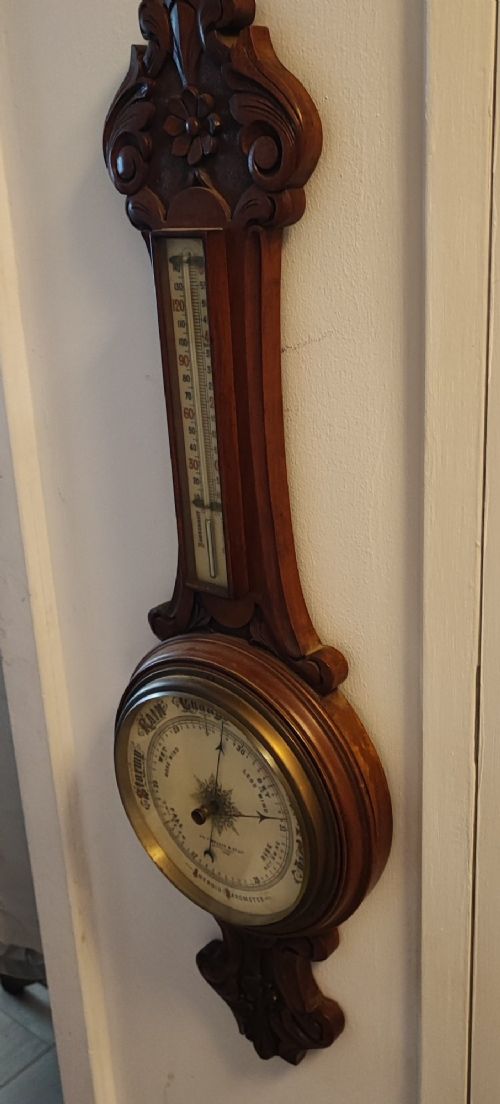
- A wall barometer shaped roughly like a banjo, featuring a circular dial at the top for weather interpretation and an extended trunk below that often houses a thermometer or hygrometer.
- Stick barometer
- A tall, narrow wall instrument where the mercury column is exposed or housed behind glass alongside a sliding vernier scale to measure barometric pressure precisely.
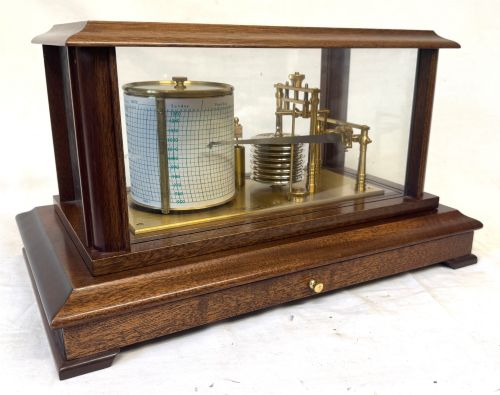
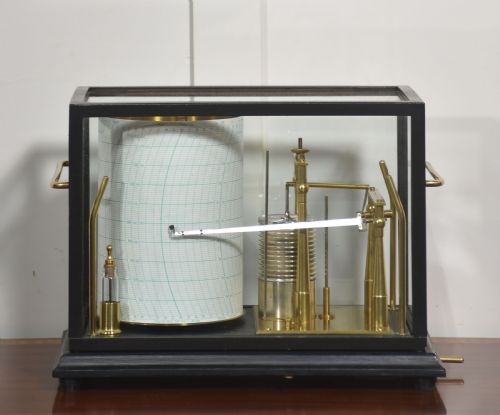
- Barograph
- A self-recording meteorological instrument that draws a continuous graph of atmospheric pressure changes onto rotating paper charts driven by a clockwork mechanism.
- Sympiesometer
- A compacted marine barometer combining a column of coloured oil with an attached thermometer to indicate changes in atmospheric pressure.
Antique Wood Barometer: Frequently Asked Questions
How do I read an antique wood barometer?
Read the main dial by observing where the pointer rests relative to weather descriptions like 'Stormy', 'Rain', 'Change', 'Fair', and 'Very Dry'. Tapping the glass gently before reading helps settle the mechanism to show the true pressure trend.
Many barometers include a secondary hand called an indicator, which you manually align over the main pointer to track whether pressure rises or falls over subsequent hours.
What is the difference between a stick and a banjo barometer?
A stick barometer is tall and slender, displaying a long vertical mercury tube alongside a vernier scale for precise scientific readings. It represents an earlier, more utilitarian approach to atmospheric measurement.
A banjo barometer widens at the top into a circular dial for easy viewing from across a room while utilising the lower stem for decorative veneers, inlays, or integrated thermometers.
How should I care for a wood barometer case?
Keep the timber case away from direct sunlight, heating vents, and damp environments to prevent the wood from warping, cracking, or fading. Applying a suitable wax polish periodically maintains the finish of the mahogany, oak, or rosewood.
Avoid placing the instrument on vibrating walls, as continuous movement can disrupt delicate internal linkages and mechanical pointers.
Are mercury barometers safe to keep at home?
Mercury barometers contain enclosed glass tubes holding liquid metal that remains safely sealed under normal domestic conditions. They require careful handling only if moved, tilted sharply, or dismantled for transport.
Hanging the instrument securely on a stable wall prevents accidental knocks that could risk breaking the glass container.
How do I date an antique wood barometer?
Dating relies on identifying stylistic markers such as Georgian mahogany string inlay, Victorian carved oak motifs, or Edwardian dial formats. Examining the timber types, backing boards, and screw heads provides further clues to the period of manufacture.
Signatures or paper labels pasted inside the case by instrument makers often supply specific operational dates or active workshop eras.