


Victorian Stick Barometer
A victorian stick barometer measures atmospheric pressure with mercury in a slender column, offering both precise forecasting and striking woodwork.

Victorian Stick Barometer
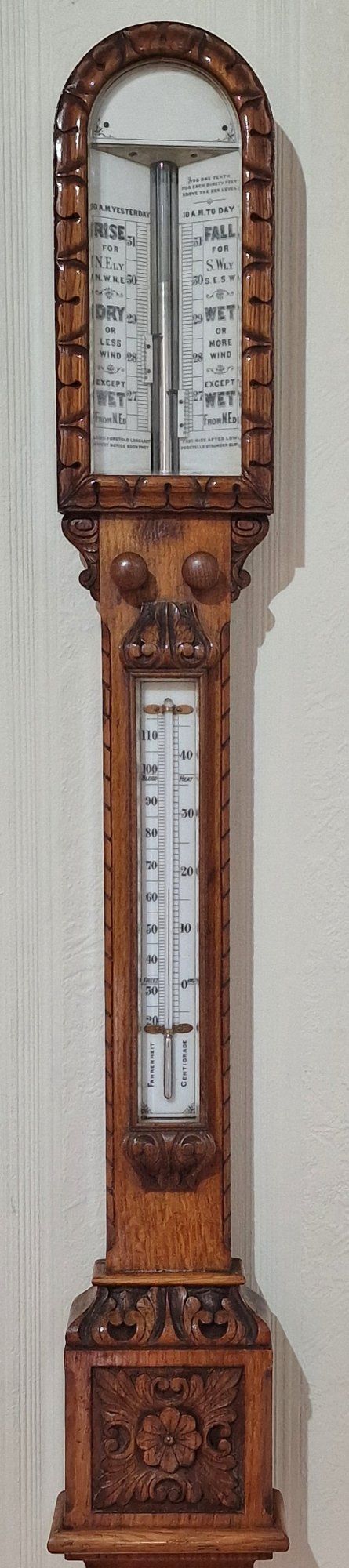
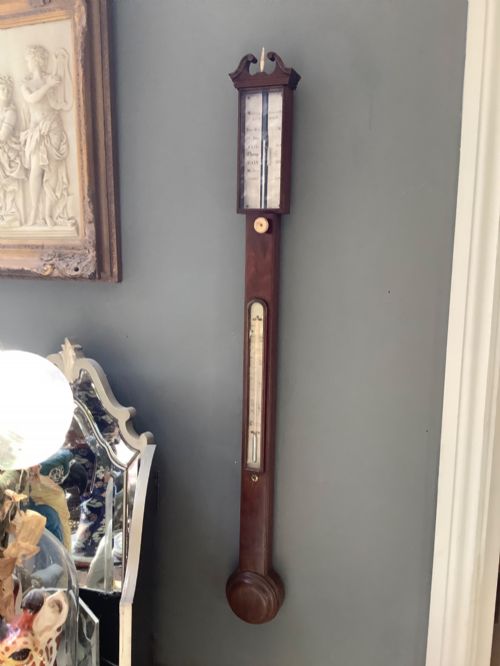
A victorian stick barometer is a tall, narrow instrument designed to record changes in barometric pressure for domestic and maritime use. These pieces appear across various materials including mahogany, oak, rosewood, and walnut, often taking standard domestic forms or specialised marine formats.
The selection ranges from simple oak or mahogany cased examples to elaborate weather stations and Admiral Fitzroy models. Buyers frequently encounter nineteenth-century pieces bearing the signatures of prominent opticians and instrument makers from London, Edinburgh, and regional centres.
Materials and Techniques
Cases are constructed from dense hardwoods like mahogany, rosewood, oak, and walnut, frequently selected for straight grain or rich figure. Skilled cabinetmakers shaped these timbers to house the delicate glass tubes safely.
Scales are rendered in brass, bone, or paper, often accompanied by mercury filled columns and vernier dials for reading measurements closely. Marine versions frequently incorporate gimbals to keep the instrument vertical on moving ships.
Victorian Stick Barometer Retail Price Guide 2026
Typical asking prices for victorian stick barometer among the pieces listed under this phrase on Sellingantiques today, from the lower quarter to the upper quarter. They describe what is for sale here now, not the wider market.
Some nineteenth-century makers inscribed specific weather forecasts directly onto the paper scales to guide nervous farmers.
Defining Quality
Quality rests in the crispness of the scale engraving and the selection of cabinet timbers, where figured mahogany, burr walnut or rosewood elevate the piece. Maker attribution also plays a role, with signed instruments by established opticians commanding greater attention.
The integrity of the original glass tube and the retention of bone or ivory adjusting verniers distinguish superior examples from standard utility barometers.
Negretti & Zambra·Alexander Wright·J Hughes London·Charles Baker·J Hicks of London·Patrick Adie·John Newman·Bate of London
The Victorian Stick Barometer Glossary
- Sympiesometer
- A type of barometer that uses oil or gas rather than mercury to measure atmospheric pressure alongside temperature. It allows for a more compact column while fulfilling the same forecasting purpose.
- Vernier
- A small sliding scale auxiliary to the main graduated scale that permits readings to be taken with greater precision. It enables the user to measure fractional parts of the primary scale divisions.
- Gimbal
- A pivoted ring mounting that allows a marine barometer to swing freely and remain vertical despite the motion of a ship. This mechanical setup protects the glass tube from sudden shocks at sea.
- Admiral Fitzroy Barometer
- A specialised storm barometer developed to provide clear weather warnings for mariners and farmers based on comprehensive meteorological observations. These instruments often include printed remarks and thermometer attachments alongside the main column.
Victorian Stick Barometer: Frequently Asked Questions
How do I read a stick barometer?
Read the height of the mercury column against the brass or paper scale, using the sliding vernier to measure fractions of an inch or millibar. Rising mercury generally indicates improving weather, while falling levels point towards approaching rain or wind.
Compare the current reading with the previous observation using the manual pointer set over the glass tube. This shows the direction of pressure change over recent hours.
Where should I hang a stick barometer?
Mount the instrument on an interior wall away from direct sunlight, radiators, and heavy vibrations to ensure accurate pressure readings. Consistent room temperatures prevent thermal expansion from interfering with the mercury column.
Choose a location at eye level where the scale and vernier can be adjusted easily without straining.
How do I date a barometer?
Examine the wood selection, case style, and scale construction, as Victorian examples often feature specific Regency survivals or later Gothic and maritime influences. Signed brass plates bearing maker names and London addresses help narrow the production decade.
Makers frequently added patent dates or exhibition medals to the engraved plates, providing a firm starting point for the year of manufacture.
Were these used at sea?
Maritime versions were built specifically for use on ships, featuring gimbals to keep the column upright and protective wooden hoods. Coastal and sea coast models served harbour towns and coastal stations where maritime forecasting was vital.
Standard domestic stick barometers remained in parlours and halls, while marine variants equipped naval and merchant vessels.