


Negretti and Zambra Barometer
A Negretti and Zambra barometer is a precision meteorological instrument built for domestic and scientific observation by a renowned London maker.
Negretti and Zambra Barometer
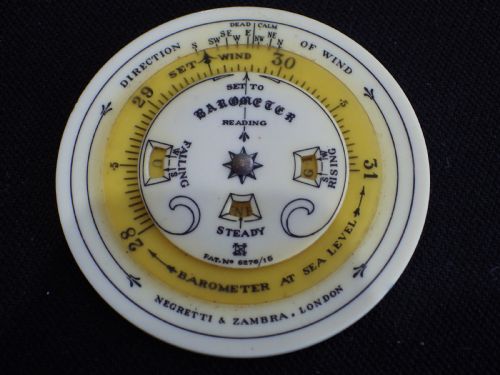
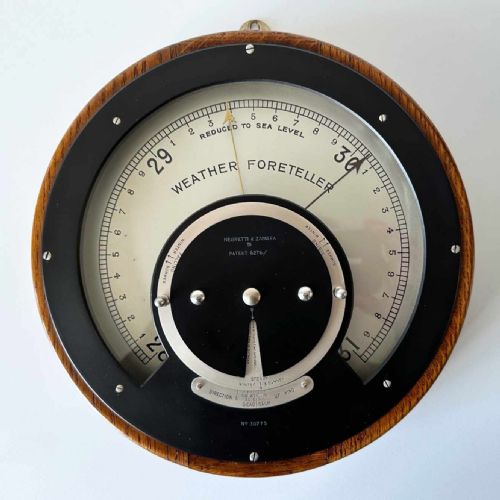
When you search for a negretti and zambra barometer, you encounter precision scientific instruments produced across the nineteenth and twentieth centuries. The selection ranges from domestic stick barometers and carved oak aneroid models to complex recording barographs and pocket forecasters.
You are most likely to meet Victorian and Edwardian examples framed in oak or mahogany, alongside wall-hung storm barometers and specialised surveying instruments. These pieces reflect the high standard of scientific instrument making associated with the firm in London.
How they were made
Maker construction combines precision brass and glass components with substantial cabinet woodwork in oak, mahogany, walnut, and golden oak. Mercury filling and aneroid mechanisms provide the functional heart of each instrument, often paired with bone, celluloid, or enamel scales.
The casings display period cabinet-making techniques, from carved wall frames to fitted mahogany boxes for portable pocket forecasters and surveying barometers. Metalwork components utilise cast and polished brass, integrating thermometers and recording drums.
Listings include timber frames in oak, walnut, and mahogany paired with brass, glass, and bone scales.
What varies in quality
Quality in these instruments depends upon the complexity of the mechanism and the integrity of the housing. Simpler pocket pocket forecasters contrast with elaborate barographs and long range stick barometers that integrate thermometers and specialised recording apparatus.
The refinement of the timber casing, the clarity of the enamel or bone scales, and the presence of original mercury or sensitive aneroid capsules determine the standing of an individual piece.
Negretti and Zambra
The Negretti and Zambra Barometer Glossary
- Barometer
- An instrument that measures atmospheric pressure to forecast weather changes. These pieces utilise mercurial columns or internal aneroid capsules.
- Barograph
- A recording barometer that traces pressure variations continuously onto a rotating drum. This mechanical device provides a visual history of meteorological shifts.
- Stick Barometer
- A tall, vertical instrument housing a mercurial tube alongside a thermometer. These wall-mounted pieces offer precise atmospheric readings.
- Aneroid Barometer
- A mechanical pressure gauge that operates without liquid by using a flexible metal box. The expansion and contraction drive the indicator needle.
- Hypsometer
- A specialised instrument used to determine altitude by measuring the boiling point of water. It represents the more scientific output of the maker.
Negretti and Zambra Barometer: Frequently Asked Questions
How do I read a stick barometer?
Observe the position of the mercury column against the engraved scale to determine the current atmospheric pressure. Rising levels generally indicate fair weather, while falling levels suggest coming rain.
Compare the primary reading with the attached thermometer to account for temperature effects on the mercury.
Where should I hang a wall barometer?
Mount the instrument on an interior wall away from direct sunlight, radiators, and heavy draughts. Stable ambient temperatures ensure the internal mechanism functions accurately.
Ensure the wall provides a secure fixing point to protect the timber frame and glass dial.
What is an Admiral Fitzroys barometer?
This specialised storm barometer incorporates descriptive weather instructions alongside the mercurial tube. Developed for coastal communities, it translates pressure changes into practical warnings.
The expanded scale helps users anticipate local gales and storms by observing combined thermometer and barometer readings.
How do I identify a pocket forecaster?
These portable instruments are housed in compact leather or fitted wooden cases designed for travel. They combine a small aneroid dial with instructions for field use.
Surveyors and farmers utilised these pocket-sized units to monitor local conditions while away from home.