




Mercury Wall Barometer
A mercury wall barometer brings domestic forecasting into the parlour with traditional brass, mahogany and rosewood dials.
Mercury Wall Barometer
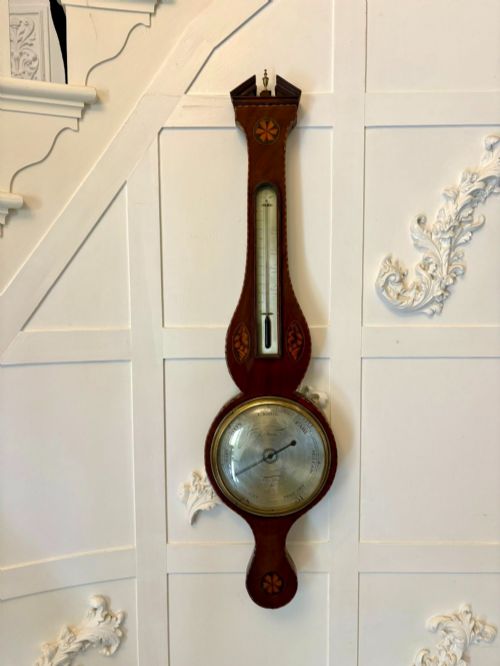
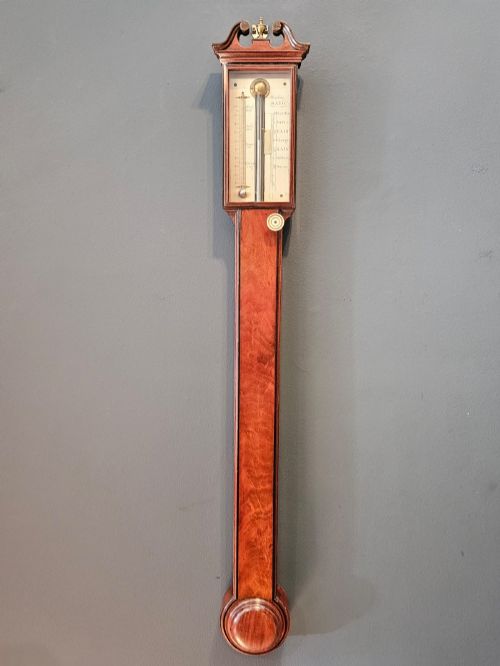
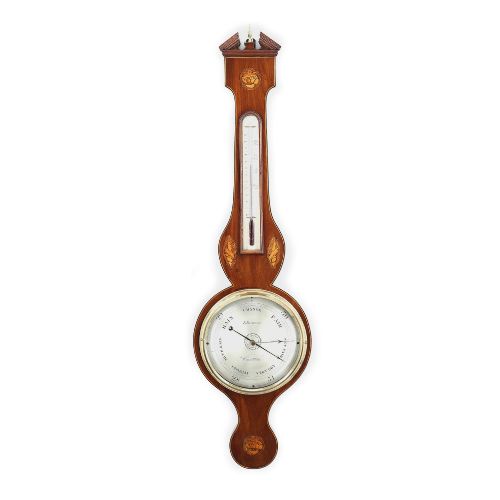
A mercury wall barometer measures atmospheric pressure to predict local weather changes using a column of liquid metal sealed within glass. These instruments arrive primarily in Georgian, Regency and Victorian forms, spanning stick barometers and wheel or banjo shapes. Buyers seek these pieces for their combination of scientific utility and traditional cabinetwork.
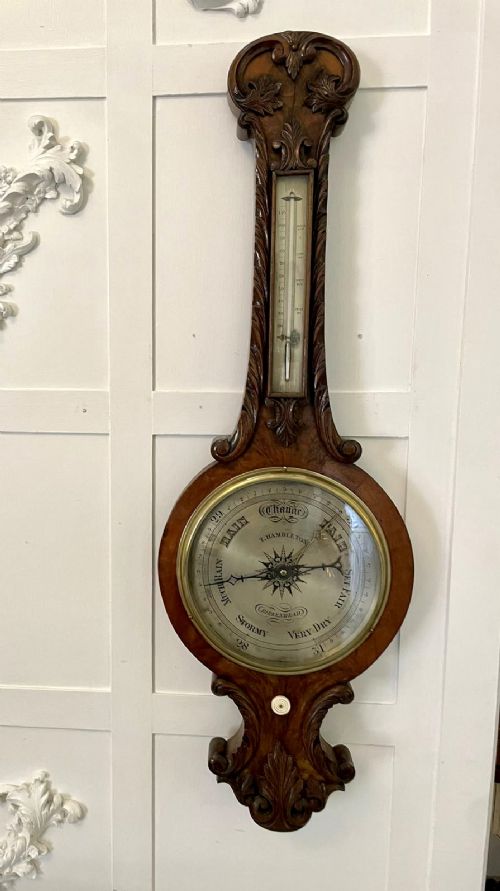
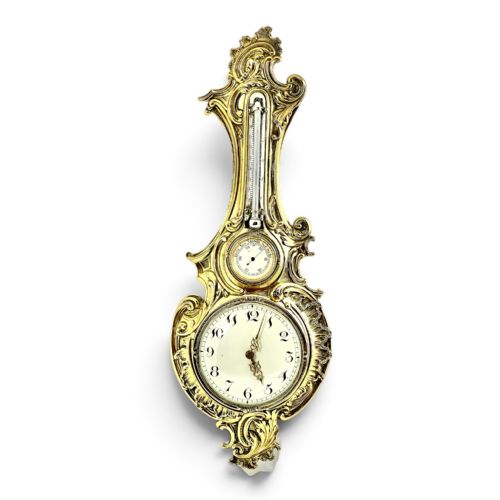
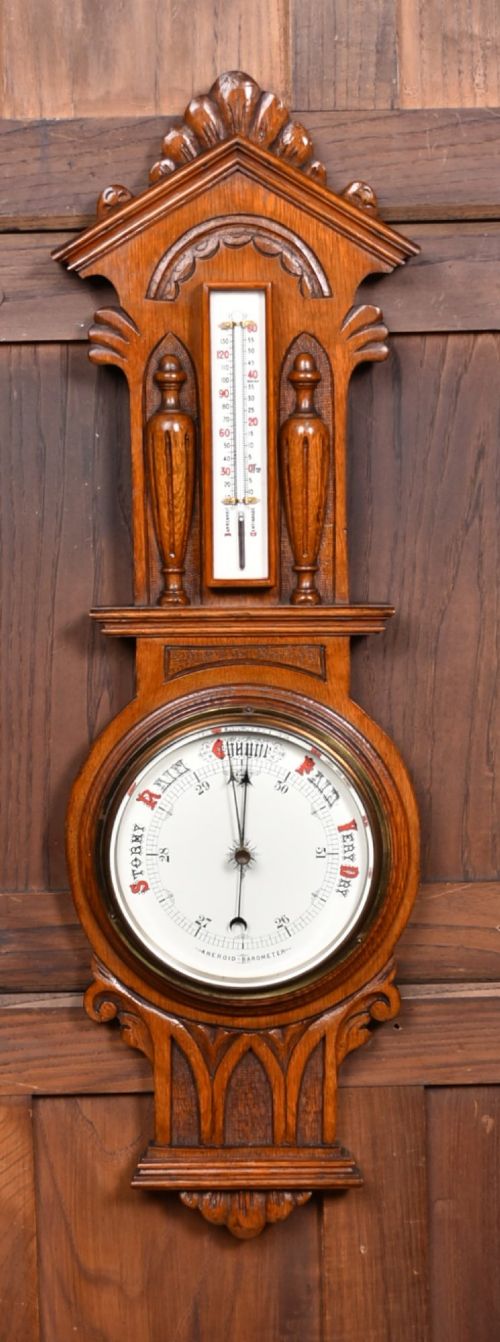
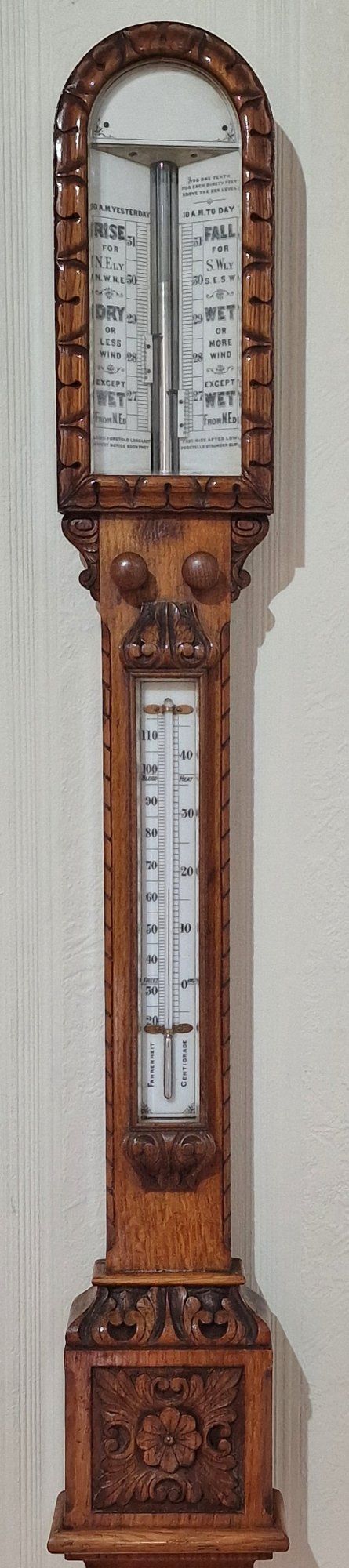
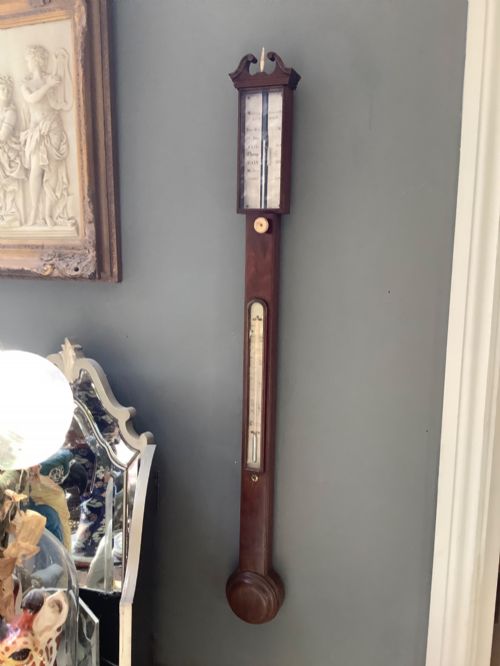
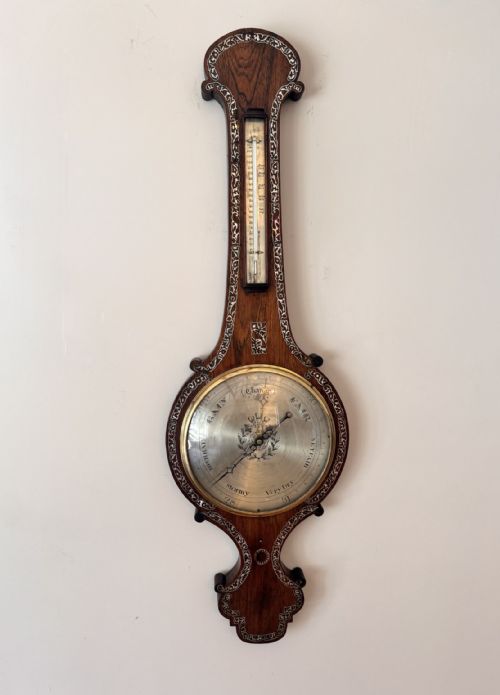
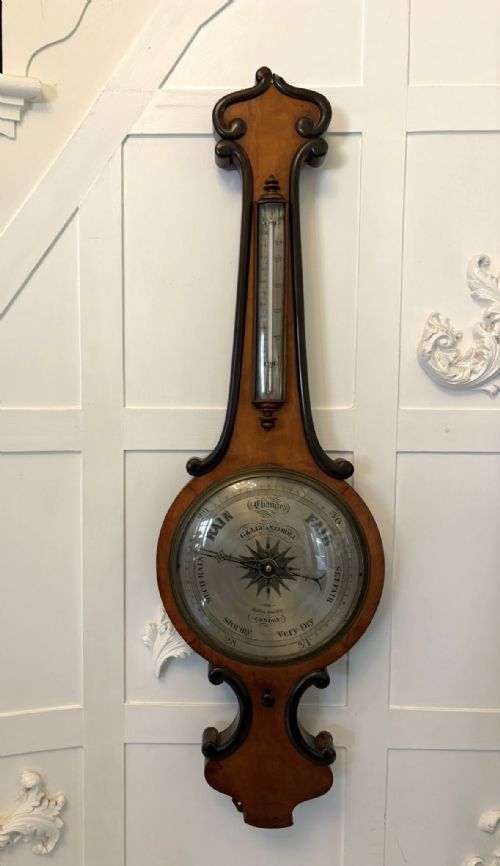
The selection ranges from simple mahogany stick barometers to elaborate Victorian wheel barometers adorned with mother of pearl inlay and carved walnut. Plain oak and rosewood examples also appear alongside combined thermometer and clock stations. Most pieces on this page date from the nineteenth century, reflecting the era when domestic weather measurement became widespread.
Materials and construction
Cabinetmakers utilised dense timbers such as mahogany, rosewood, burr walnut and oak to house the delicate glass tubes and silvered metal dials. Many cases incorporate brass bezels, bone indicators and mother of pearl shell inlay arranged in geometric or floral patterns. The mercury column operates inside a sealed glass reservoir, relying on atmospheric pressure variations to move the visible fluid.
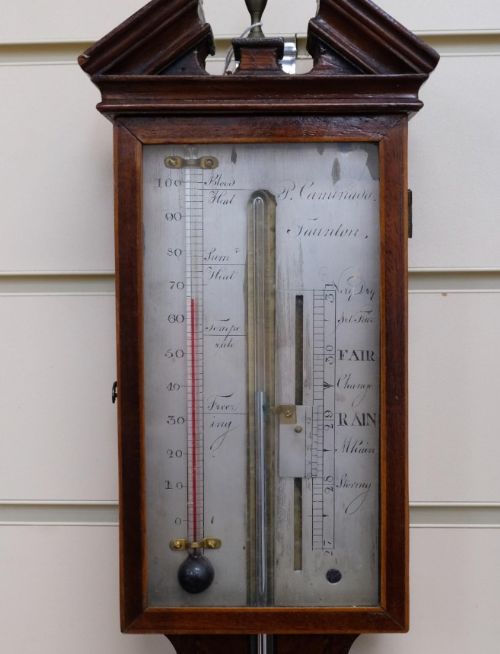
Makers integrated thermometers, hygrometers and clock movements directly into the wooden backboards of wheel barometers. Instrument makers calibrated the silvered scales by hand, engraving graduations and maker details onto brass or metal plates. Carved crests, swan neck pediments and bow fronted glass covers finished the exteriors.
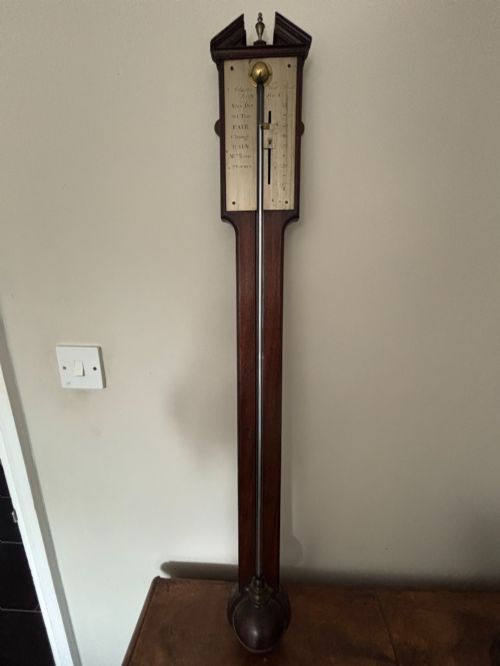
Object forms on this page include stick barometers, wheel barometers and banjo barometers alongside combined clock and thermometer stations.
Qualities of craftsmanship
The standard of a mercury wall barometer rests in the sharpness of the cabinet carving and the depth of the timber grain. Finer examples display precise string inlay, figured mahogany veneers and well-preserved silvered metal dials with crisp engraving. Plain utility pieces contrast with ornate exhibition pieces built by notable opticians and instrument makers.
Integration of multiple instruments such as clocks and thermometers elevates the complexity of the piece. The clarity of the original glass, the stability of the wooden trunk and the legibility of the maker signature all distinguish standard production barometers from superior works.
P. Caminada·George Adams·B. Besozzi·Negretti & Zambra·G & L Guanziroli·Blunt·Dollond of London·Ganthony of London·JB Bergna·Prada of High Wycombe·Alexander Wright·Molton of Norwich·Luisetti of London·Fagioli·Giana
The Mercury Wall Barometer Glossary
- Banjo barometer
- A domestic weather glass housed in a case shaped like a banjo, featuring a circular dial at the top and a long trunk below. This form became popular during the Georgian and Victorian periods.
- Stick barometer
- A vertical wall barometer that displays the mercury column directly within a long narrow wooden trunk, often sheltered by a glass door. These instruments provide direct readings of barometric height.
- Silvered metal
- A brass or copper dial plate coated with a silver compound and engraved with weather descriptions and numbers. The process creates a matte white finish that contrasts with dark numerals.
- Aneroid barometer
- A weather instrument that measures pressure using a flexible metal box without liquid mercury. While many traditional pieces utilise mercury, later examples employ this mechanical system.
- Fortin barometer
- A precision stick barometer featuring an adjustable leather bag at the cistern base to set the mercury level accurately. These scientific instruments were utilised for meteorological observation.
Mercury Wall Barometer: Frequently Asked Questions
How do I hang a mercury wall barometer?
Secure the barometer firmly to a wall stud using a strong screw or hook matched to the weight of the timber case. Ensure the instrument hangs completely vertical so the mercury column operates without friction against the glass.
Keep the barometer away from direct sunlight, radiators and draughty doorways to prevent artificial temperature swings influencing the internal pressure readings.
Can these barometers be moved safely?
Tilt the barometer gently to let the mercury flow securely into the sealed glass cistern before taking it off the wall. Transport the instrument in a flat or slightly inclined position to prevent air bubbles entering the tube.
Avoid sharp shocks or rapid movements that might fracture the delicate glass reservoir or dislodge the internal pointer linkages.
How do stick and wheel barometers differ?
A stick barometer displays the vertical mercury column openly behind glass within a slender wooden trunk for direct measurement. A wheel barometer translates the mercury movement via a pulley and float to a circular dial on the front of the case.
Wheel barometers often include secondary instruments such as thermometers and hygrometers, whereas stick barometers focus purely on atmospheric height.
What maintenance do old barometers require?
Dust the wooden case regularly with a dry cloth and clean the glass cover using standard glass cleaner applied to a rag rather than the instrument directly. Protect rosewood and mahogany surfaces periodically with appropriate furniture wax.
Leave internal glass tubes and mercury calibration to professional conservators if the instrument requires restoration or resetting.