




Oak Wall Barometer
An oak wall barometer brings reliable atmospheric tracking into a room while grounding the interior in solid period timber.

Oak Wall Barometer
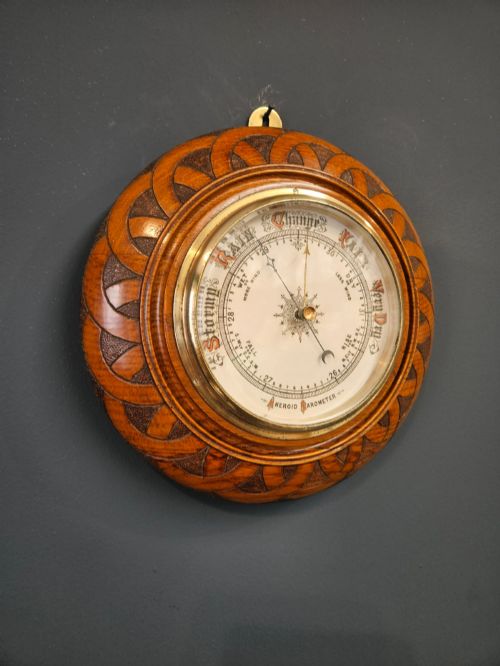
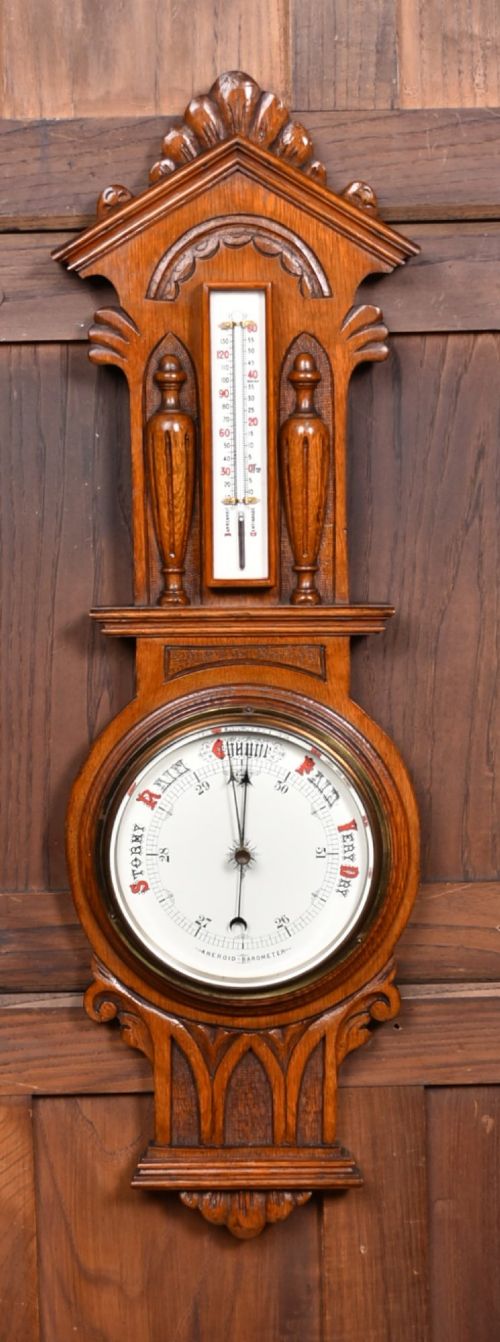
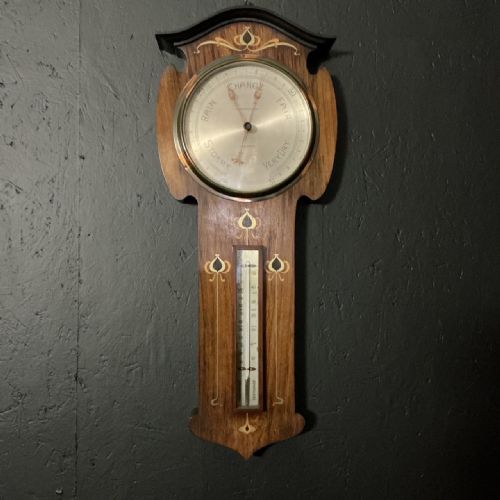
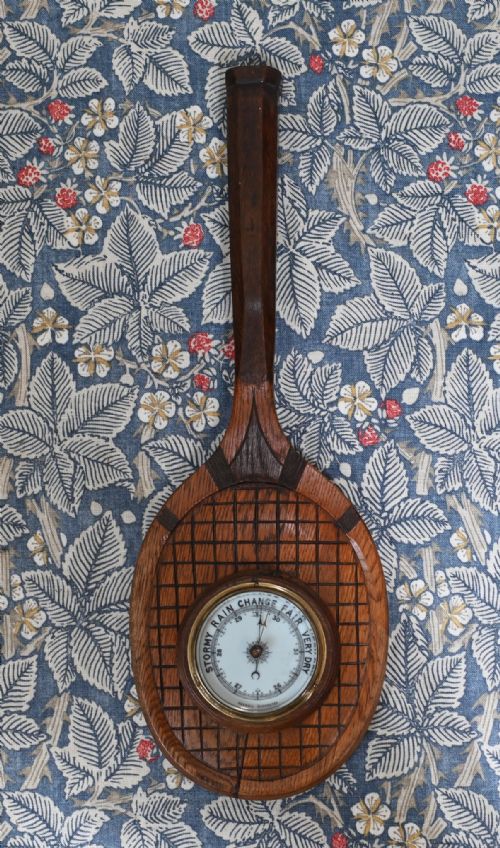
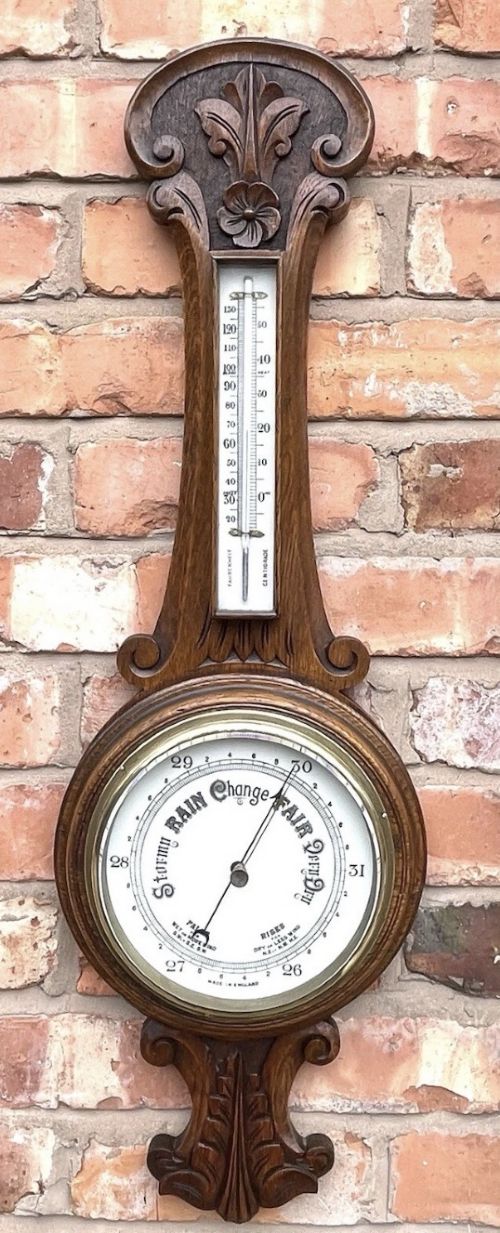
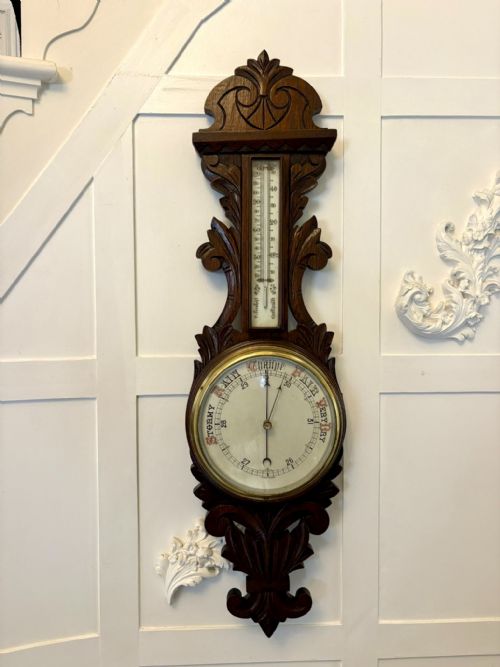
An oak wall barometer is a functional domestic instrument designed to hang on a domestic partition, combining mechanical weather tracking with robust timber housing. These items span Victorian, Edwardian, and later twentieth-century periods, capturing shifts in domestic utility and interior taste.
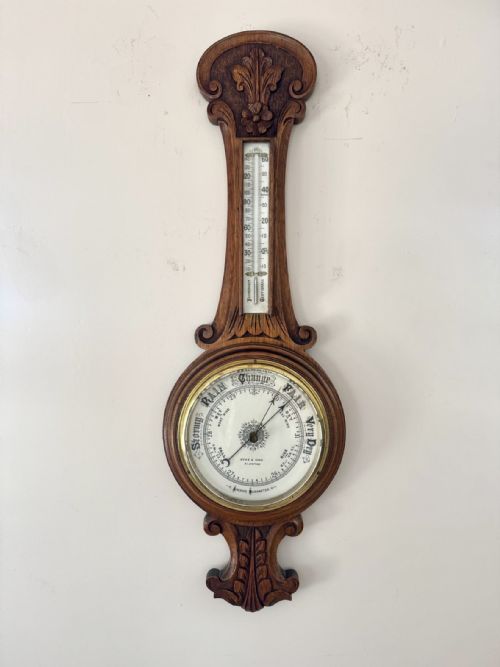
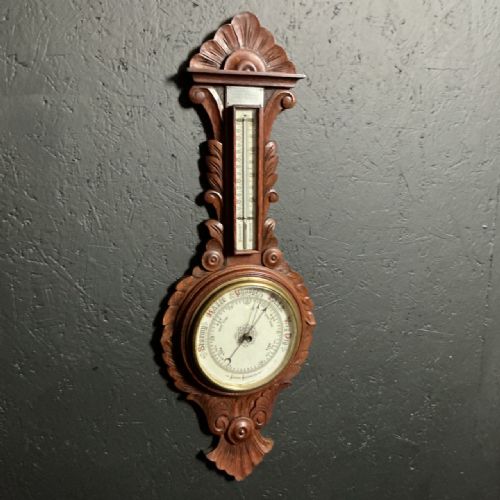
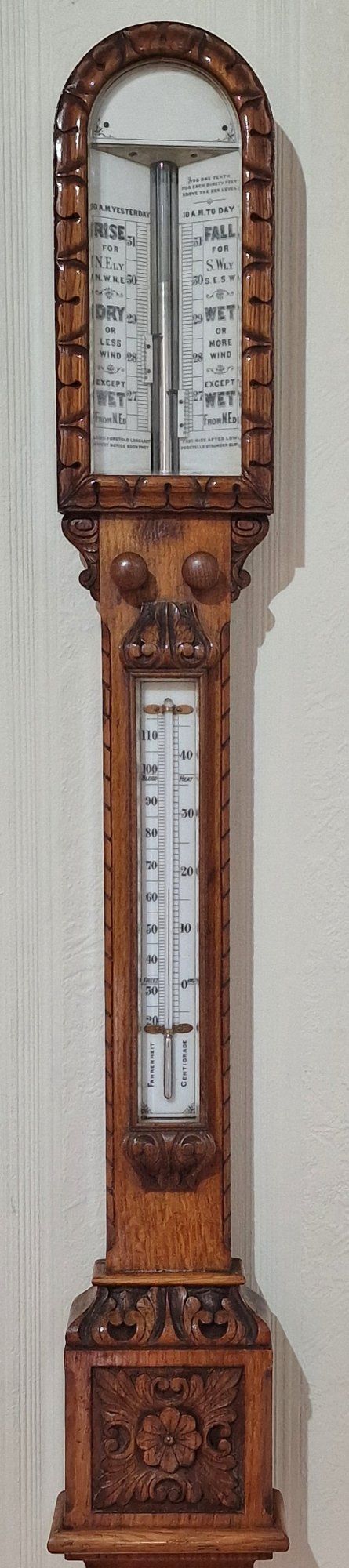
The most common formats met here are aneroid and stick barometers, frequently rendered in carved oak or enriched with banjo configurations. Makers often incorporated thermometers alongside the main dial, creating multi-function weather stations for the home.
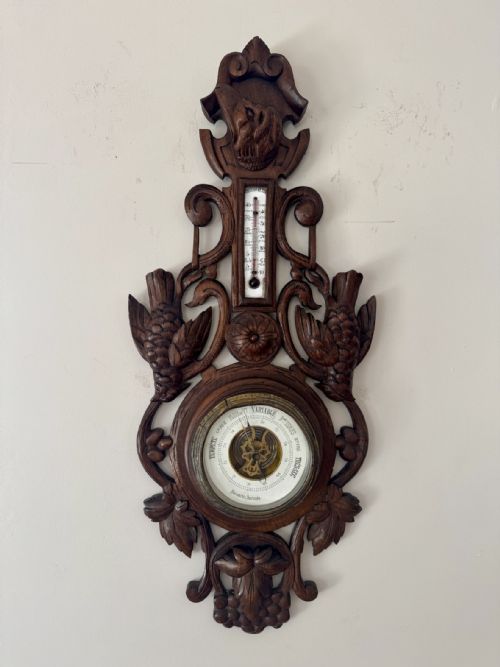
Origins stretch from British provincial workshops to specialised continental carving centres, notably the Black Forest region. Pieces range from plain geometric cased designs to heavily carved iterations featuring animal and foliage motifs.
Materials and Construction
Solid oak provides the primary structural housing, frequently shaped through turning, geometric application, or deep relief carving. Walnut and mahogany appear occasionally as secondary timbers or alternative carcass materials within the broader selection.
Internal mechanical assemblies rely on brass for movements, bezels, and indicator hands, paired with silvered or ceramic dials for legibility. Glass protects the delicate face, while paper and mercury components drive the functional tracking in stick variants.
Oak Wall Barometer Retail Price Guide 2026
Typical asking prices for oak wall barometer among the pieces listed under this phrase on Sellingantiques today, from the lower quarter to the upper quarter. They describe what is for sale here now, not the wider market.
One massive nineteenth-century oak wall barometer arrives heavily carved with watchful birds peering out from the timber foliage.
Assessing Quality
Quality rests heavily on the crispness and depth of the timber carving, distinguishing mass-produced commercial cases from bespoke sculptural work. Deep relief carving depicting natural forms requires high levels of manual dexterity and time from the artisan.
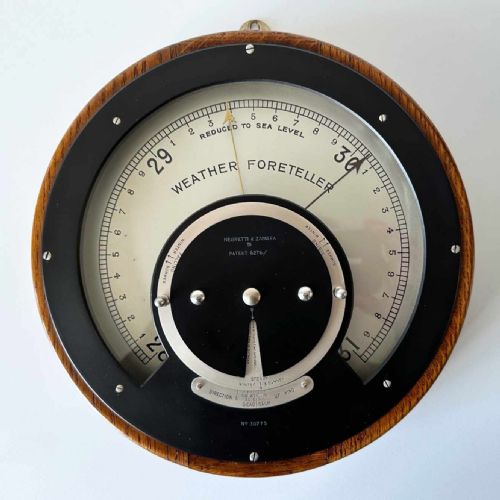
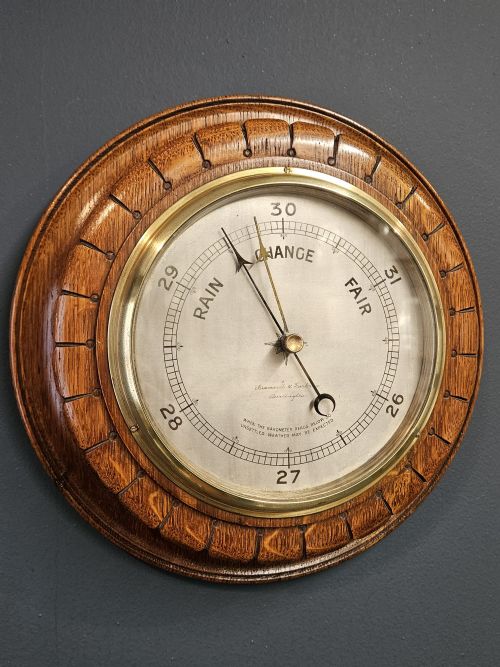
The reputation of the maker and the legibility of the dial engraving elevate certain pieces above standard utility items. Signed brass or silvered dials by known opticians and instrument makers indicate higher tiers of domestic scientific commissioning.
Hyde & Sons Sleaford·Negretti & Zambra·Bramwell & Harbron of Darlington·W Watson & Sons·J Hughes London·Maple & Co·Somalvico of London
The Oak Wall Barometer Glossary
- Aneroid barometer
- An instrument that measures atmospheric pressure using a small, flexible metal box called an aneroid cell, which expands or contracts with pressure changes. This mechanism eliminated the need for cumbersome liquid mercury reservoirs in domestic wall mountings.
- Banjo barometer
- A domestic wall barometer shaped like a stringed musical instrument, featuring a circular dial at the top and a long trunk below. This expanded layout frequently accommodated a thermometer, hygrometer, or spirit level.
- Stick barometer
- A tall, vertical barometer that uses a column of liquid to measure barometric pressure against a graduated scale. These traditional instruments often include vernier scales for precise readings.
- Silvered dial
- A brass or metallic dial face treated with a silver compound to produce a matte, reflective surface with dark engraved lettering. This treatment reduced glare and enhanced legibility in low interior lighting.
- Bezel
- The metal ring that holds the protective glass cover in front of the barometer dial. In better pieces, this ring is hinged with a small latch to allow access for manual pointer setting.
Oak Wall Barometer: Frequently Asked Questions
How do aneroid barometers work?
An aneroid barometer uses a sealed, flexible metal capsule that expands or contracts as atmospheric pressure shifts. Levers connect this capsule to the visible pointer on the dial.
Changes in weather push or pull the metal walls, translating invisible air pressure into a direct visual reading on the face.
Where should I hang a wall barometer?
Hang your barometer on an interior wall away from direct sunlight, radiators, and heavy draughts. Sudden temperature swings can affect the internal mechanism and distort readings.
Height matters less than stability, so choose a solid partition where vibrations from doors will not disrupt the delicate balance.
Can I calibrate an antique barometer?
Most aneroid barometers feature a small adjustment screw accessible from the back or through the dial face. Turning this screw aligns the pointer with known local pressure.
Compare your reading with a reliable local meteorological station before making small adjustments to the internal linkage.
How do I identify a Black Forest barometer?
Black Forest barometers are distinguished by elaborate, deeply carved wooden frames featuring naturalistic motifs such as ivy leaves, birds, or game. These nineteenth-century pieces often display exceptional German or Swiss carving skill.
The oak or walnut casing is treated as a sculptural canvas rather than a simple geometric housing for the dial.