


Carved Wood Barometer
A carved wood barometer measures atmospheric pressure while displaying the sculptural depth of Victorian and Edwardian craftsmanship.
Carved Wood Barometer
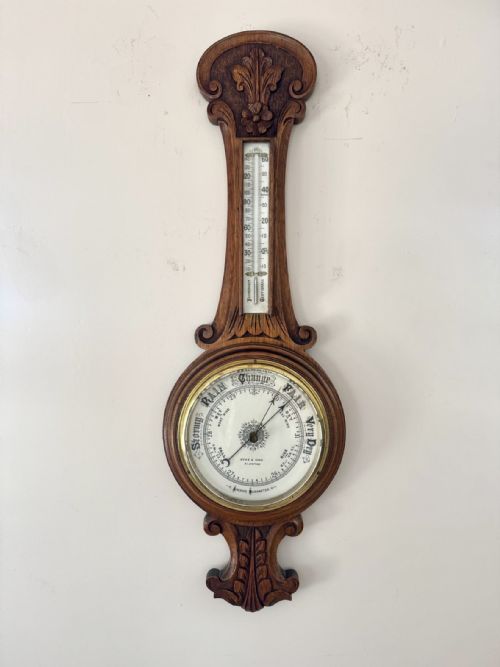
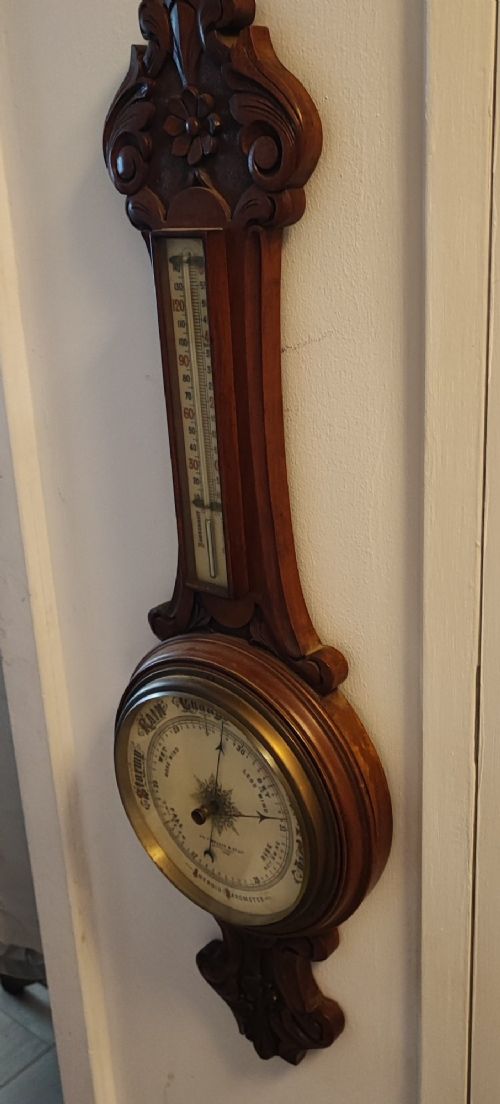
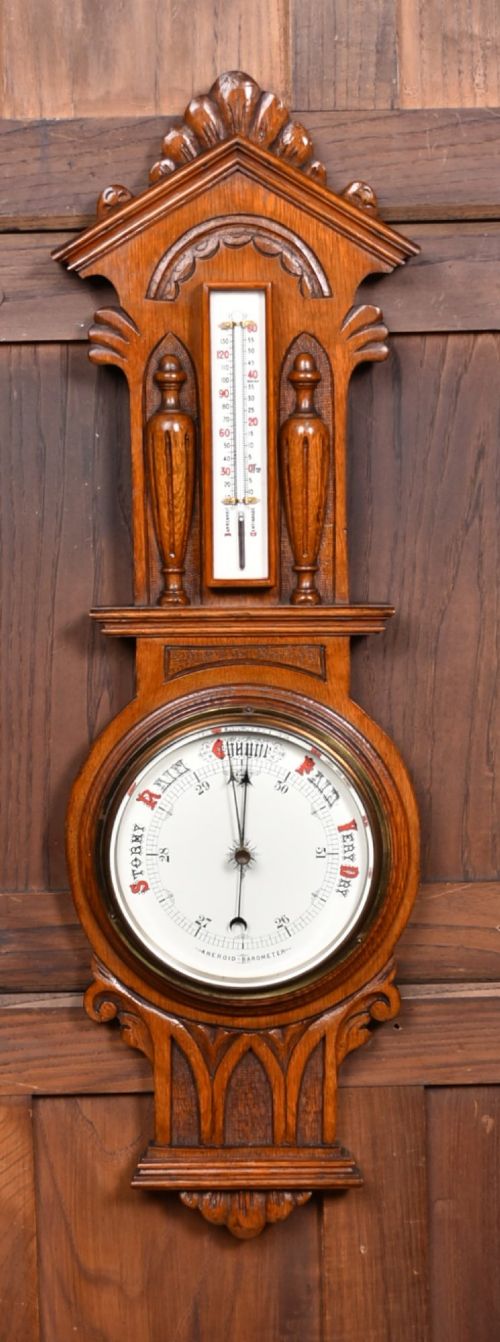
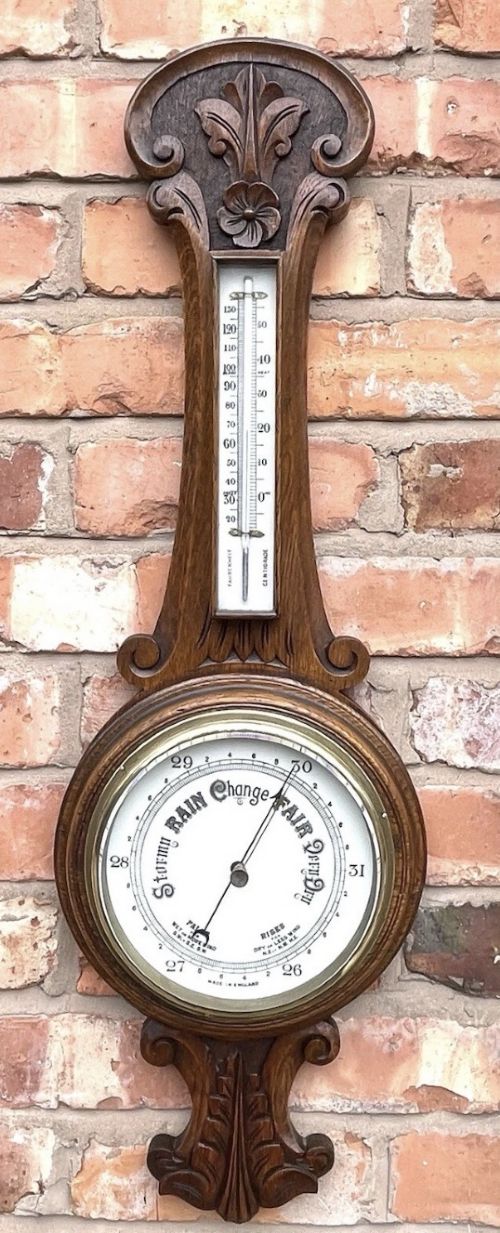
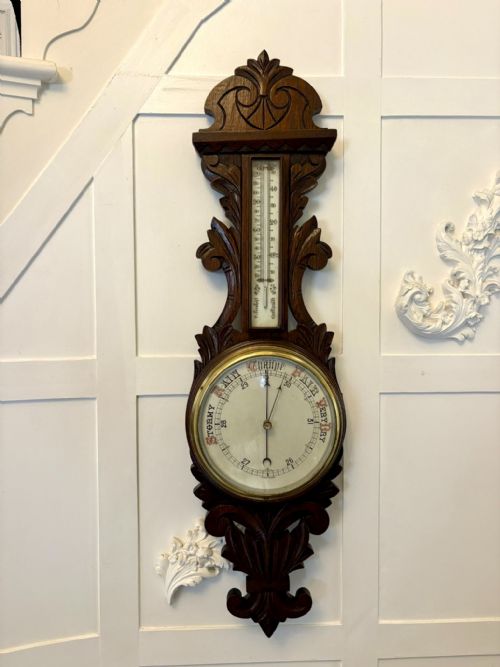
A carved wood barometer is a domestic weather instrument housed in a timber case shaped by Victorian, Edwardian, and nineteenth-century makers. The most common form on this page is the carved oak banjo barometer, often containing an integrated thermometer alongside the main dial.
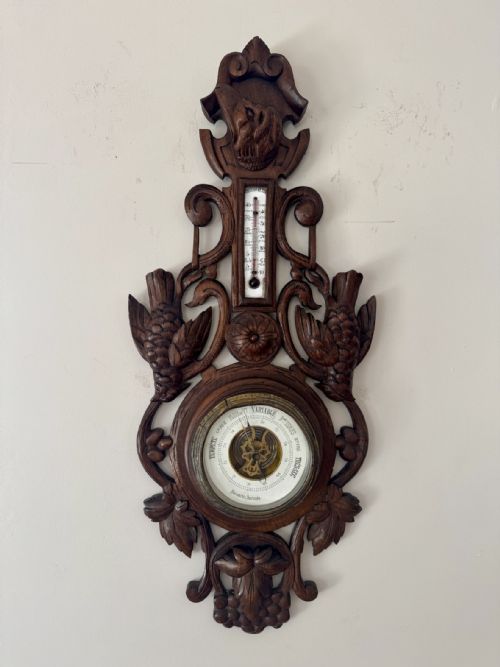
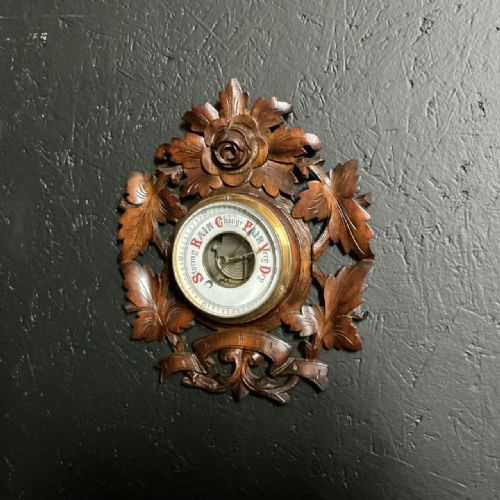
Makers also produced stick barometers, wheel barometers, and wall-hung frames using walnut, beechwood, mahogany, and rosewood. Regional variants range from Black Forest carvings to Dutch, Scandinavian, and American designs.
These instruments functioned as essential household utilities in nineteenth-century homes, combining scientific display with decorative woodwork that suited hallways, studies, and principal reception rooms.
How they were made
Cases utilise solid timbers such as oak, walnut, mahogany, beech, and rosewood, shaped through deep relief carving, turned bezels, and applied marquetry. Black Forest examples typically feature elaborate hand-carved foliage and animal motifs executed in softwood and hardwood.
Internal mechanisms rely on either mercury-filled glass tubes for stick barometers or aneroid metal capsules for banjo and wheel configurations. Ceramic, porcelain, and metal dials display the pressure graduations beneath protective glass covers, often paired with brass indicators.
Carved Wood Barometer Retail Price Guide 2026
Typical asking prices for carved wood barometer among the pieces listed under this phrase on Sellingantiques today, from the lower quarter to the upper quarter. They describe what is for sale here now, not the wider market.
The archive and current stock record mercury stick barometers alongside aneroid mechanisms, showing the coexistence of both technologies in the nineteenth century.
What varies in quality
The distinction between standard production and superior examples lies in the depth and crispness of the wood carving, particularly the undercut details on Black Forest frames and banjo cases. Maker attribution also elevates an instrument, with signed dials and movements by firms like Negretti & Zambra or James Pitkin demonstrating higher precision.
Timber selection and dial preservation dictate the overall integrity of the piece. Well-figured burr walnut and clean ceramic dials retain greater visual balance than plain secondary woods with faded graduations.
Hyde & Sons Sleaford·Negretti & Zambra·W Watson & Sons·Maple & Co·James Pitkin London
The Carved Wood Barometer Glossary
- Aneroid barometer
- An instrument that measures air pressure using a flexible metal box called an aneroid capsule, avoiding the use of liquid mercury. This design allowed barometers to be produced in varied wall-hanging formats such as banjo cases.
- Stick barometer
- A tall, vertical instrument containing an open-ended glass tube filled with mercury over a cistern. These provide a direct visual reading of barometric height against a scale.
- Banjo barometer
- A wall barometer shaped like a banjo, featuring a circular dial at the base and a long trunk often holding a thermometer. They gained popularity during the Victorian period in carved oak and walnut.
- Black Forest style
- A carving tradition originating in central Europe, characterised by deeply modelled naturalistic foliage, game animals, and rustic scenes executed in dark wood. These pieces frequently frame aneroid barometers.
- Marquetry
- The art of applying small pieces of veneer to a structure to form decorative patterns or pictorial scenes. It appears on select Neo-Classical barometer cases.
Carved Wood Barometer: Frequently Asked Questions
How do aneroid barometers work?
An aneroid barometer contains a sealed corrugated metal capsule that expands or contracts as atmospheric pressure changes. Connected levers translate this movement into the rotation of the pointer across the dial.
Unlike mercury stick barometers, these mechanical units can be mounted in any orientation and handled without liquid spillage, making them practical for domestic walls.
What is a banjo barometer?
A banjo barometer is a wall-hanging instrument whose case resembles the stringed musical instrument, featuring a bulbous lower section for the dial and a slender upper stem. This format allowed makers to include both a thermometer and a hygrometer alongside the main weather indicator.
They appear frequently in carved oak and walnut across Victorian and Edwardian listings.
How do I date a carved wood barometer?
Dating relies on stylistic clues, timber choices, and mechanical signatures within the evidence. Victorian examples often feature heavy oak banjo cases with leaf carving, while Edwardian pieces display lighter tones and refined mouldings.
Signed dials bearing maker names and specific patent dates offer the most precise chronological markers.
Are these barometers still accurate?
Most antique barometers can be calibrated to read current local atmospheric pressure by adjusting the screw on the back of the movement. The internal mechanical linkage responds to real-time barometric shifts.
However, many collectors view them primarily as historic decorative objects rather than primary meteorological tools.