


Edwardian Aneroid Barometer
When you handle an edwardian aneroid barometer, you hold a piece of domestic weather-craft shaped by walnut, brass and carved oak.
Edwardian Aneroid Barometer
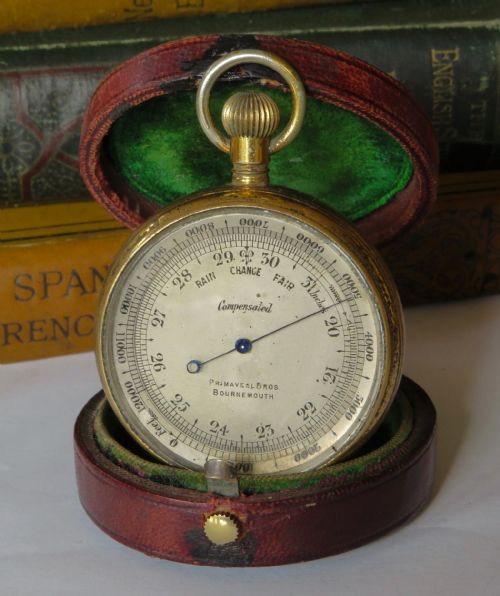
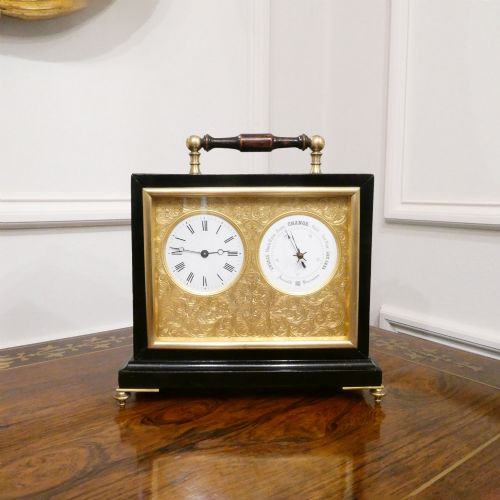
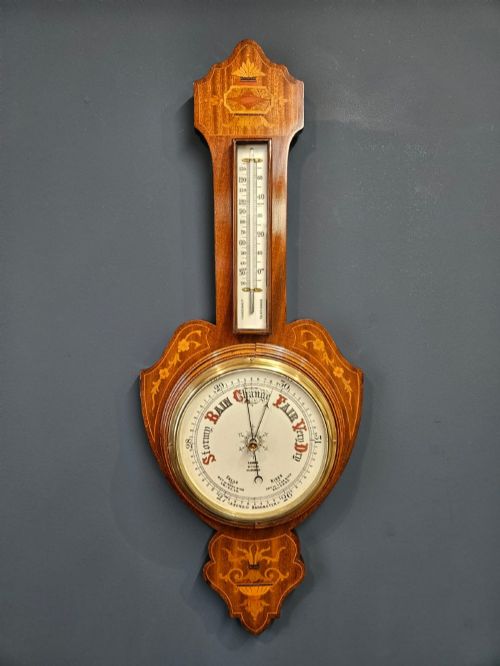
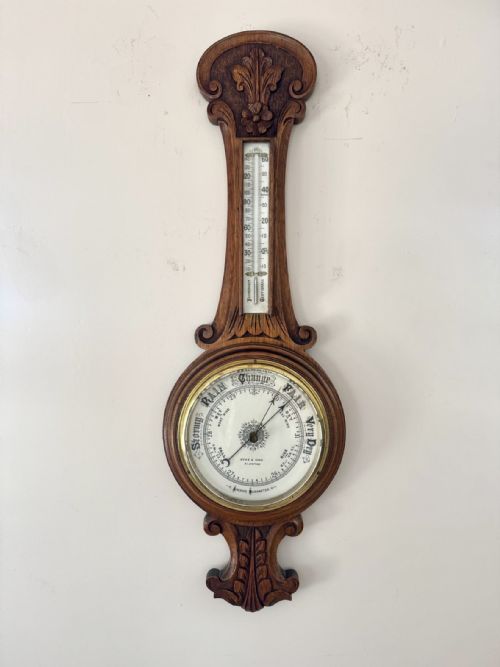
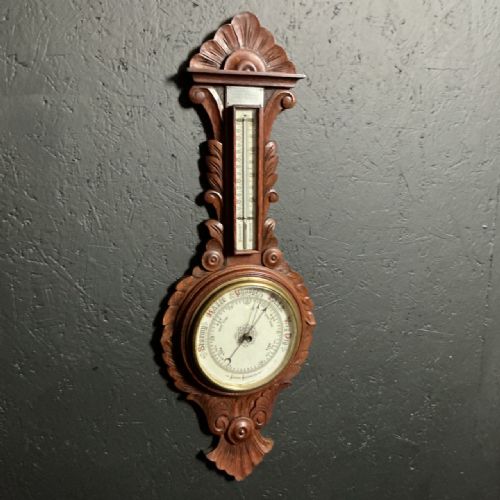
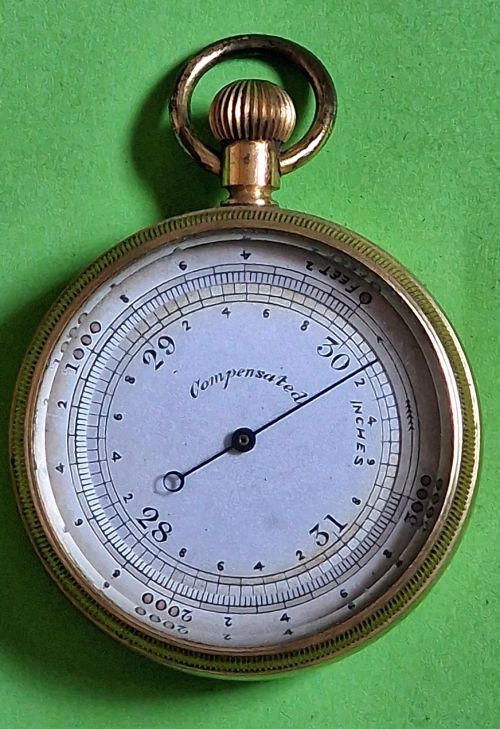
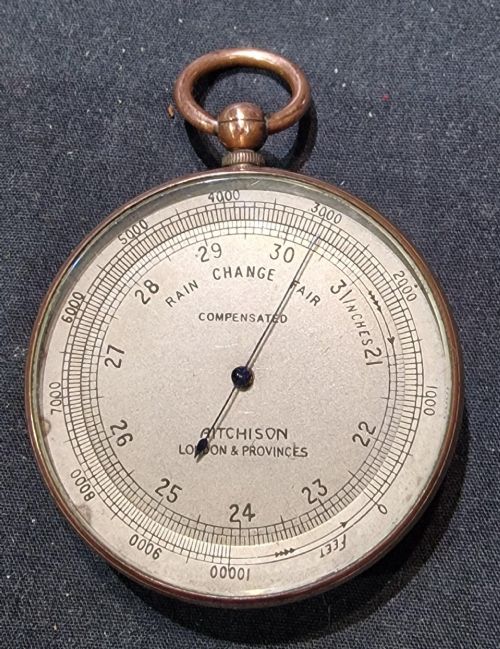
An edwardian aneroid barometer is a domestic meteorological instrument designed to measure atmospheric pressure without the use of liquid mercury. These pieces take various forms on this page, including wall-hanging banjo shapes, pocket instruments and mantel pieces.
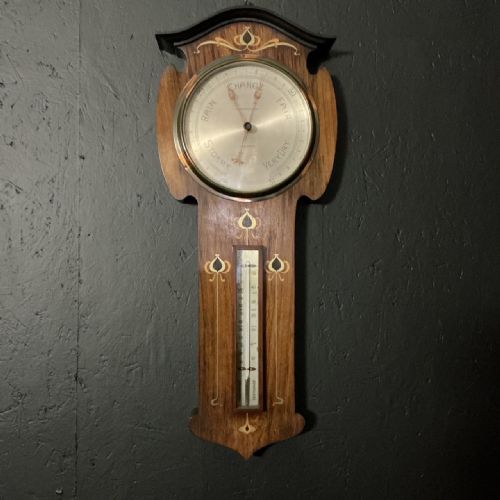
Makers housed these movements in timber cases reflecting the tastes of the period, ranging from plain polished oak to inlaid mahogany and rosewood. The surviving examples bridge practical domestic science and decorative furniture.
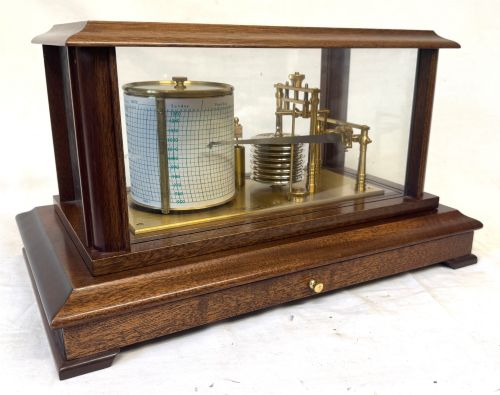
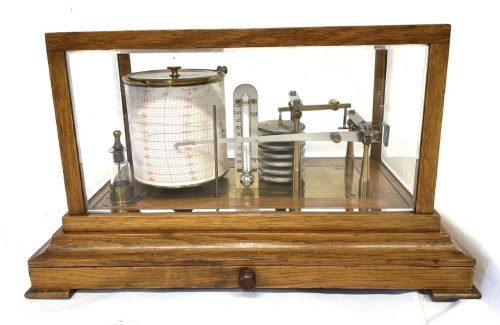
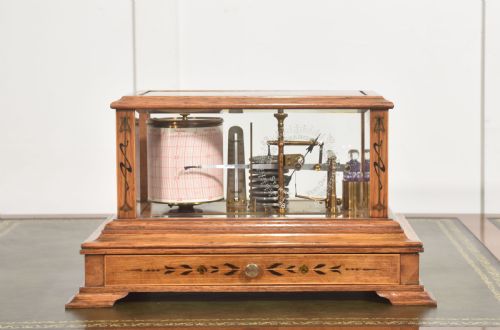
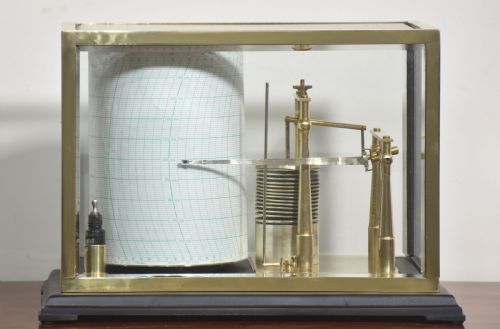
You will frequently encounter wall-mounted banjo barometers alongside heavier oak barographs fitted with glass covers and chart drawers. Each serves the dual purpose of recording weather shifts and ornamenting the interior.
How they were made
The construction relies on the mechanical linkage between a sealed metal vacuum capsule and the external dial mechanism, housed within turned or carved timber cases. Brass components form the bezels, dials and internal gears, while glass protects the delicate paper charts and indicator hands.
Cabinetmakers shaped the enclosures from native and imported hardwoods including oak, mahogany, walnut and rosewood. Decoration often involved fine string inlay, rope twist carvings or Art Nouveau motifs applied to the wood surface.
Edwardian Aneroid Barometer Retail Price Guide 2026
Typical asking prices for edwardian aneroid barometer among the pieces listed under this phrase on Sellingantiques today, from the lower quarter to the upper quarter. They describe what is for sale here now, not the wider market.
Some pocket barometers were taken aloft in military observation balloons to measure high-altitude pressure.
What varies in quality
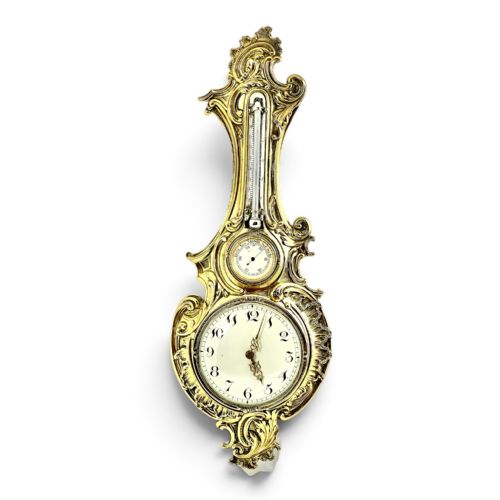
Quality rests in the crispness of the timber carving, the refinement of the dial engraving and the reputation of the maker who signed the movement. Pieces featuring specialised complications like thermometers, hygrometers or clock stations generally represent higher ambition.
The choice of housing also dictates standing, where dense carved oak or finely figured mahogany with intricate Sheraton-style inlay surpasses simpler commercial output. Preserved mechanical complexity and original paperwork elevate an instrument further.
Hyde and Sons Sleaford·Russell Norwich·Hezzanith·Short and Mason·Negretti and Zambra·Ross London·Wilson Bury St Edmunds·Primavesi·Aitchison
The Edwardian Aneroid Barometer Glossary
- Aneroid barometer
- An instrument measuring atmospheric pressure by the expansion and contraction of a flexible metal capsule, eliminating liquid mercury. This design allowed barometers to be made in portable pocket sizes and wall-hanging banjo formats.
- Barograph
- A self-recording meteorological instrument that draws a continuous line of atmospheric pressure onto a rotating paper chart. These are typically housed in oak or mahogany cases with bevelled glass viewing panels.
- Banjo barometer
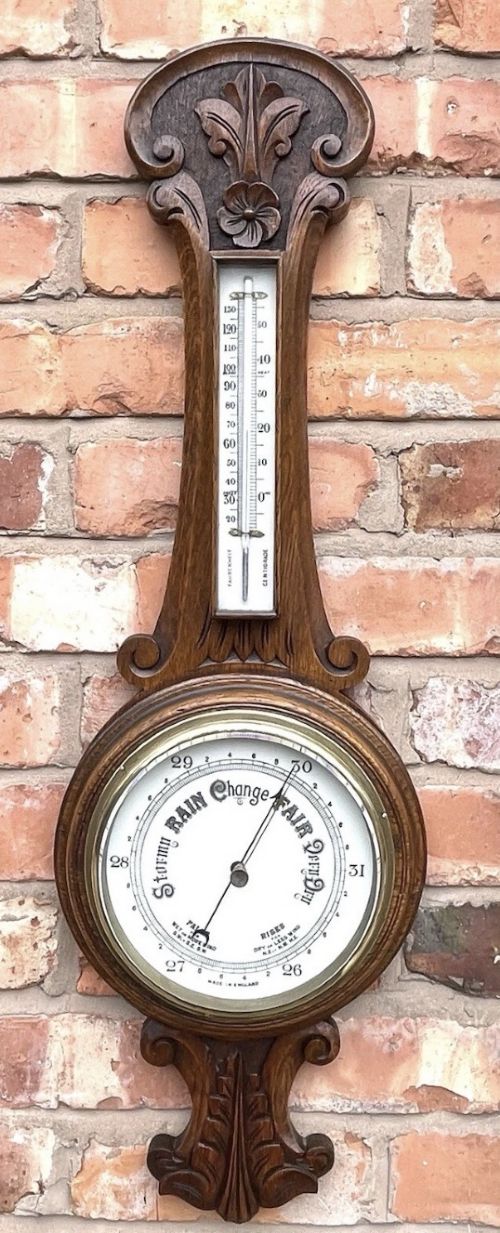
- A domestic wall barometer shaped somewhat like a stringed instrument, featuring a circular dial at the top and a longer trunk often containing a thermometer. They frequently display decorative wood inlay or carved pediments.
- Bezel
- The metal ring, often brass, that holds the protective glass face in position over the barometer dial. Finer examples feature hinged bezels allowing access to the indicator needle.
- Altimeter
- A specialised aneroid instrument calibrated to measure altitude based on atmospheric pressure changes. These are occasionally found in pocket formats or associated with early observation equipment.
Edwardian Aneroid Barometer: Frequently Asked Questions
How do I read an aneroid barometer?
The main pointer indicates the current barometric pressure, measured in inches of mercury or millibars, while the secondary manually set needle tracks changes. Rising pressure generally points toward settled weather, whereas falling pressure warns of approaching storms.
Most dials feature traditional weather forecasts inscribed around the rim, such as stormy, rain, change, fair and very dry. Comparing the movement of the needles over several hours provides a reliable local forecast.
Where should I hang a wall barometer?
Select an interior wall away from direct sunlight, central heating radiators and heavy drafts to protect the delicate internal mechanism and wood case. Stable ambient temperatures ensure the metal capsule inside registers true atmospheric pressure rather than thermal expansion.
Ensure the wall fixing is secure, particularly for heavier carved oak or rosewood banjo barometers that carry substantial weight in their lower sections.
Can these barometers still be calibrated?
Most aneroid instruments include a small adjustment screw accessible from the back or through the dial face. This allows you to match the reading to the current barometric pressure provided by a local meteorological office.
Gentle adjustment of the internal lever system aligns the indicator hand, though historical movements should be handled with care to avoid straining the delicate brass linkages.
What is a barograph used for?
A barograph records continuous atmospheric pressure over a week onto a rotating paper chart secured to a drum. The mechanical arm, driven by aneroid capsules, traces a permanent ink line that displays pressure trends at a glance.
These instruments sat in offices, libraries or ships to monitor meteorological shifts over longer durations than a standard dial barometer allows.