




English Aneroid Barometer
An English aneroid barometer measures atmospheric pressure without liquid, and collectors prize these weather instruments for their mechanical dials and timber cases.
English Aneroid Barometer
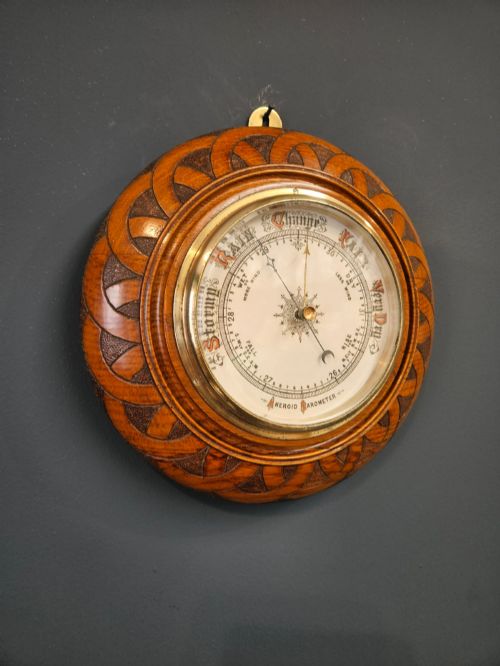
When you search for an english aneroid barometer, you encounter scientific instruments housed in wooden cases designed to hang on a wall or sit on a table. The selections span the Victorian, Edwardian, and Interwar periods, showing how domestic weather recording evolved in homes.
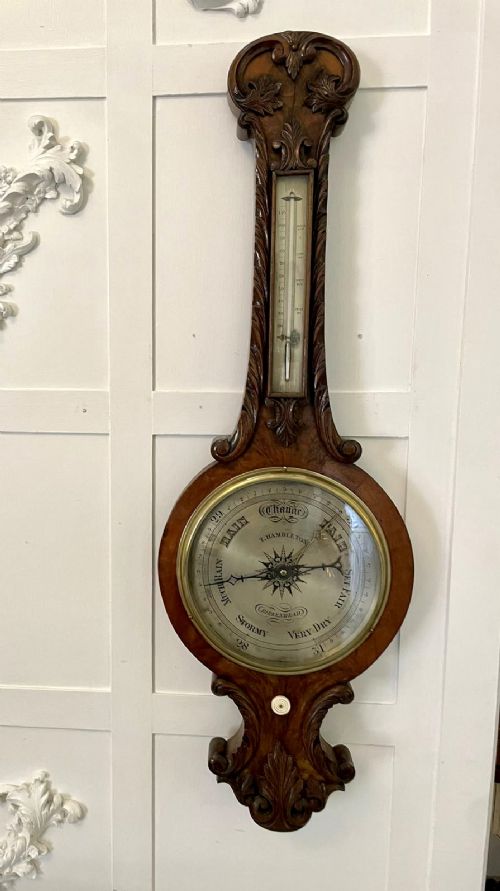
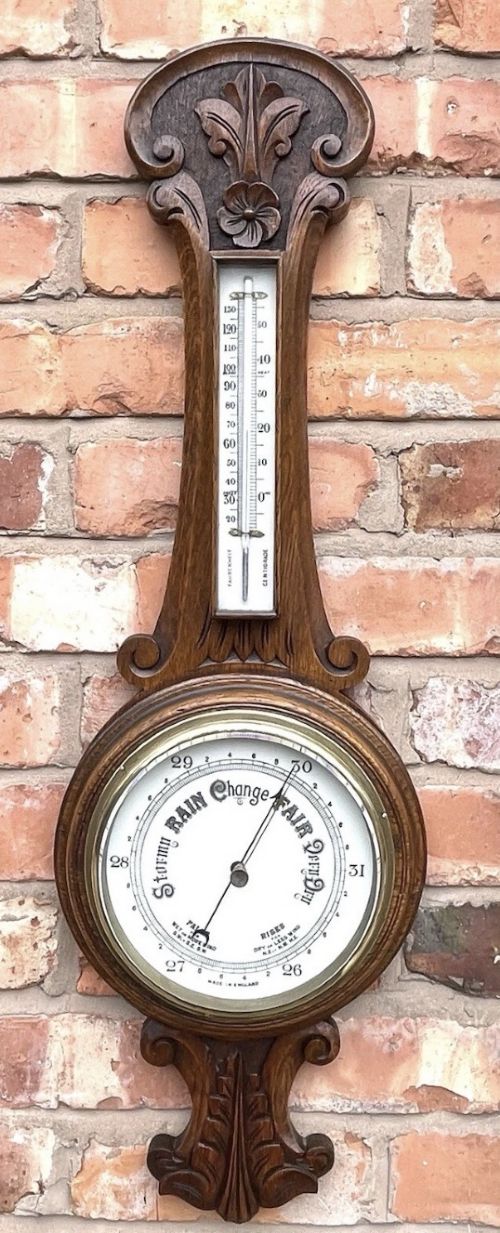
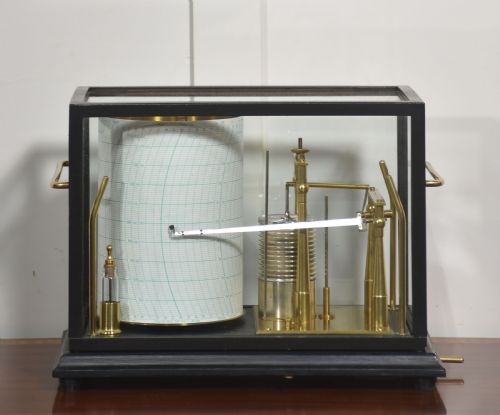
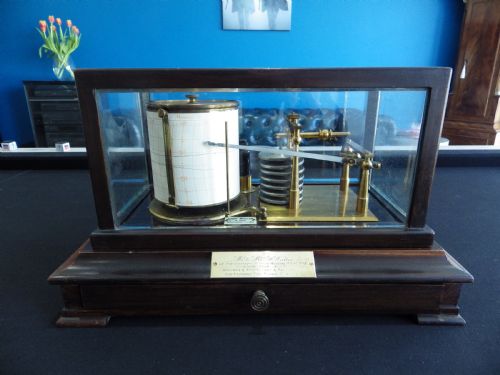
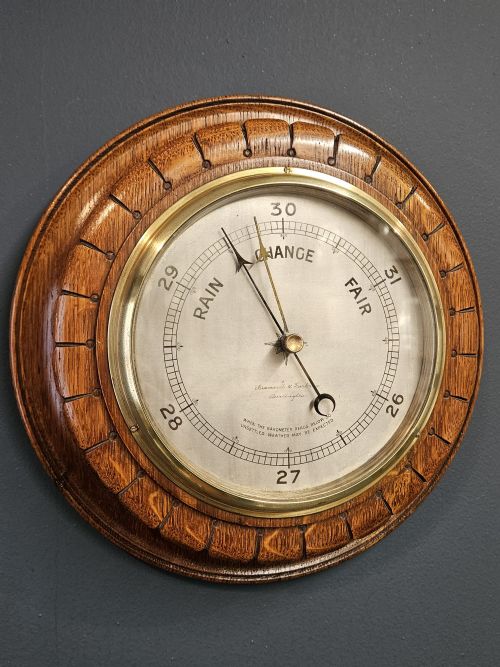
You meet banjo shapes, skeletonised movements, and recording barographs alongside traditional circular dials. Oak and mahogany dominate the timber choices, frequently accompanied by brass bezels and silvered metal scales.
The objects originate from London makers and regional opticians alike, with dates stretching from the nineteenth century into the nineteen thirties. Simpler wall-hung dials appear alongside complex instruments featuring integrated thermometers and chart drawers.
Materials and Construction
Cabinetmakers built the housings from solid oak, mahogany, and burr walnut, often carving the timber into banjo shapes or turning it into circular frames. Glass protected the sensitive silvered metal dials, while bevelled panes covered the recording drums of barographs.
Precision metalwork formed the internal aneroid mechanism, utilising brass gears and vacuum chambers to respond to barometric pressure changes. Makers mounted thermometers onto the wooden stems and fitted cast brass bezels around the primary dial faces.
English Aneroid Barometer Retail Price Guide 2026
Typical asking prices for english aneroid barometer among the pieces listed under this phrase on Sellingantiques today, from the lower quarter to the upper quarter. They describe what is for sale here now, not the wider market.
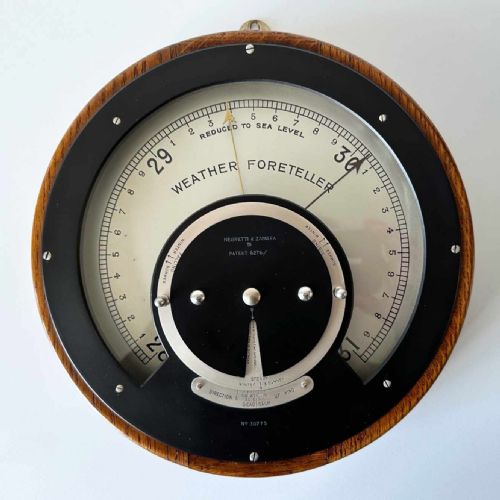
One early twentieth century model proudly labels itself a weather foreteller for everyday parlour use.
Quality and Craftsmanship
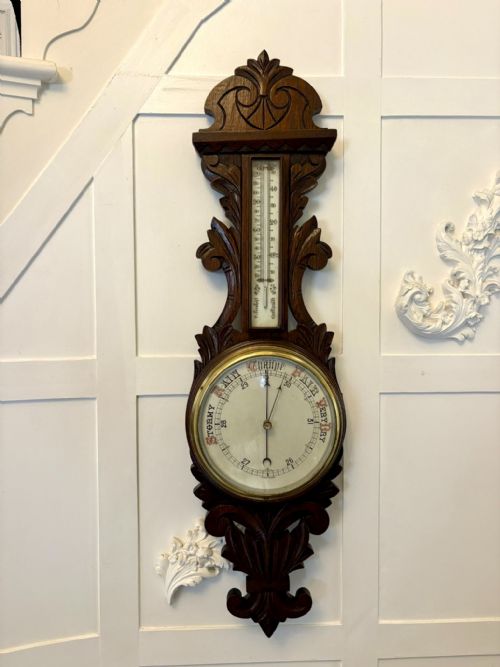
Distinction in these instruments rests upon the crispness of the dial engraving and the complexity of the timber carving. Plain circular frames differ markedly from heavily carved burr walnut or oak banjo cases adorned with matching thermometers and patent altitude adjustments.
Short & Mason·Negretti & Zambra·W Watson & Sons·Blake & Son·Bramwell & Harbron·L. Malacrida·Hayward of Ashford·Winstanley of Wigan·CSSA Ltd
The English Aneroid Barometer Glossary
- Aneroid barometer
- A scientific instrument that measures atmospheric pressure using an expanding metal capsule rather than liquid mercury. It translates subtle pressure shifts into visible needle movements on a graduated dial.
- Banjo barometer
- A domestic weather instrument housed in a tall, curving wooden case shaped vaguely like a banjo. This form typically accommodates a round dial at the top and a thermometer along the vertical stem.
- Barograph
- A self-recording meteorological instrument that draws a continuous pressure line onto a revolving paper chart. These mechanical devices often sit within glazed wooden boxes equipped with small storage drawers for spare charts.
- Silvered metal
- A brass or copper alloy dial plate treated with a silver compound to produce a bright, legible surface. The numbers and graduations are engraved into this metal and filled with dark pigment for clarity.
- Skeletonised movement
- A design that exposes the internal brass gears, levers, and vacuum chambers of the barometer rather than hiding them behind a solid face. This display highlights the intricate mechanical engineering of the instrument.
English Aneroid Barometer: Frequently Asked Questions
How do aneroid barometers work?
These instruments rely on a sealed, corrugated metal capsule that expands or contracts as atmospheric pressure rises and falls. A system of delicate levers connects this vacuum chamber to the indicator needle on the dial.
Changes in weather push or pull on the metal walls, translating invisible pressure shifts into a direct reading of atmospheric conditions.
Where should I hang a banjo barometer?
Select an interior wall away from direct sunlight, radiators, and heavy draughts to protect the wooden case and internal mechanism. Stable room temperatures ensure the metal components and wood expansion do not skew the pressure readings.
Secure the instrument firmly using appropriate wall fixings, as oak and mahogany banjo cases carry substantial weight in their lower sections.
How do I read a barograph chart?
A barograph uses an inked nib on a clockwork drum to plot a continuous line of pressure changes over the course of a week. Rising lines indicate improving weather, while falling slopes point towards approaching rain or wind.
Swapping the paper chart weekly keeps the recording mechanism accurate and provides a historical record of local meteorological shifts.
What is the difference between Victorian and Edwardian barometers?
Victorian examples frequently display heavier carved oak or burr walnut cases with deep mouldings and prominent mercury or spirit thermometers. The dial work tends towards ornate Victorian typography and decorative engraving.
Edwardian pieces often embrace simpler circular oak frames or lighter proportions, reflecting changing domestic tastes towards cleaner lines at the turn of the century.