
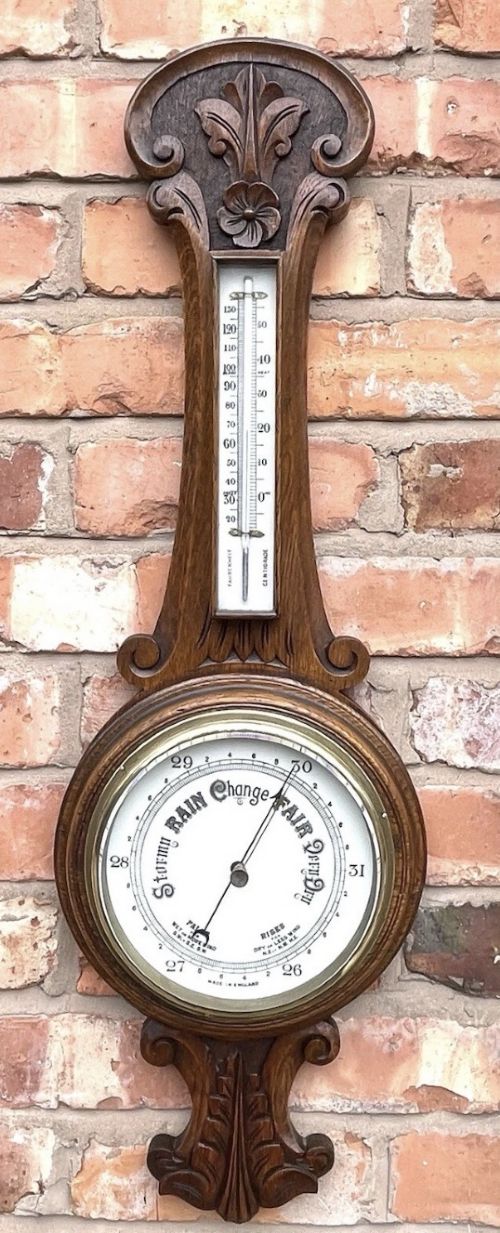


Vintage Barometer Clock
A vintage barometer clock combines timekeeping with meteorological recording, offering both functional utility and classic interior decoration.
Vintage Barometer Clock
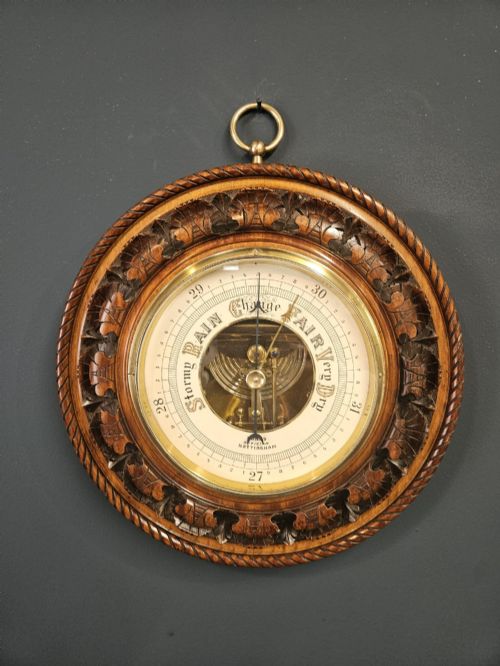
When you search for a vintage barometer clock, you are looking at combined instruments that measure atmospheric pressure and track time within a single housing. These pieces span the nineteenth century through the art deco period, emerging in forms ranging from wall-hung banjo styles to desk compendiums and mantel instruments.
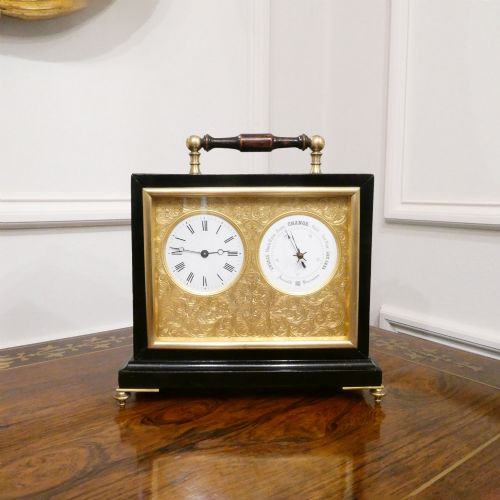
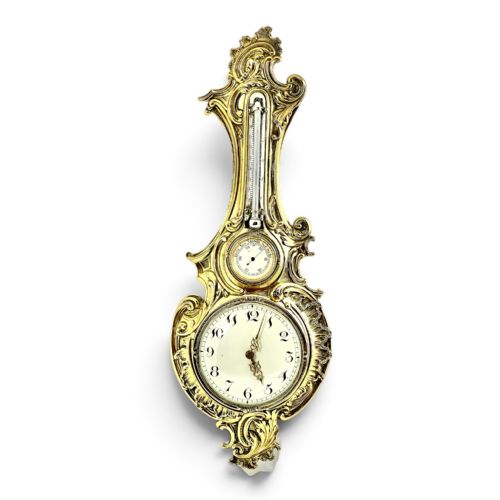
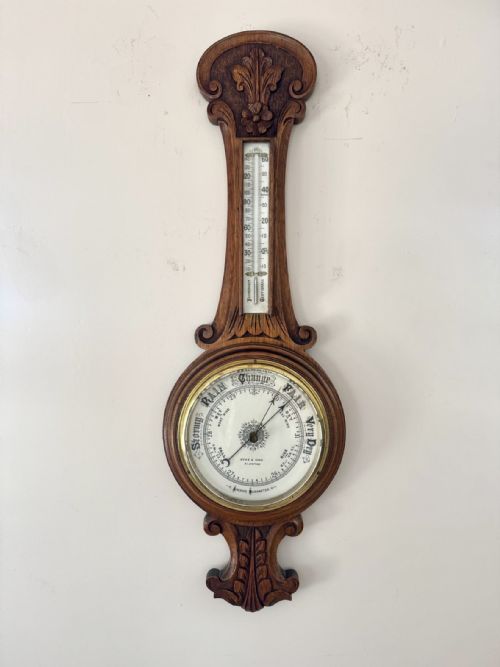
The most common examples on this page are carved oak and walnut banjo barometers incorporating thermometers and clocks, alongside Edwardian and Victorian mantel pieces. You will also encounter maritime bulkhead sets and architectural desk clocks housing multiple weather dials.
Origins stretch from English workshops to continental makers, reflecting shifting domestic tastes from Victorian rococo revival through to streamlined twentieth-century design.
Materials and construction
These instruments rely on cabinet timbers including oak, walnut, and mahogany, frequently shaped through carving or architectural joinery. Cases house delicate mechanisms alongside glass faces, silvered metal dials, and occasionally enamel or ceramic markers.
Metals such as brass, chrome, and silvered bronze formbezels, dials, and structural fittings, contrasting with the warm tones of the wooden enclosures. Aneroid movements and traditional clockwork are integrated into compact housings designed for domestic interiors.
Vintage Barometer Clock Retail Price Guide 2026
Typical asking prices for vintage barometer clock among the pieces listed under this phrase on Sellingantiques today, from the lower quarter to the upper quarter. They describe what is for sale here now, not the wider market.
Formats range from wall-mounted banjo barometers and architectural desk clocks to maritime bulkhead sets and multi-dial desk compendiums.
Factors of quality
Quality rests upon the crispness of the timber carving, the legibility and execution of the silvered metal dials, and the integration of multiple instruments within a unified case. Finer examples display meticulous dial engraving and substantial brass bezels fitted securely into dense hardwoods.
Hyde & Sons Sleaford·Ganthony of London·Negretti & Zambra·Russell of Liverpool·H Marks
The Vintage Barometer Clock Glossary
- Aneroid barometer
- An instrument that measures atmospheric pressure using a flexible metal box without liquid, allowing for compact domestic designs. It forms the basis of most combined clock barometers.
- Banjo barometer
- A wall-mounted instrument shaped like a banjo, typically housing a thermometer at the top, a circular dial in the centre, and an aneroid mechanism below. This form dominates nineteenth-century English domestic weather instruments.
- Desk compendium
- A desk accessory uniting a clock, barometer, and thermometer within a single frame. These pieces often utilise brass, wood, or leather bindings.
- Bulkhead clock
- A marine timekeeper or barometer designed to be mounted directly to the wall of a ship cabin. They frequently feature heavy brass or chrome bezels and waterproof gaskets.
- Silvered metal
- A brass or copper dial treated with a silver compound to produce a matte white finish for engraved markings. This surface provides high contrast for reading pressure and time scales.
Vintage Barometer Clock: Frequently Asked Questions
What is a vintage barometer clock?
A vintage barometer clock is a dual-function domestic instrument that combines a mechanical clock with an aneroid barometer, frequently accompanied by a thermometer.
These pieces measure changes in atmospheric pressure to help forecast local weather while simultaneously keeping standard time.
How were these instruments used historically?
Households consulted these instruments daily to anticipate weather shifts before planning travel, farming, or social activities.
They served as both scientific tools and prominent decorative furnishings in hallways, libraries, and drawing rooms.
How do I care for a wooden case?
Keep wooden cases away from direct sunlight and steady heat sources to prevent the timber from warping or splitting.
Apply a traditional wax polish occasionally to maintain the lustre of the oak, walnut, or mahogany surfaces.
Can these barometers be calibrated?
Most aneroid barometers feature a small adjustment screw accessible from the back or through the dial face.
Calibration requires matching the needle reading to current local barometric pressure obtained from a reliable meteorological source.
How do I distinguish Victorian from Edwardian pieces?
Victorian examples often feature heavier carved decoration, darker woods, and rococo revival motifs or elaborate architectural framing.
Edwardian pieces tend to display cleaner lines, lighter oak or mahogany tones, and simpler inlay work reflecting a shift toward understated interiors.