


Antique Barograph Instrument
An antique barograph instrument records atmospheric pressure onto paper charts, combining precision mechanics with handsome cabinetry for daily forecasting.
Antique Barograph Instrument
An antique barograph instrument serves as a self-recording barometer, tracing atmospheric pressure changes onto a revolving paper chart over a week. The specimens encountered here typically date from the Victorian, Edwardian, and interwar periods, spanning the nineteenth and twentieth centuries.
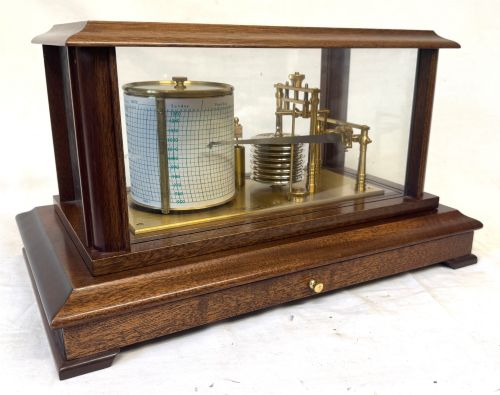
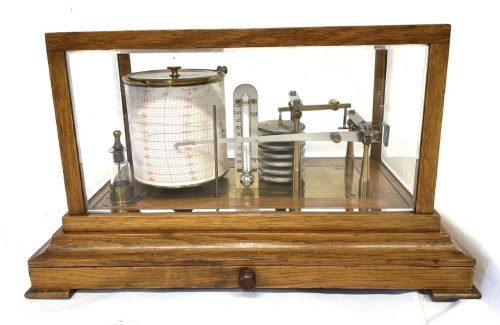
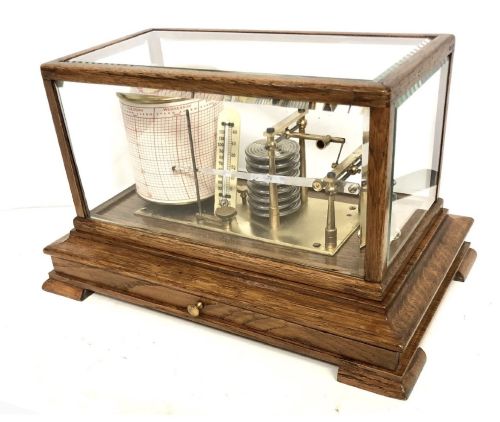
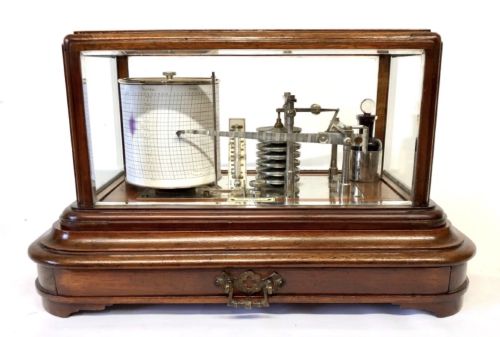
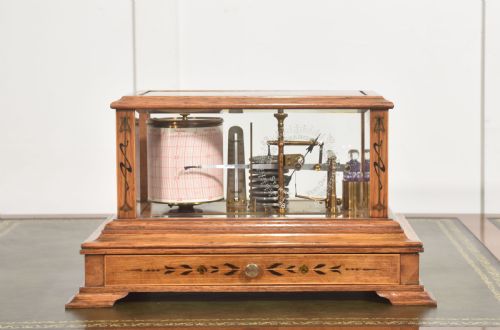
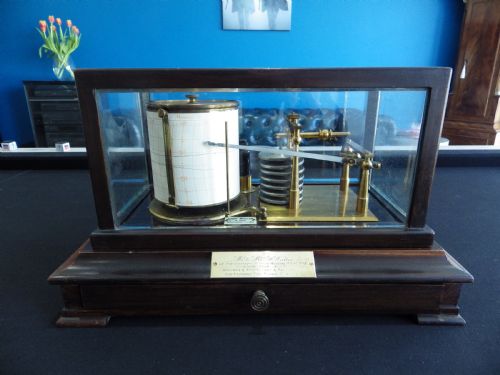
Most examples house brass mechanisms within glazed wooden enclosures, frequently incorporating a thermometer mounted on the bedplate or a drawer beneath for spare charts. Oak and mahogany dominate the timber cases, often fitted with five panes of bevelled glass to display the mechanical movement.
Makers such as Short & Mason and Negretti & Zambra appear frequently, alongside regional retailers and continental makers like Richard Frères. These scientific instruments range from standard mahogany table models to specialised oak cases with Art Nouveau inlay or railway interest.
Materials and Construction
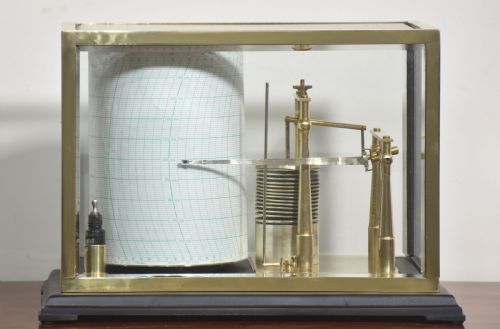
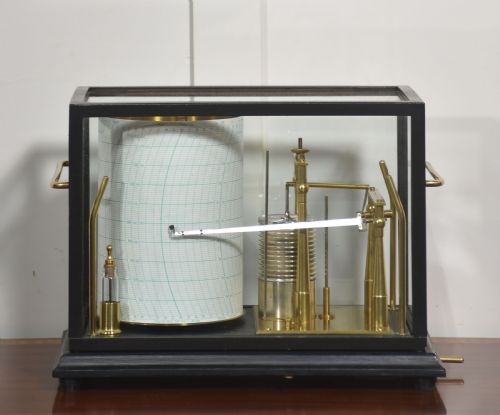
Makers constructed the barometric movement using stacked vacuum-sealed metal diaphragms, known as aneroid capsules, linked to a brass leverage system that multiplies minute pressure shifts. This delicate assembly connects to an inked arm resting upon a clockwork drum rotated by an internal spring.
Cabinetmakers housed these brass and steel movements inside timber cases of mahogany, oak, or walnut, selected for stability and appearance. Glaziers fitted bevelled glass panels into the top and sides, allowing clear observation of the recording mechanism while protecting the paper drum from draughts.
Antique Barograph Instrument Retail Price Guide 2026
Typical asking prices for barograph instrument among the pieces listed under this phrase on Sellingantiques today, from the lower quarter to the upper quarter. They describe what is for sale here now, not the wider market.
Recorded periods span from the late nineteenth century through the interwar years, with Edwardian and Victorian examples appearing most frequently.
Judging Quality
Excellence in an antique barograph instrument lies in the refinement of the movement and the integrity of the cabinetry. Finer examples display crisp maker signatures on engraved brass beds, precise gear cutting in the clockwork drums, and robust mahogany or figured oak housings with tight mitres and bevelled glass.
Lesser items may show plain timber construction, missing thermometer attachments, or replacement paper drawers that disrupt the original form. The presence of specialised retailer signatures, supplementary barometer dials, or intact original paperwork elevates the standing of an individual piece.
Short & Mason·Negretti & Zambra·Richard Frères·Casella London·Gaupp & Co
The Antique Barograph Instrument Glossary
- Aneroid capsule
- A sealed, corrugated metal box that expands or contracts with changes in atmospheric pressure. Multiple capsules are often stacked inside the instrument to increase mechanical movement.
- Chart drawer
- A shallow compartment built into the base of the wooden case. It stores spare weekly recording papers and spare bottles of ink.
- Clockwork drum
- The rotating brass cylinder driven by an internal spring mechanism. It carries the graduated paper chart and completes one revolution every seven days.
- Bevelled glass
- Pane glass featuring angled, ground edges set into the wooden framework. It adds refinement to the five-glass cases typical of Edwardian and Victorian scientific instruments.
- Thermometer
- A temperature gauge mounted alongside the barograph mechanism. It allows simultaneous reading of ambient room temperature and air pressure.
Antique Barograph Instrument: Frequently Asked Questions
How do I change the paper chart?
Lift the inked nib away from the drum using the small brass lever provided on the arm. Gently lift the brass drum off its spindle to slide the old paper off and secure a fresh weekly chart.
Ensure the paper aligns correctly with the time markings before sliding the drum back onto the spindle. Lower the pen carefully onto the paper and wind the clockwork movement moderately.
How were these instruments used originally?
Households, offices, and scientific observers used barographs to track continuous weather trends rather than single pressure readings. The rising or falling ink line predicted approaching storms or fair weather over the coming days.
Captains and station masters relied on them for accurate local forecasting before electronic meteorology. The weekly paper provided a permanent handwritten record of regional climate patterns.
How should I clean the glass case?
Wipe the wooden exterior with a soft, dry cloth to remove dust without disturbing the timber patina. Avoid liquid polishes that might seep into the joints or damage the French polish.
Clean the bevelled glass panels using a mild glass cleaner applied to a cloth rather than sprayed directly onto the case. Keep moisture well away from the exposed brass mechanism and paper charts inside.
How do I date an oak or mahogany barograph?
Examine the timber, hardware style, and maker's signature engraved on the brass bedplate. Victorian models often feature heavier mahogany frames, while Edwardian pieces frequently showcase lighter oak housings and bevelled glass.
Look for retailer plaques and paper labels inside the case or drawer that reference specific addresses or exhibition dates. The presence of Art Nouveau inlay points towards the early twentieth century.