


Recording Aneroid Barometer
A recording aneroid barometer charts atmospheric pressure over time on paper, giving you a continuous historical record of the weather.
Recording Aneroid Barometer
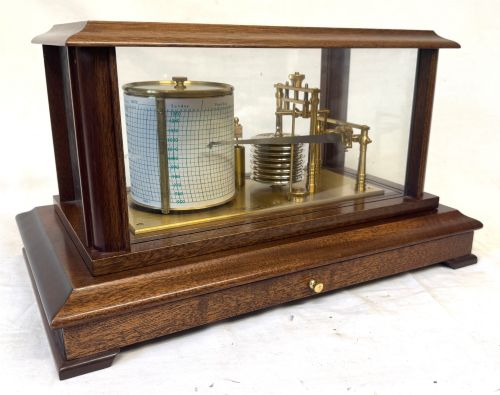
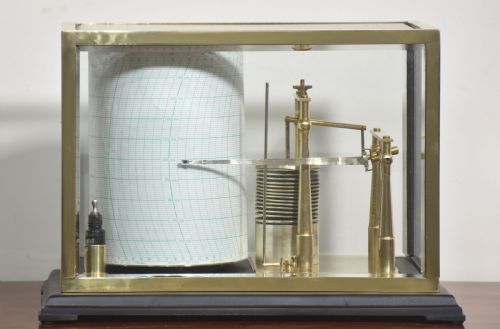
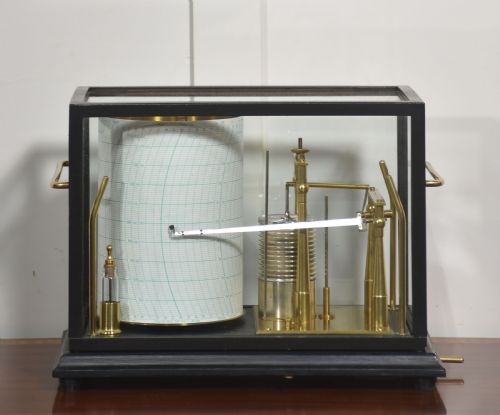
A recording aneroid barometer, commonly known as a barograph, is a self-registering meteorological instrument that plots barometric pressure onto a rotating drum. When you search for a recording aneroid barometer, you will find mechanical devices housed in glazed wooden cases that combine scientific utility with decorative presence.
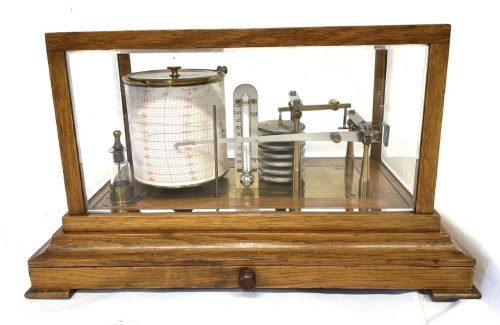
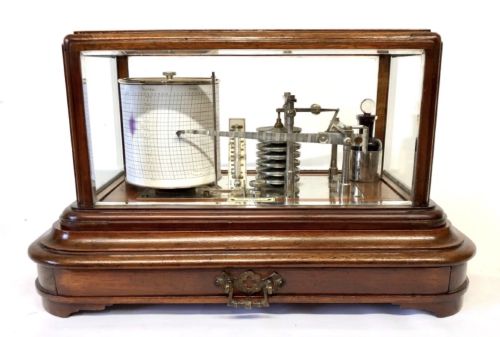
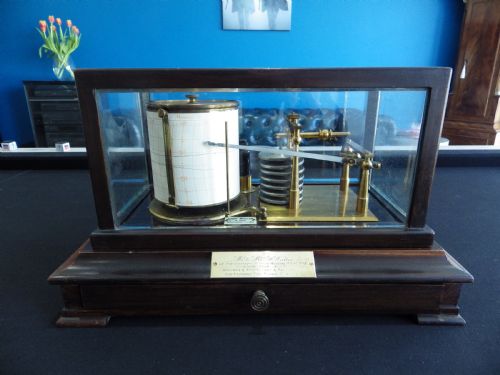
The pieces listed here span from the late nineteenth century through the Edwardian period and into the mid-twentieth century. Most examples you meet on this page are housed in mahogany or oak cases fitted with bevelled glass panels to display the delicate brass mechanism within.
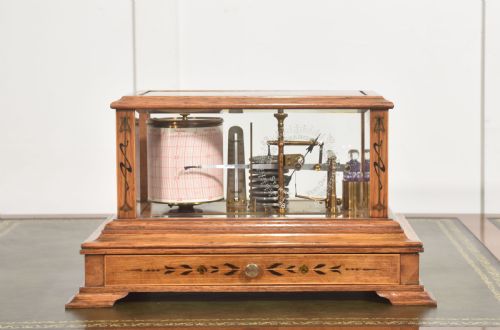
Many specimens incorporate supplementary instruments such as a thermometer or an aneroid barometer dial mounted alongside the rotating drum. Some iterations also include a lower drawer designed specifically to store unused paper charts.
How they were made
Makers constructed the sensitive internal movement using stacks of corrugated metal vacuum chambers connected via levers and linkages to a steel or brass recording arm. This arm holds a pen that traces pressure fluctuations onto specialised paper charts secured to a clockwork-driven drum.
Casework relies on traditional cabinet timbers such as mahogany, oak, and walnut, often polished or left with a natural grain. Glazing typically involves heavy bevelled glass held within a five-glass framework so the entire mechanical operation remains visible from every angle.
Recording Aneroid Barometer Retail Price Guide 2026
Typical asking prices for recording aneroid barometer among the pieces listed under this phrase on Sellingantiques today, from the lower quarter to the upper quarter. They describe what is for sale here now, not the wider market.
Some models were retailed by Harrods, proving that Victorian shoppers bought their barographs alongside afternoon tea provisions.
What varies in quality
Quality rests in the precision of the clockwork drum movement and the reputation of the maker inscribed on the brass bedplate or paper scale. Instruments bearing the signatures of established scientific makers command greater attention than unbranded examples.
The refinement of the cabinetry dictates overall distinction, ranging from plain functional boxes to pieces featuring decorative Art Nouveau inlay or finely fitted chart drawers. The clarity and thickness of the bevelled glass panes also contribute significantly to the finished character of the object.
Short And Mason·Negretti And Zambra·Richard Freres·R Fuess
The Recording Aneroid Barometer Glossary
- Barograph
- A self-recording aneroid barometer that charts atmospheric pressure onto a revolving paper cylinder. It translates subtle weather shifts into a permanent ink line.
- Aneroid barometer
- An instrument measuring air pressure by the expansion and contraction of an elastic metal box containing no liquid. It forms the mechanical heart of every barograph.
- Chart drawer
- A shallow compartment built into the base of the wooden case to hold spare paper recording sheets. This keeps essential consumables neatly stored beneath the instrument.
- Bevelled glass
- Pane glass with edges cut and polished at an angle before installation into the cabinet frame. It adds a refined optical edge to the display case.
Recording Aneroid Barometer: Frequently Asked Questions
How do I change the chart paper?
You lift the hinged brass arm away from the drum and carefully slide the spent paper chart off the rotating cylinder. Wrap a fresh weekly chart around the drum, securing the overlap.
Wind the internal clockwork mechanism gently and lower the pen arm back onto the paper surface. Ensure the ink nib flows freely before leaving the instrument to record.
Where should I place a barograph at home?
Position the instrument on a sturdy, level surface away from direct sunlight, radiators, and heavy foot traffic. Rapid temperature changes or vibrations can disrupt the delicate internal vacuum chambers and affect the accuracy of the ink trace.
A quiet study, hallway, or living room shelf provides an ideal environment where the mechanical movement can be observed without disturbance.
How do I know if an instrument is Victorian?
Victorian examples generally feature heavier timber construction in dark mahogany or walnut, often accompanied by robust brass fittings and conservative case designs. Maker signatures from this era frequently reference nineteenth-century London addresses.
Later Edwardian and interwar pieces tend to incorporate lighter oak timbers, sometimes accented with subtle decorative inlay or simplified case geometries.
Can I still buy replacement paper charts?
Specialist suppliers and meteorological societies continue to print compatible weekly pressure charts sized for standard drum diameters. Using the correct chart scale ensures the pressure readings align properly with the arc of the recording pen.