


Edwardian Barograph
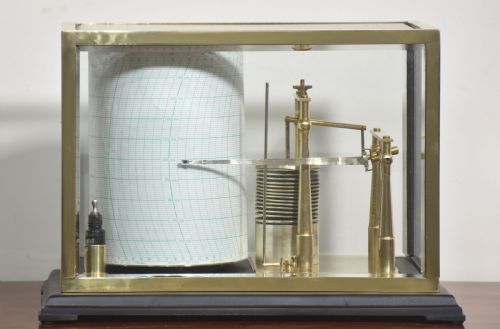
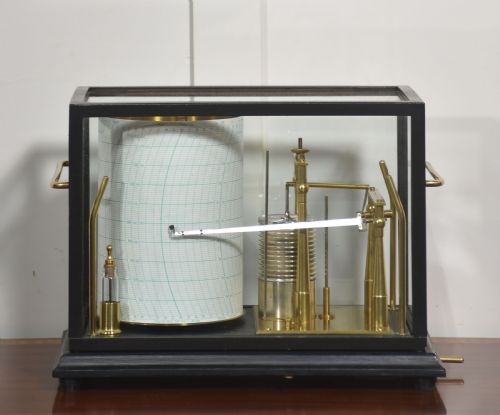
An Edwardian barograph records atmospheric pressure continuously on paper charts housed within a glazed timber case.
Edwardian Barograph
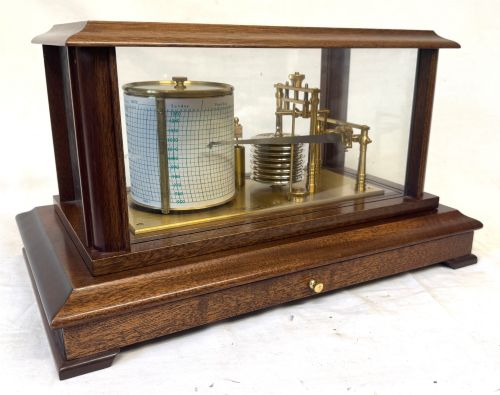
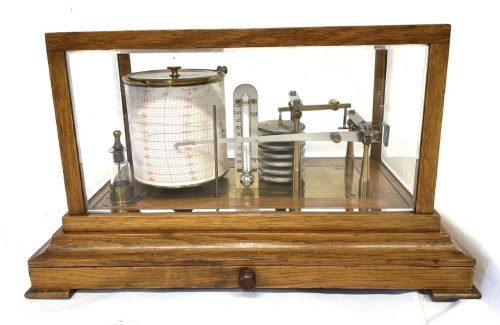
An Edwardian barograph is a scientific instrument designed to track changes in barometric pressure over the course of a week. These devices sit inside protective enclosures, most commonly built with timber frames and bevelled glass panels that allow a clear view of the clockwork drum and pen arm in motion.
Makers from this era housed the delicate vacuum chambers and levers in polished wooden boxes that double as handsome household objects. They reflect a period when domestic weather recording combined practical utility with polished cabinet-making.
Materials and Construction
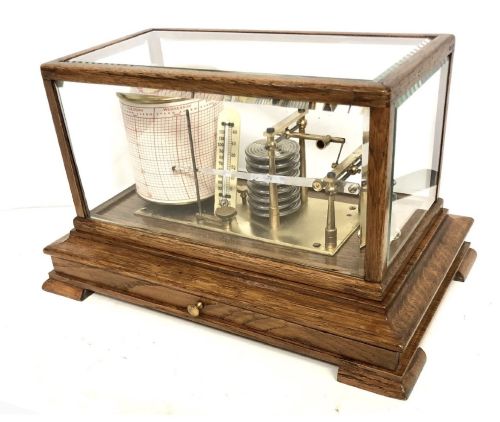
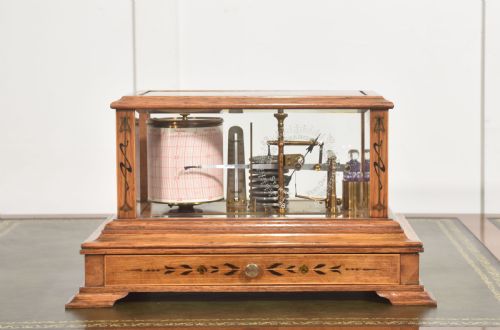
Cases utilise seasoned timbers such as mahogany, oak and walnut, joined with neat corners and fitted with five panes of glass to protect the brass and steel mechanisms inside. Bevelled glass edges catch the light, while some examples feature subtle Art Nouveau inlay or metal mounts.
The internal mechanics rely on stacked metallic vacuum capsules that expand or contract with shifting air pressure, transferring movement through a series of delicate brass levers to a pen arm. This arm holds a nib that traces a continuous line onto a paper chart wrapped around a rotating clockwork cylinder.
Edwardian Barograph Retail Price Guide 2026
Typical asking prices for edwardian barograph among the pieces listed under this phrase on Sellingantiques today, from the lower quarter to the upper quarter. They describe what is for sale here now, not the wider market.
Listings feature oak, mahogany and walnut cases housing brass and steel mechanisms.
Distinctions in Quality
Quality rests in the precision of the clockwork movement and the crispness of the cabinet joinery. Finely made examples house movements by established scientific makers, fitted securely into heavy timber cases with tight-fitting joints and substantial bevelled glass.
Subtleties such as integrated thermometers, auxiliary barometer dials, or specialised cabinetry like inlaid mahogany set certain pieces apart. The integration of a chart drawer and branded maker plaques indicates an instrument produced for a discerning clientele.
Short and Mason·Negretti and Zambra·Jules Richard·Harrods of London·Casella London
The Edwardian Barograph Glossary
- Aneroid barograph
- An instrument that records atmospheric pressure without using liquid, relying instead on flexible metal bellows.
- Chart drawer
- A small compartment built into the base of the wooden case, designed specifically to store spare recording paper.
- Bevelled glass
- Glass panes with edges cut and polished at an angle, adding depth and refinement to the instrument case.
- Clockwork drum
- A rotating brass cylinder driven by an internal spring mechanism that carries the weekly paper chart.
- Vacuum capsule
- A sealed metal chamber that expands and contracts as air pressure fluctuates.
Edwardian Barograph: Frequently Asked Questions
How does a barograph work?
A barograph operates through a series of stacked metal vacuum chambers that respond to shifts in atmospheric pressure. These movements transfer through a system of levers to a inked nib that traces a continuous line onto a revolving paper chart.
The rotating cylinder contains a clockwork mechanism that turns the drum once every seven days. This mechanical setup allows observers to read weekly weather trends at a single glance.
What timber cases are available?
Most instrument cases are constructed from mahogany, oak or walnut, often finished with a polished sheen. Some examples incorporate lighter decorative inlays or brass carrying handles.
The timber encloses five glass panels, providing visibility from the top and sides while shielding the delicate brass mechanics from dust and drafts.
How do I change the paper chart?
To change the record, lift the brass drum off its spindle and slip the old paper sheet off the metal cylinder. Wrap a fresh chart around the drum, securing the ends, and place the cylinder back into position.
Ensure the ink nib rests lightly on the new paper before winding the clockwork movement. Spare charts are typically stored in the drawer built into the base of the wooden case.
Did these instruments include thermometers?
Many models incorporate a separate thermometer mounted on the bedplate alongside the recording drum. This addition allowed households to monitor both temperature and pressure simultaneously.
These combination instruments required slightly larger timber cases to accommodate the extra dial or mercury thermometer tube.