


Vintage Barograph Instrument
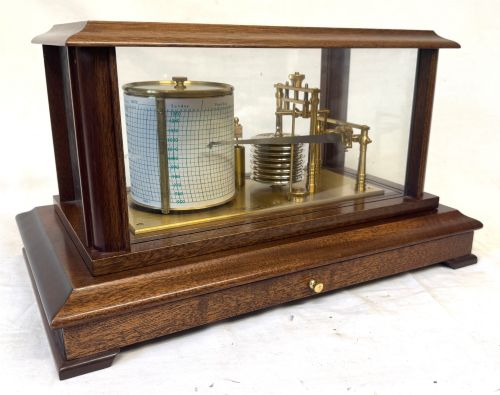
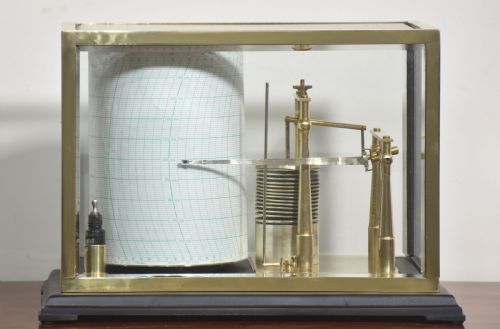
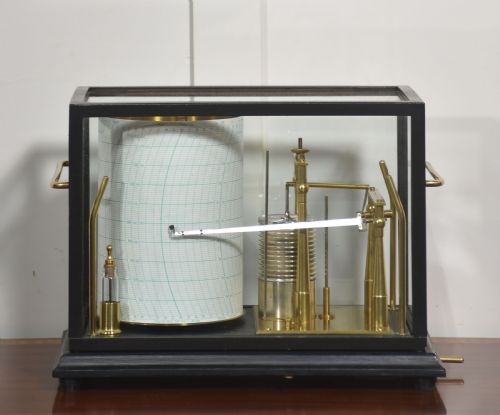
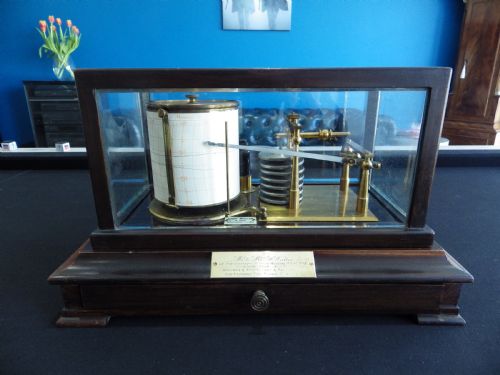
A vintage barograph instrument records atmospheric pressure onto paper charts, combining mechanical precision with handsome timber cabinetry.
Vintage Barograph Instrument
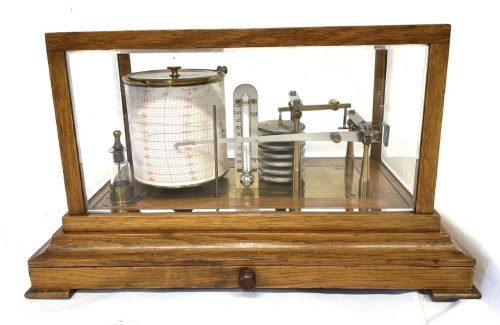
A vintage barograph instrument is a self-recording meteorological device typically housed in a glazed wooden case designed to sit on a desk or table. Most examples encountered here date from the Victorian and Edwardian periods up through the interwar years, reflecting an era when weather tracking was both a science and a domestic pursuit.
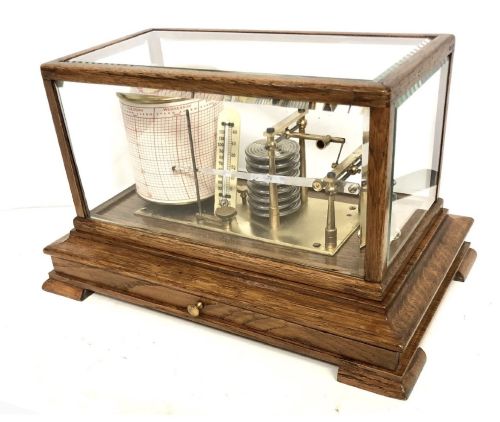
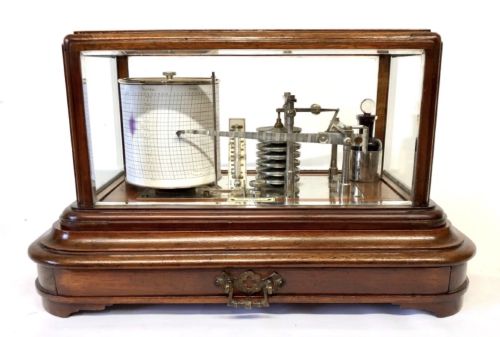
The standard form comprises a multi-layered brass vacuum capsule mechanism connected to an inked pen arm, which traces pressure fluctuations onto a rotating drum. Many incorporate an integral thermometer on the bed and a pull-out drawer at the base for storing unused paper charts.
Oak and mahogany dominate the cabinetry, often constructed with five glass panels to allow a clear view of the working movement inside. Variations span from plain utilitarian boxes to inlaid mahogany and walnut designs bearing retail signatures from London makers.
Materials and construction
The enclosures rely upon solid timbers such as mahogany, oak, and walnut, joined with traditional cabinetry methods and fitted with bevelled glass panes. Selected models feature decorative inlays or brass carrying handles mounted to the top.
Internal mechanisms combine brass linkages, steel springs, and metallic vacuum drums that expand or contract with changing barometric pressure. Movements transfer this kinetic action to a lever carrying an ink nib across a clockwork-driven paper cylinder.
Listings feature models constructed from mahogany, oak, and walnut, spanning Victorian, Edwardian, and interwar periods.
Distinctions in quality
Differences in quality depend on the precision of the mechanical linkages and the reputation of the maker supplying the instrument. Well-known scientific houses deliver smoother clockwork movements and more robust brass castings than anonymous workshop productions.
Cabinetry finish and timber selection further separate standard items from superior pieces. Fine examples display carefully matched wood grain, tight joinery, bevelled glass panes, and integrated thermometer scales mounted alongside the recording drum.
Short And Mason·Negretti And Zambra·Casella London·Jules Richard·Richard Freres·Russell Norwich·Gaupp And Co·R Fuess·Robson Of Newcastle·Antoine Redier·Depree And Young Ltd·Dobbie Son And Hutton·Harrods Of London
The Vintage Barograph Instrument Glossary
- Barograph
- A recording barometer that plots atmospheric pressure over time onto a rotating drum. This mechanical graph provides a continuous visual history of weather patterns.
- Aneroid
- Operating without liquid by using a flexible metal vacuum capsule that responds to air pressure changes. This expansion and contraction drives the recording pen arm.
- Chart drawer
- A small storage compartment built beneath the main instrument platform. It holds replacement paper recording sheets and spare ink.
- Thermometer
- A temperature gauge mounted on the wooden bed inside the glass case. It offers a secondary meteorological reading alongside the pressure trace.
- Gluck movement
- A specialised clockwork mechanism found within specific Edwardian recording instruments. It regulates the rotation speed of the recording cylinder.
Vintage Barograph Instrument: Frequently Asked Questions
How does a vintage barograph instrument work?
Stackable metallic vacuum capsules expand or contract as atmospheric pressure shifts outside the glass case. This physical movement transfers through brass levers to an inked arm that marks a rotating paper cylinder.
Clockwork mechanisms inside the rotating drum turn the paper sheet once every seven days. This continuous line creates a permanent weekly record of local weather trends.
Where should I place a barograph at home?
Position the instrument on a stable, level surface away from direct sunlight, radiators, and doors to prevent false readings from drafts or temperature extremes. Living rooms, studies, or hallways offer stable environments where the mechanical action can be observed.
Keep the case out of high-moisture areas like kitchens to protect the wooden cabinetry and the delicate brass components from corrosion.
How do I read the paper charts?
The vertical axis on the paper chart measures pressure in inches of mercury or millibars, while the horizontal grid lines mark the days of the week and hours of the day. Rising lines indicate improving weather, whereas falling traces signal approaching storms or rain.
Reading the graph requires noting where the ink trace sits relative to the calibration lines printed on the weekly sheet.
How do I date a wooden barograph?
Examine the timber species, glass configuration, and any retailer signatures or plaques mounted on the bed or case. Oak housings often point toward Edwardian production, while rich mahogany and specific maker stamps connect pieces to Victorian workshops.
Paperwork, original ink bottles, or style details like Art Nouveau inlays provide further clues for narrowing down the decade of manufacture.