


Antique Chart Recorder
An antique chart recorder is a mechanical weather instrument that logs barometric pressure over time, prized for its rotating drum and brass arms.
Antique Chart Recorder
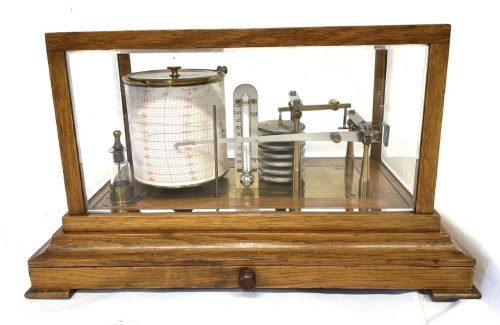
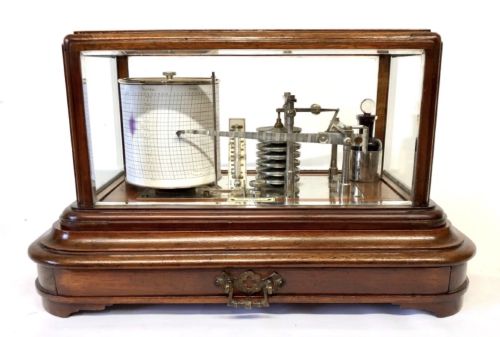
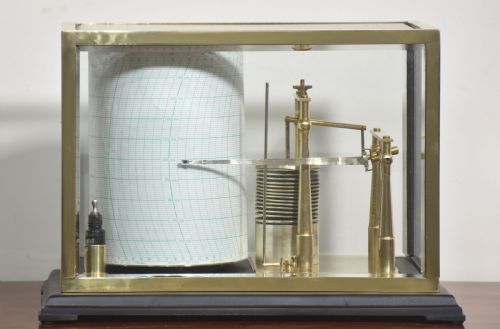
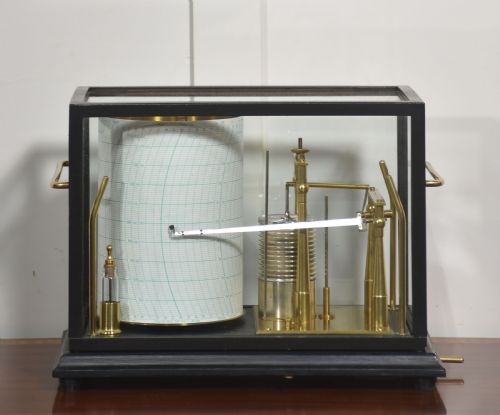
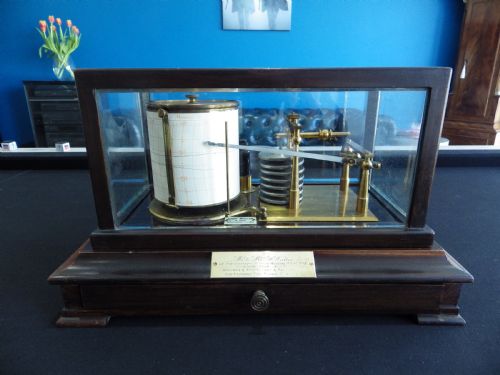
When you search for an antique chart recorder, you encounter barographs and scientific instruments housed in glazed wooden cases. These devices record continuous atmospheric pressure onto paper charts using ink filled pens.
The version you are most likely to meet on this page is the mahogany or oak cased barograph dating from the Victorian, Edwardian, and interwar periods. Many examples include a chart drawer beneath the mechanism and supplementary thermometers or barometer dials.
Originating from makers in London and international firms, these instruments combine precision meteorology with substantial cabinetry. They function as both scientific apparatus and decorative mantel or desk pieces.
How they were made
These instruments utilise seasoned mahogany and oak for the protective five glass cases, joined with brass fittings and hinges. Bevelled glass panels allow clear viewing of the internal mechanism from multiple angles.
The internal mechanics rely on stacked aneroid metal diaphragms connected to pivoted brass arms and steel nibs. Paper charts are secured to clockwork rotating drums powered by internal spring driven movements.
Listings span the Victorian, Edwardian, and interwar periods, utilising mahogany, oak, walnut, brass, and glass.
What varies in quality
The distinction between standard production and the top of the range lies in the calibre of the maker and the refinement of the case. Signed movements by notable makers and retailers command greater attention than unsigned alternatives.
Cabinetwork differentiates the examples significantly, separating plain timber boxes from those featuring inlaid mahogany, bevelled glass panes, and integrated chart drawers with fitted locks.
Gaupp And Co Hongkong And Singapore·Short And Mason·Negretti And Zambra·Casella London·R Fuess·Harrods Of London·Jules Richard·Dobbie Son And Hutton London
The Antique Chart Recorder Glossary
- Barograph
- A recording barometer that traces atmospheric pressure onto a revolving paper chart. It translates movement from aneroid chambers into an inked line.
- Aneroid
- Operating without liquid. These barometers and barographs use flexible metal vacuum chambers to measure air pressure.
- Chart drawer
- A shallow compartment built into the base of the wooden case. It stores spare weekly paper recording sheets.
- Clockwork movement
- The spring driven mechanism that rotates the recording drum at a steady rate. It requires periodic winding to maintain operation.
- Bevelled glass
- Glass panes with angled, polished edges fitted into the wooden case frame. This adds a decorative finish to the instrument housing.
Antique Chart Recorder: Frequently Asked Questions
What is an antique chart recorder used for?
These instruments continuously record barometric pressure variations over the course of a week onto a rotating paper chart.
They provided households and meteorological stations with a visual history of approaching weather changes.
How do you operate a barograph?
You wind the internal clockwork drum and secure a fresh paper chart around its metal cylinder.
An inked nib rests against the paper, tracing the rise and fall of atmospheric pressure driven by the aneroid stack.
Where should you place a barograph?
Display the instrument on a stable desk, table, or sideboard away from direct heat sources and vibrations.
A secure location protects the delicate five glass wooden case and ensures accurate mechanical recording.
How do you identify the period of these instruments?
Examine the timber species, case design, and maker signatures engraved on the brass beds or paper charts.
Victorian and Edwardian versions typically feature rich mahogany or oak woodwork with bevelled glass panels.