



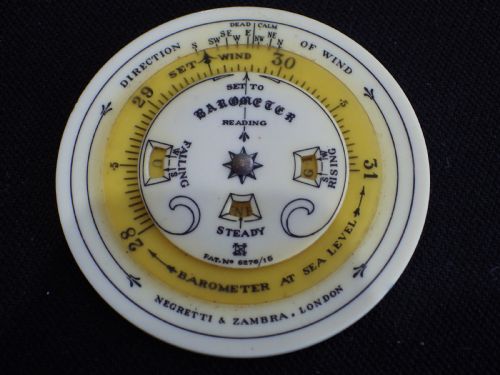
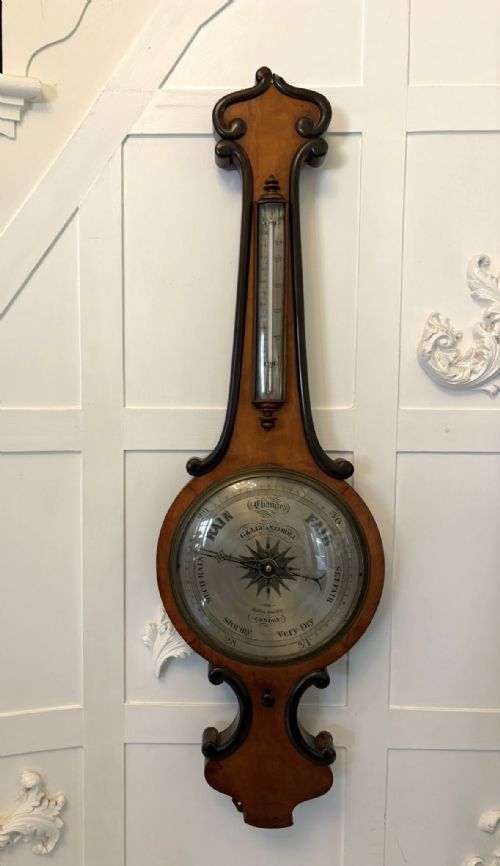


Antique London Barometer
An antique London barometer measures atmospheric pressure through precision mechanics, offering historical craftsmanship and reliable weather tracking for the home.
Antique London Barometer
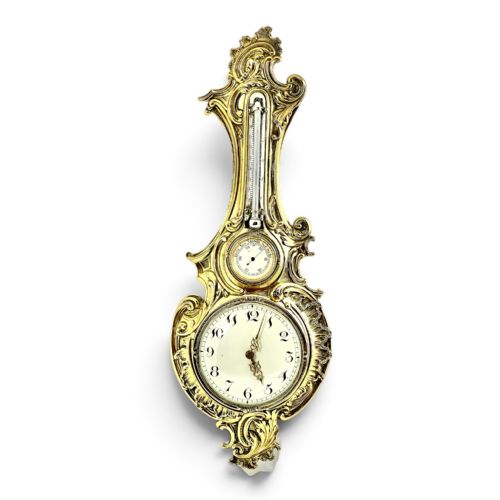
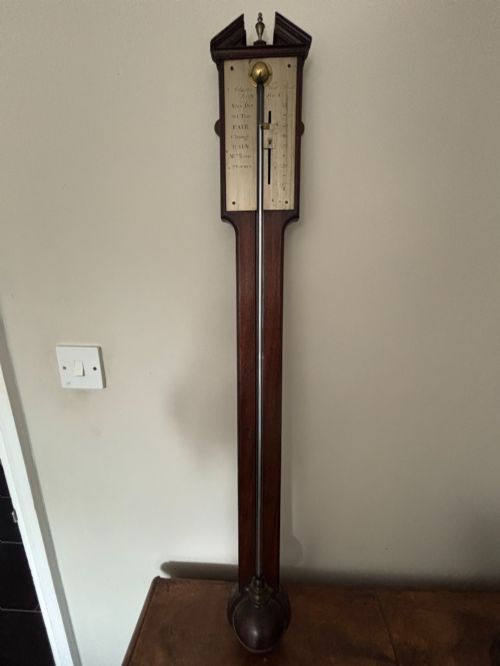
Domestic wall instruments span Georgian mahogany stick designs and richly carved Victorian oak or walnut wheel models. Marine barometers and bulkheads present robust brass or polished timber constructions suited to sea travel and observatory use.
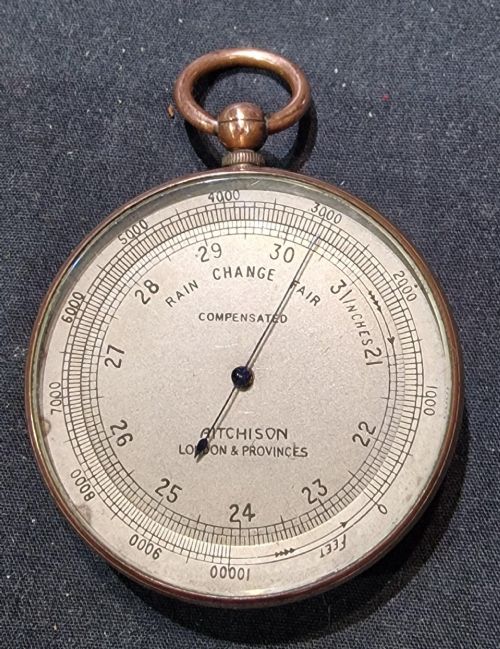
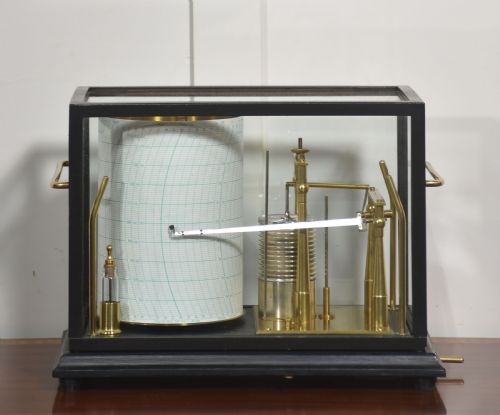
Pocket instruments and desk barometers offer compact portability encased in leather, silver gilt, or brass. Mechanical recording barographs trace pressure trends onto paper charts using clockwork movements.
What varies in quality
Quality rests in the precision of the engraved silvered scales and the fineness of the cabinetwork, from plain mahogany stocks to deeply carved walnut and oak. Signed movements by notable metropolitan makers command greater regard for their mechanical execution and accuracy.
The integrity of the original mercury column or aneroid capsule alongside surviving subsidiary thermometers and hygrometers separates standard domestic instruments from complex meteorological station pieces.
Listings feature timber cases in mahogany, oak, walnut, and rosewood alongside brass, glass, and silvered metal components spanning the eighteenth to twentieth centuries.
Negretti & Zambra·Short & Mason·Dollond of London·G & L Guanziroli·Elliott Brothers·James Pitkin·J Hicks·Casatelli of London
The Antique London Barometer Glossary
- Aneroid barometer
- An instrument measuring atmospheric pressure through the expansion and contraction of a sealed metal capsule without using liquid. This design allowed barometers to become portable for desk and pocket use.
- Stick barometer
- A vertical instrument featuring an exposed or partially enclosed glass tube filled with mercury against a long scale. These tall designs provide precise pressure readings through a direct column.
- Wheel barometer
- A dial instrument translating the movement of mercury via a float and pulley string to an indicator hand on a round face. Often called banjo barometers due to their distinctive wall-mounted case shape.
- Barograph
- A self-recording meteorological instrument that draws continuous atmospheric pressure variations onto a rotating paper chart using a clockwork drum. These mechanical devices require secure glass-sided mahogany housings.
- Sympiesometer
- A compact marine barometer using compressed air acting upon a column of coloured oil. Charles Baker and other makers produced these sensitive instruments for accurate sea navigation.
Antique London Barometer: Frequently Asked Questions
How do stick barometers work?
A stick barometer balances atmospheric pressure against a vertical column of mercury sealed within a glass tube. Changes in air pressure cause the liquid level to rise or fall along an engraved scale.
Historical models often pair this column with an attached thermometer to account for temperature variations when reading the pressure.
Where were these barometers made?
These instruments were manufactured by specialist opticians, instrument makers, and cabinetmakers working in workshops across London during the Georgian, Victorian, and Edwardian eras. Many retailers and makers operated from prominent central streets.
Retailers often signed the silvered metal dials or timber cases, while the underlying mechanical movements were produced by dedicated metropolitan craftsmen.
How do I maintain a mercurial barometer?
Mercurial instruments require careful handling and must remain upright during any relocation to prevent air entering the glass tube. Wall placement should avoid direct sunlight and rapid temperature fluctuations to protect the timber case and mercury column.
Professional transport is recommended for long-distance moves to secure the cistern and prevent damage to the glass components.
What is the difference between aneroid and mercury barometers?
Mercurial barometers rely on an open column of liquid mercury reacting directly to atmospheric weight inside a tall wooden case. Aneroid barometers use an internal flexible metal vacuum box that expands and contracts without liquid.
Aneroid mechanisms enabled the creation of compact pocket instruments, desk barometers, and wall-mounted banjo dials.