


Vintage Barograph Chart
A vintage barograph chart records pressure changes across a week, and these mechanical paper sheets bring scientific history directly into a room.
Vintage Barograph Chart
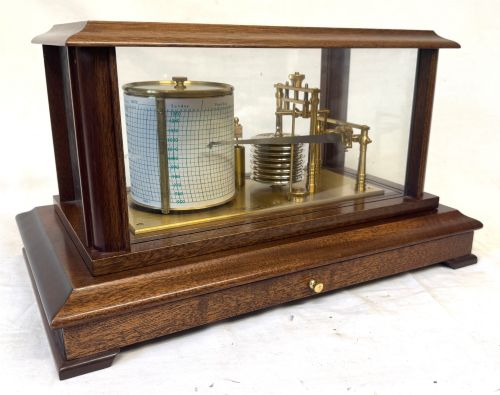
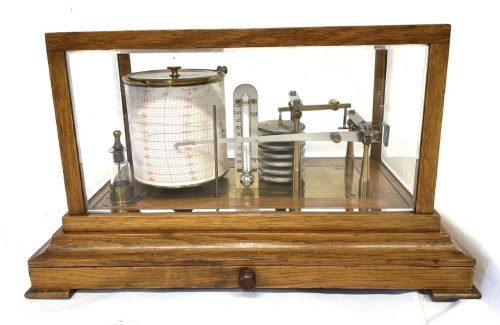
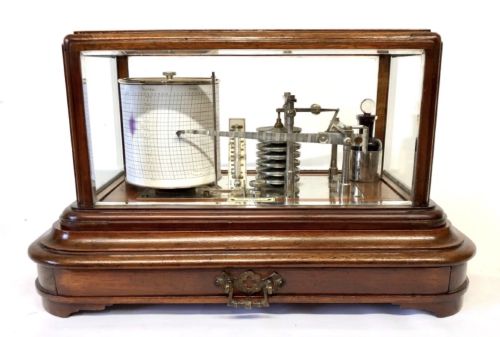
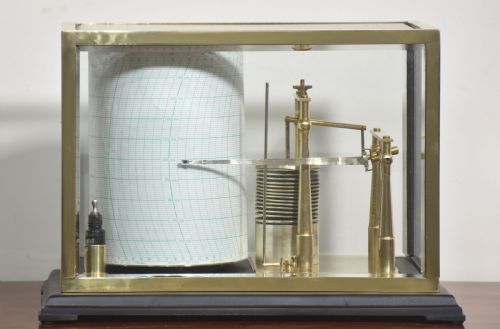
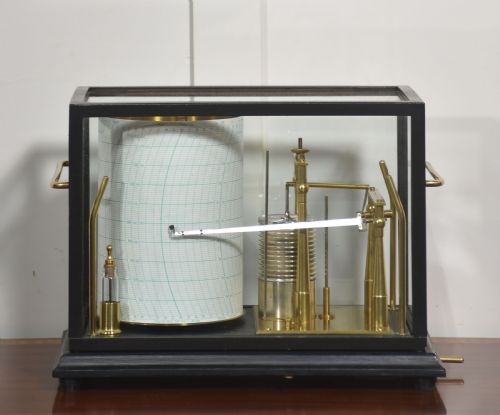
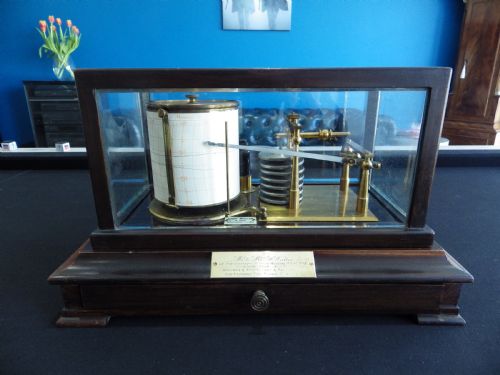
When you search for a vintage barograph chart, you encounter the paper recording sheets that fit inside mechanical weather-recording instruments. These papers form part of scientific instruments and barographs originating across the Victorian, Edwardian, interwar, and mid-century periods. The examples listed here appear alongside the mahogany and oak cases, brass mechanisms, and glass covers that house them.
Most pieces date from the early twentieth century, spanning decades such as the 1900s, 1910s, 1920s, 1930s, 1940s, and 1960s. You find these items housed in wooden enclosures alongside barometers, thermometers, and chart drawers. Makers represented include Short & Mason, Negretti & Zambra, Casella London, and Richard Freres.
How they were made
Makers utilised paper for the daily or weekly recording sheets, printing calibrated grids in ink to map barometric fluctuations over time. The instruments themselves combine brass, steel, and glass within cabinetry fashioned from mahogany and oak.
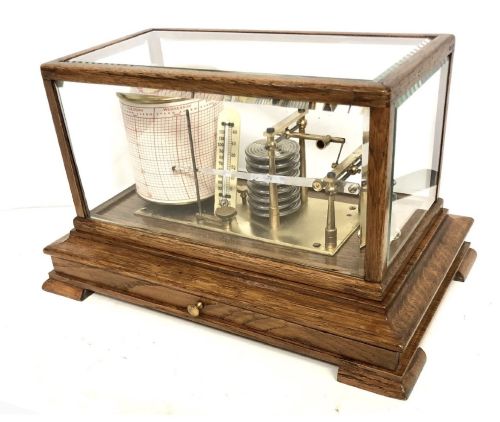
Woodworkers constructed the housing using solid timbers like oak and mahogany, often incorporating bevelled glass panels in five-glass cases. Metalworkers assembled the delicate aneroid barograph movements, dials, and thermometers to operate alongside the paper charts.
Certain instruments retain railway and Southend interest, connecting scientific barometric recording directly to early twentieth-century seaside excursions.
What varies in quality
The distinction between standard instruments and the finest examples rests upon the maker and the precision of the brass mechanism. Pieces originating from prominent makers such as Short & Mason or Negretti & Zambra display superior finishing in both the movement and the timber case.
Cabinetry detail also differentiates the selection, ranging from plain oak boxes to inlaid mahogany cases featuring chart drawers and bevelled glass. The presence of original paperwork, maker signatures on the dial, and integrated thermometers elevate the character of an instrument.
Russell Norwich·Gaupp and Co·Short and Mason·Negretti and Zambra·Casella London·R Fuess·Harrods of London·Robson of Newcastle·Jules Richard·Dobbie Son and Hutton·Richard Freres
The Vintage Barograph Chart Glossary
- Barograph
- A self-recording aneroid barometer that plots atmospheric pressure onto a paper chart over a set period. It uses an evacuated metal chamber linked to an inked arm.
- Aneroid
- Containing no liquid, this describes barometers and barograph movements that measure air pressure using flexible metal capsules.
- Bevelled glass
- Glass panes with angled edges fitted into the wooden frames of instrument cases to catch the light.
- Chart drawer
- A small compartment built into the base of a wooden barograph case specifically to store replacement paper recording sheets.
Vintage Barograph Chart: Frequently Asked Questions
What is a barograph chart?
A barograph chart is a paper sheet marked with pressure measurements and time gradients designed to be wrapped around a rotating drum inside a barograph.
As the mechanical arm of the instrument moves up and down with atmospheric changes, an inked nib traces a continuous line across the paper.
How do you use a barograph?
A barograph operates continuously by recording air pressure fluctuations onto the paper chart fitted to its rotating drum.
Owners wind the clockwork mechanism periodically and replace the paper chart weekly to maintain an ongoing record of local weather patterns.
How do I date a barograph?
Dating a barograph involves examining the style of the wooden case, the lettering on the dial, and any maker signatures or engraved details.
Pieces range from Victorian and Edwardian mahogany models to 1930s oak enclosures and 1960s instruments, each reflecting the design standards of its era.