




Antique Desk Barometer
An antique desk barometer brings precision weather-watching to the surface, combining scientific utility with period craftsmanship.

Antique Desk Barometer
When you search for an antique desk barometer, you are looking at scientific instruments designed for tabletop or desktop placement rather than wall hanging. The pieces seen here span from the nineteenth century into the art deco period of the nineteen-thirties, encompassing various weather-recording devices and compendiums.
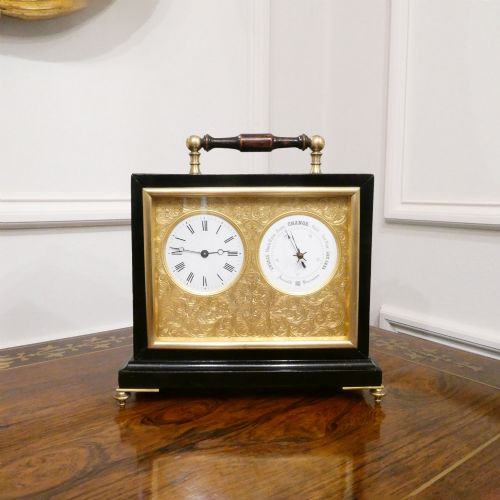
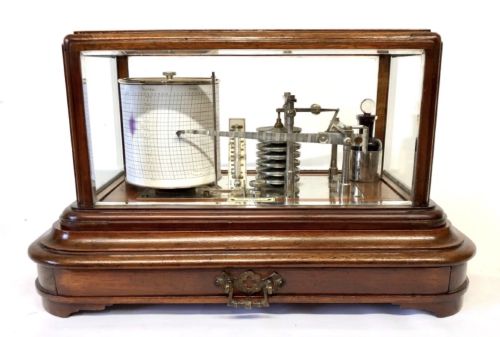
The most common forms include freestanding barographs in mahogany or oak cases, mantel clocks combined with barometers, and specialised desk barometers mounted on ebonised stands or framed in silver and brass. Many examples integrate thermometers or hydrometers alongside the primary barometric dial.
Origins stretch across British workshops, French makers, and colonial retailers, reflecting an era when tracking atmospheric pressure was both a domestic necessity and a scientific pursuit. These instruments range from small pocket conversions to oversized five-glass recording barographs.
How they were made
Cabinets and desk stands rely heavily on traditional timbers such as mahogany, oak, and walnut, frequently complemented by ebonised wood or inlaid details. Metal components utilise cast brass, gilt and silvered bronze, and steel, housing delicate glass dials and mercury or aneroid movements.
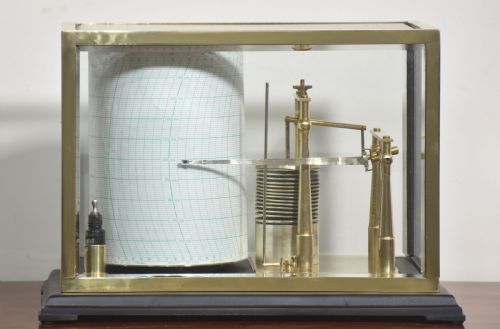
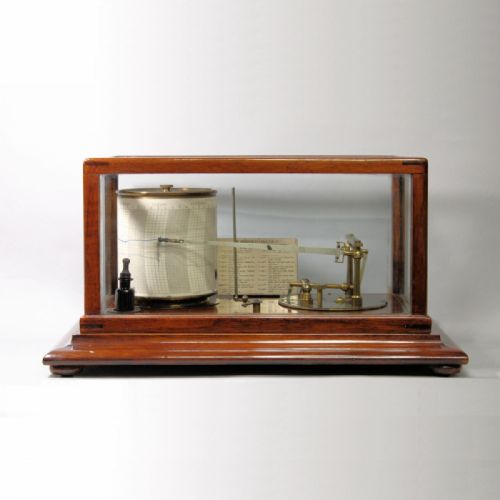
Recording instruments like barographs employ complex mechanical linkages within multi-glass cases to trace pressure changes onto paper charts, while aneroid barometers rely on vacuum-sealed metal capsules. Dial faces feature crisp enamel or engraved metal scales executed by specialist instrument makers.
Listings feature scientific instruments utilising brass, glass, mahogany, oak, and ebonised wood across Victorian and Edwardian periods.
What varies in quality
Quality rests upon the reputation of the maker and the precision of the mechanical movement housed within the case. Pieces signed by established firms or retailers demonstrate superior engraving on silvered brass dials and smoother mechanical action in their recording arms or aneroid linkages.
The choice of housing also dictates value, moving from simple utilitarian oak boxes to elaborate five-glass mahogany cases, carved walnut surrounds, or exotic crocodile leather finishes. The integration of multi-function compendiums combining clocks, thermometers, and barometers represents the higher tiers of domestic scientific luxury.
Gaupp & Co·Short & Mason·R Fuess·Robson of Newcastle·Negretti & Zambra·Callaghan & Co·Pillischer London·Richard Freres·Asprey
The Antique Desk Barometer Glossary
- Barograph
- A self-recording aneroid barometer that charts atmospheric pressure onto a revolving drum over a week.
- Aneroid barometer
- A device that measures air pressure without liquid, using an expanding and contracting metal capsule.
- Compendium
- A desktop desk set combining multiple instruments such as a barometer, clock, and thermometer in one case.
- Hypsometer
- A scientific instrument used to calculate altitude by measuring the boiling point of water, often paired with barometric readings.
- Silvered bronze
- A metal casting technique where a thin layer of silver is applied to a bronze base, commonly found on instrument dials.
Antique Desk Barometer: Frequently Asked Questions
What is a barograph?
A barograph is a mechanical recording barometer that uses a drum and ink pen to trace a continuous line of atmospheric pressure changes over a week. These devices were housed in glass-topped wooden cases to protect the sensitive internal metal bellows.
They allowed households and offices to monitor weather trends visually at a glance without relying on daily manual readings.
How do I date an antique barometer?
Dating relies on stylistic clues in the woodwork, the typography on the enamel or silvered metal dials, and the complexity of the brass mechanisms. Victorian pieces often feature heavy carved walnut or architectural mahogany, while nineteen-thirties examples lean towards art deco onyx and streamlined brass.
Maker signatures and registration numbers stamped on the metal plates also provide precise manufacturing decades.
Where should I place a desk barometer?
These instruments sit best on study desks, library tables, or mantelpieces away from direct heat sources and open windows that cause rapid temperature fluctuations. Because they are designed for tabletop display, choose a stable surface where the delicate glass cases and recording needles remain undisturbed.
Desktop barographs require a level platform to ensure the mechanical arms track pressure accurately.
Are desk barometers still accurate?
Many antique aneroid barometers and barographs retain functional mechanical movements and can be calibrated to local barometric pressure using a modern reference point. The internal aneroid capsules respond to current weather shifts just as they did over a century ago.
Minor adjustments via the calibration screw on the back or dial face usually restore proper reading alignment.