






Architectural Desk Clock
An architectural desk clock is a miniature building in brass, marble or slate that tells the time, bringing heavy structural presence to a surface.

Architectural Desk Clock
An architectural desk clock takes its design cues from classical temples, gothic cathedrals and grand facades, translating masonry and pillars into a domestic timekeeper. When you search for an architectural desk clock, you encounter heavy stone bodies, columns and pediments that dominate a mantelpiece or a large desk.
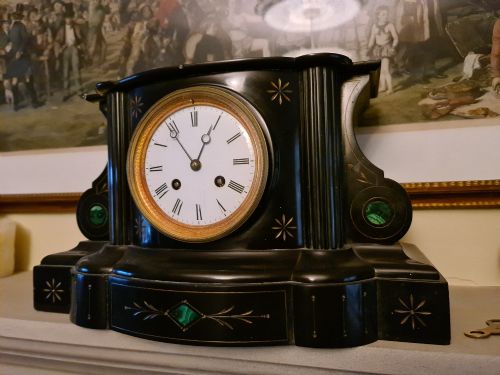
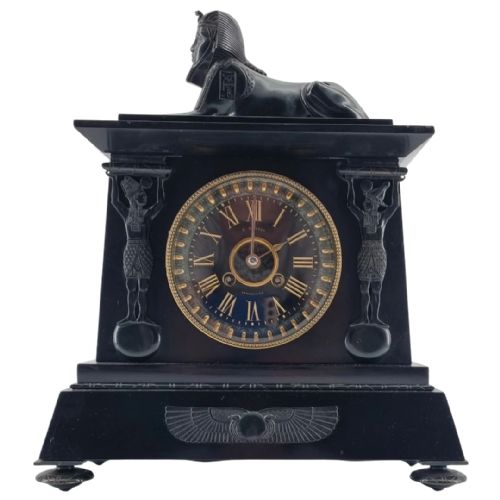
The pieces appearing here span the nineteenth century, including Victorian interpretations and French portico forms. Marble, slate and bronze dominate the visual language, presenting dark or variegated stone blocks punctuated by metal mounts and enamel dials.
Makers and retailers such as D. Munsey of Cambridge and Baby and Jannings emerge across these decades, grounding the category in verifiable nineteenth-century production. The forms range from strict classical symmetry to gothic revival brackets and French architectural marbles.
Materials and Construction
The structural body relies on dense materials like black slate, rouge marble, alabaster and occasionally oak or walnut, cut and polished to resemble monumental stonework. Bronze and ormolu mounts are then pinned or screwed to the stone corners, pediments and dial surrounds to give contrast and depth.
Dials are typically white enamel with Arabic or Roman numerals, protected behind bevelled glass and brass bezels. Heavy brass movements, including twin fusee or eight-day escapements, sit recessed within the stone or wood housing, often driving striking trains on bells or gongs.
Listings feature nineteenth-century pieces spanning the Victorian era, incorporating materials such as black slate, rouge marble, bronze, ormolu and enamel.
Judging Quality and Execution
Quality rests on the weight and selection of the stone, the crispness of the bronze casting and the architectural coherence of the design. A superior piece uses solid, well-matched marble or slate with finely chased ormolu mounts rather than thin plated brass tacked onto poor timber or soft stone.
The internal mechanics separate standard production from high workshops, shown in heavy movement plates, fusee chains instead of mainspring barrels, and clean engraving on the backplate. The integration of the clock face into the overall facade determines whether the object reads as a genuine architectural model or a simple dial stuck in a box.
Baby and Jannings·D. Munsey of Cambridge·H.A.C.
The Architectural Desk Clock Glossary
- Portico clock
- A clock built in the architectural form of a portico, featuring four columns supporting an upper entablature with the pendulum swinging freely between them. This French style frequently uses mahogany, rosewood or alabaster.
- Portico clock
- A clock built in the architectural form of a portico, featuring four columns supporting an upper entablature with the pendulum swinging freely between them. This French style frequently uses mahogany, rosewood or alabaster.
- Slate clock
- A timepiece housed in heavy black or coloured slate, popular in Belgium and Britain during the nineteenth century to mimic classical stone architecture. These pieces often feature incised gilt detailing and marble inlays.
- Fusee
- A conical pulley used in better mechanical clocks to maintain even power as the mainspring unwinds. This mechanism ensures consistent timekeeping over the course of the running period.
- Ormolu
- Gilded bronze applied as decorative mounts to furniture and clock cases. The technique involves coating bronze in a mercury and gold amalgam before heating.
Architectural Desk Clock: Frequently Asked Questions
How do I wind the movement?
Most of these clocks utilise a key inserted into winding holes on the enamel dial to tension the mainsprings every eight days or fourteen days. Take care not to overwind the mechanism, stopping as soon as you feel firm resistance.
Keep the winding key in a safe place near the clock so you do not lose it, as replacement keys require matching the exact square arbor size.
Where should I place an architectural clock?
These pieces suit high-status locations where their monumental design can be viewed from multiple angles, such as a large mantelpiece, a partner desk or a heavy sideboard. Avoid areas subject to vibrations, heavy foot traffic or direct sunlight that might fade dials or dry out wooden components.
Ensure the surface is completely level so the pendulum beats evenly and the clock does not stop.
How do I tell Victorian from earlier styles?
Victorian architectural clocks often lean towards heavier, eclectic revivals like the Gothic Revival or Egyptian Revival, utilising dense black slate and contrasting marbles. Earlier French portico clocks from the Charles X period tend to feature lighter alabaster, exotic veneers and freestanding columns with gilt bronze mounts.
Examining the dial signature, movement construction and overall massing helps place the piece within the nineteenth-century timeline.