


Edwardian Oak Mantel Clock
An Edwardian oak mantel clock brings solid domestic timber and steady mechanical timekeeping to a room.
Edwardian Oak Mantel Clock
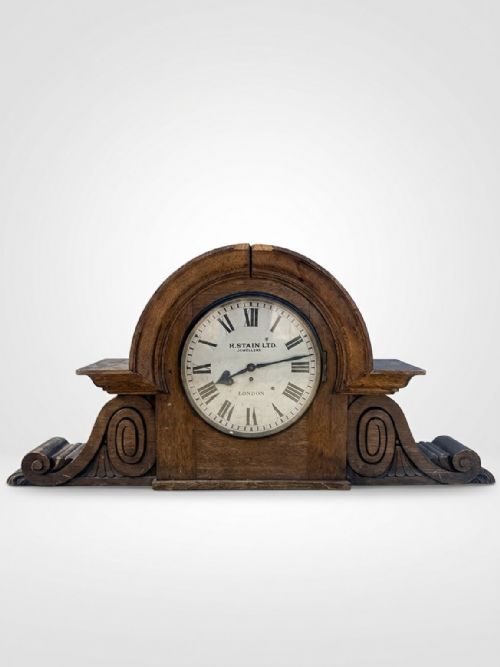
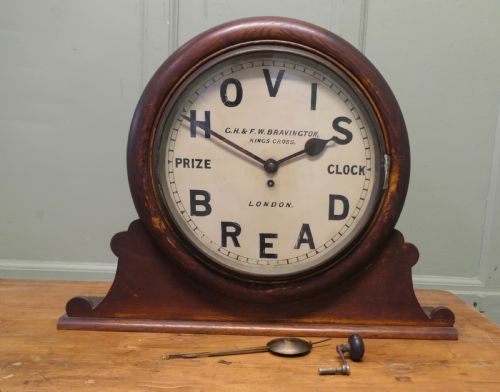
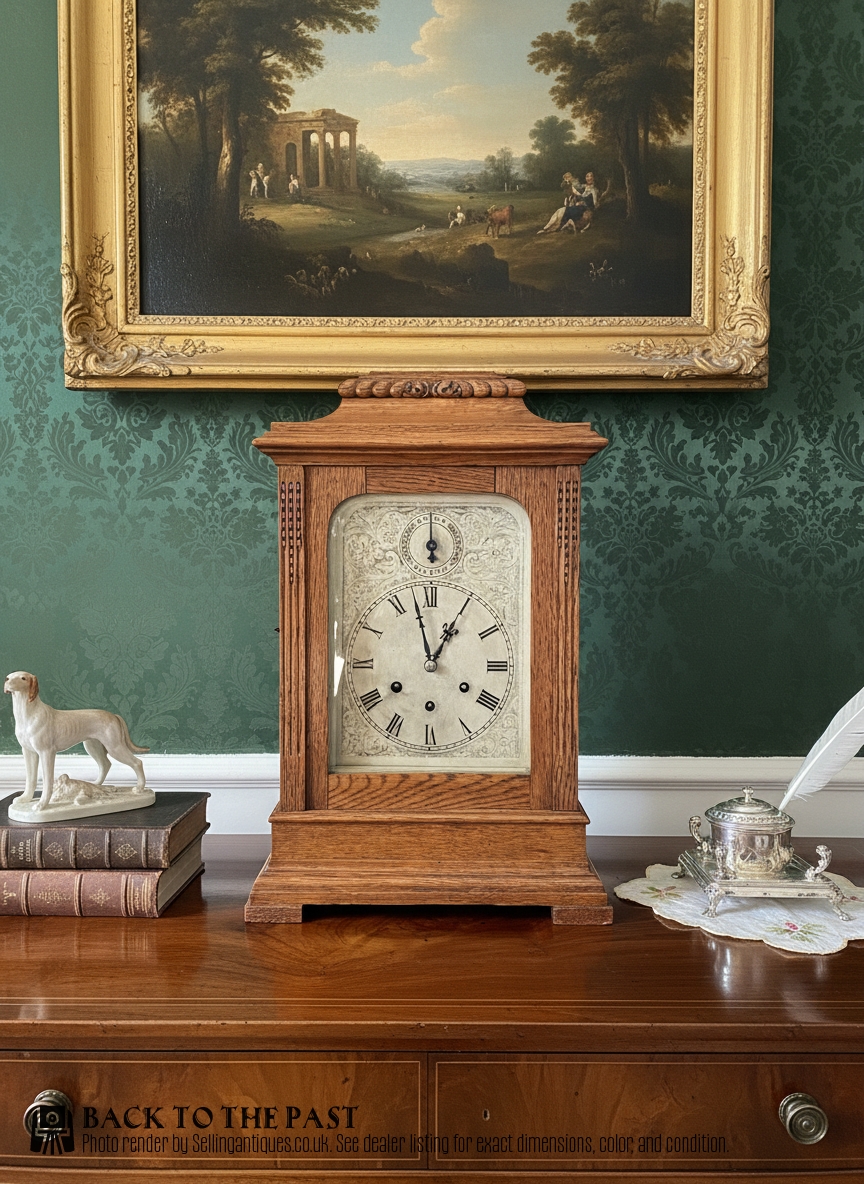
The edwardian oak mantel clock appears across this selection in architectural, lancet, balloon, and dome top shapes, often displaying the grain of golden or light oak. These timepieces range from simple single fusee movements to bracket clocks and boardroom pieces with striking mechanisms.
Makers in Edinburgh and London, alongside continental workshops, produced variations including four glass-sided bracket clocks and hand-carved Arts and Crafts designs. The common thread is a sturdy wooden housing designed to sit prominently on a shelf or desk.

Materials and Construction
The primary material is oak, utilised either as solid timber or golden oak veneers, frequently complemented by subtle inlay work. Cases are constructed to house internal brass and metal movements, while dials incorporate silvered metal, enamel, or glass components.
Details such as hand carving, copper accents, and architectural mouldings define the exterior finish. Movements vary from basic timepieces to eight-day striking systems and quarter-striking arrangements.
Edwardian Oak Mantel Clock Retail Price Guide 2026
Typical asking prices for edwardian oak mantel clock among the pieces listed under this phrase on Sellingantiques today, from the lower quarter to the upper quarter. They describe what is for sale here now, not the wider market.
Listings demonstrate a strong preference for oak housings, ranging from light oak to golden varieties combined with brass dials and inlaid details.
Assessing Craftsmanship
Quality rests in the weight and proportion of the timber case, alongside the precision of the carved details or inlaid patterns. A well-constructed golden oak or carved cabinet demonstrates tighter joinery and more refined architectural balance.
The standard of the internal mechanism dictates the grade of the piece, moving from simple timepieces to complex fusee or ting-tang striking movements housed within brass and silvered metal dials.
G.H & F.W Bravington London·Jas Whitelaw of Edinburgh·Hamilton and Inches of Edinburgh·Lenzkirch
The Edwardian Oak Mantel Clock Glossary
- Fusee
- A conical pulley used in clock movements to maintain even tension on the mainspring as it unwinds. This mechanism helps the clock maintain consistent timekeeping throughout its running cycle.
- Bracket clock
- A portable household clock originally designed to sit on a wall bracket or table. These examples often feature architectural or arched wooden cases.
- Lancet top
- A pointed, gothic-arch shape reminiscent of medieval lancet windows. This silhouette appears frequently on Edwardian wooden clock cases.
- Ting-tang
- A two-hammer striking system that sounds two distinct notes on the quarters. It provides an audible chime without a full hour melody.
- Timepiece
- A clock that indicates the time but does not strike the hours or quarters. These simpler movements focus entirely on the motion of the hands.
Edwardian Oak Mantel Clock: Frequently Asked Questions
How do I wind my Edwardian clock?
Most models require a key inserted into the dial holes to tension the spring gently. Turn the key slowly until you feel resistance.
Avoid over-winding the mechanism, as this can damage the internal components and disrupt the striking sequence.
Why does my clock run fast or slow?
Mechanical clocks react to temperature changes and the levelness of the surface they rest on. Adjusting the pendulum regulation nut alters the speed.
Clock movements also require periodic cleaning and lubrication by a specialist to maintain accurate time.
What is a single fusee movement?
A fusee movement uses a chain and cone-shaped pulley to equalise the pull of the mainspring. This keeps the driving force steady.
Such mechanisms generally indicate a higher standard of clockmaking craftsmanship.
Where should I place a mantel clock?
Position the piece on a sturdy, level surface away from direct sunlight, drafts, and dampness. Wooden cases respond poorly to extreme humidity.
A solid mantel or sideboard provides the stable foundation necessary for the pendulum and escapement to function properly.