
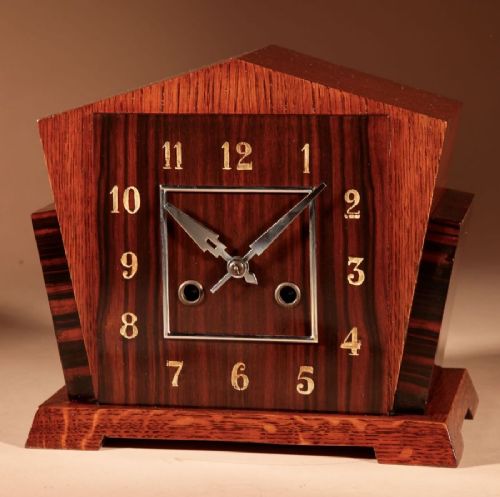
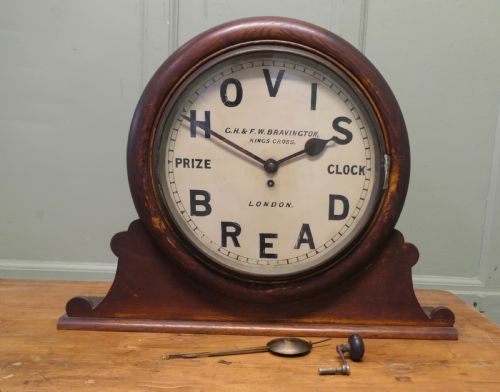
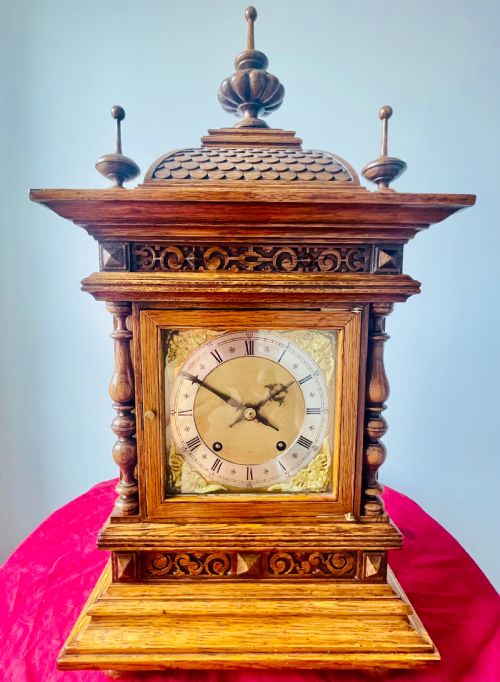
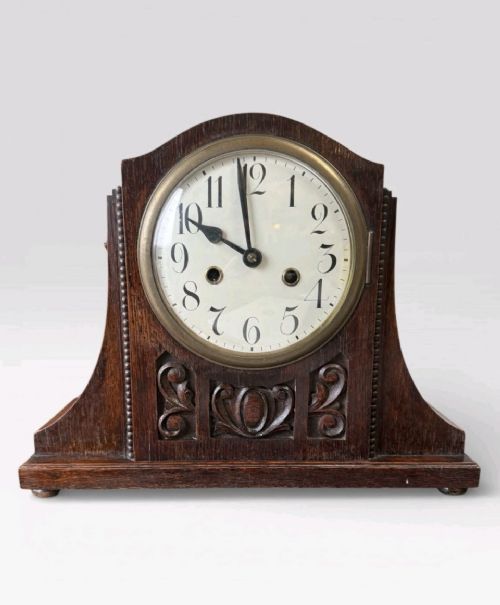


Antique Oak Table Clock
An antique oak table clock sits comfortably on a mantelpiece or desk, bringing mechanical precision and warm timber grain into a room.
Antique Oak Table Clock
An antique oak table clock encompasses robust bracket clocks, architectural mantel clocks, and architectural timepiece designs spanning the nineteenth and early twentieth centuries. These timekeepers originated as portable domestic clocks for desks, tables, and bracket shelves in grand interiors.
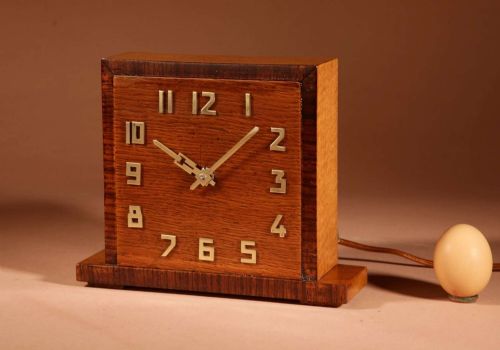
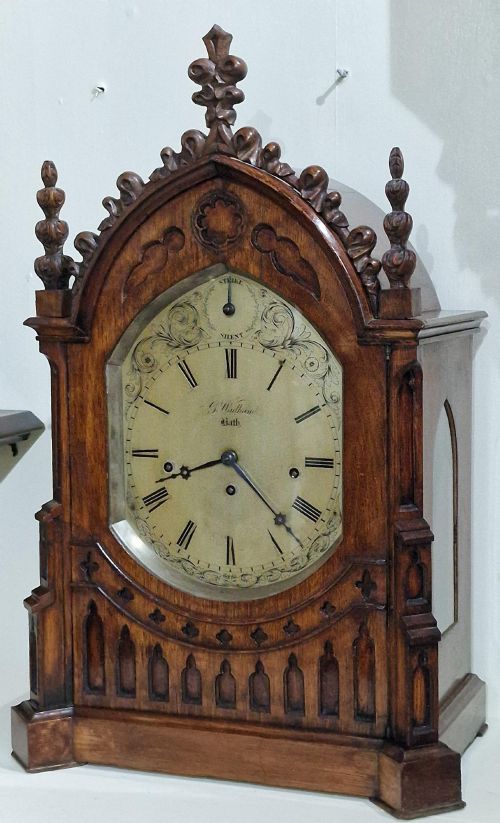
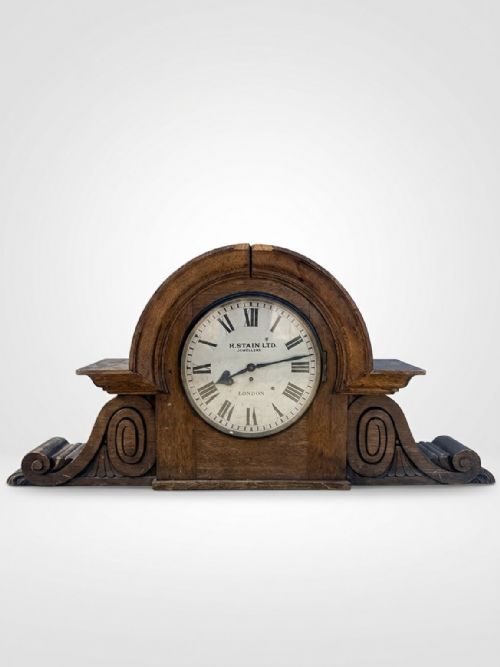
The selection on this page leans heavily toward nineteenth-century Victorian examples, Edwardian pieces, and later Art Deco or Amsterdam School interpretations. Buyers will encounter substantial architectural cases, carved bracket forms, and glass-sided designs.
Makers housed these movements in solid oak, pollard oak, and macassar ebony, often pairing the timber with brass dials, silvered metal chapters, and visible glass panels. Each piece reflects the prevailing aesthetic of its decade, from Gothic Revival and Black Forest carving to clean geometric lines.
Materials and Construction
Cabinetmakers utilised quarter-sawn oak, pollard oak, and macassar ebony to construct sturdy timber cases that protected intricate mechanical movements. Craftsmen carved floral motifs, geometric patterns, or architectural arches directly into the wood.
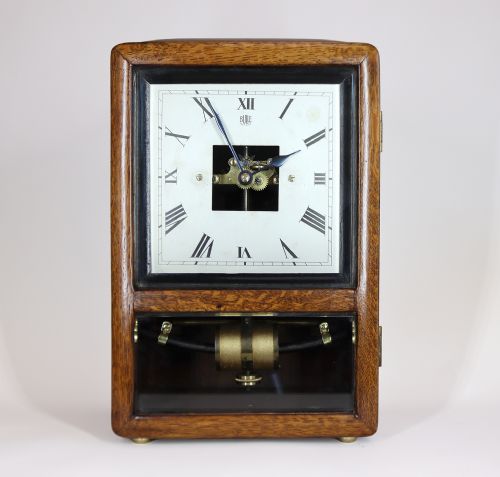
Horologists fitted brass plates, fusee movements, and striking gear inside these timber housings, adding silvered metal chapter rings and enamelled dials for legibility. Glass panels allowed viewers to observe the swinging pendulum or the ticking gear train.
Listings span the nineteenth century through the 1940s, featuring oak, pollard oak, brass, and glass across Victorian, Edwardian, and Art Deco styles.
Distinctions in Execution
The distinction between ordinary production and superior work rests on the crispness of the timber carving and the complexity of the internal movement. Fusee movements and multiple-train chiming mechanisms represent a higher tier of horological engineering than simple time-only spring drives.
Cabinetmaking standards define the visual success of the case, where finely figured pollard oak veneers or meticulous hand-carving elevate the object. Simpler unadorned oak boxes occupy the utilitarian end of the spectrum, while complex architectural facades and signed movements represent the upper tier.
George Wadham Bath·Winterhalder And Hofmeier·Pennington Of Camberwell·Payne And Co·DeLa Salle And Christie·Pfeilkreuz Junghans
The Antique Oak Table Clock Glossary
- Fusee
- A conical pulley used in mechanical clocks to maintain even tension on the gear train as the mainspring unwinds. This device improves timekeeping accuracy across the power reserve.
- Bracket Clock
- A portable clock designed to sit on a bracket or furniture surface rather than hang on a wall. Many feature arched wooden tops and carrying handles.
- Pollard Oak
- Timber harvested from trees that were pollarded, producing wood with dense, highly figured grain patterns. Cabinetmakers utilised this timber for decorative veneers.
- Ting-Tang
- A striking mechanism that sounds two notes on bells or gongs to mark the quarters of the hour. This auditory feature signals passing time without playing a full melody.
Antique Oak Table Clock: Frequently Asked Questions
How do I wind an antique oak table clock?
Most mechanical movements require a key inserted into winding holes on the dial to tension the internal springs.
Take care not to over-wind the mechanism, stopping as soon as resistance is felt.
Where should I place a heavy bracket clock?
Select a level surface such as a sturdy mantelpiece, sideboard, or dedicated wall bracket where vibrations are minimal.
A stable foundation ensures the pendulum swings evenly and the escapement remains in beat.
How do I tell an Edwardian clock from a Victorian one?
Victorian pieces often display heavier carved ornamentation, Gothic Revival details, or elaborate architectural pediments.
Edwardian and later twentieth-century examples frequently lean toward simpler rectilinear forms, inlay, or Amsterdam School geometric styling.
What is a fusee movement?
A fusee is a mechanical device using a cone-shaped pulley and cord to equalise the power delivered by the mainspring.
This ensures consistent force reaches the escapement as the spring runs down, improving accuracy.