


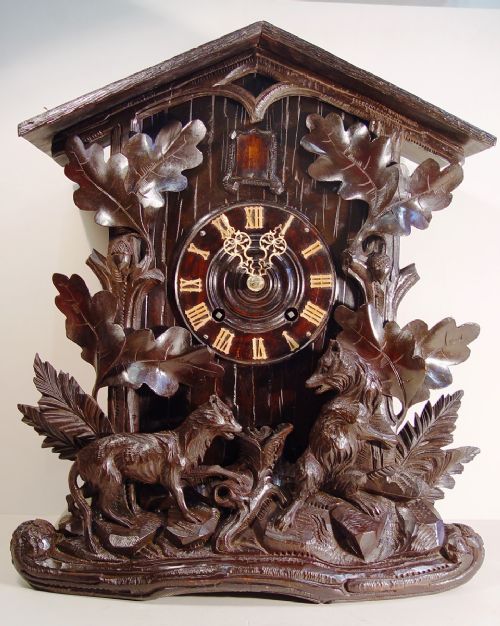
Dark Oak Mantel Clock
A dark oak mantel clock brings warmth and architectural presence to a room, grounding a mantelpiece with solid timber and traditional movement.
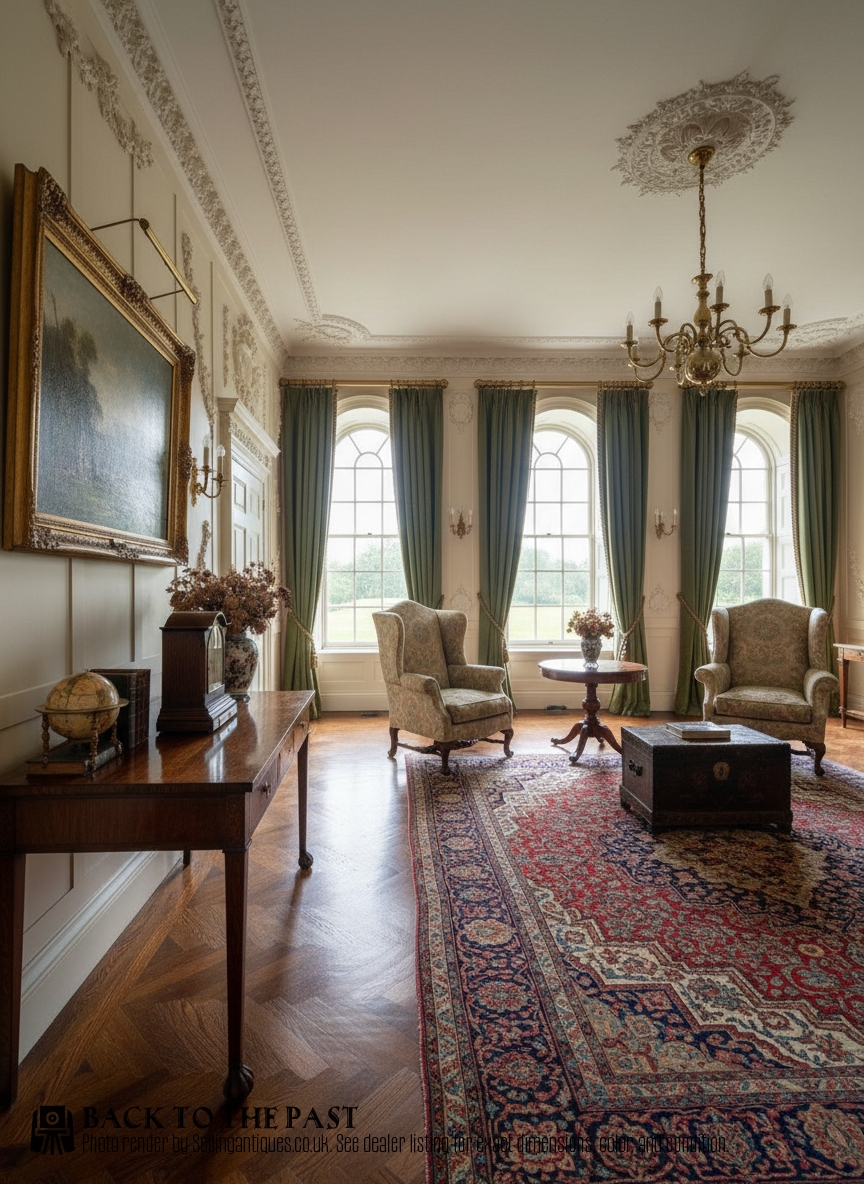
Dark Oak Mantel Clock
A dark oak mantel clock combines robust timber cases with mechanical clockwork, designed to stand on a shelf or fireplace surround. These pieces span from the Victorian era through the Edwardian period into the 1920s, reflecting changing domestic tastes in timekeeping.
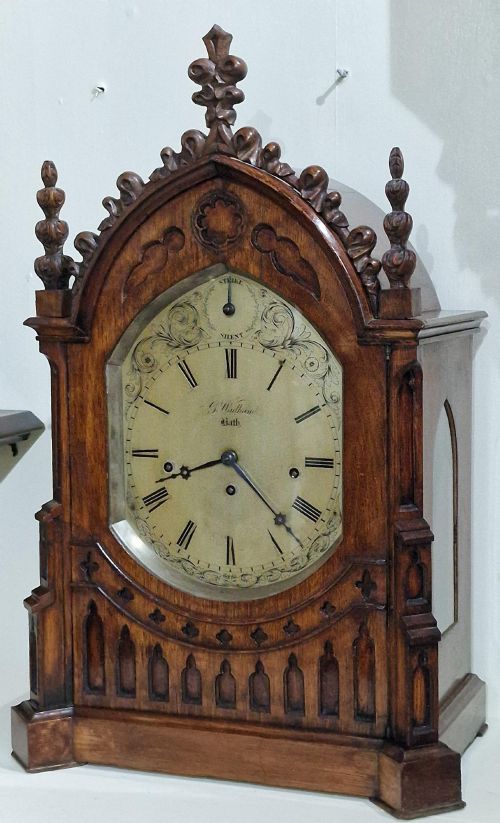
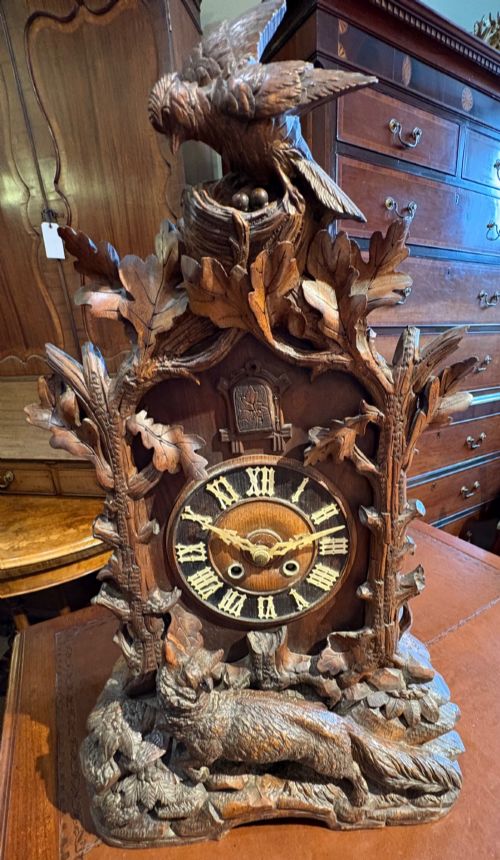
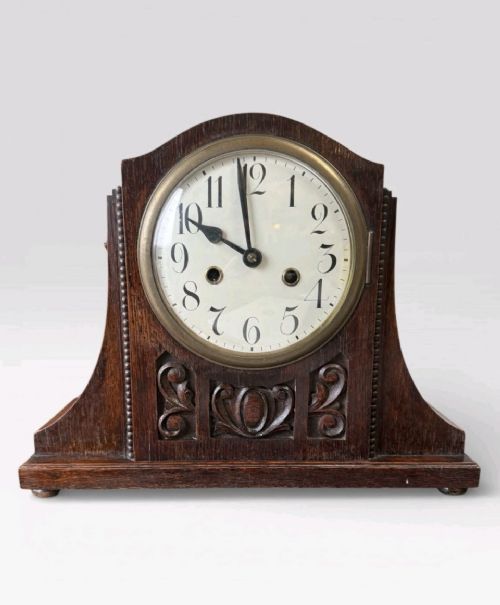
The selection ranges from simple oak timepiece mantel clocks to elaborate architectural bracket clocks and carved Black Forest examples. Buyers encounter vernacular English pieces alongside German-made movements housed in dark oak or ebonised cases.
Stylistic variations are wide, drawing on Gothic Revival, Arts and Crafts, Aesthetic Movement, and Art Deco traditions. Each style dictates the carving depth, dial design, and overall silhouette sitting upon the timber base.
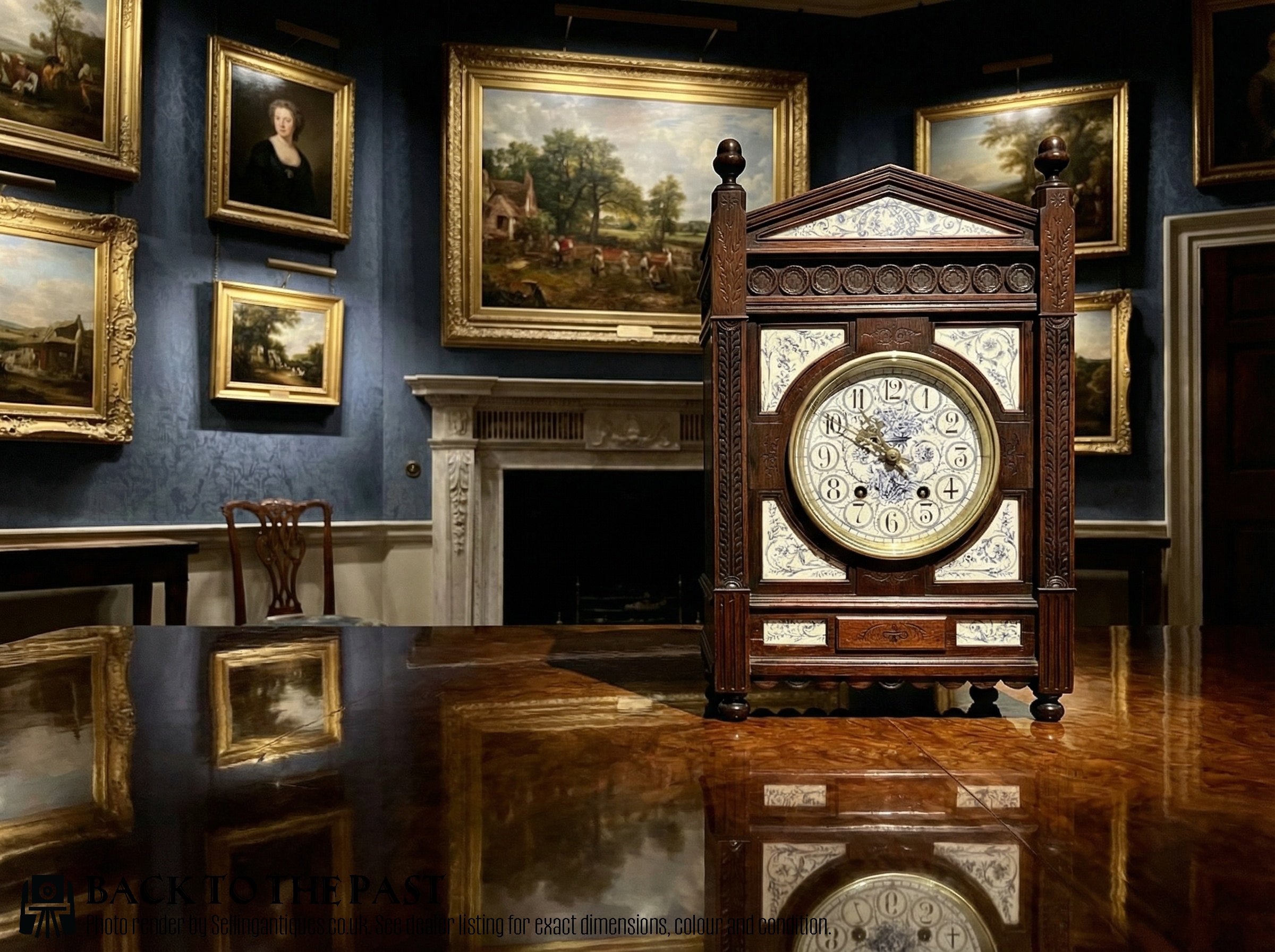
Materials and Construction
Cases rely primarily on solid oak, frequently carved by hand or shaped to suit specific revivalist and modernist styles. Workshops combined this timber with brass bezels, glass dial covers, and white enamel or metal chapter rings.
Movements inside these oak cases are mechanical, driven by springs or weights, featuring striking mechanisms, Westminster chimes, or triple fusee arrangements. Cabinetmakers worked alongside clockmakers to house complex gear trains within substantial wooden housings.
Dark Oak Mantel Clock Retail Price Guide 2026
Typical asking prices for dark oak mantel clock among the pieces listed under this phrase on Sellingantiques today, from the lower quarter to the upper quarter. They describe what is for sale here now, not the wider market.
Some bracket clocks feature hidden musical trains designed to play tunes on the hour, turning a functional timekeeper into a parlor concert.
Factors That Distinguish Quality
Quality rests in the precision of the cabinetwork and the complexity of the internal movement. Hand-carved details and substantial timber scantlings separate standard production pieces from workshop masterworks.
The presence of specialised movements, such as musical trains or multiple gongs, elevates a clock beyond a basic timekeeper. Furthermore, the crispness of the enamel dials and the original integration of brass hardware define the upper tier.
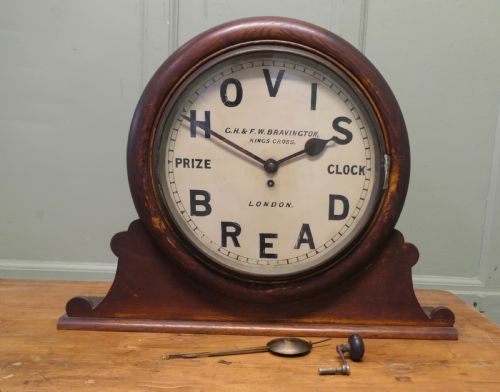
George Wadham Bath·G.H. & F.W. Bravington London·Winterhalder & Hofmeier·Beha
The Dark Oak Mantel Clock Glossary
- Bracket clock
- A portable table or mantel clock, originally designed to sit on a wall bracket. These substantial pieces frequently feature arched wooden cases and carrying handles.
- Fusee
- A conical pulley used in mechanical clocks to maintain even force on the gear train as the mainspring unwinds. This mechanism improves timekeeping accuracy.
- Chapter ring
- The outer ring on a clock dial that bears the hour numerals. In antique pieces, these are commonly made of silvered metal or white enamel.
- Ebonisation
- A wood-finishing process that stains timber to resemble ebony. Victorian makers utilised this technique to create striking dark contrasts on clock cases.
Dark Oak Mantel Clock: Frequently Asked Questions
What maintenance do these clocks need?
Mechanical movements require periodic cleaning and oiling by a professional horologist to prevent wear on the brass gears. Keeping the clock level on the mantelpiece ensures the pendulum beats evenly.
Avoid placing wooden cases near direct heat sources or in damp environments, which can warp the oak timber and crack the dial enamel.
How do I identify the period of a clock?
Examine the stylistic cues of the wooden case, such as Gothic tracery, Arts and Crafts hand carving, or clean Art Deco geometry. The materials used on the dial and bezel also offer strong clues.
Maker signatures on the backplate or movement plates help narrow down the exact decade of manufacture and the workshop of origin.
Why does the clock run fast or slow?
Regulation is controlled via a small adjustment nut on the pendulum, which alters its effective length to speed up or slow down the beat. Small adjustments made over several days correct the timekeeping.
Temperature changes and the gradual settling of the mantelpiece can also influence the pendulum's rhythm.