


Carved Oak Table Clock
These carved oak table clock examples combine solid timber construction with mechanical timekeeping, offering reliable interior focal points.
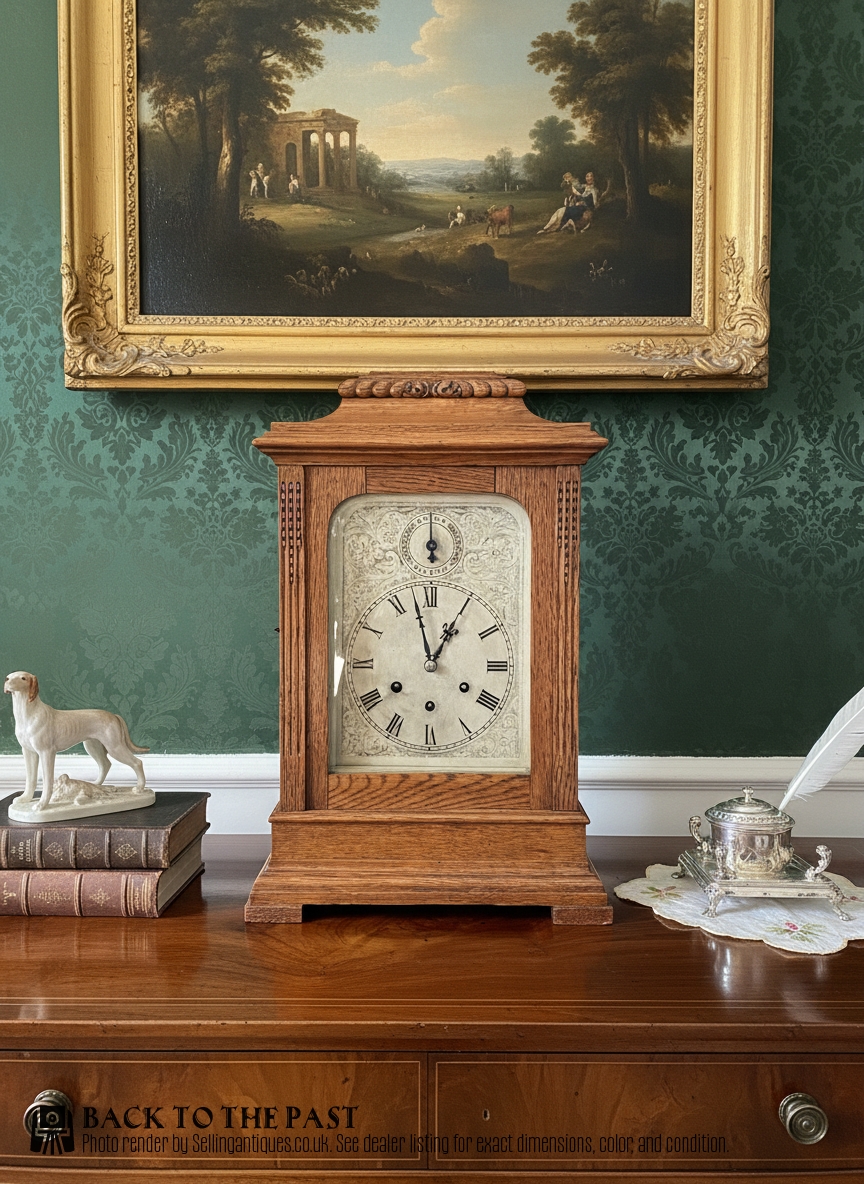
What carved oak table clock designs offer
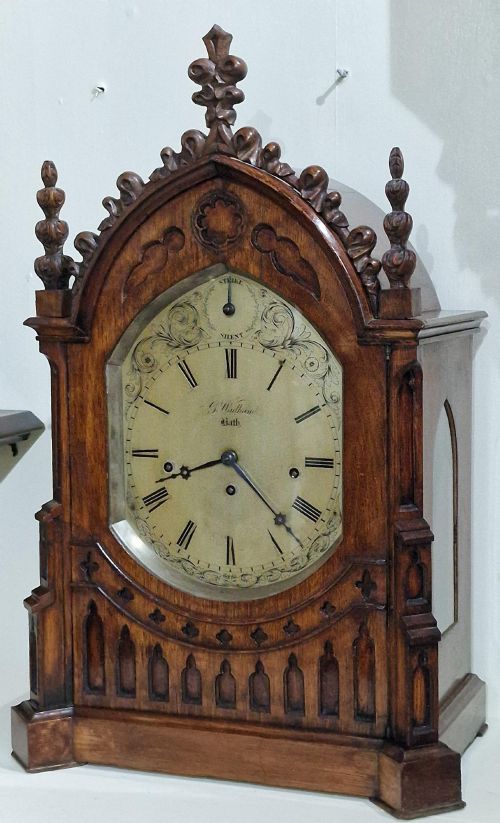
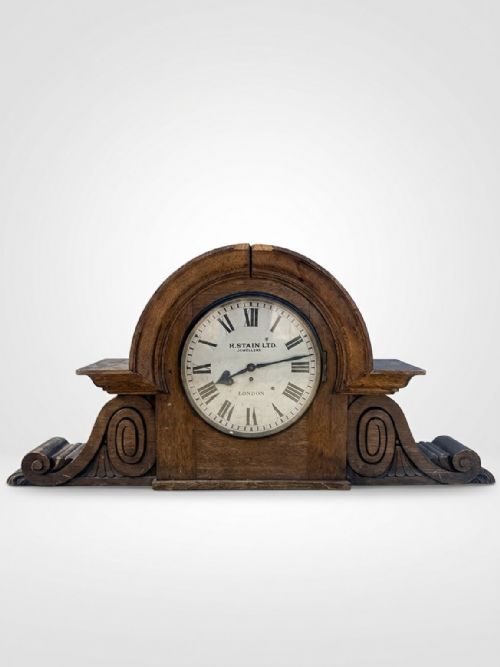
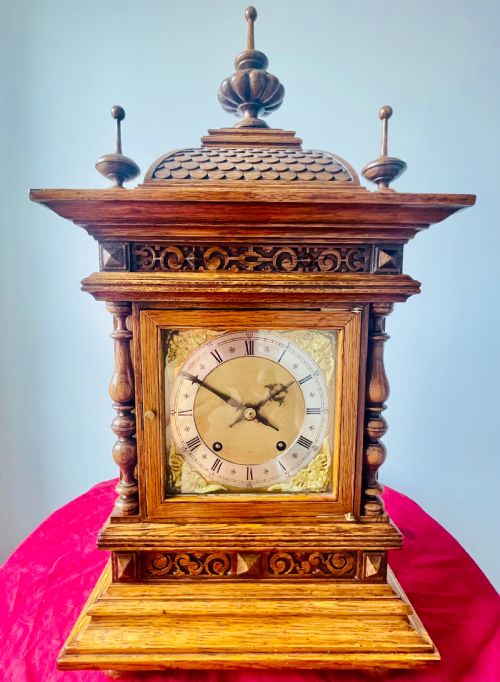
A carved oak table clock represents a sturdy class of mantel timepiece, typically featuring structural woodwork designed to sit securely on flat surfaces. The current selection spans Victorian, Gothic, and Art Deco interpretations, reflecting changing domestic tastes across the nineteenth and twentieth centuries.
Makers utilised dense hardwood to house mechanical movements, resulting in substantial mantel clocks and bracket clocks. These pieces served both functional and decorative roles in period interiors, measuring time through spring-driven or weight-driven mechanisms.
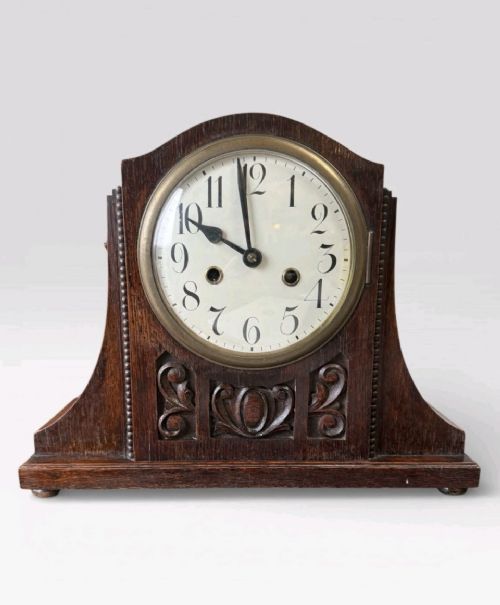
Buyers encountering this group will find variations ranging from elaborate nineteenth-century carving to cleaner geometric lines from the nineteen-twenties. Each piece combines heavy timber framing with visible dials and glazed bezels to protect the face.
Construction and materials
Carpenters constructed these bodies using solid oak, often applying hand-carved relief work, mouldings, and applied bracket details to the exterior surfaces. The timber was selected for durability and finished to highlight the natural grain patterns characteristic of quarter-sawn or plain oak boards.
Internal components relied on brass movements, which were engineered to drive multiple trains for timekeeping and musical chimes. Dials frequently incorporated silvered metal rings, Arabic or Roman numerals, and protective glass panels set within cast or turned bezels.
Current listings incorporate oak housings paired with brass movements, glass panels, and silvered metal dials across Victorian and Art Deco periods.
Assessing craftsmanship
Quality in these timepieces rests upon the crispness of the timber carving and the architectural proportions of the wooden case. Superior examples display deeply chiselled details and well-balanced joinery that integrates the dial harmoniously with the housing.
The sophistication of the internal movement further divides standard production from higher-grade items, particularly in three-train musical mechanisms and heavy brass plates. Fine finishing on the silvered dial and robust mounting hardware indicate superior workshop standards.
Winterhalder And Hofmeier
The Carved Oak Table Clock Glossary
- Bracket clock
- A portable timekeeper originally designed to sit on a wall bracket or a table surface. These often feature architectural wooden cases and sophisticated mechanical movements.
- Mantel clock
- A domestic timepiece made to stand on the shelf above a fireplace. They utilise compact footprints suited for narrow wooden ledges.
- Silvered metal
- A brass or copper base treated with a silver solution to create a bright, reflective dial surface. This treatment receives engraved numerals filled with dark wax for legibility.
- Three train
- A mechanical movement configuration that drives three separate functions: timekeeping, striking the hours, and playing musical chimes or quarter-hour melodies.
Frequently Asked Questions
What is a carved oak table clock?
A carved oak table clock is a mechanical timepiece housed within a wooden case featuring decorative relief work. These objects were built for domestic interiors to track hours and quarters.
They combine functional brass movements with sturdy timber frames designed to sit securely on mantelpieces or tables.
How do I wind the clock?
Winding requires a matching key inserted into the winding arbours located on the dial face. Care must be taken not to over-wind the mainsprings.
Different movements require weekly or daily attention depending on whether the clock runs on a standard time train or includes musical chimes.
What periods do these clocks represent?
The available selection spans the Victorian era through to the Art Deco period of the nineteen-twenties. Earlier pieces often display Gothic or ornate carved motifs.
Later examples tend to feature simplified geometric woodwork characteristic of twentieth-century design shifts.
Where should I place the clock?
These clocks require a level surface such as a mantel, sideboard, or sturdy table. Stability is essential for the mechanical pendulum or balance wheel to beat evenly.
Keeping the clock away from direct heat sources and damp areas helps preserve the oak timber and brass internal components.