
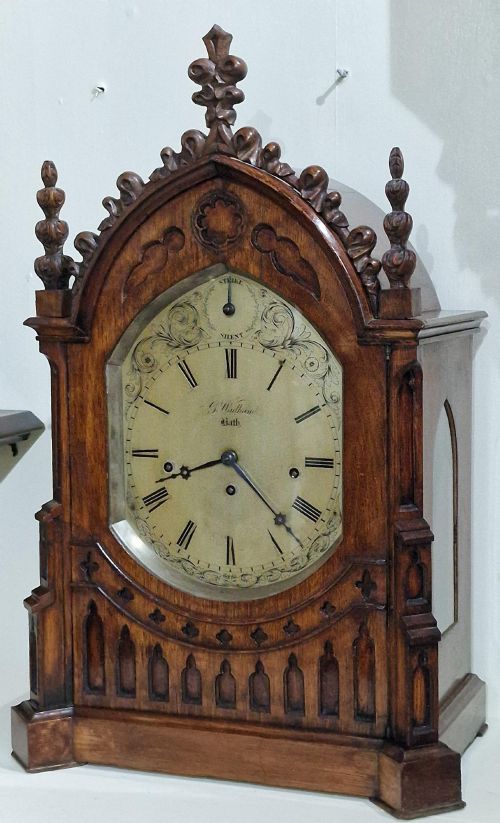
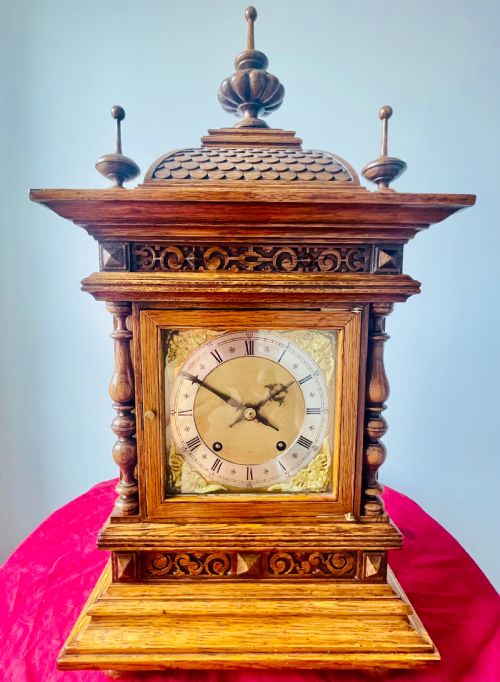
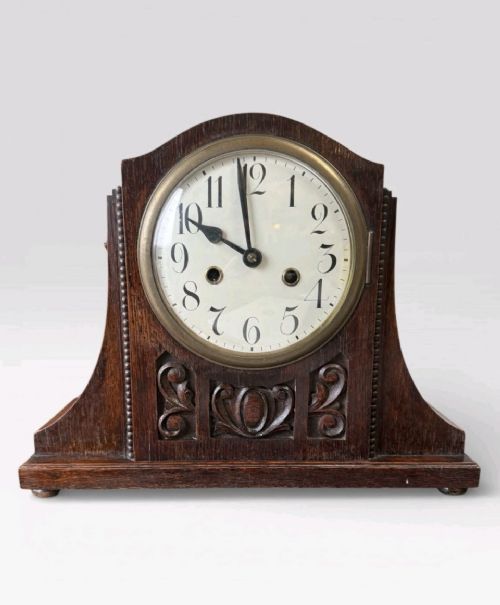


Carved Oak Bracket Clock
A carved oak bracket clock brings architectural presence and solid timber warmth to a room.
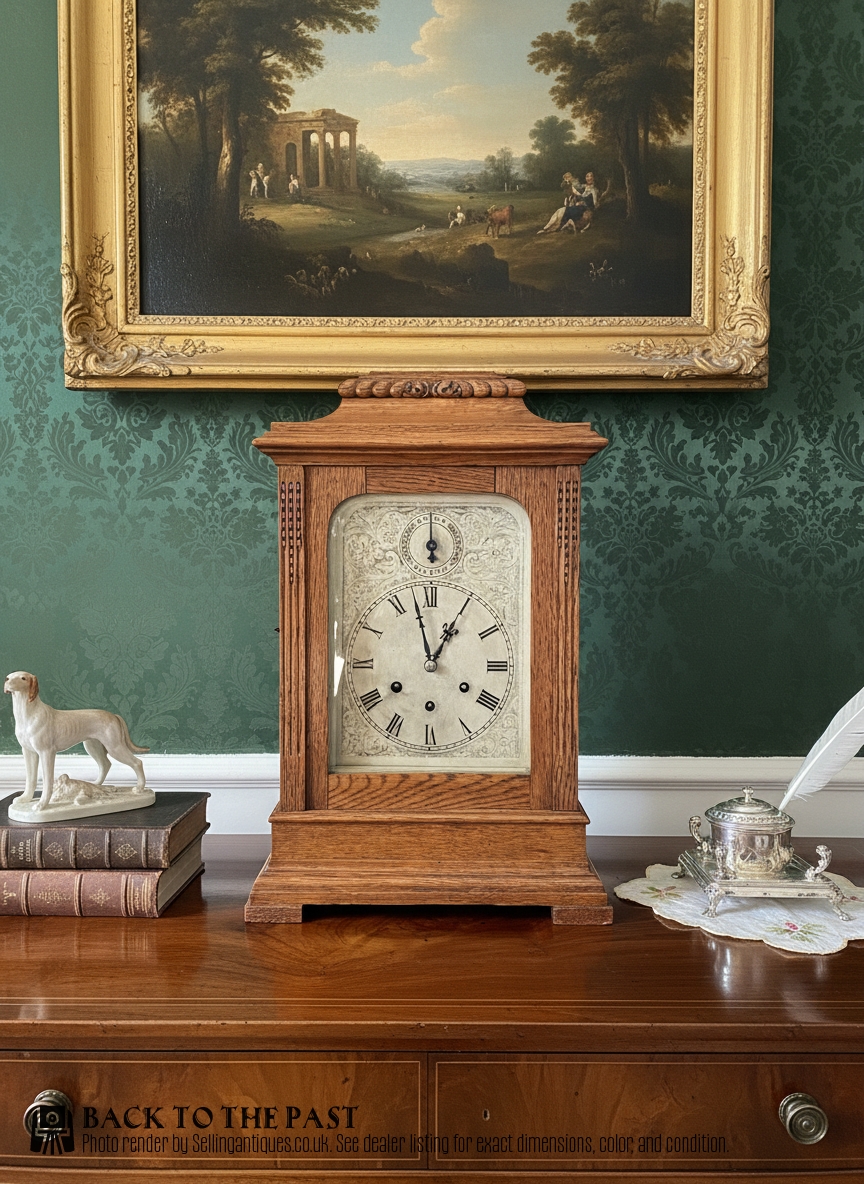
What carved oak bracket clocks are
A carved oak bracket clock is a striking timepiece designed for table or shelf placement, executed in solid timber. The selections on this page span the nineteenth century, featuring Victorian examples alongside continental workshop pieces.
You will encounter mantel clock forms that draw heavily on historic architectural vocabularies. These pieces combine heavy timber construction with elaborate carved enrichment.
The aesthetic leans towards nineteenth-century historicism, particularly the gothic taste and revival styles. Such clocks serve as both functional timekeepers and substantial decorative objects for the interior.
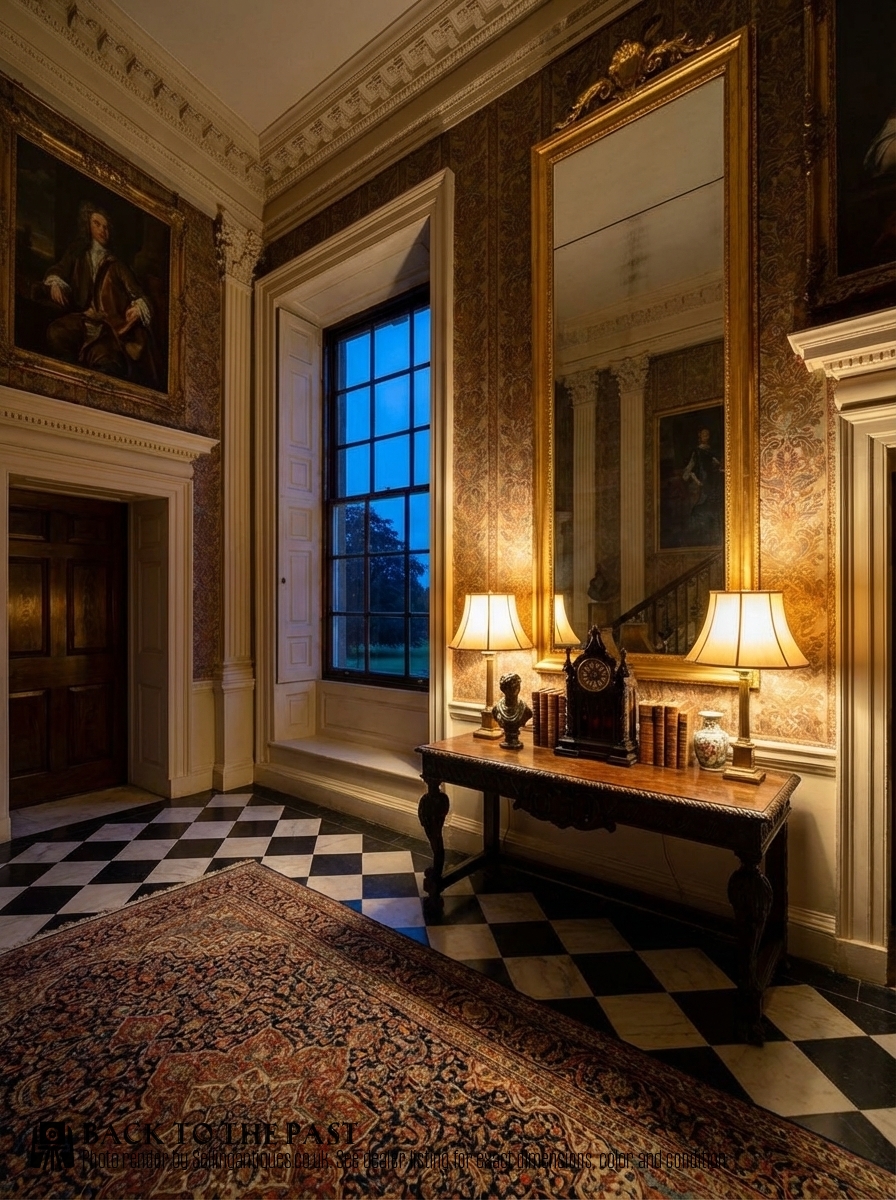
How they were made
Makers built the structural carcases from solid oak, subjecting the timber to deep sculptural carving. This work frequently incorporates architectural motifs, sunburst mounts, and chamfered details.
Movement assembly involved brass gear trains, often incorporating quarter-striking mechanisms and ting-tang chime configurations. Dial faces combined silvered metal chapters with protective glass covers and enamel elements.
Retail Price Guide 2026
Typical UK retail prices for carved oak bracket clock, calculated from the Sellingantiques database of over a million retail prices indexed since 2003. This retail price guide relies exclusively on Sellingantiques data; no external sources or auction records are used, so the figures do not describe the wider market.
Listed periods include the nineteenth century, with specific dates clustering around eighteen sixty, eighteen eighty, and eighteen ninety.
What varies in quality
Quality rests in the crispness of the timber carving and the sophistication of the internal movement. Clocks by established makers such as Winterhalder and Hofmeier demonstrate superior mechanical complexity and refined proportion.
Simpler nineteenth-century mantel clocks rely on standard mass-produced movements within plain oak cases. The presence of specialised quarter-striking systems elevates a piece above standard domestic timekeepers.
Winterhalder and Hofmeier
The Carved Oak Bracket Clock Glossary
- Bracket clock
- A portable table clock originally designed to sit upon a wall bracket. These pieces eventually evolved into freestanding mantel clocks.
- Quarter striking
- A mechanical complication that sounds the quarters of the hour on multiple gongs or bells. It requires additional gear trains within the brass movement.
- Gothic revival
- An architectural and decorative style drawing inspiration from medieval design. It employs pointed arches, tracery, and heavy carved oak surfaces.
- Silvered metal
- A brass or copper dial plate treated to achieve a bright silver finish. Numerals are typically engraved and darkened for legibility.
Frequently Asked Questions
What is a carved oak bracket clock?
A carved oak bracket clock is a nineteenth-century timepiece housed in a heavy wooden case decorated with sculptural carving. These clocks were built for domestic mantel or table placement.
Most examples reflect Victorian historicism, utilising gothic revival motifs and brass dial fittings to create an imposing decorative object.
How do quarter-striking movements work?
A quarter-striking movement utilises additional gear trains to chime the passage of every fifteen minutes. This mechanical complexity separates higher-grade workshop production from standard domestic timepieces.
Clocks featuring this mechanism often require multiple gongs or bells mounted internally within the oak case.
Where should I place my clock?
These clocks require a stable, level surface such as a heavy mantelpiece or sturdy table to maintain accurate timekeeping. Solid oak cases have considerable weight and need adequate support.
Keep the clock away from direct sunlight and fluctuating heat sources to preserve the finish of the timber and the integrity of the movement.
How do I identify a gothic revival clock?
Gothic revival pieces feature architectural elements such as pointed arches, trefoils, and deep chamfering carved directly into the oak. These details mimic medieval stone and woodwork.
The overall silhouette is often taller and more vertical than standard Victorian table clocks, emphasising structural mass.